
Imagining Sustainable Futures for Urban Policy and Governance in India November 2024 Batch
Three-day workshop is intended for professionals, practitioners, and researchers working in the broad domains of urban policy, governance, sustainable urban development, and urban planning and design.
Details
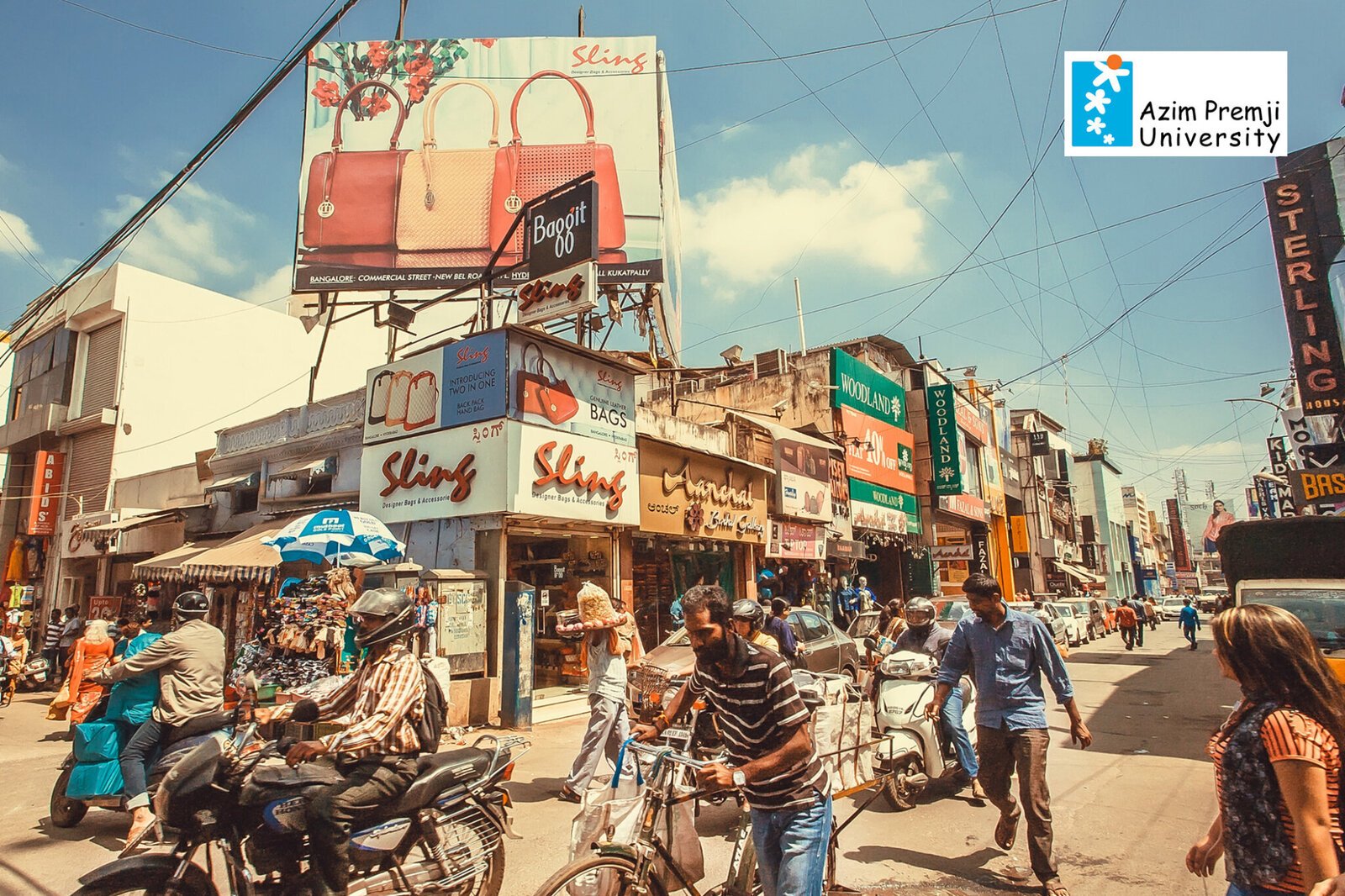
This specialized three-day workshop is intended for professionals, practitioners, and researchers working in the broad domains of urban policy, governance and sustainable urban design and development. It intends to provide participants with intensive learning sessions on foundational perspectives, analytical competencies, and technical skills to better address current and future challenges of urban governance and sustainability in the Indian context.
The accelerated rate of urbanization in developing countries such as India is a fact. India’s urban population is the second largest in the world, and by 2035 nearly two fifths of the Indian population is projected to live in urban areas. Yet what is unclear is how we manage the dual concerns of realizing aspirations of an urban population (for better opportunities of employment, income, and education), and mitigating challenges of urban social life. The latter includes the presence of socio-economic inequalities, lack of adequate urban infrastructure services, environmental challenges of pollution, waste, and apathy towards practices of violence and exclusion in cities. To add to this, some cities in developing countries such as India are also poised to be most affected by the consequences of long-term climate change.
As a starting step to imagine sustainable urban futures, what is required is building conceptual and practical capacities to assess unique aspects and patterns of urbanization and urban social life in the Indian context. This includes building analytical capacities of assessing how different developmental contexts affect spatial and social aspects of urban life, understanding practical concerns of governance and regulatory structures in shaping local urban development, and the ability to provide equitable solutions to environmental challenges in urban areas.
Acknowledging the constant crisis that transforming urban India deals with and the existing shortcomings in collective capacities to comprehend, design and implement contextualized interventions for Urban India, Azim Premji University, Bengaluru is offering a professional development course to address these issues and gaps.
The course offers a unique combination of perspectives on the nature and dimensions of ‘urban’ in India as well as offers sessions on relevant technical skills that will enable participants to operationalize their learnings to map, measure the urban and implement suitable sustainable interventions. The course will be delivered through a series of perspective building lectures, multi-disciplinary case studies, and technical skill development. The upcoming workshop will specifically focus on two themes of ‑Urban Drinking Water Provisioning and Waste Management Systems.
This uniquely tailored three-day workshop will offer:
- Introduction to foundational concepts of urbanization and urban social life, important frameworks to understand urban governance & regulation; citizen participation and legal frameworks of urban utilities provisioning and perspectives on sustainability and climate change concerns in the urban Indian context.
- Analytical case study-based assessments of important governance and sustainable practices, specifically in the domains of drinking water provisioning and waste management in Indian cities.
- Technical skills on material flow assessment of waste management.
The course will be delivered through a series of perspective building lectures, multi-disciplinary case studies, and technical skill development by Faculty Members of Azim Premji University and Experienced Practitioners involved in Urban Planning and Design. Thematic topics that the course will include:
- Perspective Building Sessions on:
- Socio-economic composition of urban life in India: Sociological perspective to understand uniquely urban aspects of socio-economic inequalities, cultural identities, participatory democracy and politics in Indian cities. These sessions will foreground how it is critical all urban policy planning and implementation to develop contextualized interventions informed by comprehensive understanding of urban socio-economic composition and historical nuances of the urban spaces that inform the unique challenges of Indian cities.
- Understanding Institutional and legal frameworks: A multidisciplinary view on concerns of spatial planning, institutional governance structures, and regulatory concerns of urban infrastructure and service delivery. This workshop will specifically focus on critical issues of urban India today- water and waste management.
- Sustainable Urban Development and Climate Change: Analyzing how infrastructure and human activities impact material use and the environment in the urban context, societal responses to environmental problems, and frameworks to evaluate and assess climate adaptation and mitigation concerns in the Indian context.
- Case Study Sessions on:
- Practices in Urban Governance Structures: How do different urban governance structures and regulatory authorities, shape Indian cities through mechanisms such as administration of the urban. Sessions will focus on how different urban administrative bodies are structured and how they interact with other administrative institutions of the state and central government.
- Legal Frameworks for Urban Water Provisioning: Understanding how legal frameworks influence methods and frameworks of urban water provisioning in Indian cities. More specifically the session will discuss how certain legal frameworks and negotiations have enabled innovations and enabled strategic challenges to governing water provisioning in Urban areas.
- Last Mile Delivery Policy Analysis for Waste Management: Analyzing how large-scale urban infrastructure projects are implemented on ground. Understanding the interplay of global institutional funding, project designs, implementation concerns for local governance institutions, consumption behavior of urban citizens and real-world social impacts.
- Technical Skills on:
- Material flow assessment of waste management: Learning the tool of material flow analysis and its visual representation to assess concerns of waste management, formal and informal actors, and quantifying waste material stocks and flows in an Indian city.
This workshop will be offered to participants working on urban policy & governance and/or sustainable urban development including
- Working professionals associated with Non-Governmental Organizations (NGOs) International Non-Governmental Organizations (iNGO) and donor agencies
- Private sector consultants involved in policy planning and execution, corporate social responsibility, rehabilitation and resettlement, special purpose vehicles linked to urban development and finance.
- Practicing architects, journalists, and lawyers.
- Government officials involved in planning and administration.
The criteria are set keeping in mind the intent that the participant would be able to integrate the learnings from the workshop into their practice within their field and organizational contexts. All applicants must possess a working knowledge of English.
Azim Premji University is committed to diversity and inclusion, and we encourage participants with different genders, disabilities and social backgrounds to apply.
Certificate of Participation will be issued to all participants after successful participation in all modules of the workshop.
In case of any queries, please write to sustainablecities.governance@apu.edu.in
Course Faculty
-


Sarbani Sharma
She works on itineraries of political aspirations and articulations of freedom and sovereignty in Kashmir. Before joining Azim Premji University, she was a postdoctoral fellow at the Department of Social and Cultural Anthropology at the University of Tübingen, Germany. She completed her PhD from the Department of Sociology, Delhi School of Economics, and her Master…
-

Narayana A
Narayana has over two decades of experience in the media, academics and consultancy. With a master’s in economics, he started his career as a journalist with the Bangalore-based English daily, Deccan Herald, and switched to academics after obtaining his doctorate from the Institute of Development Studies (IDS), University of Sussex, United Kingdom, with the Ford…
-

Aravindhan Nagarajan
Aravindhan was formerly a research scholar with the Centre for Climate Change and Sustainability Studies, at the Tata Institute of Social Sciences. His current research work focuses on ‘Recycling and Industrial Sustainability in the Indian Economy’ with a focus on informal sector plastic recycling units. He has also worked on the subject of risk perceptions…
-


Gautam Ganapathy
Gautam Ganapathy works on the relationship between water and society, especially the intersection of ecology, politics and technology.
Fee Structure
General Category: INR 3000/- (Inclusive of all taxes)
Partners of Azim Premji Foundation/ University: INR 1180/- (Inclusive of all taxes)
Accommodation (twin sharing basis): INR1700/- (Inclusive of all taxes)
Note: Travel and the food cost will be borne by the participant.
Food: Breakfast and meals are available at the cafeteria on direct payment basis.
Approximately INR 225 can suffice for a breakfast and two meals per person per day.