
SURC 2025: Setting aside labels and thinking about science
The fourth edition of the Science Undergraduate Research Conference (SURC) featured some excellent exchanges, and highlighted what undergraduates have to offer science.
Campus
Bengaluru

Details
“What’s the safest place to get bitten by a venomous snake?”
This was just one of the many delightfully zany scientific exchanges I overheard during the 4th annual SURC at Azim Premji University, Bengaluru, that took place in December 2025. It was an unusual space for academia: a science conference where Indian youngsters barely out of their teens confidently engaged with professors and their peers without the fear of being judged about how much they know and just how “good” a question is.
The SURC was born in 2019 to nurture a platform for non-PhDs across the country to share their research — blunders, hiccups, and all — with a community of peers and experts from who could be counted on to keep this a safe and non-judgamental space. “At SURC, it’s not just about awesome results, it’s about showing that science need not be expensive, or come solely from fancy research labs,” reminded Divya Uma, biologist and head of the Research Centre at the university, during her welcome address.
Divya emphasised that it was also a space to truly experience the interdisciplinarity of science, as undergraduates are generally less constrained to hyperspecialised boxes in their thinking. This point was illustrated numerous times over the course of the two day conference, which saw dozens of young researchers present their original research at the university — many, presumably, for the first time in their lives.
“At SURC, it’s not just about awesome results, it’s about showing that science need not be expensive, or come solely from fancy research labs.”
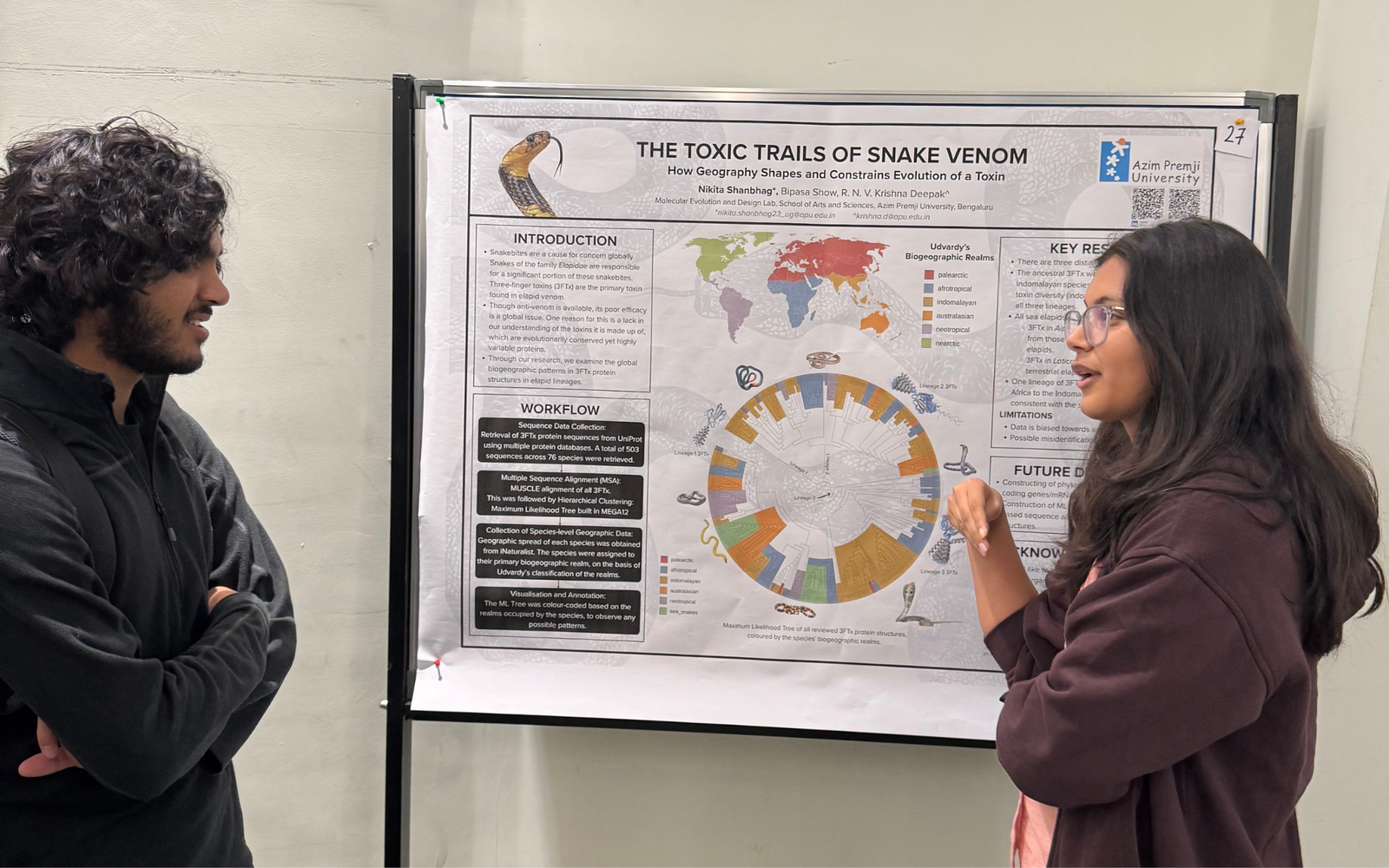
A lively interaction at one of the poster booths
Over the two days of the conference, the environment crackled with curiosity, nerves and good humour. And none of this took away from the high quality of science on display. The question at the start of this article was posed to a student presenting her work on how geography shapes and constrains the evolution of the structure of a type of toxins found in India’s poisonous snakes. Around the corner was another heartening sight of a cluster of students craning their necks to hear about their peer’s research into the expression of a specific gene linked to polycystic ovarian syndrome, a much understudied public health issue.
Besides this, there were presentations ranging across several scientific disciplines, such as an exploration of the age of the cosmos, experiments on mice with learning and memory, an algorithm to identify ragas in classical music, exotic wildlife trade, the chemistry of coffee, an investigation of the impact of chemical insecticides in a college campus, a diagnostic tool for Parkinson’s Disease and a new tool to study light matter interactions.
This year, the SURC faced an unexpected challenge in the form of major flight disruptions all over the country. A chunk of external participants had to drop out, including both the invited plenary speakers Vidita Vaidya from Tata Institute of Fundamental Research (TIFR) and G V Pavan Kumar from Indian Institute of Science Education and Research (IISER) Pune.
Instead of getting dismayed over this giant spanner in the works, the organisers chose to accept this as lemons life had thrown at them… and made lemonade they did! They managed to secure Bengaluru-based Shashi Thutupalli as a substitute plenary speaker, and this last-minute arrangement was a grand success.
Watch our 'Friendship with Science' episode featuring Shashi Thutupalli here. →
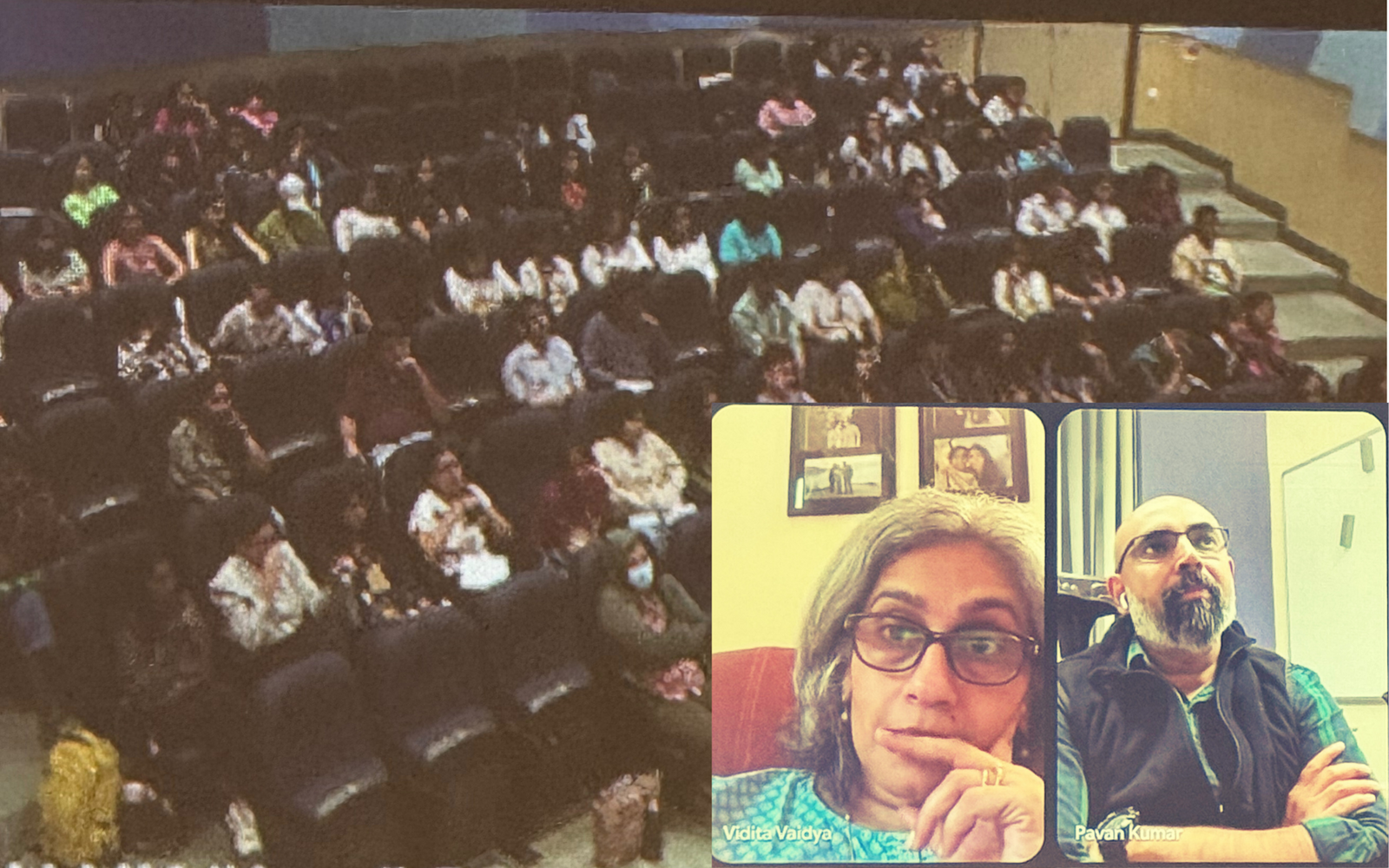
An image depicting the virtual set of plenary talks delivered by Vidita Vaidya and Pavan Kumar.
The topic of Shashi’s talk was as hard to label as his own research, and it really demonstrated the futility and the counterproductivity of trying to force scientific research into boxes called biology, physics and chemistry. He captivated the audience with snippets of his own work ranging from the origin of life and synthetic biology to mechanics and energetics. “Let’s set aside the labels and think about the science,” he implored early on in his talk, and the audience happily acquiesced.
Thankfully, the participants did not miss out on what Vidita and Pavan, each a star of Indian science in their own right, had to offer. Despite the logistical barrier, they did turn up on stage on Day 2, albeit digitally. The two-way cameras that had been set up were operated efficiently by student volunteers and technical staff, enabling the audience and the speakers to feel closer to each other.
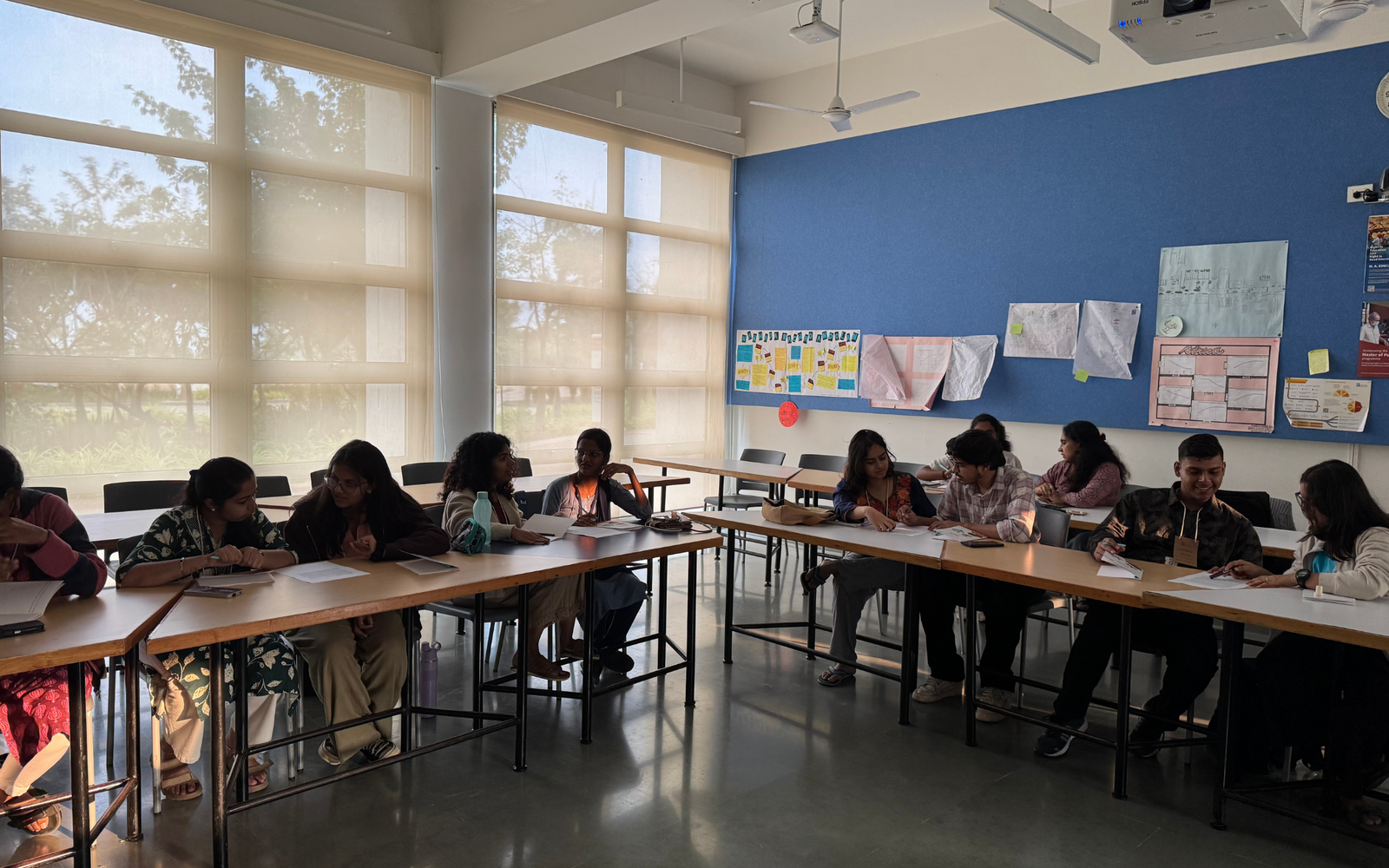
One of the workshops on science communication underway at SURC 2025.
In her talk, Vidita took the audience on a flashback to the earliest reported use of serotonergic psychedelics in ancient indigenous ceremonies, traced the evolution of our attempts to understand psychedelic molecules over the centuries, leading up to the resurgence of interest in these chemicals due to their apparent effectiveness in treating depression and anxiety.
Following this, Pavan shifted gears towards an insightful presentation of his lab’s research, as told through the journeys of his students, many who started off their careers as bachelor’s students just like the large cohort of audience members. He also peppered his talk with wisdom gathered over the years; for example, no matter how impressive a scientist’s achievements may be, they are all humans with flaws. “We must understand what they have done, but it’s important we don’t worship them,” he cautioned.
A lively Q&A session followed the double plenary, during which Vidita offered the students in this modern undergraduate milieu some practical advice: “Build an appetite for accepting rejection and be open to opportunities that you might not have initially considered as being good for your CV, but you might be surprised by an opportunity that is just around the corner.”
“Undergraduates bring with them an element of play, an intellectual playfulness, which I found is a very interesting way of starting new projects. They bring an air of freshness with them, especially when they ask questions. They do not have that ‘burden of knowledge’ yet. They don’t need to worry about what someone will think.”

Students from IISER Berhampur show off a prototype of a ‘smart’ bandage they developed that enables faster and more gentle wound healing.
In addition to the plenary talks and the student presentations were a diverse set of workshops and extracurricular activities led by various faculty of the university. This included one that explored maths through hula hoops, nature through origami, learning to identify trees, data visualisation, an introduction to an illustration software, citizen physics, using Git, observing air pollution from space, thin layer chromatography, sensing chemicals and building a sundial.
A birdwatching session led by biologist RNV Krishna Deepak on the chilly morning of Day 2 rewarded participants with sightings of the hoopoe, rosy starlings and a hawk cuckoo, which is colloquially called ‘brain fever bird’. “Students came here from many places. Learning about the biodiversity of a new place adds to their appreciation of it,” said Krishnapriya Tamma, who also joined the walk.
During this latest edition of the SURC, it was apparent that it was not just about what a conference like this has to offer undergraduates, but also what undergraduates have to offer science itself. Apart from their savviness with technology and, in Vidita’s words, an impressive risk appetite, Pavan made an astute observation: “Undergraduates bring with them an element of play, an intellectual playfulness, which I found is a very interesting way of starting new projects. They bring an air of freshness with them, especially when they ask questions. They do not have that ‘burden of knowledge’ yet. They don’t need to worry about what someone will think.”
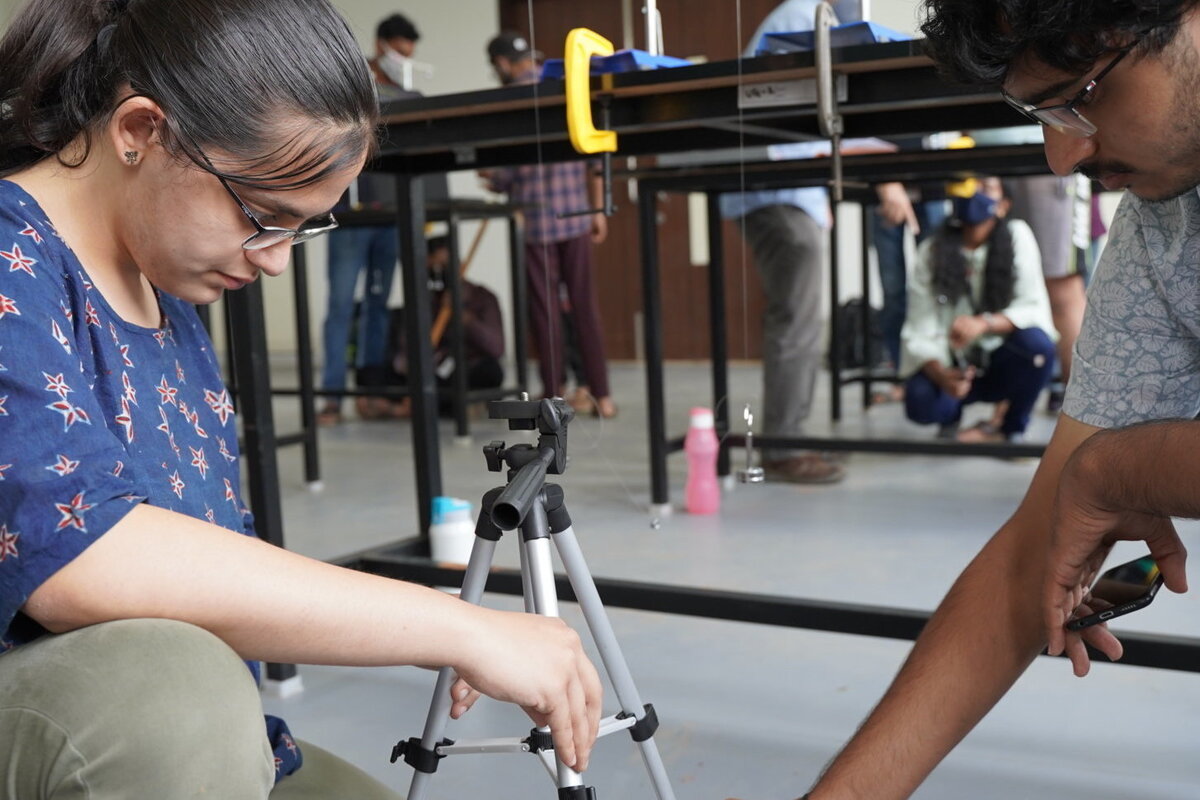
Images by Nandita Jayaraj
About the Author
Nandita Jayaraj is a Science writer and Communications Consultant at Azim Premji University.