
Science Undergraduate Research Conference 2025
A platform to share research work in mathematics and the sciences by undergraduate students and those in the early years of their postgraduate degrees.

Details
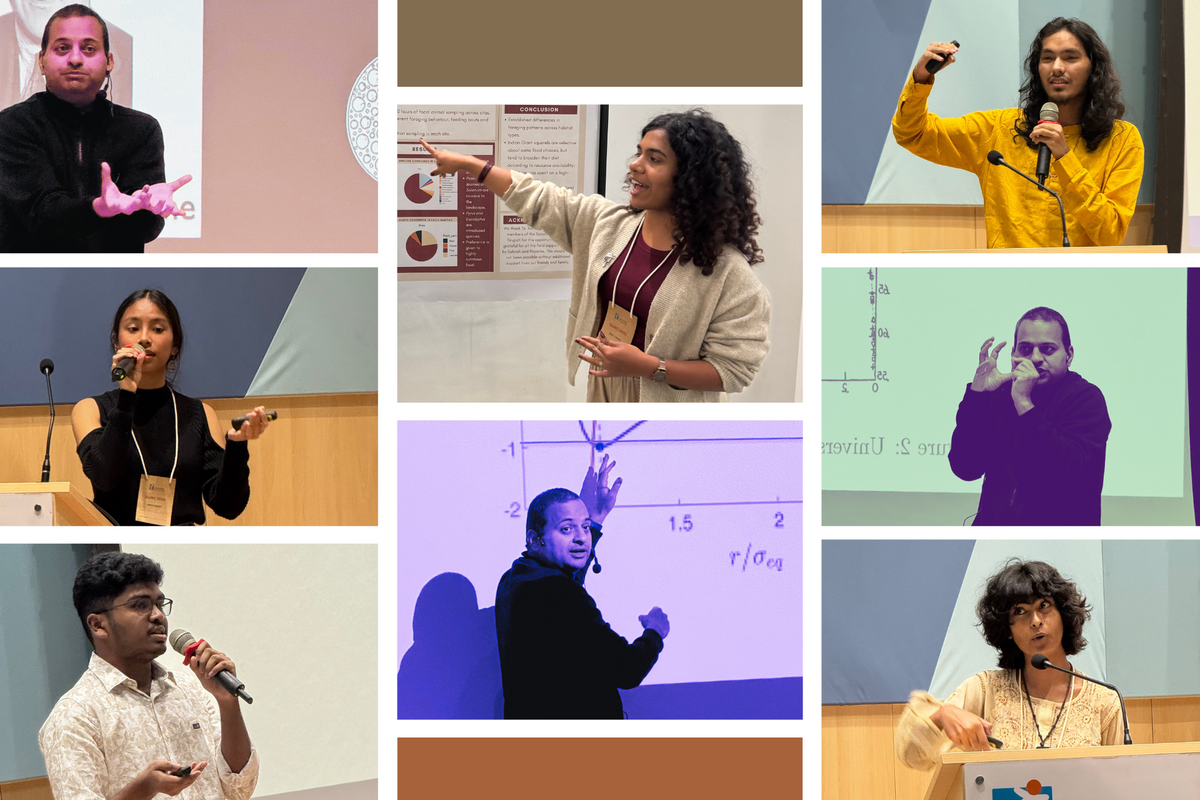

SURC 2025: Setting aside labels and thinking about science
The fourth edition of the Science Undergraduate Research Conference (SURC) featured some excellent exchanges, and highlighted what undergraduates have to offer science.
Campus Bengaluru
The Science Undergraduate Research Conference (SURC) brings undergraduate and early postgraduate students together from across India to present their work and meet other science students who share their passion for research. During the conference, students gain constructive feedback on their research and find new avenues for exploration and collaboration.
The fourth SURC will be held on 7 and 8 Dec 2025 at Azim Premji University, Bengaluru.
You can apply for the conference using the registration form here. Abstracts selected for student talks and/or 2‑minute poster pitches will be informed via email by mid-September 2025.
For all selected participants, a nominal fee of INR 1000 will be charged which will be inclusive of food and accommodation on campus.
Spot registration on the day of the conference is not available.
Day One
- –
Registration and breakfast
- –
Conference Inauguration; Plenary Talk 1
- –
Tea Break
- –
Research talks by students
- –
Lunch break
- –
Poster Session
- –
Tea Break
- –
Parallel workshops
- –
Conference Dinner and Star gazing
Day Two
- –
Bird watching walk off campus
- –
Breakfast
- –
Plenary Talk 2
- –
Research Talks by students
- –
Tea Break
- –
Poster session
- –
Lunch break
- –
Parallel workshops
- –
Closing ceremony and Group Photo
- –
Tea and snacks
Plenary Speakers
Plenary Talk 1: Curiosity as a Career: A Physicist Perspective
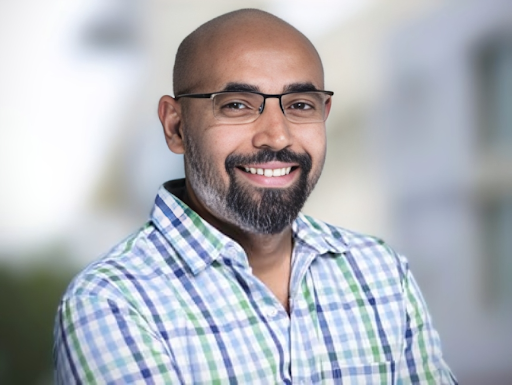
G.V. Pavan Kumar, Department of Physics, Indian Institute of Science Education and Research (IISER), Pune
Plenary Talk 2: Serotonergic Psychedelics — ‘Mushroom for Discussion’
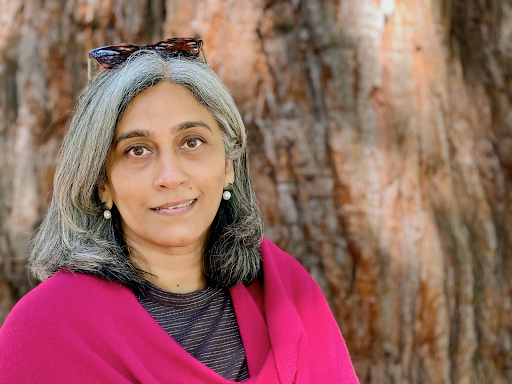
Vidita A. Vaidya, Senior Professor and Co-Chairperson, Department of Biological Sciences, Tata Institute of Fundamental Research, Mumbai
1. What is the timing of the conference?
The conference starts at 8:30 AM on Sunday, 7 Dec and goes until 4:30 PM on Monday, 8 Dec 2025.
2. Which are the days that accommodations are available?
Accommodation is available from the evening of Saturday, 6 Dec till the evening of Monday, 8 Dec. However, should you have difficulty finding a transport back to your institution on 8 Dec, you could stay the night of 8 Dec also. You have to vacate the rooms by 9 AM on Tuesday, 9 Dec 2025.
3. What does the registration fee cover?
The registration fee of INR 1000 covers your food and accommodation throughout the conference.
4. I’ve submitted an abstract through the Google Form. When will we know if it has been selected?
An email will be sent to you from surc@apu.edu.in by 15 September 2025. Kindly check your spam folder also.
5. Who is eligible to attend the conference?
All undergraduate students and first year postgraduate students in the sciences are eligible to apply. Only students whose abstracts are selected can attend the conference. Faculty members and instructors at undergraduate institutions are welcome to accompany their students and attend the conference, but they cannot present posters or give talks.
6. Do instructors/faculty need to pay the registration fee?
All attendees, including instructors and faculty must pay the same registration fee of INR 1000.
7. We have completed a project / prepared an abstract as a group. Can groups present?
Group members may register individually if they are part of the author list of a selected abstract. However, only one group member can present. All attendees will have to pay the registration fee if they are attending the conference, and each member will receive a certificate at the end of the conference. A group can have a maximum of four members.
8. Do I have to pay the registration fee while submitting my abstract?
No. After your abstract submission, if your abstract is selected, we will send you an email with the registration details following which you will need to pay the registration fee.
9: Can parents or guardians stay with students in the accommodation provided for the conference?
No, the accommodation arranged for the 2‑day undergraduate conference is strictly for student participants only. Parents or guardians will not be permitted to stay or attend, and such requests shall not be entertained.
10. Will my airfare/flight travel expenses be reimbursed?
Flight tickets will not be reimbursed. However, reimbursement equivalent to a standard AC 3‑tier train fare from the departing district to destination (Bengaluru) may be considered for selected students, based on a case-by-case evaluation.
11. Will all participants receive a certificate for attending the conference?
Yes, participation certificates will be distributed at the end of Day 2 to all participants, including instructors and faculty members. To be eligible, participants must fulfil the following criteria: 1) Attend all conference sessions, 2) Present a student talk or poster, and 3) participate in the workshops.
Science Undergraduate Pedagogy (SUP) is an annual meeting for teachers and researchers interested in undergraduate science and mathematics education. The meeting aims to bring together like-minded individuals to share experiences and innovative pedagogical ideas — what has worked, what hasn’t, and what holds potential for broader application. It serves as a platform for collaborative brainstorming and networking, with a focus on pedagogical approaches relevant to the Indian context. SUP also seeks to connect educators from diverse academic settings, fostering mutual learning that can prompt introspection and lead to more effective and engaging teaching practices.
SUP is now in its second year and once again finds its home at Azim Premji University, Bengaluru. SUP 2025 is scheduled on 9 and 10 Dec 2025, after the Science Undergraduate Research Conference (SURC).
Agenda for SUP 2025
- Pre-meeting online workshops on topics relevant to the meeting
- Plenary talk, lightning talks and poster presentations
- Roundtable discussions on various topics such as assessment reform (NEP 2020), integrating computation, use of AI, equity in classrooms, pedagogies for large classrooms, etc.
- Lab workshops that include cost-effective experiments, gamifying assessments, computer simulations
- Co-designing activities where mixed-discipline teams will work and present on length/time scale, gamification, and simulations, emphasising process over content, and highlighting local contexts
Who is this meeting for?
- Teachers of undergraduate science and mathematics courses interested in innovative and effective teaching methods.
- Educators, resource persons, or researchers engaged in undergraduate science or mathematics education or faculty development programmes.
- Senior or retired professors eager to share their experiences at the intersection of changing educational landscapes.
What to expect?
- Presentations and discussions on active learning tools, teaching strategies, and assessment techniques.
- Hands-on workshops on effective pedagogical methods.
- Opportunities to network, learn from peers and share teaching experiences and ideas.
- Roundtable discussions on key issues and possible solutions in undergraduate science education.
If you are interested in participating and/or presenting your work in these areas, please fill out this form. Note that the registration fee is INR 500.
During the two-day conference, participants will have the opportunity to attend a variety of interactive science workshops, including:
Environmental Science
Combating tree-blindness: Participants will learn basic tree identification skills and understand the role of urban trees in reducing air pollution, supporting biodiversity, and promoting well-being.
Observing polluted air from space: The workshop outlines the fundamental procedures for working with remotely sensed atmospheric products, such as aerosol data, and introduces participants to the key steps involved in accessing, processing, and interpreting these datasets.
Maths
Spinfinity | Spinning math with hula hoops: Explore how a simple plastic circle can defy gravity, and reveal surprising secrets of symmetry. Experience maths and physics with your body.
Nature inspired origami: What do leaves, beetles, satellites, and DNA have in common? Folding. Using a simple piece of paper, we’ll explore how leaves, wings, and molecules grow, move, and adapt — and how these patterns have inspired everything from space tech to information design.
Physics
Building a sundial: This hands-on workshop introduces participants to the science of timekeeping by building a simple sundial using everyday materials such as cardboard, paper, and a stick.
Physics for all: A citizen science approach: This workshop will explore how foundational ideas in physics can become part of larger, community-driven scientific efforts. Participants will learn how citizen-science platforms collect, validate, and interpret data, and how undergraduate students can meaningfully contribute to ongoing real-world physics projects.
Information Science
Illustrating with inkscape: This practical workshop introduces participants to creating scientific figures using inkscape and vector-based graphics. We will cover paths, shapes, object manipulation, and discuss how to ensure clarity and visual consistency. By the end of the workshop, participants will be able to create figures suitable for talks, posters, and journals.
‘Git’ it Right with Version Control: Having trouble managing different versions of your documents or your code? Join this workshop to learn how to track changes, collaborate and manage project history effectively using git.
Chemistry
Sensing chemicals: The elegant Chemistry behind detecting alcohol content in one’s body will be explored, along with other engaging and fun hands-on activities!
Biology
TLC for beginners | Understanding separation of compounds: Thin layer chromatography (TLC) is a simple, rapid, and cost-effective technique used to separate compounds based on their movement across a stationary phase. In this workshop, participants will learn how to prepare plates, run TLC, and interpret Rf values for analysing biological samples.
Basics of data visualisation: This workshop will use simple tools such as excel, R and ggplot2 to help students understand the basics of effective visualisations.
All registered participants will be provided food and accommodation at the University campus. A nominal registration fee will be charged.
6 Dec: Dinner will be provided.
7 — 8 Dec: Breakfast, lunch, and dinner will be provided.
You will be sharing rooms at the University’s student residence building during your stay. Since we value sustainability, please carry your reusable water bottle and any other accessories you may need.
In general, we do not reimburse travel expenses, but we will consider travel and registration fee reimbursement requests on a case-by-case basis.
Limited financial assistance for travel and registration may be available.
For any further enquiries, please contact us at surc@apu.edu.in
Know more about earlier SURCs here →
SURC 2024
