
V. S. Chitre
A policy-engaged academic
By Rupa Rege Nitsure
Details
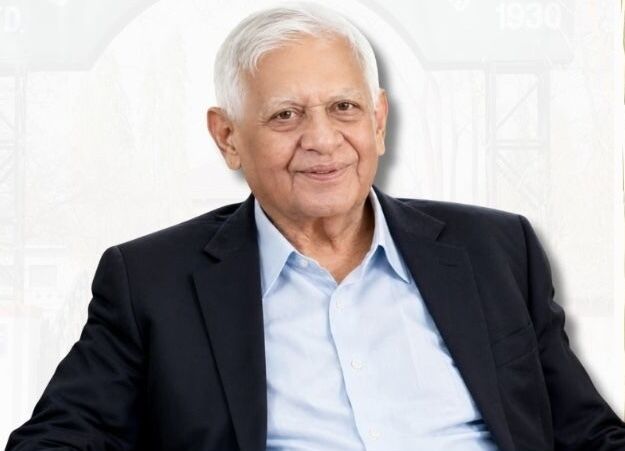
V. S. Chitre (1939 – 2026) belonged to a generation of Indian economists that was as effective in shaping government policy as it was in teaching the next generation of economists. His profound influence came from the way he connected scholarly research with macroeconomic policy making in India, based on his mastery of economic theory and quantitative techniques.
Chitre was among the toppers in his graduate and postgraduate programmes at the universities of Pune and Mumbai respectively. He earned his doctorate from University of Rochester, getting straight As in all his courses. His PhD work on demand for money functions was completed under the supervision of S.C. Tsiang, an authority on macroeconomics, monetary theory and international finance, and Edward Zabel, who was known for his work on price-making in a competitive market and on industrial capacity.
A research paper that Chitre wrote based on his doctoral dissertation – “A Dynamic Programming Approach to the Demand for Money” – was one of the three invited papers for a session at the annual conference of the American Economic Association (AEA) held in New York in 1965. The AEA selects three papers every year written by doctoral candidates who are about to complete their dissertations.
One of the term papers that Chitre had prepared as a doctoral student – “A Note on the Three Hicksian Laws of Comparative Statics for the Gross Substitutes Case” – was later published in the Journal of Economic Theory in July 1974. Getting a research paper accepted by this journal, and that too one prepared as a student, was no mean feat. The editorial board at the Journal of Economic Theory at that time included Karl Shell, A.B. Atkinson, Gerard Debreu, Stanley Fischer, Robert Lucas and Robert Solow.
The Japanese mathematical economist Michio Morishima had shown that the three laws of comparative statics that John Hicks stated in Value and Capital only hold when goods have a specific mathematical structure. The three Hicksian laws can be mathematically proved for the gross substitutes case – or when all commodities are substitutes of each other — under zero homogeneity of excess demand functions as well as Walras’ Law, by making use of the properties of Leontief-type matrices.
The third Hicksian law compares the effects of a given disturbance in a particular market on different commodity prices. Chitre proved using rigorous mathematics that any given commodity price responds more to a disturbance originating in the market for that commodity rather than a comparable disturbance in the market for any other commodity. In plain terms: if wheat supply is disrupted, the wheat price jumps more than the rice price does. What makes the finding non-trivial is that in general equilibrium, a shock in the wheat market ripples through to rice, sugar, fuel, and back again — so in principle, some indirect chain of effects could cause another price to move more. Chitre ruled that out rigorously, showing the own-market effect always dominates.
After completing his doctorate from the University of Rochester, Chitre taught at the University of Toronto in Canada for seven years and at the University of Adelaide in Australia for two years, before returning to India in 1973. Chitre’s first job in India was at the University of Jodhpur, Rajasthan as Professor and Head of its Economics department. Attracted by the intellectual and scholarly legacy of the Gokhale Institute of Politics and Economics (GIPE) in Pune, then headed by V. M. Dandekar, Chitre joined the institute in 1975 as Professor of Economics. He continued to work there in various capacities for three decades (except for 1981, when was Visiting Professor at the University of Adelaide in Australia, on leave from GIPE). He served as the Joint Director of GIPE during 1985 – 86 and then twice as the Director, notably in 1987 – 1991, and again in 1998 – 2004.
At GIPE, Chitre regularly taught courses on Monetary Economics, Macroeconomics, Mathematical Economics and Models of Economic Growth at the undergraduate and master’s levels, and Economic Theory in Retrospect and Advances in Monetary Economics & Macroeconomics with a special reference to India, at the M.Phil level.
His teaching style was not conventional, in the sense that he would not unnecessarily fill the blackboard with a series of equations. Rather, he would encourage his students to think about fundamental ideas, and opened up economics in ways that one could not dream of as a student. Along with teaching, Chitre also worked as an advisor to many important policy-making bodies such the Reserve Bank of India (RBI), Ministry of Finance, and the Finance Commission. No matter how engaged he was with these policy-making bodies or his other administrative responsibilities, he always taught with unwavering dedication. His teaching style was always inspiring rather than intimidating.
After his retirement from the GIPE in 2004, Chitre became the Director of the Indian School of Political Economy (ISPE), which was founded by V. M. Dandekar in 1970, primarily to undertake and support research on the social, political and economic problems of India. In 2012, he became the President of the ISPE. He also worked as the editor of the Journal of Indian School of Political Economy for 14 years. During his tenure as the editor of ISPE journal, he expanded its scope to broader institutional structure and policy evaluation, attracted articles from leading scholars and practitioners, and elevated the journal’s citation metrics and academic reputation.
In his younger days, Chitre worked as an academic consultant in the Department of Research of the Federal Reserve Bank of Philadelphia in 1970 – 71 and prepared a paper, “A Theory of Bank Asset Management and the Effectiveness of Monetary Controls,” for the bank. Subsequently, he presented this paper at the Money and Banking Session of the Econometric Society’s meeting held in New Orleans in December 1971. Before that, in 1969, Chitre had presented a paper based on his doctoral research – “A Dynamic Programming Model of Demand for Money with Fixed Transfer Costs” – at the Monetary Theory Session of the Econometric Society’s meeting held in New York in December 1969.
In June 1975, he published a seminal paper – “Wealth Effect on the Demand for Money” – in the Journal of Political Economy. In this paper, he had examined the wealth effect on an individual’s money demand, within the inventory theoretical framework involving stochastic cash needs. Driven by “decreasing absolute risk aversion,” Chitre showed how a direct wealth effect makes money demand negative rather than ambiguous as obtained by Kenneth J. Arrow in 1971. Chitre’s finding was highly significant for monetary theory and policy-making. At that time, the editorial board of the Journal of Political Economy comprised of Harry Johnson, George Stigler, Robert Barro, Sam Peltzman and J.A. Frenkel.
In 1980, Chitre served as an academic consultant to the RBI for a research project on A Model for Forecasting Money Supply in India. In 1985, he undertook a special research study entitled “Quarterly Prediction of the Reserve Money Multiplier and Money Stock in India” for the RBI Committee to Review the Working of the Monetary System of India, chaired by Sukhamoy Chakravarty. The recommendations of this committee had far-reaching consequences for India’s monetary policy framework. Chitre’s background paper was an important input in the shift to the money supply targeting framework in India.
In 1996, Chitre guided a research project on Inflation, Interest Rates and Index-linked Bonds supported by the Development Research Group of RBI. Based on this research, Capital Index Bonds were introduced by the RBI for the first time in 1997, which was a ‘inflation-hedged instrument’ linked to the wholesale price index.
During the 2000s, Chitre served as a Member of a Technical Advisory Committee appointed by the RBI to recommend measures for strengthening the Government Securities Market and also as a Member of a Technical Advisory Committee on Short-Term Liquidity Forecasting Model. The Liquidity Forecasting Model developed by this committee was based on daily data and explored the nature of interactions of financial markets with monetary policy instruments. For many years, this model guided the short-term liquidity management operations of the RBI.
Another major research area where Chitre contributed fundamentally was identification of business cycles for the Indian economy. His paper, prepared in 1986, “Indicators of Business Recessions and Revivals in India: 1951 – 1982”, was an effort to prepare a systematic list of indicators of business recessions and revivals in India. This was an important work for researchers of the Indian economy for not much was researched in this area earlier. Geoffrey Moore from the National Bureau of Economic Research (NBER), who was known as the “father of leading indicators”, had sent Chitre a special letter of appreciation for doing this work despite the paucity of high frequency data for India at that time.
Chitre’s pioneering work on Indian business cycles attracted recognition in many countries. In 1981, he presented a paper – “Growth Cycles in the Indian Economy: 1951−75” – at the Tenth Annual Conference of Economists of Australia & New Zealand held in Canberra. He also presented a paper in the Workshop on Business Cycles in Asia, organised by the Institute of Developing Economies in Tokyo in 1988, entitled “Fluctuations in Agricultural Income, Public Sector Investment, World Economic Activity and Business Cycles in India.”
In Chitre’s oft-quoted study on Growth Cycles in the Indian Economy, he had identified five short period business cycles around the trend or growth cycles, of three to five years periodicity during the period 1951 – 1975. His later studies proved the presence of such growth cycles even for later years, based on monthly data as well.
While serving as the President of the ISPE Indian School of Political Economy, Chitre worked on two large projects of great social relevance, notably, the Ford Foundation funded project Macroeconomics of India and the World Bank funded project Cost of Healthcare in Public Hospitals in Maharashtra.
His last research paper, at the age of 85 years, entitled “The Mystery of Cyrptocurrency”, published in the July-December 2025 issue of the Journal of Indian School of Political Economy covered the history, nature and the issues related to, the evolution of money, banking, and cryptocurrencies. It was considered as one of the best on this intricate subject by Indian monetary economists. Unfortunately, that turned out to be his swan song.
Major works
- Chitre, V. (1971). A Theory of Bank Asset Management and the Effectiveness of Monetary Control. Prepared for the Department of Research, Federal Reserve Bank of Philadelphia, 1971.
- Chitre, V. (1972). A Dynamic Programming Model of Demand for Money with Planned Total Expenditure. International Economic Review, 13(2): 303 – 323.
- Chitre, V. (1974). A Note on the Three Hicksian Laws of Comparative Statics for the Gross Substitutes Case. Journal of Economic Theory, 8, 397 – 399.
- Chitre, V. (1975). Wealth Effect on the Demand for Money. Journal of Political Economy, 83(3), 615 – 631.
- Chitre, V. (1978). An Econometric Model of the Consolidation Portfolio of the Indian Scheduled Commercial Banks, 1951 – 1972. Artha Vijnana, 20(1), 11 – 74. [Reprinted in Recent developments in monetary theory and policy: Papers and proceedings of the seminar held at Bombay, Reserve Bank of India.]
- Chitre, V. (1978). Banking in India. In J. S. Uppal (Ed.), India’s economic problems (2nd ed., pp. 246 – 264). Tata McGraw-Hill.
- Chitre, V. (1982). Growth Cycles in the Indian Economy, 1951 – 1975. Artha Vijnana, 24(4): 293 – 450.
- Chitre, V. (1986). Quarterly Prediction of Reserve Money Multiplier and Money Stock in India. Artha Vijnana, 28(1).
- Chitre, V. (1986). Indicators of Business Recessions and Revivals in India [Unpublished manuscript submitted to the Industrial Development Bank of India].
- Chitre, V., & Naik, U. (1989). Integration of Money and Real Analysis in an Empirically Estimable Applied General Equilibrium Framework. In Proceedings of the Conference on Methods of Planning and Policy Analysis for Mixed Economies. Indira Gandhi Institute of Development Research.
- Chitre, V. (1991). Fluctuations in Agricultural Income, Public Sector Investment, World Economic Activity and Business Cycles in India. In H. Osada & P. Hiratsuka (Eds.), Business cycles in Asia (pp. 113 – 125). Institute of Developing Economies.
- Chitre, V. (1991). Crisis in the Indian economy: Issues and policy options. In V. R. Panchamukhi (Ed.), Fiscal management of the Indian economy (pp. 288 – 295). Indian Economic Association Trust for Research and Development/Interest Publications.
- Chitre, V., & Singhal, P. D. (1993). Human Life Cycle, Real Interest Rate, Savings and Economic Growth [Unpublished manuscript].
- Chitre, V., Kanagasabapathy, K., Ray, P., & Saggar, M. (1996). Inflation, Interest Rates and Index-linked Bonds (Development Research Group Study No. 12). Reserve Bank of India.
- Chitre, V. (1997). Foreign Capital Flows and Financial Markets in India. Journal of Foreign Exchange and International Finance, 10(4), 275 – 282.
- Chitre, V. (2025). The Mystery of Cryptocurrency. Journal of Indian School of Political Economy, Jul-Dec 2025: 533 – 601.
Reference
Rege Nitsure, R. (2025). The Teacher who Inspired Thinking. Journal of Indian School of Political Economy, 37(1 – 2), 91 – 96.
About the author:
Rupa Rege Nitsure is an independent economist who works on macroeconomics and financial intermediation. In the past she has served as Group Chief Economist for L&T Finance, Chief Economist at Bank of Baroda, and Senior Economist and Head of ICICI Research Centre at ICICI.