
R K Hazari
Industrial planning and licensing policy expert
By Mausam Kumar
Details
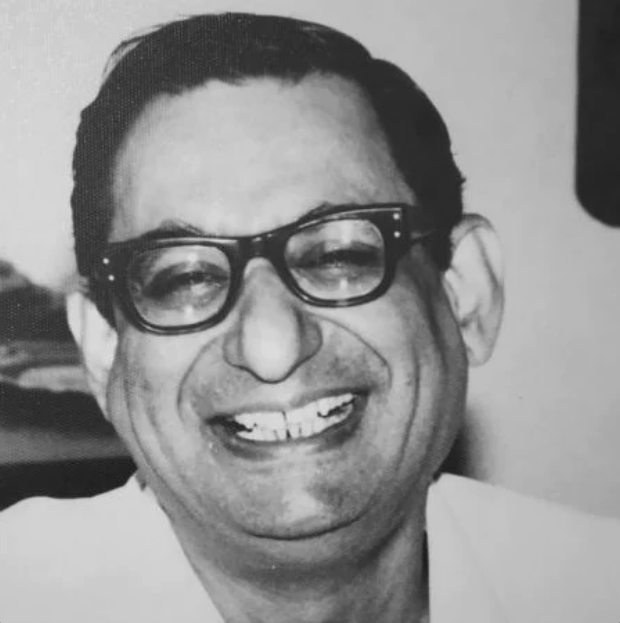
Born in 1932, Punjab in pre-independence British India, R. K Hazari, fondly addressed as Ravi by his friends and colleagues, received his education at Government College, Lahore and St. Xaviers College and the School of Economics and Sociology, Bombay. Hazari taught economics at St. Xaviers College from 1951 to 1964 before moving to the University of Bombay as a professor of industrial economics and eventually becoming the chair of the department. He edited the Economic and Political Weekly (EPW) from 1967 to 1969 before being appointed the deputy governor of the Reserve Bank of India (RBI) in 1969, the youngest to have ever been appointed to that role at that time. Hazari had replaced Sachin Chaudhari, the founding editor of EPW, previously known as the Economic Weekly, after his demise in 1966. When Hazari moved to the RBI, he was replaced by the most illustrious Krishna Raj, who helmed EPW for over 30 years until he passed away in 2004.
EPW’s groundbreaking contributions to the study of India’s social, political, economic, and cultural issues stands on the shoulders of giants like Chaudhari, Hazari and Raj. Hazari is also speculated to have played a key role in the nationalisation of 14 Indian banks in 1969 undertaken by the Indira Gandhi government which remains a much-debated moment in India’s public memory. Hazari’s tenure at the RBI came to an end in 1977 and he went on to hold among other teaching positions, the position of visiting lecturer at the World Bank’s Economic Development Institute.
Hazari’s first publication for EPW was an article in 1954 titled “Rationalization in the Cotton Textile Industry.” In the article, Hazari argued that simply introducing new labour-saving equipment does not entail rationalisation even though it may enhance labor productivity as a corollary. Instead, it is exigent that key changes in management accounting, standardisation and balancing of equipment, and quality controls among other measures are simultaneously introduced. His seminal study titled The Structure of the Corporate Private Sector: A Study of Concentration, Ownership, and Control published in 1966, was a comprehensive and authoritative book mapping the ownership structures of private enterprises in post-independence India and its implications on the Indian economy. His three part essay titled “Ownership or Control- A Study of Inter-Corporate Investment” published in the EPW towards the end of 1960 was a precursor to this book. In these essays, Hazari laid out in great detail how large business houses during this period such as Tatas, Birlas, Mafatlals, Walchands, and Mahindra relied on inter-corporate investments as an instrument of control across a number of enterprises. This control was further institutionalised through the managing agency system and Hazari showed that these inter-corporate investments were not necessarily instruments of investment for productive purposes but for taking advantage of speculative capital market situations. It is in this background that Hazari called for reforms in legal provisions, especially Section 372 of the Companies Act of 1956 which dealt with inter-corporate investments. While a range of economists have focused on state intervention and regulation, pejoratively studied as the license raj, as central to the failure of India’s import-substitution strategy, Hazari’s works provide critical insights on understanding the monopolistic tendencies within Indian businesses and its implications for productive capacity and industrial policy during this period.
The book received significant attention to the point that the Government of India asked R. K. Hazari to conduct an enquiry into the licensing ecosystem which had been the bedrock of India’s industrial policy as incorporated in the Industries (Development and Regulation) Act of 1951. As a consultant with the Planning Commission, Hazari submitted his final report titled Industrial Planning and Licensing Policy Report in 1967 where he evaluated the licensing system and pointed out significant procedural flaws in terms of how licenses were approved and allocated, and required an immediate overhaul. The report led to the eventual convening of the Dutt Committee (led by Subimal Dutt) in 1967 which came up with the most comprehensive report on the licensing ecosystem in India in 1969.
Hazari’s third significant contribution to the study of India’s economic history comes from his work titled Essays on Industrial Policy that studied India’s industrial policy experience from 1876 – 1964. It is a rich chronicle of the development of specific industries in India such as the Iron and Steel Industry, the emergence of state enterprises, and various tariff and protection policies in the inter-war period. Another fascinating aspect of the book is its documentation of industries in the then princely states of India.
Hazari’s most important academic contribution remains his analysis of corporate control and its implications for India’s post-independence economic trajectory. A fair share of studies on India’s post-independence economic trajectory have often portrayed the licensing system and other forms of state discipline as central to the dismal experience of economic growth and the apparent failure of the import-substitution strategy during this period. Hazari’s contributions, on the other hand, focus on locating key structural issues in India’s economy related to business ownership structures, misallocation of critical industrial finance, and the need for institutional reforms to administer post-independence India’s developmental state. Trajectories of industrial transformation in the post-war developmental states have often hinged on the role of the state in addressing key structural and institutional constraints in the economy. An uncritical evaluation of industrial policy tools such as licensing, which as a matter of fact, was a key element of developmental state policy making, and deployed with significant success in east Asia, has often obfuscated a coherent evaluation of India’s economic trajectory. Hazari’s works address this myopia and create a body of literature which can be the basis for enquiries into this trajectory that can locate the multiplicity of actors and interests at play.
Hazari’s analytical and empirical works on business ownership structures in India remains one of a kind and a key body of work to locate state-business relations in historical perspective. K S Krishnaswamy, a noted economist in his own who also went on to hold the position of deputy governor at the RBI, writes in Hazari’s obituary when he passed away suddenly at the age of 54 in 1986, “..But Ravi left suddenly, taking away from the world of those who had the privilege of knowing him more than a little bit of its rich flavour. He lived, not long enough to rest on his oars or accumulate riches, but meaningfully enough to leave a memory that one can cherish.” For those who wish to study his works more closely, Prof. Hazari’s son, Hemindra Hazari maintains a carefully crafted online archive of his works which is an ideal first-stop for anyone looking to get a window into his scholarship and life.
References
- Bagchi, A. (1967). Concentration of Economic Power in India. Economic and Political Weekly, 2(33−34−35), 1613 – 1618.
- Krishnaswamy, K. S. (1986). Ravi Hazari: A Remembrance. Economic and Political Weekly, 21(48), 2076 – 2078.
About the author
Mausam Kumar is a postdoctoral research associate at the Center for Policy Research on Energy and the Environment, School of Public and International Affairs, Princeton University. He received his PhD from the Indian Institute of Technology, Bombay. His research interests include industrial policy, development finance, and green transitions.
In the sense of the natural sex imbalance at birth being more amplified in India than elsewhere↩︎
In the sense of the natural sex imbalance at birth being more amplified in India than elsewhere