
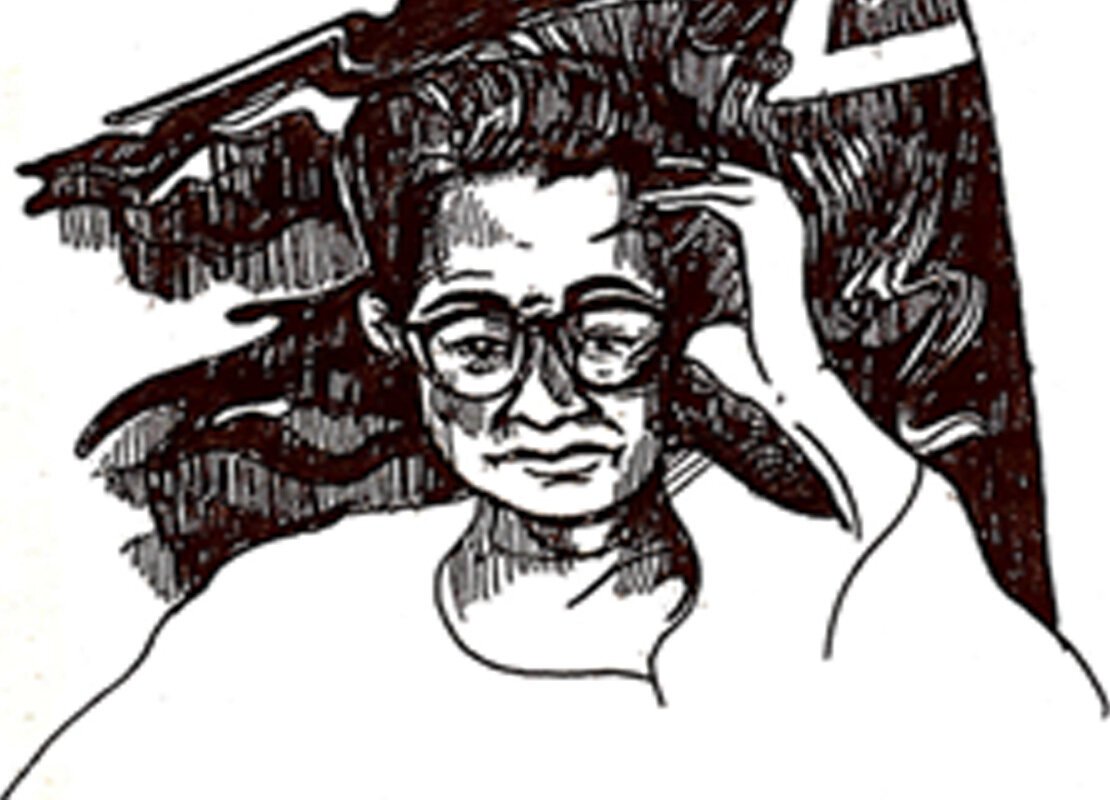
Sachin Chaudhuri
Founder-editor of Economic Weekly and Economic and Political Weekly
By Rammanohar Reddy
Details
Image credit: Tarushee Mehra
In the first two decades after India’s independence, the Economic Weekly (EW) was in the forefront of debates on India’s economic policy. Orchestrating this publication was Sachin Chaudhuri (1904−1966) who in EW created a unique forum where many of India’s leading economists of the time discussed the nation-building project even as the founder-editor gave space to brilliant young minds who cut their teeth in the EW on their way to establishing themselves as reputed scholars. The spirit of EW was carried into the Economic and Political Weekly (EPW), established in 1966, of which too Chaudhuri was the founder-editor. If it were not for the foundation laid by Chaudhari and the EW, the EPW would not have become what it is now.
Chaudhuri was the only editor during the life of EW from its founding in 1949 till its discontinuation in 1965 — a weekly publication that was neither an academic journal nor a magazine and yet acquired a national and international reputation.
Many “small” magazines were launched in the years ahead of Independence, seeking to intervene in the making of policy. There were also formal and informal groups of economists who had begun discussing the challenges that an India free from colonial India would face. It was though only Chaudhuri’s EW that established itself.
Sachin Chaudhuri was by all accounts a brilliant mind, though as a student in Dacca University (now known as the University of Dhaka) in the 1920s, his interests seemed to stretch across disciplines and he refused to constrain himself to achieving success in the classroom. He was more interested in Mathematics than Economics (anticipating perhaps by a couple of decades the formalisation of Economics that was to begin in the late 1940s). It was at Dacca that he befriended A.K. Dasgupta, who went on to become one of India’s most well-known theoretical economists of his time. Their close friendship later played a major role in building the EW.
Chaudhuri did not train to become a formal economist, though he did for a brief while register for a PhD at the Economics Department of the University of Bombay (now known as the University of Mumbai) before giving it up after a disappointment with the department. In the decades after Dacca, he seems to have travelled widely, and changed jobs, mainly in what were then Calcutta and Bombay.
In what has become folklore, he was for a while during the 1940s even a manager at a well-known film production company, Bombay Talkies. He then became a journalist and columnist in a number of Bombay-based publications writing on economics and finance.
In the mid 1940s, even before Independence, Chaudhuri seems to have been conceptualising a magazine on the lines of the EW. But it took a combination of factors – persuasion by a brother, Hiten Chaudhuri (later also a trustee of the Sameeksha Trust which publishes EPW), who managed to arrange finance from a firm of cotton merchants, the Sekhsarias, and prodding by a wide circle of economists, friends and colleagues in Bombay and across India – to make Sachin Chaudhuri launch the EW in January 1949 from Bombay.
From the very beginning the EW had a unique format, perhaps unique for the world. The first half of the publication would consist of an editorial, then a series of reports, commentary and columns on contemporary issues, and book reviews. The second half would consist of scholarly articles by academics, mainly economists, and later by sociologists, political scientists and then even historians. This format was the hallmark of the EW and then also the EPW, which some would say was its strength (offering short commentary alongside scholarly discussions) as well as its weakness (the academic pieces being looked down upon because they were not ‘peer reviewed’).
The timing of the launch of EW coincided with the newly independent nation trying to find its feet and embark on what it hoped would be a rapid process of economic development. But timing alone was not enough; the weekly had to be able to intervene successfully.
Chaudhuri was able to do that successfully through a variety of ways. He drew on his extended network of economist friends and acquaintances to contribute articles on the emerging contours of economic policy. The established economists were also expected to suggest young, and upcoming academics. Whether it was on planning, land reform, later industrial licensing and import controls, agriculture policy, or deficit financing — in short anything to do with India’s economic journey — all were discussed in the pages of EW. There were also papers on theoretical aspects of economic development. The EW’s pages were a veritable who’s who of Indian economists and a representative list would be a very long one. The postwar generation of established economists like A.K. Dasgupta, V.K.R.V. Rao were followed by the younger generation of K.N. Raj, and then Amartya Sen, P.R. Brahmananda, Jagdish Bhagwati, Ashok Mitra, P.N. Dhar, I.S. Gulati and the young Krishna Bharadwaj. The early debates on planning were followed by those on farm size-productivity and choice of technique.
It was also a time when economists from West Europe and North America flocked to India to study and advise this experiment at development in a newly independent electoral democracy. Chaudhuri was able to persuade many of them to write in EW. In keeping with the times, there was a strong representation by members of the Cambridge (UK) school (Joan Robinson, Nicholas Kaldor and Richard Goodwin were writers) but also present were Jan Tinbergen, George Rosen (Chicago) and Michal Kalecki.
It wasn’t just economists who peopled EW. In those heady days of lively debates, the weekly also saw articles by the sociologist M.N. Srinivas.
If Sachin Chaudhuri was able to attract the best academic economists to write the “Special Articles” (as the research papers used to be and are still called), he was equally successful in attracting journalists, stock market analysts, government and RBI officials (often writing under pseudonyms), and political activists to contribute commentary and editorial comment. The commentaries ranged from analysis of markets to discussion of political developments in the country. For this, the EW editor cultivated young writers, the only criterion being that the articles “must have an argument” which with editing could be published. The EW offices kept shifting but were always located in South Bombay, not far from the RBI headquarters. Stories are legion of young, middle and senior RBI officials walking across to the EW offices in the evening to write a short piece on Sachin Chaudhuri’s suggestion or help read and edit submissions. It was thus that RBI officers like K.S. Krishnaswamy, Anand Chandavarkar, V.V. Bhatt and Deena Khatkhate, who later were to occupy senior positions in the RBI/international organisations, left their imprint on EW.
A central feature of how Chaudhuri gave EW its quality, diversity and an air of excitement was the part salon-part adda he conducted in the evenings at his flat in Churchill Chambers, which was also located in South Bombay. Writers and friends of Chaudhuri have written of evenings stretching into the night of heated discussions on policy. Academics and others dropped in, some visiting Bombay, others having been brought home from the EW office. Besides discussions on the state of the country, these informal gatherings alongside an impromptu dinner also saw future issues of the EW being planned. Some of the younger visitors also involved themselves in editing, rewriting and correcting articles that had been brought to Churchill Chambers. To give a sample of names mentioned in accounts of Sachin Chaudhuri and Churchill Chambers: there was Ram Manohar Lohia of the Socialist Party, the actor Devika Rani and even Milton Friedman, the libertarian economist from the University of Chicago.
The EW was decidedly Nehruvian (liberal in political outlook and trying to find the middle ground between capitalism and socialism in the economy) in its outlook. This perhaps reflected the Editor’s perspective and those he cultivated as writers. He was a middle of the roader who was not attracted to either the Marxist left and or the free enterprise right. This may explain why the weekly attracted writers and readers across the ideological spectrum. Sachin Chaudhuri’s perspective was best described after his death by his friend from Dacca and EW writer, A.K. Dasgupta (1966, p. 826):
My own feeling is that he was essentially a liberal, alive as much to the limitations of a free enterprise economy as to the excesses to which socialist planning is open. His emphasis perhaps would be on social change rather than on a revolution of the economic organisation. He had the mould rather of Keynes than of either Marshall or Marx.
Chaudhuri had a sharp and analytical mind and could engage with any economist. But because he did not have a higher degree in Economics and had never taught at a university, the community of economists did not see him as one of them even as they were eager to publish in the EW. Friends say he was disappointed that he was never made a member of any panel of economists established by the Planning Commission over the 15 years of EW.
The EW had an extraordinary run for more than 15 years. But, like many small magazines it eventually began to show the strains of the absence of an institutional set up. It was a one-man show run with voluntary help (though a future Editor of EPW, Krishna Raj, had already joined the staff in the early 1960s) and it was forever short of finances. Income from advertising and sales were never enough for a stable existence. Sachin Chaudhuri was just shy of 50 when the EW was launched in 1949, and by the early 1960s the pressures began to tell on an editor who had reached the mid 60s. After years of unsuccessfully trying to get the publishers to invest more in the weekly, he finally quit in December 1965. It is a measure of how much EW and Chaudhuri were intertwined that while the publishers attempted to run the weekly after his departure, they could not bring out a single issue.
EW then did not see 1966, but the idea behind this unique forum refused to go away. The large community of EW readers and writers would not accept the end of an era and wanted very much the publication to be continued in some form. Many of them from across the country got together and decided to relaunch EW under a different name and under the aegis of a trust. Chaudhuri was not enthusiastic, friends recount, partly because of his poor health and partly because he was exhausted after his EW experience. He was perhaps also aware that a small magazine in whatever avatar would need the same kind of effort he had put into EW. Pressed or persuaded, in the end, Chaudhuri agreed to head the new Economic and Political Weekly that would be published by the Sameeksha Trust, which would be free from the fancies of private investors.
The new publication was in much the same format, with many of the writers from EW. Chaudhuri did not though live to see EPW establish itself. He died in December 1966 before he was able to hand over the new weekly to someone who could take on the responsibility. It was left first to R.K. Hazari, and then, most of all, to Krishna Raj, to establish the EPW and acquire its own identity, though one built on the foundations of EW.
Featured Image: Tarushee
About the author
Rammanohar Reddy is the founder & editor-in-chief of The India Forum and former chief editor of Economic and Political Weekly. He holds a PhD in Economics from Centre for Development Studies, Trivandrum.