
Pravin Visaria
India’s premiere demographer
By Sujata Visaria
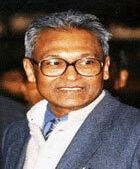
Details
Born in 1937 in the village of Koday in (what is now) Gujarat’s Kachchh district, Pravin Visaria was a demographer and economist. The only surviving child of Meghji and Monghiben, from the age of 10 he attended boarding school in Mumbai. He graduated from Mahavir Jain Vidyalaya, becoming the first member of his family to complete secondary school. After completing a bachelor’s and master’s degree in economics at the University of Bombay, he received the recommendation of his professors and mentors Professors D T Lakdawala and M L Dantwala, and earned a scholarship from The Population Council, New York to join the PhD programme at Princeton University. His PhD dissertation was supervised by Professor Ansley Coale.
In 1963 Visaria returned to the University of Bombay, where he was first Reader and then full Professor. Between 1973 and 1980, he worked at The World Bank as an Economist in the Development Research Centre in Washington DC and in Bangkok, before returning to India. At around this time, when it became clear that he was still just young enough to be eligible, he was asked to recuse himself from the selection committee for the prestigious Dr V K R V Rao Prize. He was awarded the prize for Demography in 1981.
In 1980, he joined the Sardar Patel Institute of Social and Economic Research in Ahmedabad, and in 1983, became the director of the Gujarat Institute of Development Research (formerly Gujarat Institute of Area Planning). He remained there for 13 years, before moving to the Institute of Economic Growth (IEG), Delhi. He was first Visiting Professor, and then, from 1997, Director of the IEG.
Visaria was an empiricist. He believed in impartial, sound investigations of data, and that policy formulations should be based on thoughtful understanding and analyses of the facts. Over his four-decade long career, he made important contributions to the literature on a wide range of topics including population and family planning, migration, infant mortality, employment and child labour. He co-authored numerous articles, reports and books with collaborators and colleagues, former students and perhaps most importantly, his colleague and wife Dr. Leela Visaria, a sociologist and demographer, who also holds a PhD from Princeton.
Six decades after it was done, he is still perhaps best known for his work on the sex ratio of the population of India, published as a monograph of the Census of India. This work, that formed his PhD dissertation, examined the reasons for the unnaturally larger number of males than females in the Indian population. As is well known, in most countries, at birth there is a small excess of males, but this small imbalance evens out at higher ages because male mortality tends to be higher than female. In India, especially in its Northern and North-western parts, the imbalance favouring males had been increasing between 1881 and 1941. Although there was conjecture about the reasons, there had been no systematic analysis.
Using data from a range of sources and subgroups, Visaria examined and then ruled out hypotheses that this imbalance was caused by selective undercounting of women in the census, or by greater “masculinity” in the sex ratio at birth in India1. Instead, he argued that the sex imbalance was most likely due to excess female mortality. His finding that women in the reproductive age group of 15 – 44 years were especially more likely to die than similarly-aged men strongly suggested that this was excess maternal mortality – caused by poor conditions surrounding childbirth, as well as the health effects of frequent childbearing.
Pioneering at the time, this finding is now received wisdom for any observer of India. Visaria had predicted that with improving health facilities and secular reductions in mortality levels, the sex ratio would achieve balance over time. In fact, however, the sex ratio of India’s population in 2011 (1061 males per 1000 females) was nearly identical to that in 1961 (1063 males per 1000 females). This has ensured that examination of the causes and consequences of imbalanced sex ratios and discrimination against women remains on the research agenda, spurred on in no small part by Amartya Sen’s well-known work in the 1990s, arguing that “more than 100 million women are missing” around the world.
In addition to his scholarly writing, Visaria also made important contributions to research leadership and capacity building in India, by mentoring PhD students, serving on appointment and promotion committees, on academic councils for various research institutions, as well as membership of several government committees. He was President of the Indian Association for the Study of Population from 1994 to 1996. From 1991 until his death, he was Chairman of the governing council of the Indian government’s National Sample Survey Organisation. It is in this role that he set in motion another influential piece of work.
The estimate of the number of poor people in a country relies crucially on good data about their income, and how it compares to the threshold of the poverty line. In India, as in many developing countries where it is difficult to measure household income, researchers use measures of consumption instead. The National Sample Survey’s (NSS) “consumption rounds” provide highly respected data on household-level consumption levels, collected through detailed survey questions about the quantities of various foods and non-food items consumed over a particular reference period. Unlike most other survey organisations which use shorter reference periods, the NSS followed a protocol where households reported their food consumption over the 30 days prior to the interview. There had been questions for some time about the wisdom of this choice, because households with limited means who purchase food more frequently may find it difficult to remember purchases over a long recall period. When early experimentation under Visaria’s chairmanship suggested that moving to 7‑day recall substantially raised reported food expenditures, it became clear that this could have large implications for poverty estimates. However, a key problem was the lack of “ground-truthing” – a way to know which estimate was correct.
To address this, Visaria encouraged the NSS to conduct a pilot study in five states during January-June 2000, where sample households were randomly assigned to answer questions using a 7‑day recall period or a 30-day recall period, and these were compared to the “gold standard” of daily visits, with food diaries and daily measurement of food consumed by weight or volume. This led to the unexpected but very important finding that different recall periods are suitable for different categories of foods. This has informed the structure that the NSS uses today – where consumption of cereals, pulses, milk, sugar and salt is measured over a 30-day period, and of other foods is measured over 7 days.
The resulting estimates of food expenditure and the implied estimates of poverty were key elements in “the great Indian poverty debate” that raged during the 2000s. No doubt Visaria would have continued to contribute to this debate, had his life not been cut short by illness in 2001.
- Visaria, P. M., & Visaria, L. (1999). India’s population: Its growth and key characteristics. In V. Das (Ed.), The Oxford India companion to sociology and social anthropology (Vol.1, pp. 184 – 218). Oxford University Press.
- Visaria, P. (2000, June 27). Alternative Estimates of Poverty in India. The Economic Times.
- Cassen, R., & Visaria, P. (1999). India: looking ahead to one and a half billion people. BMJ, 319(7215), 995 – 997.
- Jones, G. W., & Visaria, P. (Eds.). (1997). Urbanization in large developing countries: Brazil, China, India and Indonesia. Clarendon Press.
- Visaria, L., & Visaria, P. (1996). Prospective population growth and policy options for India, 1991 – 2101. Population Council.
- Dantwala, M. L., Visaria, P. M., Mujumdar, N. A., & Sundaram, T. R. (Eds.). (1996). Dilemmas of growth: the Indian experience. Sage Publications.
- Visaria, P. M., Visaria, L., & Jain, A. K. (1995). Contraceptive use and fertility in India: A case study of Gujarat. Sage Publications.
- Visaria, P. M., & Jacob, P. (1995). Child labour in India: Results of a methodological survey in Surendranagar and Surat districts of Gujarat State. Gujarat Institute of Development Research.
- Visaria, P. M., & Basant, R. (Eds.). (1994). Non-agricultural employment in India: Trends and prospects. Sage Publications.
- Visaria, P. M., & Unni, J. (1992). Self-employed women, population and human resource development. Gujarat Institute of Development Research.
- Visaria, P. M., & Jain, A. K. (Eds.). (1988). Infant mortality in India: Differentials and determinants. Sage Publications.
- Visaria, P. (1981). Poverty and unemployment in India: An analysis of recent evidence. World Development, 9(3), 277 – 300.
- Visaria, P. (1980). Poverty and living standards in Asia. Population and Development Review, 6(2), 189 – 223.
- Visaria, P. (1969). The sex ratio of the population of India (Monograph No. 10, Census of India 1961). Office of the Registrar General.
About the author
Sujata Visaria is Reader of Finance at Bayes Business School, University of London. Her research has examined financial constraints and contracting frictions in developing countries, often in agricultural settings. She is a member of the Standing Panel on Impact Assessment of the CGIAR (2021−27), and associate editor at the Journal of Economic Behaviour and Organization (2023-present).
In the sense of the natural sex imbalance at birth being more amplified in India than elsewhere↩︎
In the sense of the natural sex imbalance at birth being more amplified in India than elsewhere