
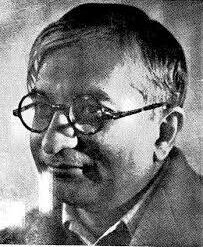
Radhakamal Mukerjee
Early practitioner of economic sociology
By Sharmin Kodaiji
Details
Radhakamal Mukerjee (1889 – 1968) counts among the first generation of sociologists and economists in early-twentieth century India. Born in Berhampore, Mukerjee’s thinking was influenced by the early-twentieth century nationalist movement after the government announced the partition of Bengal in 1905. During this time, the Swadeshi (home manufactures) movement gained prominence, with large sections of the youth attracted to it. His brother, Radhakumud Mukerjee, was associated with the National Education Movement, initiated in 1905 in Bengal as part of the anti-colonial, nationalist response to the educational policies of the British government.
Radhakamal Mukerjee completed his education at Presidency College in then Calcutta. In 1921, Mukerjee was appointed the first Chair of Sociology at the University of Lucknow, when its Department of Economics and Sociology was created. He was instrumental in shaping a unique approach towards the discipline of sociology at Lucknow.
His approach has been characterised as interdisciplinary with Mukerjee often writing about a transdisciplinary approach in the social sciences. He held that the distinction between fields like economics and culture were false as humans and different facets of their existence could not be delineated. The major intellectual influences on Mukerjee were Brajendranath Seal (1864−1938) and Patrick Geddes (1854−1932). Seal taught philosophy at the University of Calcutta and lectured on what he called ‘comparative sociology’ in 1917 (Madan, 2011, p. 20); and Geddes, the urban planner and a critic of Empire, visited India for several years, teaching sociology and civics at University of Bombay. From Geddes, Mukerjee picked up the importance of concepts such as ‘regional planning’, ‘social mapping and charting’, the interconnection between ‘Place-Work-Folk’, or ‘Environment-Function-Organism’, the significance of the concept of energy to sociology, from which were created ideas such as ‘manpower and manday’ (Madan, 2011, p. 21). Mukerjee closely followed the works of American institutionalists such as Thorstein Veblen and Wesley C. Mitchell; and incorporated sociological methods of inquiry and research from Werner Sombart, the historical economist and sociologist, and Ernst Engels. These methods of inquiry are apparent in one of Mukerjee’s first major writings, The Foundation of Economics.
In Foundation of Economics, with an introduction by Geddes, Mukerjee wanted economists to turn their attention back to village society, providing a communitarian (Mukerjee uses the term ‘communal’) approach to economics. He was trying to revive the idea of the self-sufficiency of the village economy – also echoed in Gandhian economic thought – which was lost as a result of Western notions of progress based on market relations, modernisation, and increased urbanisation of the economy. Mukerjee stated there was a ‘relativity of economic life and institutions,’ and a proper study of the ‘the regulative social and ethical ideals of India’ was required, and to observe the way in which ‘economic institutions’ adapted to it (Mukherjee, 1916, p. xix). Throughout his career, Mukerjee was against the uncritical imposition of economic theories emanating from the classical and neoclassical framework upon India. He was especially critical of the individualism of neoclassical economics, which reduced humans to rational actors, devoid of the social and cultural factors shaping their actions.
According to him, the ‘historicocomparative method,’ borrowed from sociology should be applied to economics, thus enlarging the realm of the ‘science of pure economics’ (Mukerjee, 1916, p. xx). The method was the inductive study of cottage and village industries, examining socio-economic data collected from ‘caste [communities] and the joint family,’ including their ‘economico-religious ideas and institutions’ (Mukerjee, 1916, p. xx). Mukerjee undertook laborious field research of industries and their systems of trade, credit and transport, gathering data from artisans and traders in numerous villages.
For Mukerjee, economic development was based on the revitalisation of village life, by removing the separation between the rural and urban, evident in the exploitation of the countryside by the urban economy. He did leave open the possibility of large-scale industrial production in some spheres, but the emphasis was on village-based, cooperative economies. He believed two social institutions were vital to the economic organisation of India. The first was caste, which was the social ideal and formed the community around which artisans were organised. The second was the joint family system, which was the most fundamental unit of economic organisation, as opposed to the individual, viewed as an invention of Western civilisation. This romanticisation of a native Indian social order, resting upon the caste system, a deeply hierarchical social structure, is a problematic aspect of Mukerjee’s work and should be treated as such.
Another important text was Borderlands of Economics, where Mukerjee outlined the relationship of economics with other disciplines like sociology, psychology, anthropology, biology, physics, geography, and others (Sinha, 1992, p. 485). However, it was The Institutional Theory of Economics, published in 1940, that is considered his most important work on the subject of economics. In this text Mukerjee brought out the view that economics’ understanding of the relationship between ‘technological efficiency and biological survival’ was insufficient (Sinha, 1992, p. 487). Rather than considering efficiency as an intrinsic end, it needed to be treated instrumentally. He contended in this text that price economics established the self-interested individual as the ‘norm of practical policy’ rather than trying to integrate the ‘ends of individual in society,’ implying that the individual is not an atomized being but a social being.
Following Werner Sombart, Mukerjee contended that political economy meant the examination of different economic systems, defining it as “[t]he unitary mode of providing material wants, animated by a definite spirit or set of purposes, motives and behaviour, regulated and organised according to a definite plan” (Mukerjee quoted in Sinha, 1992, p. 488). Political economy, or the study of comparative systems, comprised of three branches: (i) Ecological economics or the study of limiting and optimal factors, which comes close to the contemporary understanding of environmental economics (Sinha, 1992, p. 488), (ii) Price economics, which is the study of prices and incomes, and (iii) Institutional economics, encompassing social values such as attitudes, beliefs and traditions, science and culture. It also includes the state, social institutions and organisations, private property, whether custom or competition prevails, ideologies and public opinion (Sinha, 1992, p. 488). In a similar vein, Mukerjee did not agree with Alfred Marshall’s notion of marginal productivity, and believed that an organic view of industrial production was required, i.e. productivity as a cooperative venture. He also applied this cooperative principle to consumption, meaning that people combine their resources and find greater happiness when consumption is shared.
Over his lifetime, Mukerjee developed his views on the interconnectedness of the environment, culture, and the region, influenced by Geddes. He moved from the framework of the individual and ecology to firmly claiming that culture plays a significant role in the creation of ecological relations. In Borderlands of Economics, Mukerjee moved towards the idea of regional balance, as opposed to economic regionalism. He conceived of the region as a dynamic field or ‘configuration’, with an interplay between the natural environment and culture, tending to shift towards a ‘balance’ or ‘equilibrium’ (Madan, 2011, p. 27). The region is not a static field but a complex of interrelations. The field of social ecology therefore involved looking at social structures and functions, and their larger adjustments to the world around it. The task of sociology then becomes an understanding of social processes in this intricate network of interconnections. Sociology is construed as an empirical, positive science, and Mukerjee is focusing on the aspect of social integration (similar to the French sociological tradition), where social space is seen as a ‘constructed, symbolic, moral space’ (Madan, 2011, p. 28).
It is through this understanding of the region, that we can better comprehend Mukerjee’s ideas surrounding regional planning. As nationalist discussions around economic planning gained ground during the 1930s, Mukerjee, in line with his emphasis on the rural, suggested measures to promote activities in agriculture, arguing for a balance between agriculture and industry, while the dominant narratives around planning in India tilted in favour of large-scale industrialisation.
In conclusion, Mukerjee’s views on the scope and task of economics are summed up well in his presidential address to the Indian Economic Association in 1933:
As economics becomes regional, institutional and functional, economic theory must also co-ordinate itself with the concepts of the other social sciences even as in economic practice a problem however specialised cannot be treated adequately in isolation, but with the standpoint and assistance of the various social studies. Indeed, the development of regional, institutional and functional economics as a specialised sociology foreshadows a coordination and unification of all the social studies, as wide-minded as Comte conceived but now strengthened beyond his imagination by the scientific tools of measurement and statistics. The general meeting ground of the social sciences is sociology, and it is by cultivating and acquiring the sociological standpoint that economics will gain in new concepts and their integrated, evaluational application.
Mukerjee, R. (1916). The Foundations of Indian Economics.
Mukerjee, R. (1922). Principles of Comparative Economics, Vol. I.
Mukerjee, R. (1925). Borderlands of Economics.
Mukerjee, R. (1925). Groundwork of Economics.
Mukerjee, R. (1926). Regional Sociology.
Mukerjee, R. (1938). The Regional Balance of Man: An Ecological Theory of Population.
Mukerjee, R. (1940). The Institutional Theory of Economics.
Mukerjee, R. (1942). Social Ecology.
Mukerjee, R. (1943). A Political Economy of Population.
Mukerjee, R. (1945). The Indian Working Class.
Mukerjee, R. (1946). Planning the Countryside.
Mukerjee, R. (1949). The Social Structure of Values.
Mukerjee, R. (1951). The Dynamics of Morals.
Mukerjee, R. (1960). The Theory and Art of Mysticism. Originally published in 1953.
Chaudhuri, M. (2024). Culture and Cultural Policy in Radhakamal Mukerjee and Indian Sociology: Text in Context. Sociological Bulletin, 73(3), 259 – 277.
Madan, T.N. (2011). Radhakamal Mukerjee and His Contemporaries: Founding Fathers of Sociology in India. Sociological Bulletin, 60(1), 18 – 44.
Sinha, D. (1992). Institutional Economics of Radhakamal Mukerjee. Journal of Economic Issues, 26(2), 485 – 492.
Thakur, M. (2011). Radhakamal Mukerjee and the Quest for an Indian Sociology. Sociological Bulletin, 61(1), 89 – 108.
About the author
Sharmin Kodaiji is Assistant Professor at Jindal Global Law School, OP Jindal Global University, Sonipat. Her work looks at the emergence of ‘Indian Economics’ as a specific field of study during the colonial period, by tracing the development of the discipline of political economy in Indian universities and the establishment of formal platforms such as journals and associations of economists in India.