Finding Pastures in a Shrinking Landscape
Rushikesh Gawade studies how the Dhangar pastoralists of Maharashtra sustain their way of life when the landscapes around them are changing, as highlighted by Meryl Garcia.
Details
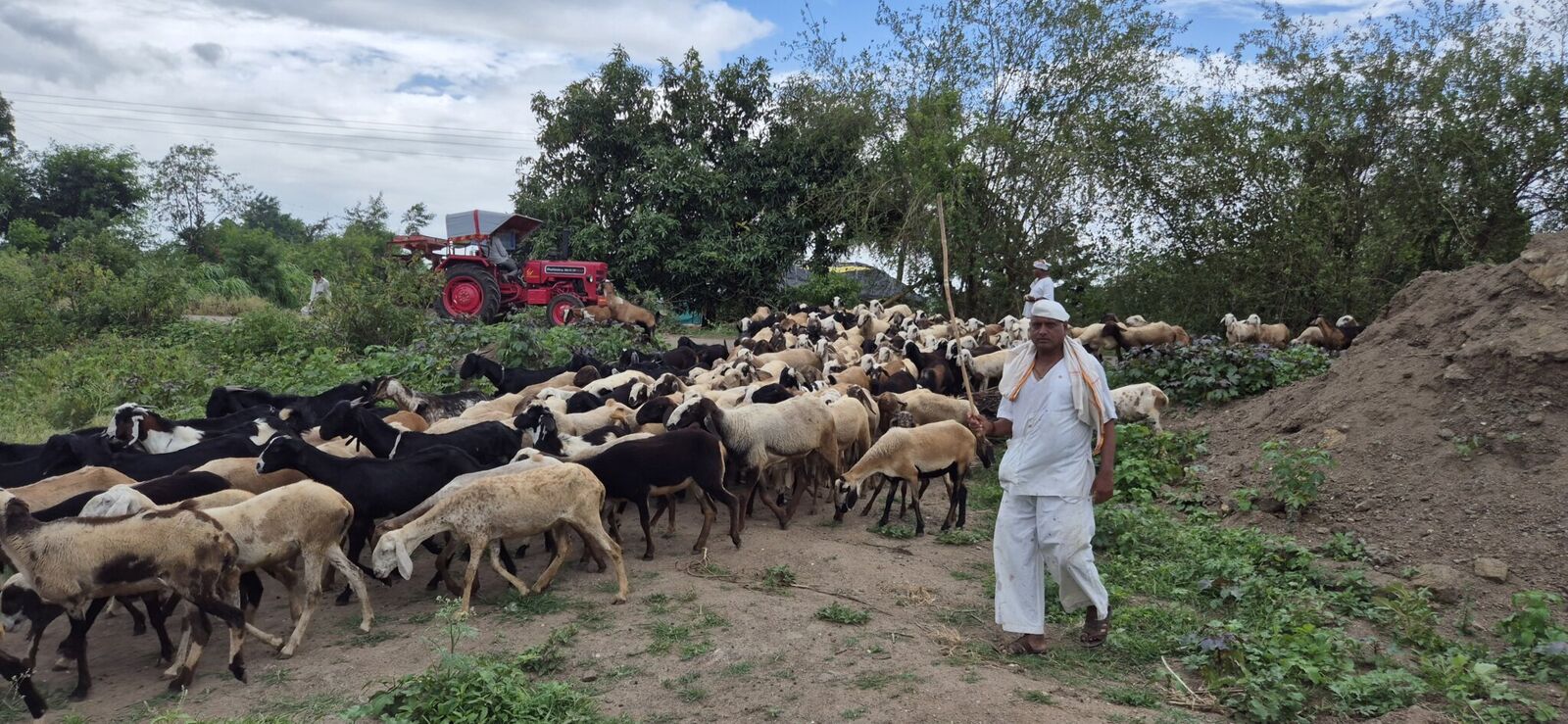
The pastoralists of Maharashtra’s Dhangar community are always on the move. Pastoralist families from this semi-nomadic caste group travel for much of the year with their herds of sheep and goat in search of fodder and water, returning to their Dhangarwadis (settlements) only for a few months. But the landscapes they depend on are changing.
Agricultural expansion and shrinking common pastures have made it harder for shepherds to find places to graze their herds. At the same time, the needs of pastoral communities like the Dhangars are rarely considered in decisions of land governance. As a result, they have to increasingly depend on lands that are not legally designated for grazing.
The United Nations has declared 2026 as the International Year of Rangelands and Pastoralists, bringing attention to these landscapes and communities like the Dhangars that have been stewarding them for generations. India itself is home to around 46 distinct pastoral communities, each with its own way of life. While some are nomadic or semi-nomadic, others practice village-based livestock rearing.
“Over the last few decades, agricultural expansion and irrigation projects have reshaped the landscape in central Maharashtra. With more land being brought under cultivation, the community’s access to common grazing lands has become restricted, pushing some of them to give up mobile pastoralism and take up cultivation within their Dhangarwadis.”
How do pastoral communities sustain their way of life when the land, institutions and livelihoods around them are changing? This is what Rushikesh Gawade, a sociologist at the university’s Ranchi campus, explores through his research. He looks at how the Dhangar pastoralists in central Maharashtra manage their pastures, how their seasonal mobility is organised, and how their lives have changed over time.
Rushikesh belongs to the Dhangar community, although his family stopped practising pastoralism a few decades ago. This shared background offers him some familiarity and easier access to the community he is studying. In sociology, this kind of research where the researcher is both an insider and outsider is called ‘halfie ethnography,’ he explains.
“Over the last few decades, agricultural expansion and irrigation projects have reshaped the landscape in central Maharashtra. With more land being brought under cultivation, the community’s access to common grazing lands has become restricted, pushing some of them to give up mobile pastoralism and take up cultivation within their Dhangarwadis,” explains Rushikesh.
The Dhangarwadis are usually located near grazing grounds along the peripheries of a larger village so that shepherds can access markets and other basic necessities including healthcare. Different settlements have different degrees of integration with the village. Today, some wadis are fully sedentary without any mobile pastoralists.
“You would not see our ancestors sitting around a tea stall,” a community leader told Rushikesh during one of their conversations. “They did not have the time for that. Even if they visited the village, they would make purchases and leave.”
Gavliwada: A case study
During his fieldwork, Rushikesh interacted closely with Dhangar pastoralists in Ahilyanagar (Ahmednagar) and Aurangabad districts. He shares the example of Gavliwada* village, where the impact of changing land use patterns on the lives of pastoralists is clearly visible.
“Sometime during the late 1970s, a branch of the Mula Right Bank canal passed through Gavliwada. By 2022, 2,879 hectares of the village’s 3,108 hectares (around 92%) were brought under cultivation,” he says. Year-round, multi-crop farming is now common, making it harder for the community to access fallow lands. The 23 hectares of designated pasture land in the village have been encroached upon, while forest department regulations restrict access to nearby scrublands.
A shift in shepherding
Over time, pastoral families have adapted to these challenges in two ways. Some have taken to what is known as Wada shepherding, selling off most of their livestock and keeping smaller herds of 20 – 80 within the village while also taking up cultivation. Others continue to maintain larger herds through Raan (wilderness) shepherding, but this comes at a cost as they remain permanently displaced.
Traditionally, shepherds would return to their villages during the monsoon, from Ashadh (the fourth month of the Hindu calendar, usually in June-July) until Diwali. During this period, fodder and water would be available in the fallow lands around the wadis. They would also shear the sheep for wool and sell the lambs in the markets. With the fallow lands in the villages now under cultivation, their herds have to stay away throughout the year.
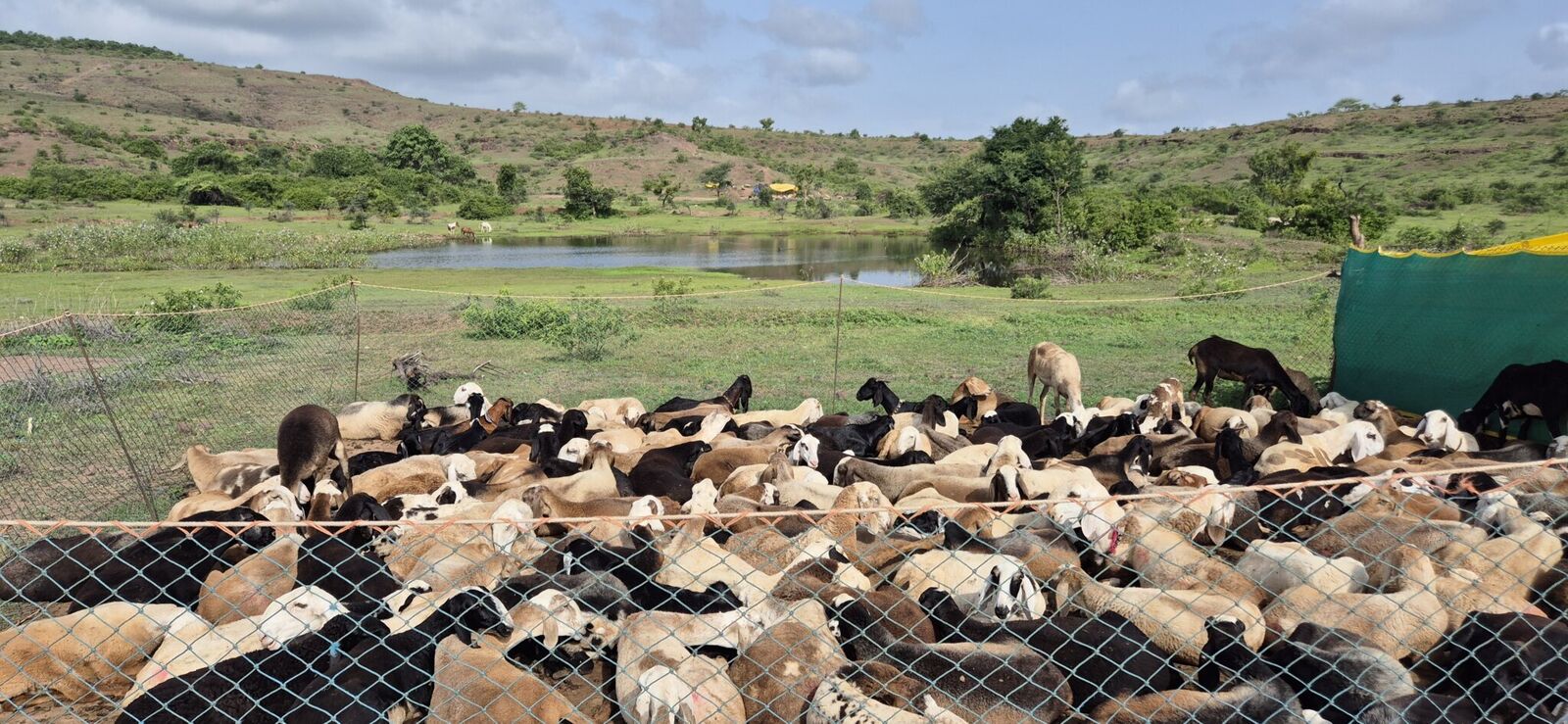
Sheep being kept in an enclosure on a forest land that shepherds occupy during the rainy season after moving out of the Jayakwadi dam’s backwaters.
This shift in shepherding has also led to some interesting changes in how households organise themselves. In some joint households, brothers divide their responsibilities. One brother pursues Raan shepherding, staying away from the village throughout the year, while another brother stays back in the village with the elders and children, looking after the cultivation while the children attend school.
Pandurang*, a mobile shepherd from Gavliwada, is someone Rushikesh spent a great deal of time with during his fieldwork. Although Pandurang was a topper when he was in Grade IV, he was later pulled out of school by his parents to join them in Raan shepherding. Today, his children attend school in the village.
“Earlier, children learnt the ways of pastoralism by growing up alongside their families and travelling with the herds. Today, going to school has become important,” comments Rushikesh.
To really immerse himself in the community’s way of life, Rushikesh accompanied Pandurang and his family, along with two other households, as they travelled with a herd of 500 sheep grazing along the Jayakwadi dam in Aurangabad.
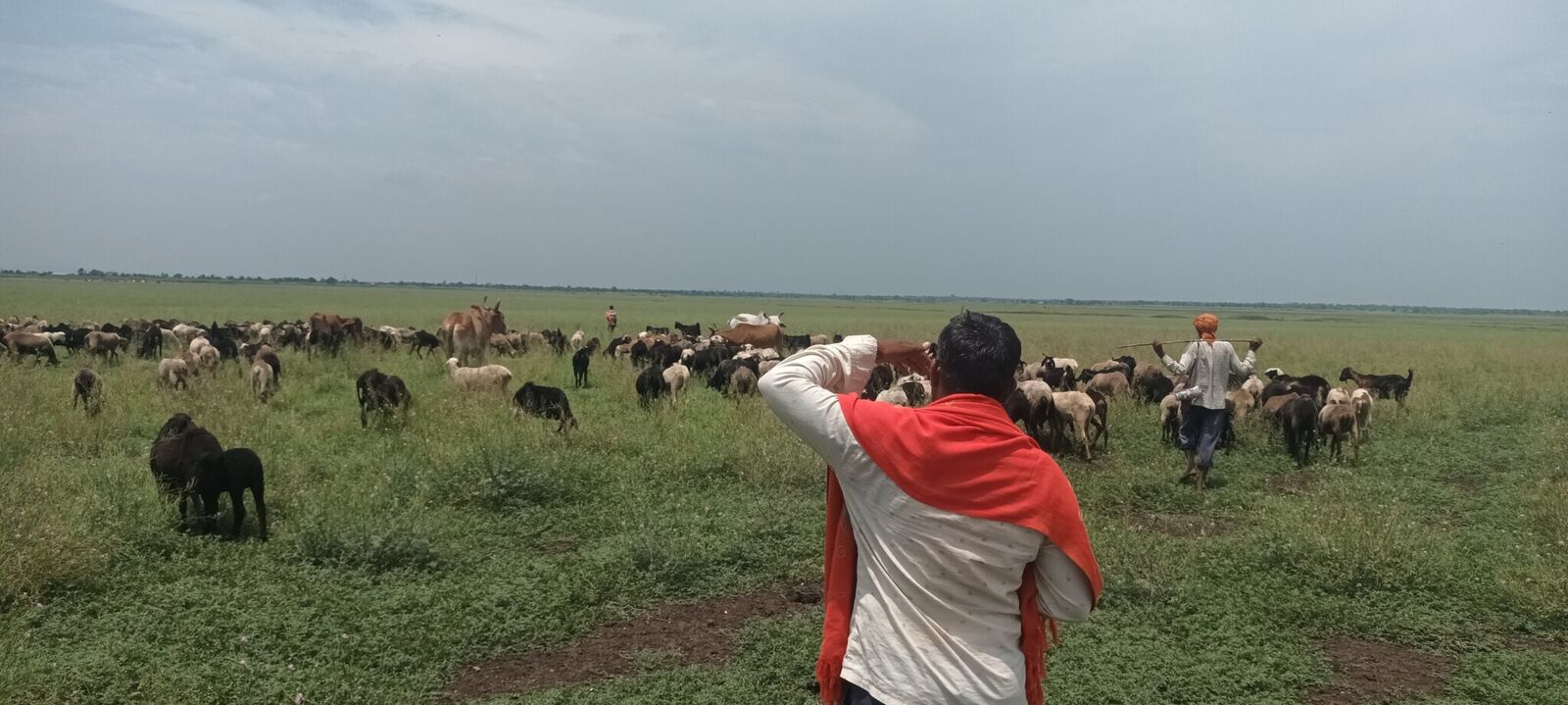
The herd traveling along the area near the backwaters of the dam before it fills up during the monsoon season.
Journeying through the Raan
Rushikesh remembers the first night he spent with the shepherds. The herd had stopped at a cotton field to graze the land after the cotton was harvested. The surroundings were pitch dark except for the light coming from a solar lamp that was mounted on a bullock cart. A small patch of land had been cleared, where the chulha (a traditional hearth) was set up for cooking. The sheep were kept within an enclosure.
Sleeping out in the open was unsettling at first. “It was a very remote area. I was worried about snakes and even the robbers who sometimes target the travelling herd.” But the shepherds put him at ease, telling him to sleep close to the sheep. They believe the snakes don’t come near the sheep.
“Looking at the sheep was soothing,” Rushikesh recalls. As it was a chilly December night, they gave him a ghongdi, a blanket woven from sheep wool, which protects against the cold winds and morning dew.
According to Rushikesh, the herd stays on a farm for approximately two nights. He would spend around 15 days with them at a stretch, return to the village and rejoin them. Over a period of one-and-a-half years, he accompanied them on different stretches along their seasonal migration route, spending around two months with the herd in total.
The shepherds prefer to travel along small streams and rivers to ensure access to water for the herd. During the dry season, they look for fields with wells and water pumps. In the monsoon, the area around the receding backwaters of the dam becomes a place to camp and rest. “They get a bit of leisure time then,” says Rushikesh.
Women play a key role in keeping the pastoral households running. The work is divided along gender lines with the women looking after the cooking, managing the water, and caring for young children and lambs. They also take charge of guarding the herd when the men are away.
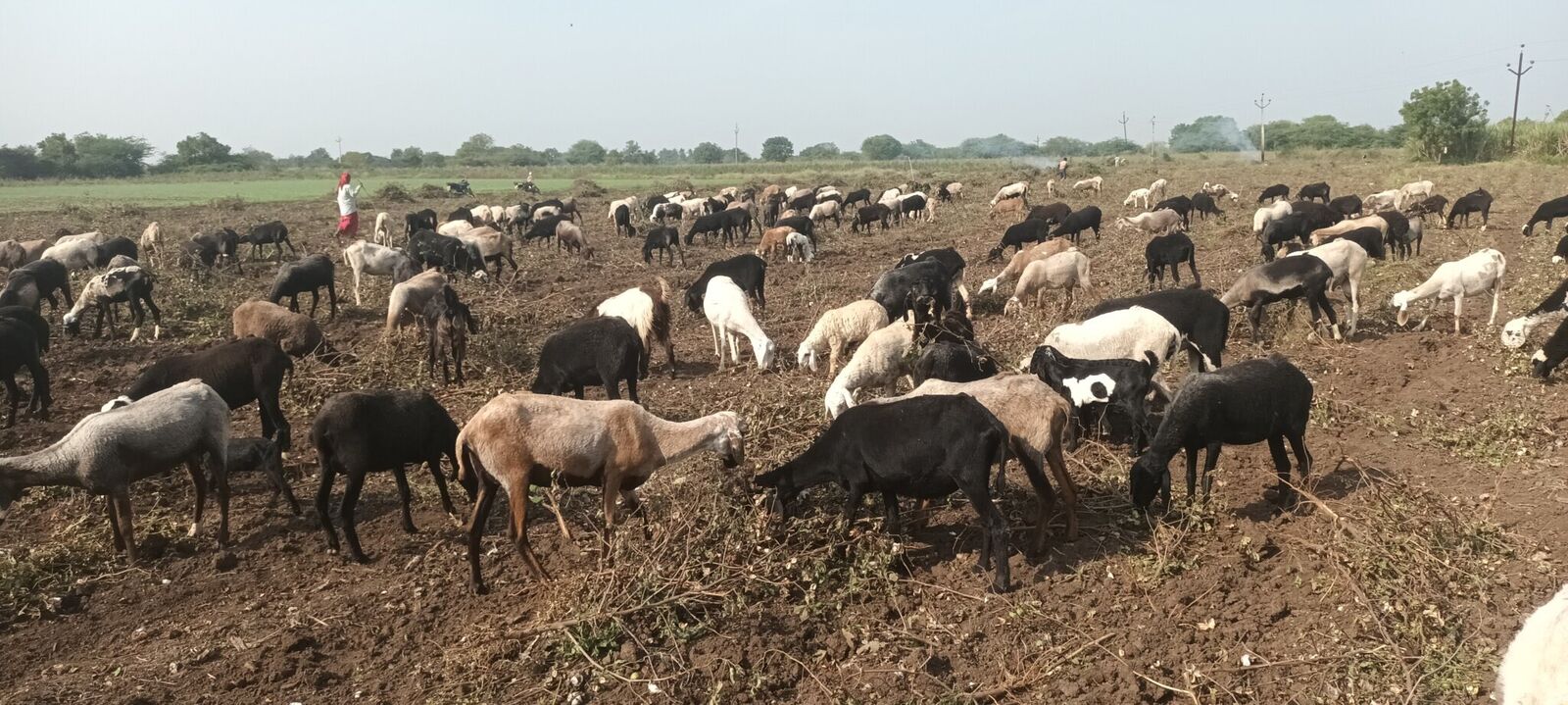
Sheep belonging to the mobile herd grazing on a cotton field after the harvest.
With hardly any fallow lands around and the shrinking of the common pasturelands, the travelling herds have become increasingly dependent on agricultural fields for grazing. Older pastoralists would tell Rushikesh of a time when the relationship between shepherds and farmers were mutually beneficial. Farmers were keen to invite the herd to graze on their fields during their migration to clear the land while the sheep droppings became manure for the soil. Back then, shepherds would sometimes receive grains and even money for penning their sheep on the plot.
But things have drastically changed. With intensive agriculture and farmers looking to grow multiple crops in a year, they have turned to modern farming techniques. This has shifted the balance of power between the shepherds and the farmers. Instead of being welcomed onto the fields, shepherds have to sometimes pay the farmers or offer free labour in exchange for penning their sheep.
Falling off the map
Rushikesh’s research points to the larger problem of how land governance has failed to accommodate pastoral mobility.
“There seems to be little room for mobile herds in the legal imagination. They move across agricultural fields, forest margins, industrial land, and dam backwaters yet none of this movement is on land that is legally recognised as pastures.”
These compounding challenges seem to have consequences for the future of the occupation too. The Dhangar population in Maharashtra is estimated to be around 10 million. But the number of people who are actively pursuing pastoral ways of living is coming down, according to Rushikesh, who is also looking at how the aspirations of younger pastoralists are changing.
“Many young pastoralists are now moving out of the profession. One of the reasons is the constant uncertainty around being evicted from the pastures they depend on. Another reason is a lack of matrimonial matches. They now look for jobs in cities like Mumbai and Pune,” he says.
While some are looking for a way out, others are also finding reasons to return. Rushikesh recalls meeting a college-educated man who has returned to Raan shepherding. With his father and brother taking care of the farm, the young man and his wife have bought more sheep and returned to a mobile life. “My wife and I are educated. But we couldn’t find better opportunities. Moreover, I feel this profession suits my nature.”
*Names have been changed to protect confidentiality.
Image credits: Rushikesh Dhanaji Gawade
About the author
Meryl Garcia is a consultant with Azim Premji University’s Research Centre. She spends her time exploring research projects across the social sciences and uncovering the stories hidden within them.