
Capacity Building
Details
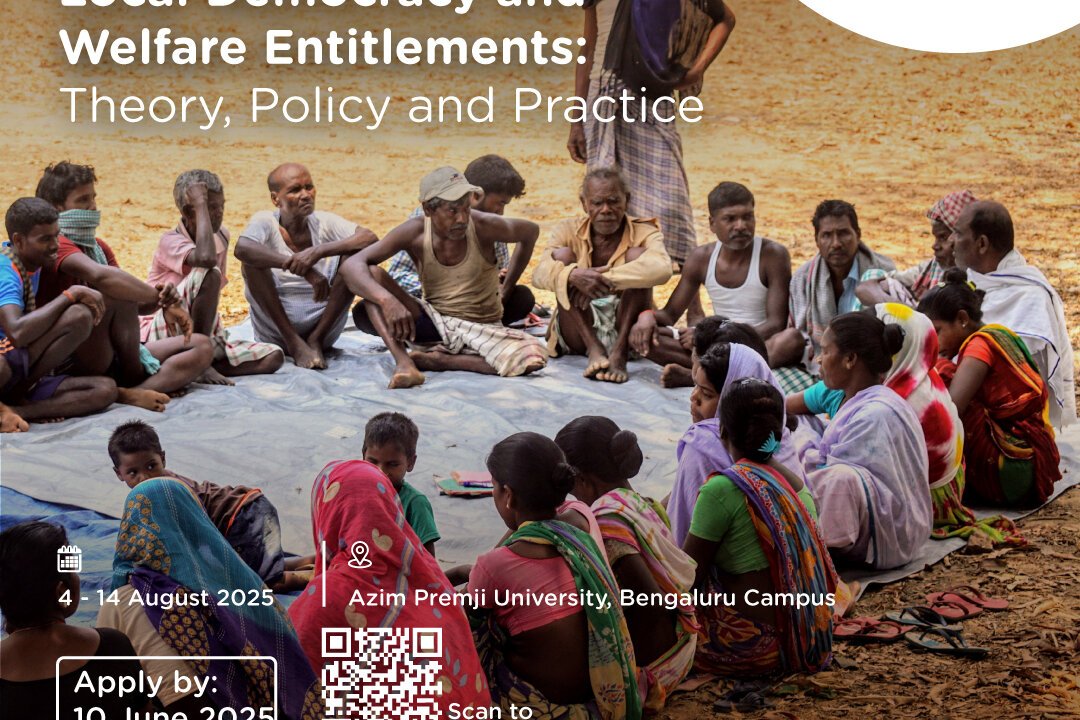
The Centre runs a number of short courses for non-government and government practitioners on local democracy. These are aimed to provide broader perspectives, specific competencies, and skills to pursue its cause at the local and non-local level. There courses are designed for grassroot functionaries, middle management and leadership levels. Customised courses exist on forest rights, welfare-entitlement and local democracy, and overall local democracy policies and practices. Further details can be found here.
The Scheduled Tribes and Other Traditional Forest Dwellers (Recognition of Rights) Act, passed by the Government of India in 2006, popularly known as Forest Rights Act (FRA), is considered a unique piece of legislation which has changed the status of Adivasi and forest-dwelling communities in India from ‘encroachers’ who lived under the threat of eviction, to rightful inhabitants on their traditionally occupied land and custodians of forest resources.
The Forest Rights Act has the potential to restore rights of forest dwellers on 40 million hectares of forest land in 170,000 villages. This covers one quarter of the villages in India. At least 90 million tribal people stand to benefit from recognition of forest rights under the Forest Rights Act. Despite the importance of this legislation, the implementation remains weak, owing to several challenges on the ground.
Azim Premji Foundation currently supports ~20 civil society organisations in Chhattisgarh for facilitating implementation of the Forest Rights Act. The FRA training programme is a capacity building initiative by the Centre for Local Democracy, currently in its pilot phase in Chhattisgarh.
This programme is planned in 2 phases, with the first phase focusing on conducting training programmes for field staff from these organisations, and the second focused on building capacities of government officials and staff involved in the implementation of the Act, so that the full potential of recognition of rights can be realised.
During the course of a 3‑day training for the field staff, participants learn about the history of the legislation, the process for different rights such as Individual Forest Rights, Community Forest Rights etc., as well as engage in activities such as GPS mapping of forest boundaries, holding a Gram Sabha meeting and preparing a nazri naksha.
The CLD’s work aims to create a conducive ecosystem for local democracy by building capacities and showcasing successful interventions.
People Trained till December 2024
- 32 Partners
- 40 Master Trainers
- 488 Field Members
Intensive, Large-scale Capacity Building in Jharkhand
The Centre for Local Democracy, in collaboration with the Philanthropy unit of APF has initiated a large-scale capacity building exercise in the state of Jharkhand. The experiment hopes to significantly improve the quality of training in the state, which is one of the most backward in the country. The interventions are expected to improve the performance of the Gram Panchayats and Gram Sabhas of Jharkhand, regarding Gram Panchayat Development Plan, National Rural Employment Guarantee Scheme, and Forest Rights Act.
Interventions
- Training Content: Development and delivery of training modules for field-level cadres working in local democracy and welfare space.
- Training Materials: Creation of detailed session plans, training modules (2÷3÷5 days), and trainer’s manuals with customization as needed.
- Training Delivery: Implementation of a cascading model with three layers/phases:
- Induction manuals for new partners.
- Manuals for existing Panchayat facilitators and Master Trainers.
- Manuals for community leaders to promote participatory methods and address welfare rights and issues through collective decision-making and dialogue.