
Saving the Silence
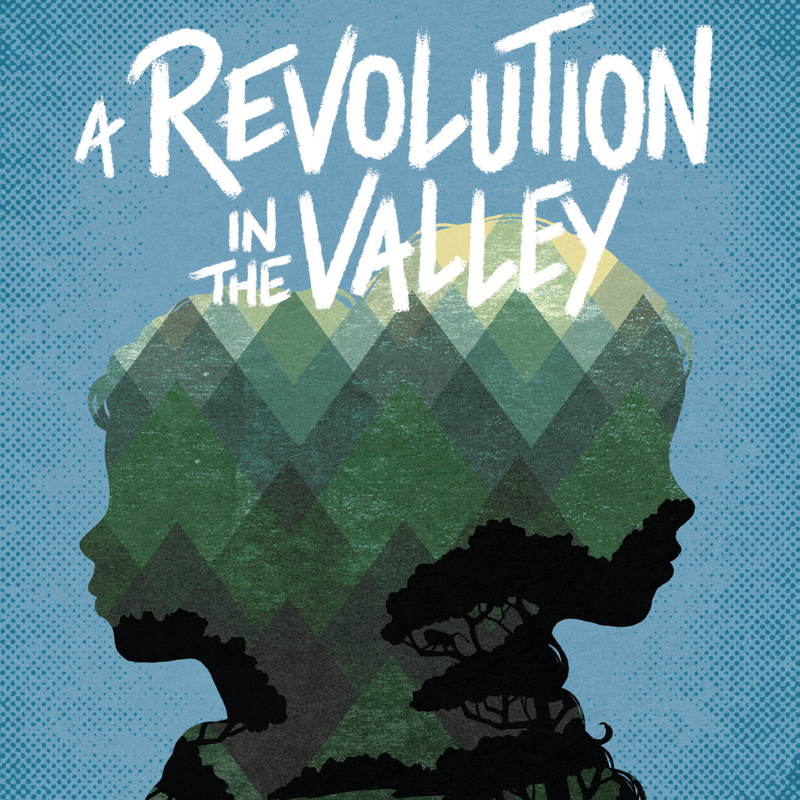
Book Title: Chronicles of Courage: A Revolution in the Valley
Author: Bijal Vachharajani
Publisher: Duckbill (paperback, ₹299)
Reviewed By: Aditi Patil
Details
On the eighteenth page of Bijal Vachharajani’s A Revolution in the Valley, Jenny wonders what exactly the lion-tailed macaques need to be protected from. That innocent question stayed with me. In many ways, it contains the entire careers of conservationists like me. Protected from a dam? From disappearing forests? From governments that regard ecological destruction as an acceptable cost of development? Or from the belief that forests, rivers and other species must continually justify their right to exist?
Published as part of Duckbill’s Chronicles of Courage series, which focuses on post-independence history as experienced by ordinary people and children, the novel revisits the Silent Valley movement (1973−1984) through the lives of two teenage girls, Jenny and Teesta, who learn that they can question their worldview and find their place within a larger public struggle.
Beginning in 1978, the story unfolds through letters between Jenny in Palakkad and Teesta in Bombay. Jenny lives close to Silent Valley, where a proposed hydroelectric project threatens the rainforest and the Kunthipuzha river. Teesta watches Bombay’s mangroves being gradually swallowed by construction.
Although the story is set before I was born, I enjoyed reading their letters. Much of their school life felt instantly familiar to me as a child of the 1990s. Passing chits in class, being separated for making too much noise and giggling, borrowing books from libraries, eagerly awaiting letters and treating magazines as gateways into a larger world were all wonderfully relatable. The postcards, library cards, notes and illustrations scattered through the book add enormously to this experience. They make the reader feel as though they are looking through a box of Jenny and Teesta’s memories. I especially loved the letters hidden inside library books, which capture the secrecy of teenage friendships.
The historical setting is carefully handled. The novel begins soon after the Emergency and moves through a period of political and social change, including India’s 1983 Cricket World Cup victory. These references place the Silent Valley struggle within a wider conversation about democracy, dissent and citizens’ right to challenge decisions made in the name of progress. The movement opposed a hydroelectric project on the Kunthipuzha and became a landmark conservation campaign before Silent Valley was declared a national park in 1984.
Vachharajani’s careful research comes through in the book, as readers encounter Sairandhri Vannam, the lion-tailed macaque, the forest’s biodiversity, and the bureaucratic processes through which environmental decisions are made. Even words such as “clearance” and “committee”, which might sound dull to a young reader, acquire meaning as they are translated into actions on the ground.
The series editor has written that Vachharajani interviewed people who remembered growing up near Silent Valley in the late 1970s and early 1980s. That attention to lived detail is visible in the food, books, school routines and regional language references. Scientists and conservationists such as Salim Ali and Madhav Gadgil appear at meaningful moments, but environmental protection is not reduced to the work of a few famous experts. Poetry, journalism, science, political will and public protest all matter.
The pairing of Kerala and Bombay is especially effective. Silent Valley represents a visible confrontation, with a proposed dam threatening an ancient rainforest. Bombay’s mangroves reveal a slower form of erasure. Teesta describes mangroves as an “in-between” place, and I loved that phrase. It is ecologically accurate, but it also sounds exactly like something an observant teenager might say. Mangroves exist between land and sea, yet adults often treat them as empty land waiting to be developed. Vachharajani communicates this ecological idea while remaining convincingly inside a young person’s mind.
Jenny and Teesta experience friendship, jealousy, embarrassment, puberty, family tensions and uncertainty about their futures. Their concerns move naturally between forests and friendships, politics and popularity. I particularly enjoyed metaphors such as the railway crossing gate opening like a crocodile’s mouth. The writing is playful without making the girls sound like adults pretending to be children.
The novel also treats family difficulties sensitively, especially the tendency of children to blame themselves when parents separate. Its observations about patriarchy are similarly understated. “Does Kerala want its girls to be boys too?” In raising this question, the novel captures the contradictory expectations placed upon young women: to be intelligent, but not too assertive; ambitious, but still obedient.
Teesta’s ambition to become a journalist is especially significant. Her rejection from the editorial board of Duniya, her school magazine, felt painfully relatable. Anyone who writes has experienced the early kind of rejection that feels like a judgement on one’s entire ability. When she is later published in a magazine she admires, her achievement feels like a personal victory.
At its heart, the book asks: what counts as development, and who gets to decide? Why should irreversible destruction become acceptable simply because a project is labelled progress? Why must a forest prove its economic value while a dam is presumed beneficial?
The novel is not without flaws. The large supporting cast, shifting letters and quantity of historical information can occasionally make the narrative feel crowded, especially for younger readers. At a few points, the environmental message is stated more directly than necessary, leaving less room for readers to reach their own conclusions. Even so, the warmth of the friendships and the liveliness of the period details prevent it from becoming overly didactic.
Children today inherit ecological crises they did not create, along with a public culture that often alternates between denial and despair. A Revolution in the Valley offers them a different inheritance, the memory of people who researched, organised, wrote, protested and changed a political decision. It shows that decisions presented as inevitable can still be questioned.
I finished the book feeling nostalgic, entertained and hopeful. It reminded me that children do not need to wait until adulthood to ask difficult questions. Sometimes a revolution begins with a child wondering what exactly a monkey needs to be protected from.
About the Reviewer:
Aditi Patil holds an MPhil from Cambridge and has co-founded the research organisation ‘Conservation indica’. She has a decade of conservation research experience in India and is the author of Patriarchy and the Pangolin.