
Get Nerdy about Nature
Titles: From Sea to Sky: Hidden Stories of Nature’s Science and From Root to Rain: Hidden Stories of Nature’s Science
Author: Sneha Verghese
Illustrator: Ishan Trivedi
Publisher: Hachette (paperback, INR 499 each)
Reviewer: Meghaa Gupta
Details
Nature is full of curiosities, and in this series, author Sneha Verghese plumbs the depths of the Earth and soars high into the sky to pluck out an eclectic collection. Each book is made up of twenty-five facts narrated through short stories followed by a narrative non-fiction section. For instance, From Sea to the Sky opens with a story about the symbiotic relationship between a clown fish named ‘Funny’ and a carnivorous sea anemone, followed by a short section on deadly sea anemones that have traits of both plants and animals. Similarly, From Root to Rain begins with a story of fourteen-year-old Maria and her family of poor farm labourers in Ireland. It’s 1845 and things are not looking so good. The potato crop has failed and starvation is setting in. This gloomy tale is followed by an account of potato blight that caused a severe famine in Ireland during the nineteenth century. The story on potato blight reads more like history than science, which I suppose is a reminder of how knowledge is essentially interdisciplinary and what is branded as ‘nature science’ can be a feast with assorted delights.
Stories are an interesting way of approaching non-fiction, particularly for children. Infusing lively storytelling into facts can make them come alive for young readers in a way that a more straightforward narrative approach may not. Yet, balancing fact and fiction in such storytelling to avoid one from overshadowing the other is a fine art. Reading these books was an exercise in understanding this.
While the writing is competent, in an effort to storify facts, the author often anthropomorphises the natural world. This gets repetitive and feels quite stilted at times, especially when even gases and bacteria are personified! For instance, in a story titled ‘Trapped for the Larger Good’, ‘nitrogen’ is portrayed as a somewhat standoffish character who is refusing to ‘mix’, making the plants worry because they can only absorb ‘him’ when ‘he’ joins with hydrogen to form ammonia, and oxygen to form nitrates or nitrites. While there is certainly a streak of imaginative inventiveness in this, I wondered whether it might be somewhat juvenile for the middle-grade readers of these paperbacks. What I found myself gravitating towards was the narrative non-fiction section at the end of each story, which cuts to the chase and sets the context nicely.
The pieces in these books are a compilation of columns that the author wrote for the Young Hans page of the Hans India newspaper, which possibly explains why there is a certain uniformity to the telling, but no apparent guiding order to the pieces. So, one minute you’re reading about nitrogen and the very next you’ve moved on to the earthquake-detecting powers of the peculiar-looking star-nosed mole. While I didn’t mind the unexpectedness — it was kind of fun, really, to not know what would come next — in hindsight, I thought the pieces could have been ordered thematically and put into one instead of two books.
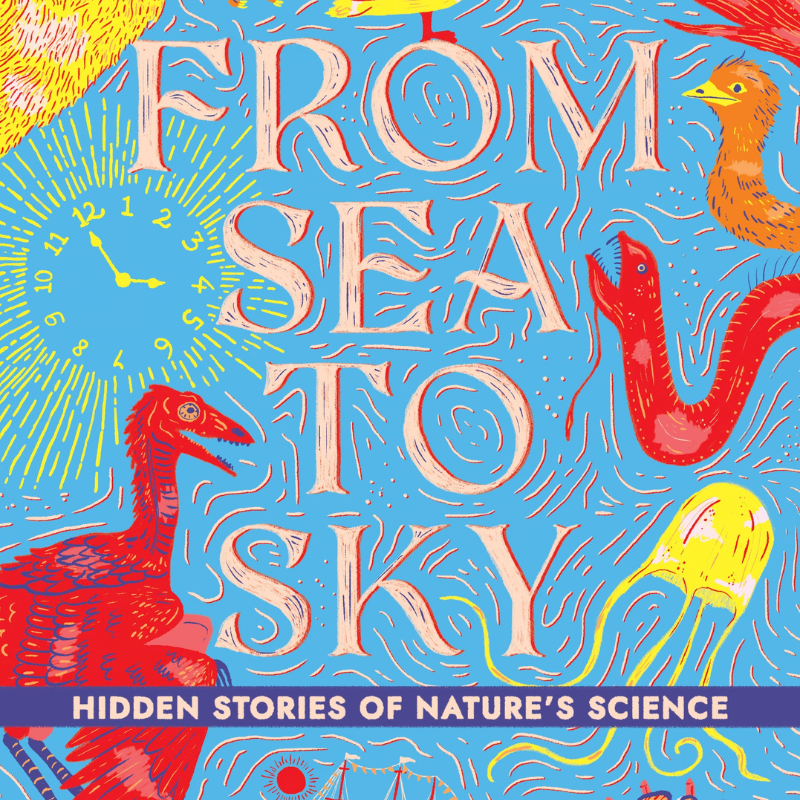
A special mention must be made for Sharanya Kunnath’s stunning cover illustration and design that make the books truly stand out on a shelf. In fact, in recent times, Hachette’s book covers have generally been quite good, which is always an asset in an overcrowded market.
About the Reviewer:
Meghaa Gupta works in children’s publishing and co-edits the Nature Writing for Children newsletter. She writes a column on plant histories for The Hindu Young World.