
Same Experiments, New Story
Molecular biology workshops are nothing new to Beena DB and Krishna Deepak, but this time they chose to follow a completely different approach, as highlighted by Nandita Jayaraj.
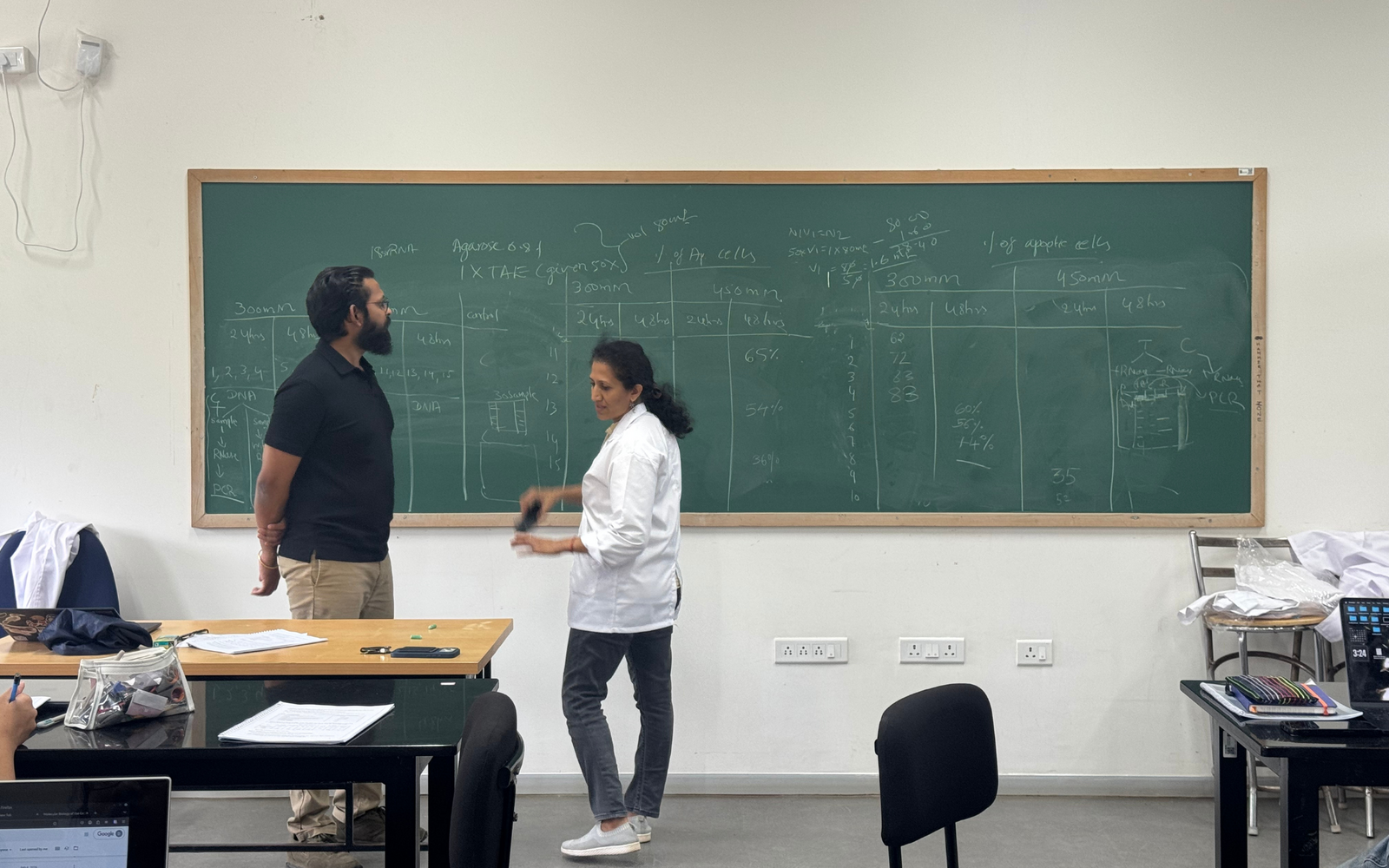
Details
From July 13 to 18, biologists Beena DB and Krishna Deepak conducted a workshop for 35 students coming from different parts of the country. A cursory browse through their lab manual revealed nothing new — the same old cell and molecular biology techniques that are essential to the toolkit of life sciences researchers today. However, infused throughout this basic structure was something that only scientists usually get to experience: an exciting possibility of discovery.
The quality of practical training in science varies from college to college, and most undergraduate students of science finish their degree woefully underprepared for research. To address this gap, the National Programme on Technology Enhanced Learning (NPTEL) conducts the occasional laboratory workshops for interested students. Two years ago, Beena had done an online workshop with NPTEL where she demonstrated how easily available material like boiled chickpeas can be used to observe the working of the cell membrane’s lipid bilayer. The following year, in 2025, she teamed up with her colleague Krishna Deepak to conduct a similar workshop, but this time on campus and for a full week. Forty-seven participants from various colleges in the country were accommodated at Azim Premji University’s Bengaluru campus. “Many of them hadn’t got the chance to perform these experiments in their colleges,” said Krishna.
The workshop covered topics such as microscopy, DNA isolation, gel electrophoresis, polymerase chain reaction (PCR), chromatography, BLAST and SDS-PAGE — all techniques and tools that have underpinned some of contemporary biology’s most important breakthroughs and, thereby, find a presence in most college biology syllabi. The workshop was a success and NPTEL requested the duo to repeat the exercise this year.
While enthusiastic to give it another go, they decided it was time for this iteration of the workshop to evolve.
Upping their game
Typically, each experiment is tackled separately, successively ticked off from the checklist over the duration of the course. A student who has gotten the chance to perform these experiments may finish their degree (or in this case, a workshop) with an overall sense of familiarity with the protocols. However, without knowledge of a context and thread binding each experiment to each other, their memory is likely to quickly dissipate with time, and before they know it, they are back to square one, having to re-learn the processes from scratch at the next stage of their education — perhaps at an internship or on the job. How could they break biology students out of this pattern, the biologists wondered.
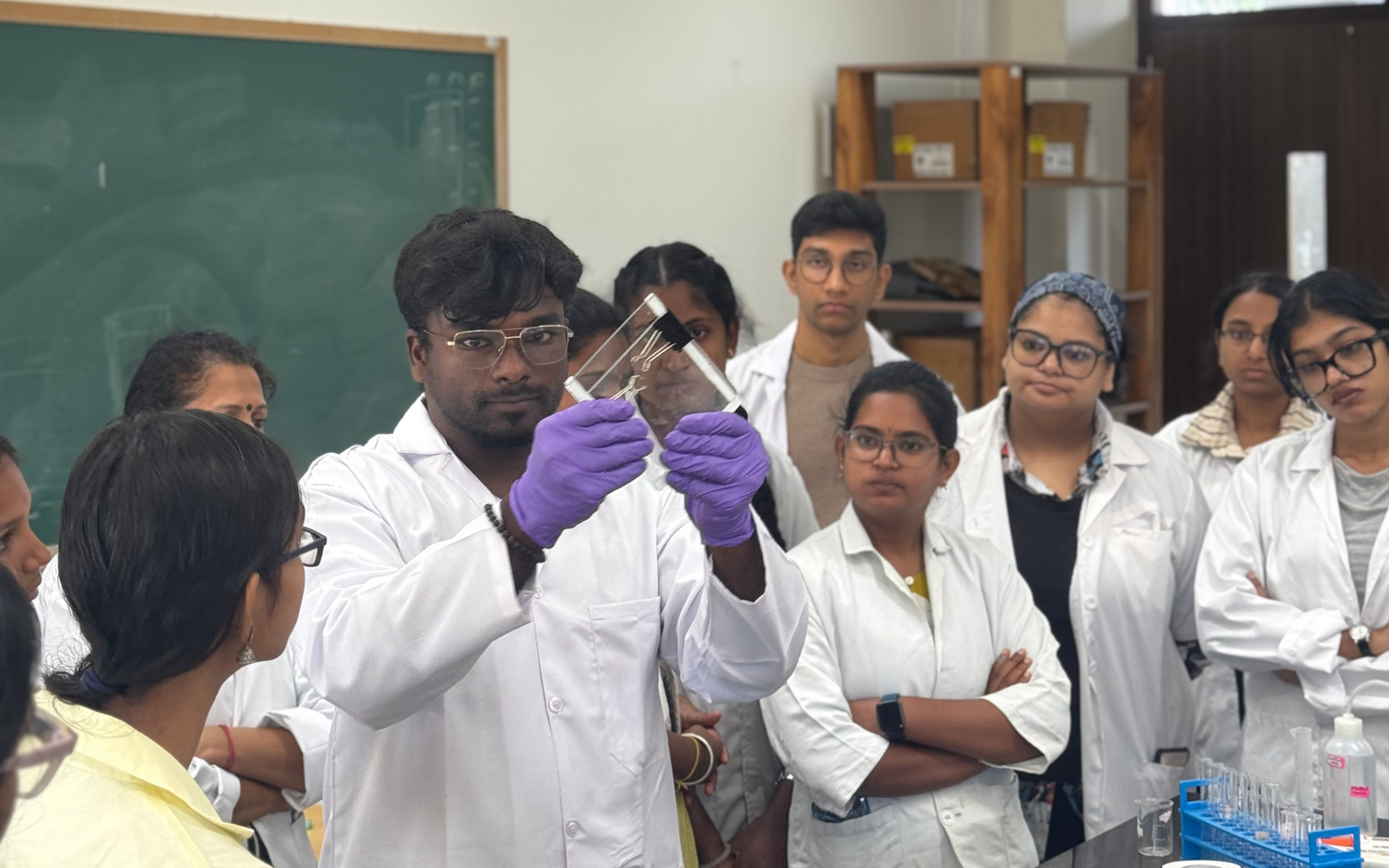
Academic associate Janaki Raman demonstrates the SDS-PAGE set-up to students.
“We decided to have a unifying theme or system where we not only teach them how to do experiments, but also how those experiments help us address a question,” said Krishna. The question they landed upon was: How do plants respond when you subject them to stress? The subject of their study would be onions or, more specifically, the rapidly dividing cells from growing onion roots. Onions were immersed in a salt-heavy solution for a prolonged period and over the course of the week, participants observed the effect of this salt stress on the cells from its root tips.
They did this through a series of experiments, starting with microscopy to record visible changes at the tissue and cellular level. To examine the impact on the genetic level, they proceeded to extract DNA from salt-stressed onion root tip cells and subsequently, ensured the quality of this isolated DNA by a process called agarose gel electrophoresis. Extracted DNA was subjected to polymerase chain reaction (PCR), a technique that can help amplify specific sections of DNA. Participants were introduced to the concept of gene expression and how stress conditions can cause some genes to become hyperactive and others to wind down.
Finally, they tested what was happening at the protein and phytochemical levels, through chromatography and SDS-PAGE. Organisms are known to increase or decrease the synthesis of specific proteins, or resort to special metabolic pathways to cope with stress. Alongside the “wet lab” side of the workshop were a few sessions where the bioinformatician Krishna demonstrated to them relevant computational techniques such as primer design and BLAST searches, which have become vital techniques to aid research in the life sciences.
A new approach
“Research is not just about knowing how to do any given technique, but also about understanding how it fits within a coherent project,” according to Krishna. He believes that biology education must also expose students to the planning that goes into experiments and deciding which one to perform when. “The objective of this workshop was to give them a little flavour of real research.”
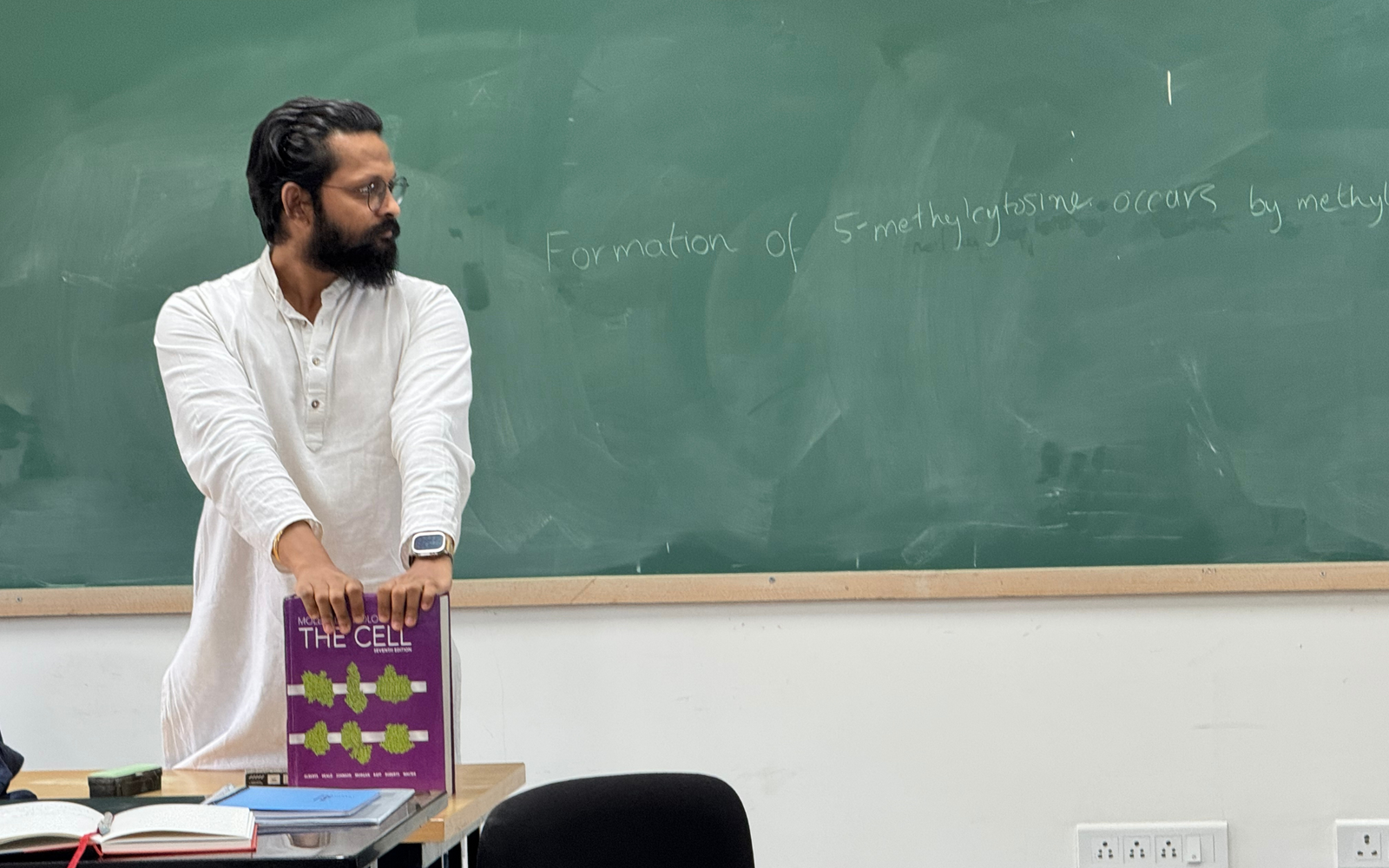
Krishna Deepak conducts a session explaining the relevance of BLAST searches for analysing genomes of different species.
This model of teaching science — sometimes called Course-Based Undergraduate Research Experiences (CURE) — has been explored globally for at least a couple of decades now. It was a response to the understanding that exposure to research is immensely beneficial to undergraduates, and the simultaneous reality that internships and apprenticeships were not accessible to most students of science. CUREs help navigate this by bringing research into the classroom. “CUREs involve whole classes of students in addressing a research question or problem that is of interest to the scientific community,” says one paper about this approach. Krishna elaborated: “Rather than just teaching them the techniques, CUREs teach students to use them within the context of a research project. So now they can see how each experiment connects with the research question.”
There was no existing protocol for such a workshop available anywhere, so there were months of trial and error before Beena was able to finalise a manual of experiments for workshop participants. Moreover, getting a whole class to individually try their hands on molecular biology techniques like gel electrophoresis can be an expensive affair. Fortunately, Beena is well-versed in the art of being resourceful. Aided by the young research associates who work with her in the biology lab, she was able to produce customised versions of the setups that are significantly cheaper than the ready-made apparatus available in the market. For example, they used the 3D printer and the laser cutter from the physics laboratory to replicate 15 sets of gel casting plates for SDS-PAGE apparatus for INR 8,000. The readymade setup costs up to INR 30,000 a piece!
No concrete answers
While contemplating a theme for the workshop, Krishna was immediately drawn to apoptosis, or programmed cell death, a topic he teaches to his undergraduate students every year. Apoptosis is a critical process that helps organisms get rid of old, damaged or unwanted cells. “I thought it would be very nice if we can actually show cells undergoing apoptosis,” he said. He took his idea to Beena, who promptly began test experiments to identify an appropriate biological system to study this.
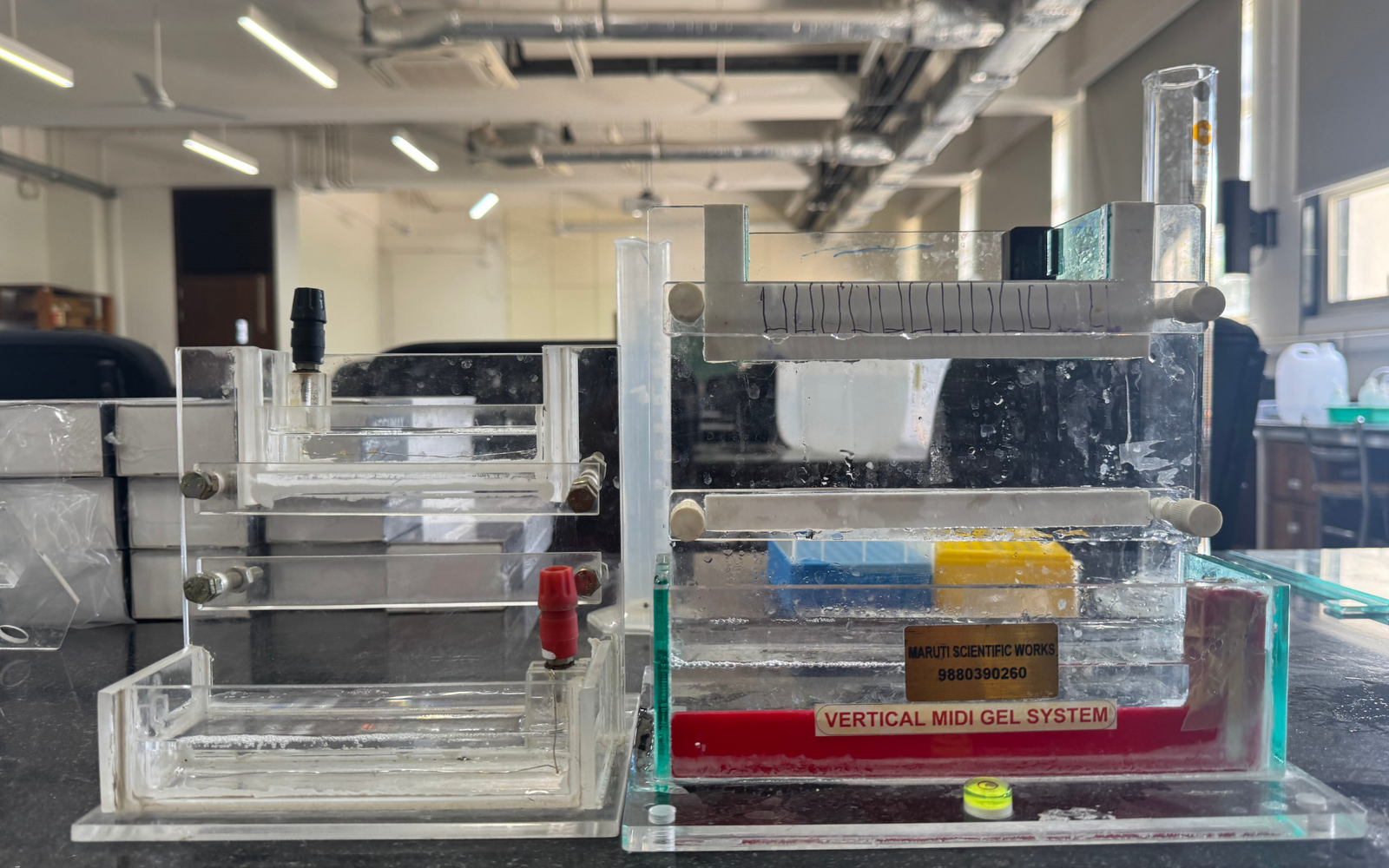
Beena’s customised SDS-PAGE setup (left) next to the more expensive readymade one.
At first she tried fungal cells, but this didn’t work out. That’s when she thought about onion root tips, which are popular in biology labs to view dividing cells, as their nuclei are clearly visible under a microscope. This, supposed Beena, might make them good candidates to witness apoptosis taking place. She asked Janaki Raman K, her academic associate, to keep onions for rooting and subject them to salt stress by immersing them in saline water. If they were lucky, they would be able to observe apoptosis in the onion root tip cells.
“Stress in plants is a very complex process,” stated Beena. “Different plant systems respond in different ways to different kinds of stress. What we are trying to find out is whether they undergo apoptosis when the cells cannot tolerate the damage.” Before long, the group started making interesting observations. “When we looked at the onion root cells, we saw breakdown of nuclei, sort of blebbing of the nuclear membrane, DNA laddering in the agarose gel… these are all common signs of apoptosis,” noted Krishna.
To confirm what they were seeing, they began scouring literature on apoptosis in plant cells. That’s when they realised something surprising. “We found that there was hardly any literature on apoptosis in plants!” he said. “There are some studies reporting apoptosis-like phenomena in plants but the key enzymes responsible for apoptosis in animal cells are absent in plant cells.”
Takeaways
Despite the uncertainty of the topic they chose and the added effort into designing the workshop (preparations started as early as in December), Beena and Krishna agree that this was a worthwhile exercise. “We were asking students to explore a research question which does not yet have a concrete answer. We really did not know what their experiments would throw up,” said Krishna.
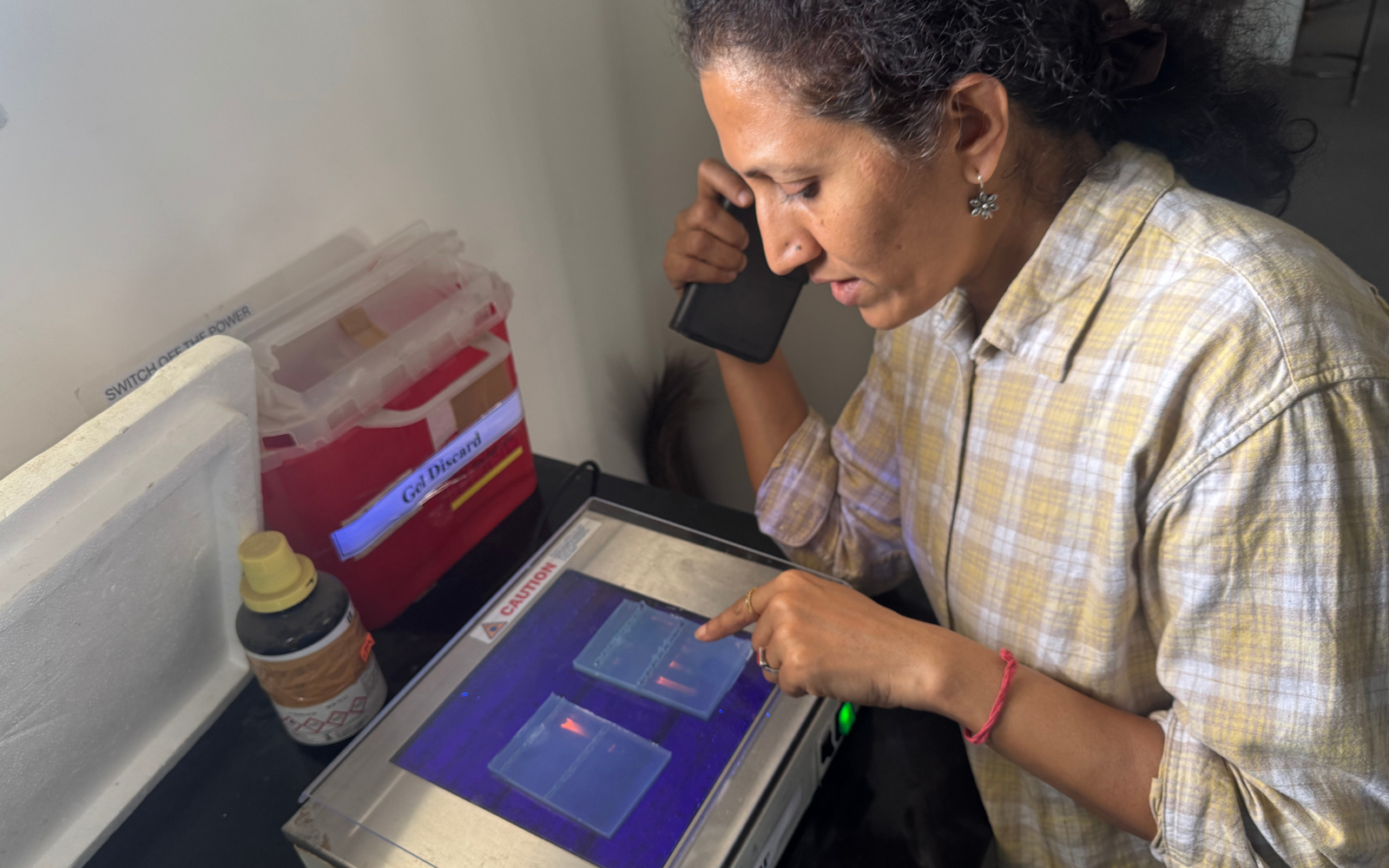
Beena examines the phenomenon of DNA laddering observed during gel electrophoresis. This is one of the signs that apoptosis is taking place.
So did they see anything new? “They actually got some spectacular degraded nuclear membranes… even I had not seen this at that level,” he confessed. Both Krishna and Beena believe that results of these experiments can reach a stage where they are publishable. “Obviously this needs to be repeated, refined, and we can add more techniques,” he said.
For Anushree, an undergraduate student of biology studying in Nagpur, the workshop was a way to consolidate her grip on practical biology as she pursues her goal to start a biotechnology firm just like her role model Kiran Mazumdar Shaw. “I’m very good at theory… at least I believe that,” she smiled. “But the connection between experiment and theory, that was not there before. And I can feel it building up a bit.”
CURE-based workshops such as these align seamlessly with the pedagogical approach followed by the science groups at the university, where the experimentation and context are just as important as theory. Beena and Krishna are heartened by the response from this cohort of workshop participants. “As far as our own research curiosities are concerned, and as a tool for better pedagogy, I think this workshop came together well. The sample size is still too low to comment, but my personal feeling is that the engagement was more pronounced this time around.”
Image credits: Nandita Jayaraj
About the author
Nandita Jayaraj is a science writer and communications consultant at Azim Premji University. She may be contacted at nandita.jayaraj@apu.edu.in