
Mapping India’s Realities: Insights on Society, Development, and Environment
Our undergraduate students explore the vast diversity of historical, cultural and linguistic aspects that define Indianness.
Campus
Bhopal
Details
An actor in a popular Malayalam movie (Varane Avashyamund) said, “Travel. Travel a lot. But once in a while, travel back to your roots.” This probably sums up why we have the Understanding India courses as part of the Common Curriculum at Azim Premji University.
Ever wondered why History is important to understand the present? Or who is an Indian (probably like Gogol Ganguli in the movie Namesake?). How has the subcontinent evolved across its geography, geology, and territory? Who are the people who live here, their culture, and the larger questions around population and inequality? What structures exist and organise Indian society?
With these courses,
- Students engage with significant aspects of our pasts, to see how these relate to the present of India in Understanding India 1: The Many Pasts of India’s Present.
- Students explore identities and belonging in the context of contemporary India in Understanding India 2: Who is an Indian?
- Students engage with numbers and data to acquire a statistical understanding of some of the key issues in the Indian context in Understanding India 3: The Measure of India.
The Measure of India is the third course in the series that aims to introduce students to the use of quantitative and scientific methods to make sense of and engage with important contemporary issues in the Indian context. It focusses on three particular aspects of development, i.e., Economy (income, spending, and employment), Public Health and Nutrition, and Ecology and Environment.
Project exhibition
On 12 Nov, our students exhibited their projects based on these three major themes guided by Achyut Kumar Banerjee, Saswata Guha Thakurata and Sukanya Bose, faculty members at the University.
Exhibition Highlights
- 141 Undergraduate student participants
- 27 Groups
“It was my first poster presentation, and I felt a mix of excitement and concern about how we would organise everything on time. But by the end, our teamwork was strengthened, our coordination had improved, and it gave me greater confidence for future presentations.”
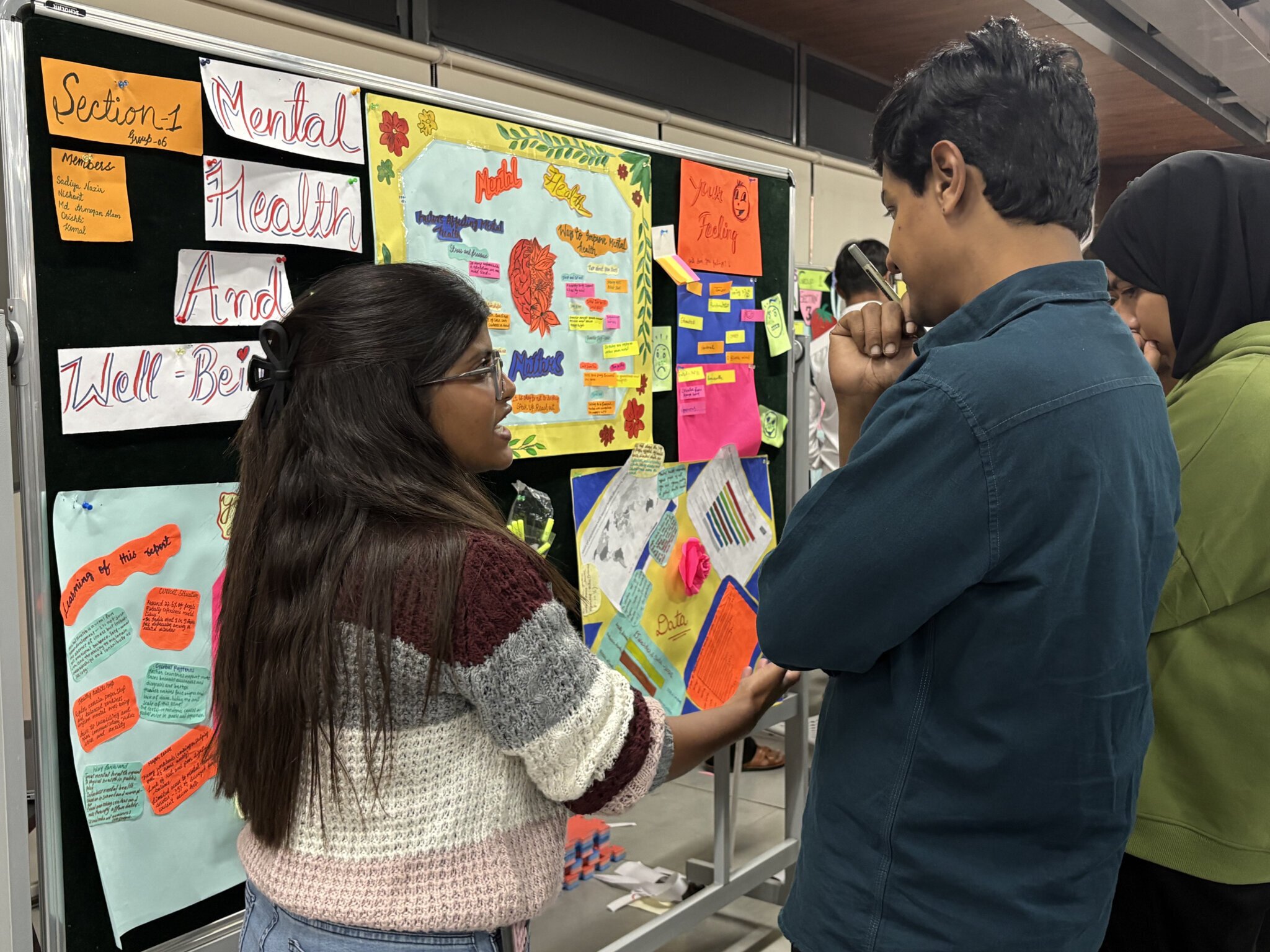
Explore some of the pressing issues from contemporary India chosen by the participants, based on which they designed posters and presented their insights.
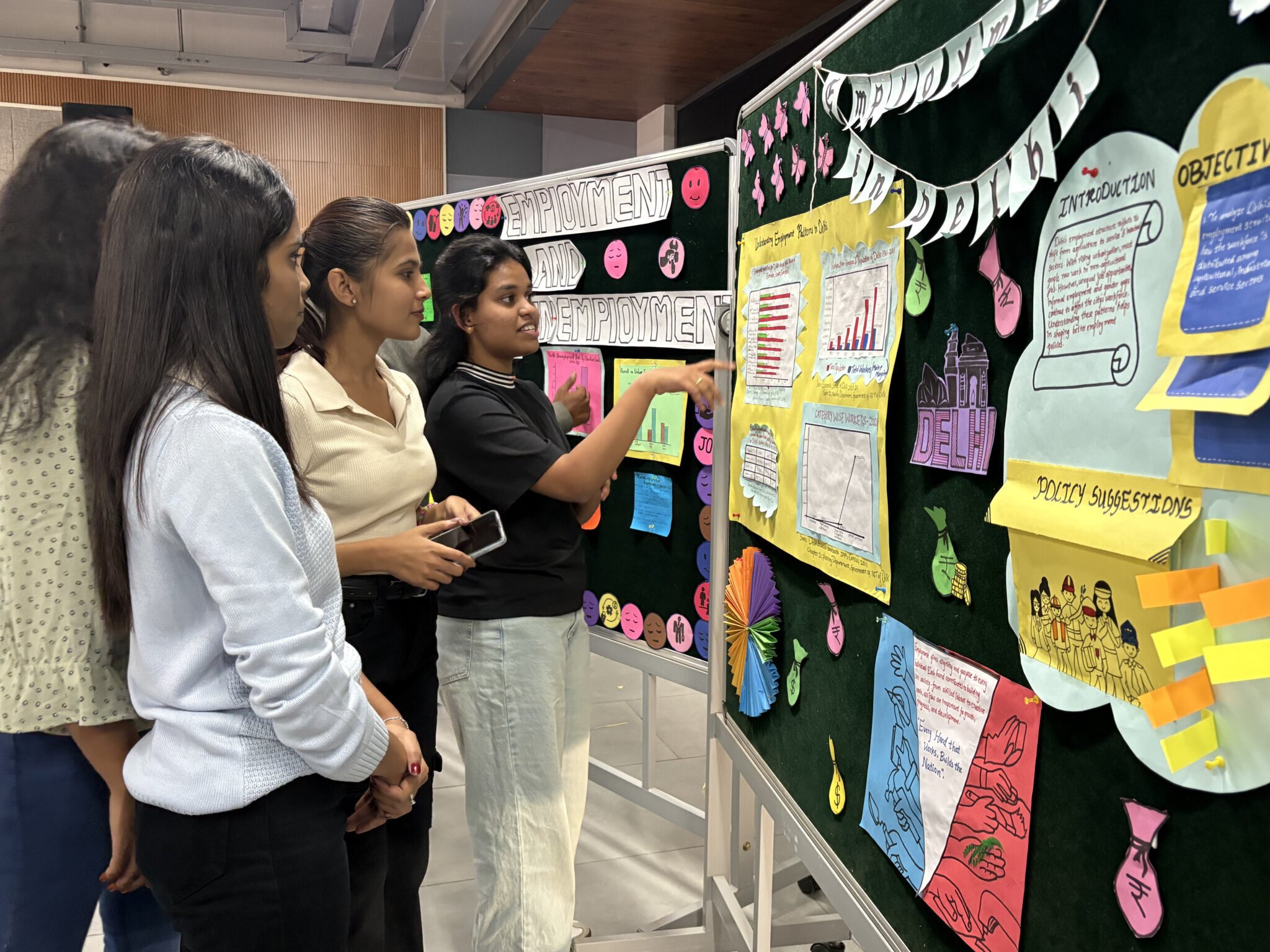
Projects under this theme focused on macroeconomic trends and specific sectoral analyses. Some projects were on broad themes such as the convergence of growth across Indian states and the employment scenario in India. Social welfare was a key area of interest, with inquiries into poverty reduction, women’s economic participation, and the effectiveness of support schemes like Mahatma Gandhi National Rural Employment Guarantee Act (MGNREGA) and the Public Distribution System (PDS). Some groups worked on specific case studies, including the handicraft sector, consumption expenditure patterns, and a comprehensive economic profile of Delhi.
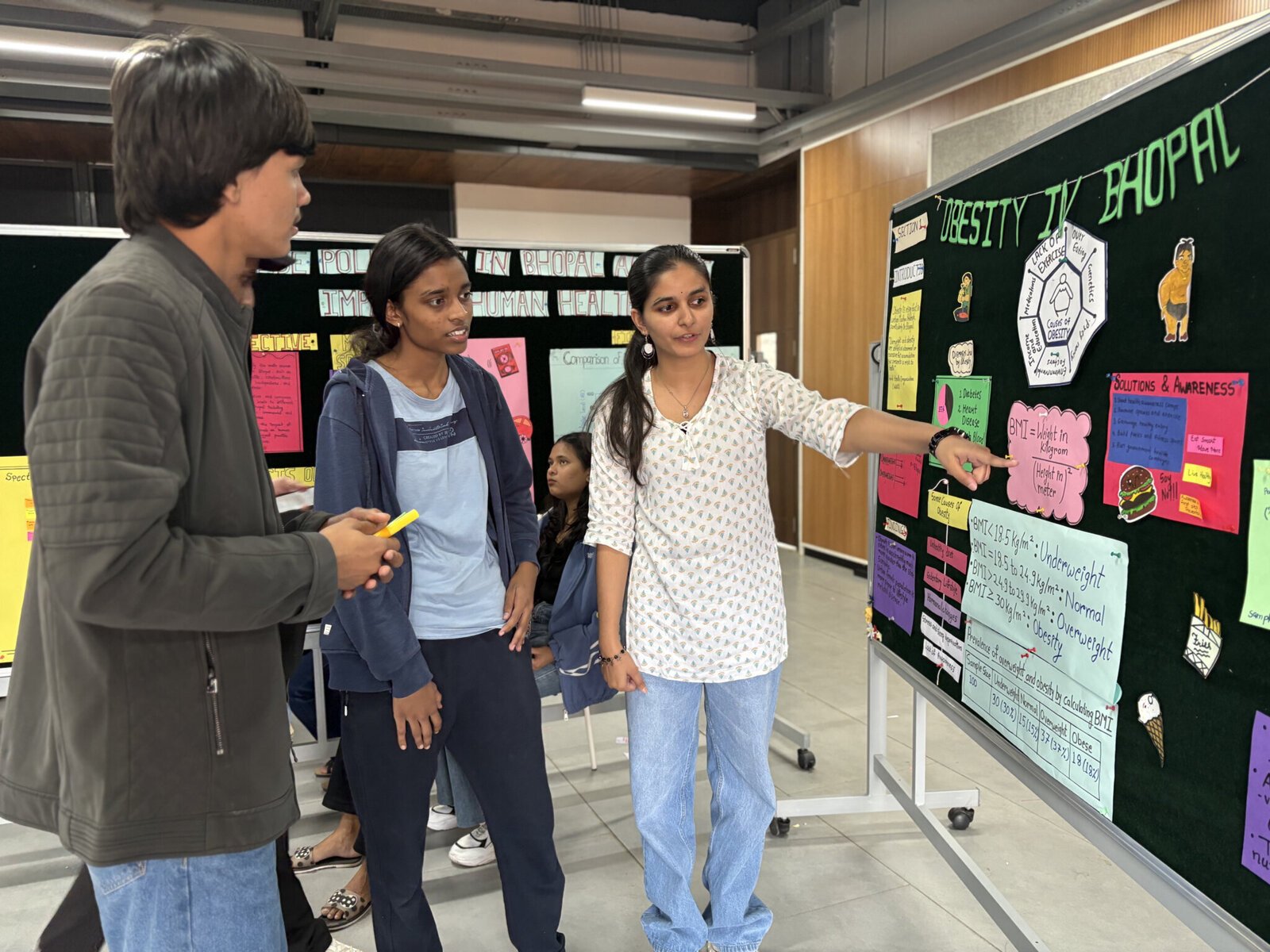
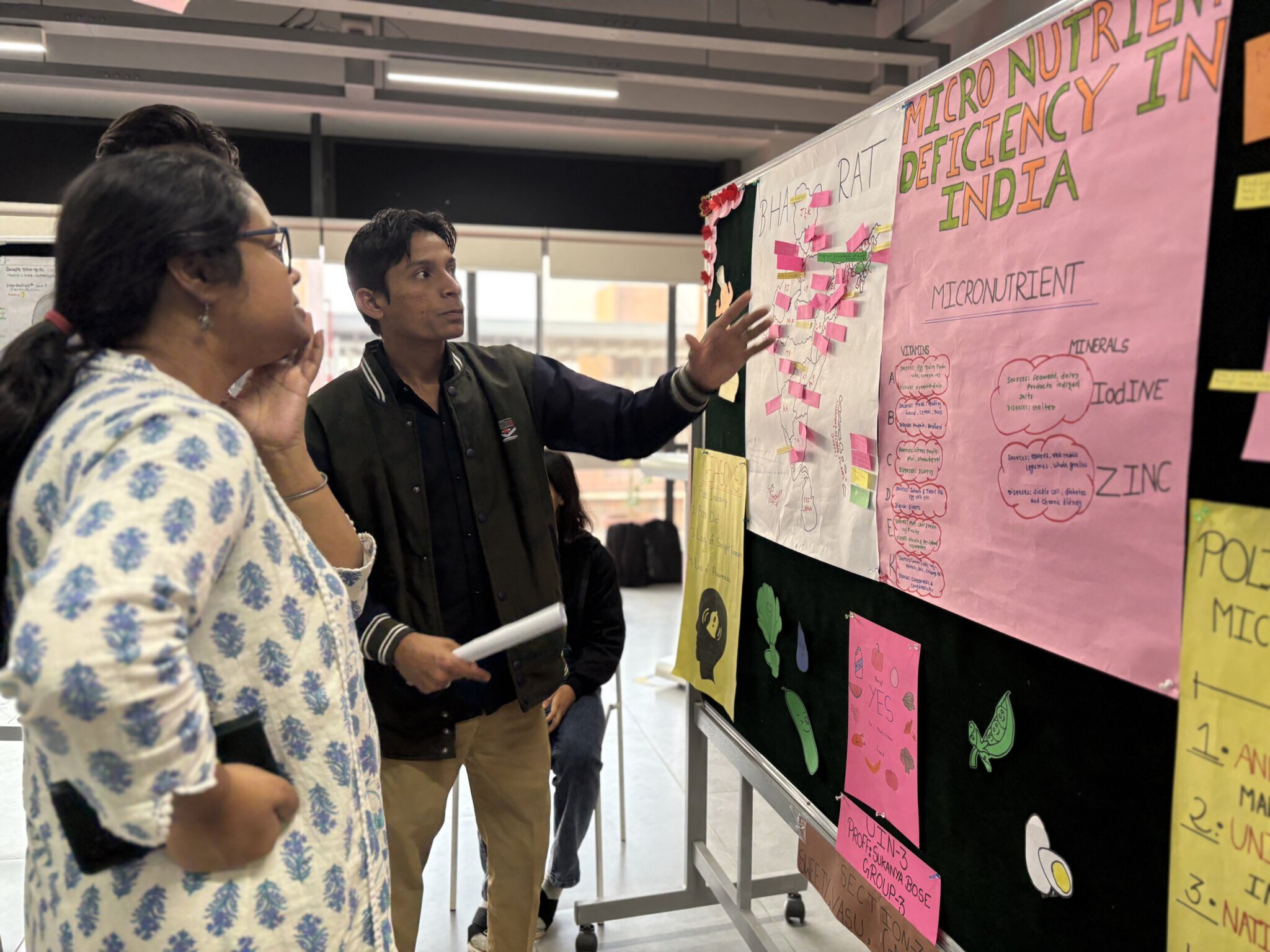
Projects under this theme highlighted lifestyle, systemic, and demographic health issues like obesity patterns, the impact of junk food, and micronutrient deficiencies. Students also investigated structural challenges, including public health spending, infrastructure, and the ground-level realities of Primary Health Centres (PHCs). Some groups worked on specific topics such as anaemia in adolescent girls (in Madhya Pradesh) and gender-based health disparities, alongside the crucial subject of mental health and wellbeing.
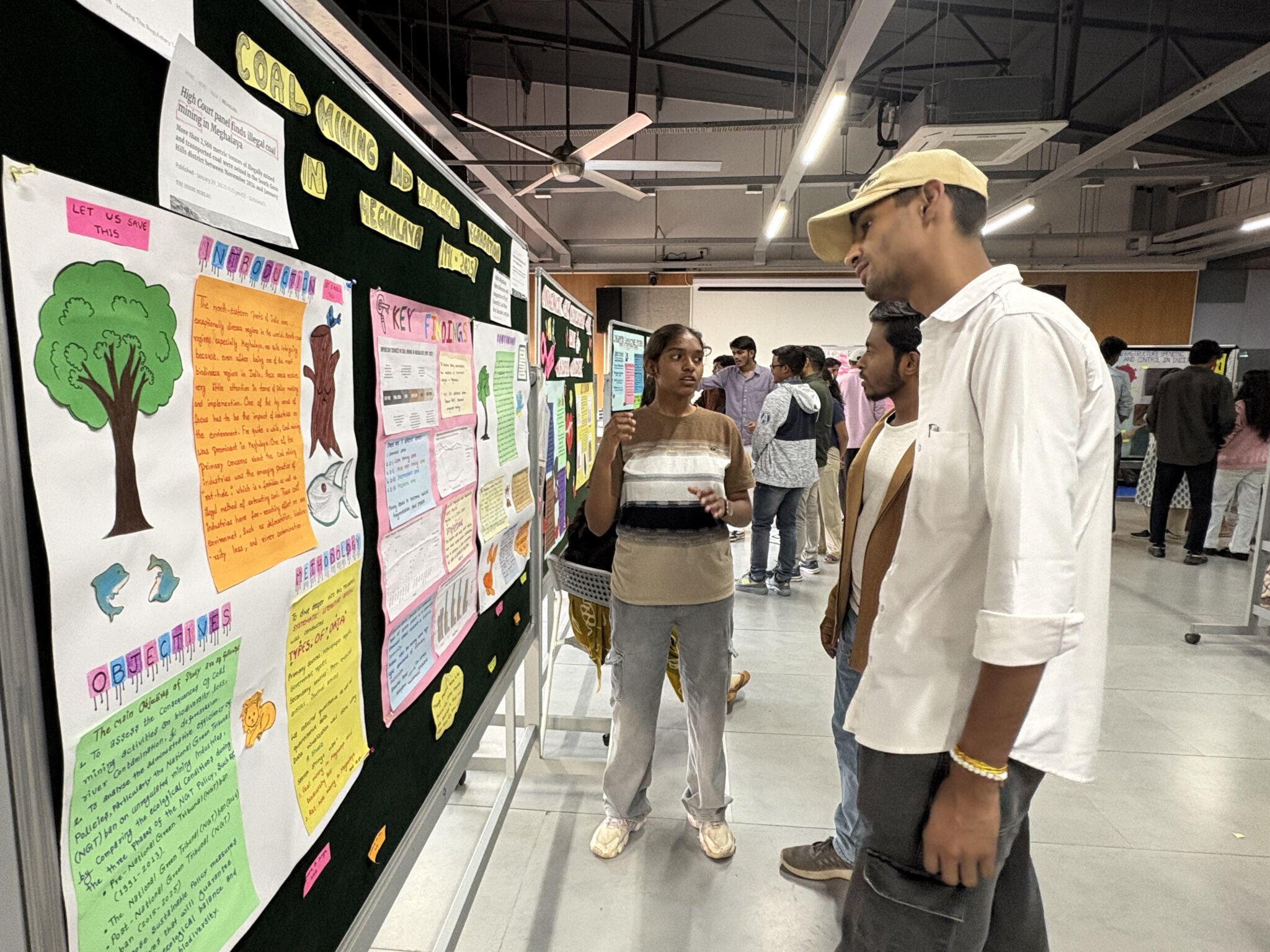
Students shared local case studies concerning Bhopal. Some students investigated water body management (specifically the Upper Lake, or Bada Talaab, and its impact on livelihood), waste management (including plastic use and disposal), noise pollution, and the tragic Bhopal gas leak tragedy. Beyond Bhopal, some projects also examined regional ecological crises such as deforestation in Uttarakhand and degradation caused by coal mining in Meghalaya. The students tried to connect these local issues to the broader conflict between industrialisation and ecology.
“Our idea for the exhibition was developed through our analysis of how junk food affects adolescent health. The preparation work helped us develop essential research abilities and communication competencies. It was fun to share our research findings during our poster presentation session.”