
Dealing with nature’s unwelcome guests
Last month, the country’s leading experts on bioinvasion united for a unique meeting to devise ways to combat the scourge of invasive alien species, reports Nandita Jayaraj.
Campus
Bhopal
Details
We are barely into the fourth month of the year and there have already been human lives lost to elephant attacks in the state of Kerala. Human-wildlife conflicts are on an exponential rise in the state. “The main reason for this,” according to K V Sankaran, former director of Kerala Forest Research Institute, “is that there is nothing in the forests for elephants to eat. It’s all lantana. So the elephants enter farmers’ fields, and the carnivores follow.”
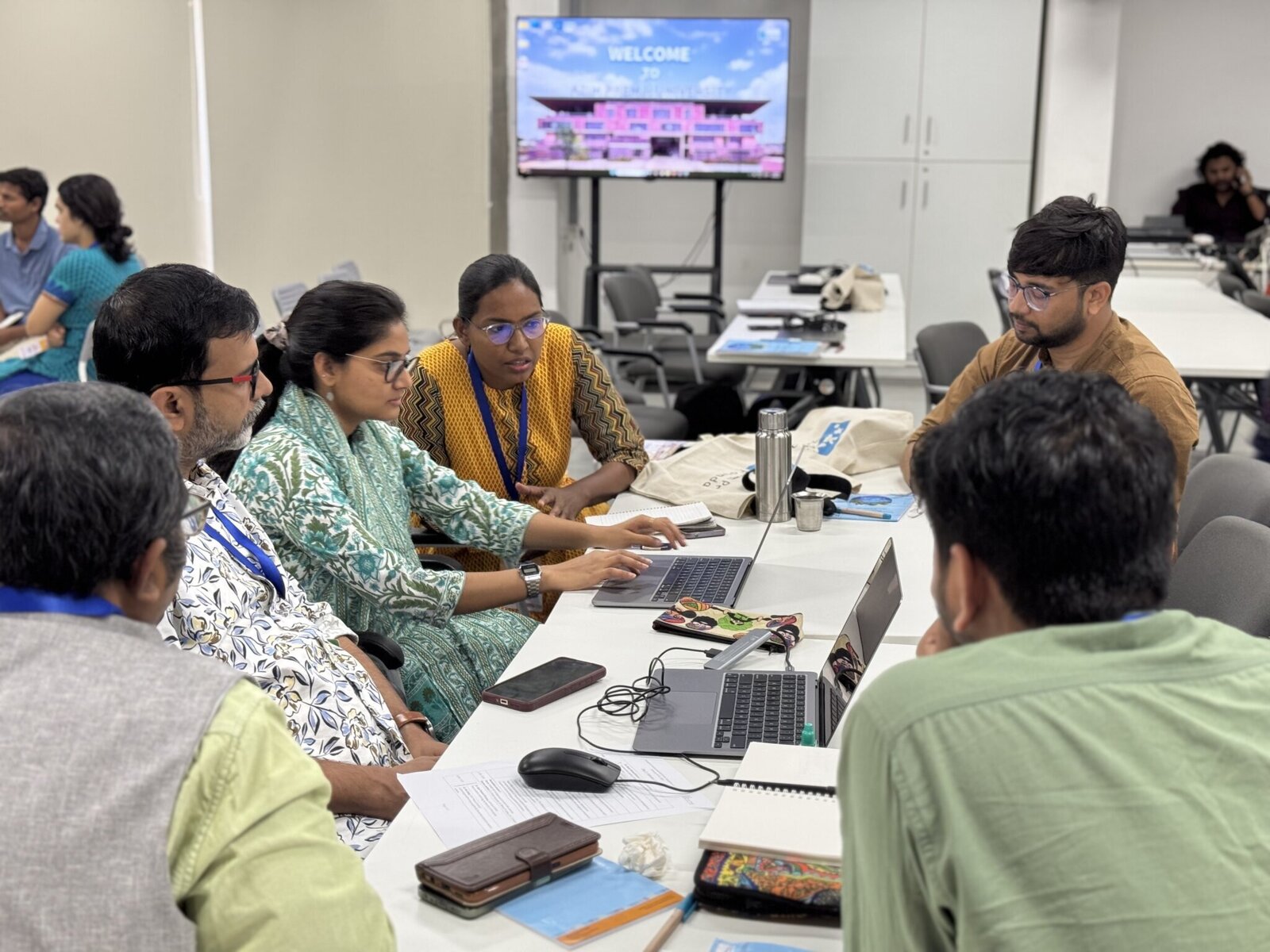
Sankaran was delivering the keynote address at a unique national meeting that took place at Azim Premji University, Bhopal, on 21 and 22 February 2025. Co-organised by Achyut Kumar Banerjee and Mansi Mungee, biology faculty members at Azim Premji University, Bhopal, the meeting saw the rare coming together of 34 researchers and practitioners to share their latest findings and discuss strategies to combat the scourge of invasive alien species (IAS) in India. Participants represented various stakeholders, levels of seniority, sub-specialties and geographies.
The phenomenon of elephant attacks in Kerala is just one of the dozens of manifestations of a severe ecological crisis affecting the world today: the takeover of invasive alien species (IAS). The ‘lantana’ that Dr Sankaran mentioned refers to every environmentalist’s favourite example of IAS, the deceptively attractive flowering plant Lantana camara. One study from 2020 estimated that lantana – brought to the country by the British in the 1800s – has invaded over 44% of Indian forests, including more than 40% of India’s tiger range.
A report on Mongabay India summarised the many ways this plant harms the ecosystem: “[Lantana] competes with native plants for space and resources, and also alters the nutrient cycle in the soil. This invasion has resulted in the scarcity of native forage plants for wild herbivores. If eaten, the leaves can induce allergies on the muzzles of animals. In some cases, extensive feeding on lantana has led to diarrhoea, liver failure, and even the animal’s death.”
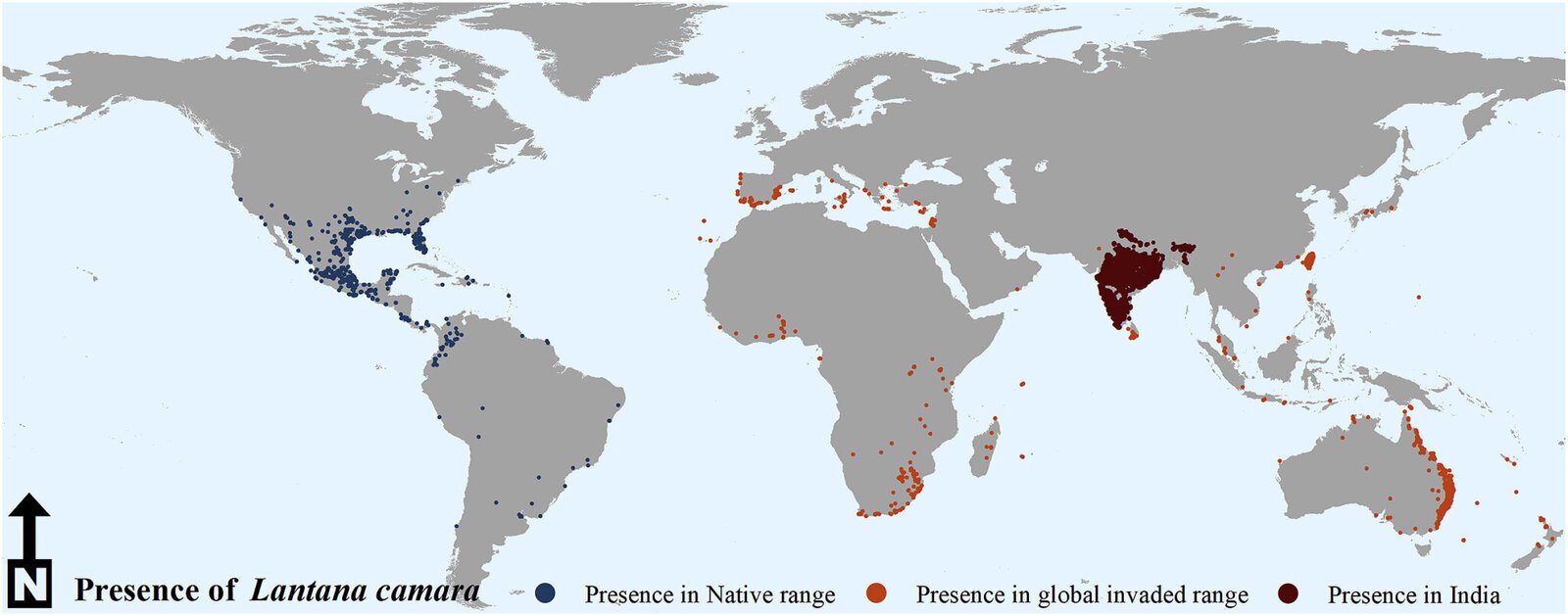
A graphic depicting the presence of Lantana camara in its native range in tropical America (blue), invaded range (orange), and in India (maroon). Source: Ninad Avinash Mungi et al (2020)
Lantana is just one of the many worrying invasive species affecting our country. At the two-day meeting, experts threw light on many other plants and animals that have similarly disastrous effects on our native flora and fauna. Rajeev Raghavan from Kerala University of Fisheries highlighted the threat of invasive alien fish species in our freshwaters; Puja Ray from Presidency University, Kolkata spoke on managing water hyacinth populations; other researchers presented their work on invasive mussels, insects and feral dogs. These topics were presented in the form of invited talks by experts as well as shorter ‘lightning’ talks by young researchers entering the field.
Valuable exchanges
Several open discussions and debates between experts and younger researchers took place on the platform. For example, after one talk that illustrated the benefits of biological control where new species are introduced to an area to control the population of an invasive one, a participant questioned: “Is it good to target one invasive species with another alien species?” Another participant encouraged the gathering to rethink terminologies such as ‘alien’ in the context of bioinvasion research. These doubts were appreciated and debated in a healthy manner.
The meeting also dedicated a few hours each day to roundtable sessions tackling the major gaps in India’s bioinvasion crisis. Arguably, the most fundamental of this is the lack of data being generated from tropical regions like India. Globally, it is recognised that invasive species are the primary cause of plant and animal extinctions over the past 500 years. However, most of these statistics are based on literature published in the west and developed countries. There is a severe shortage of research on bioinvasion coming from India, and this is reflected in our almost non-existent policies, regulations, laws, and general awareness about IAS.
“The forum is envisioned to foster collaboration and partnership within and beyond academia and enhance linkages between science, policy and practice.”
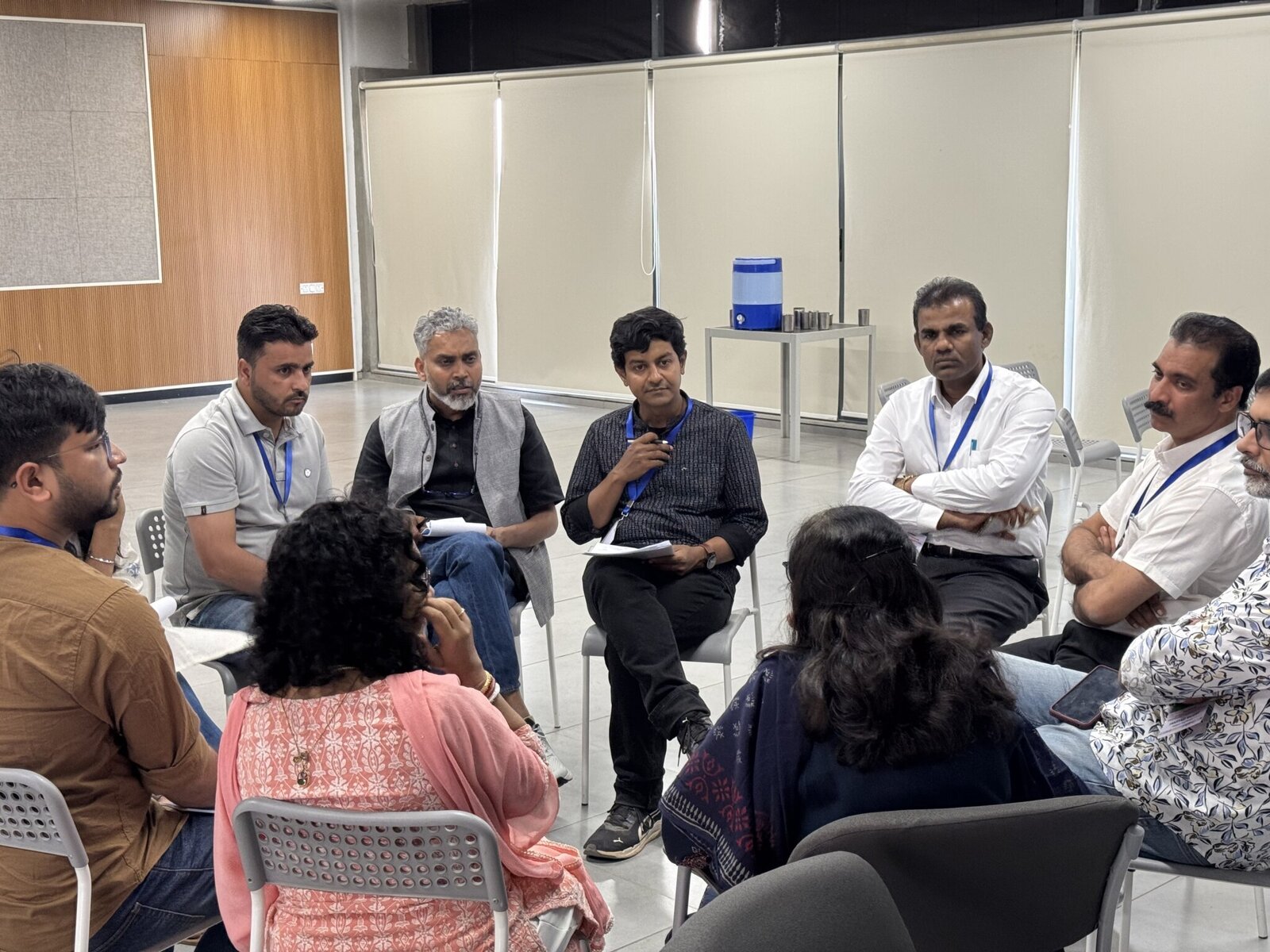
Achyut (holding the mic) leads a roundtable session at the meeting. [Credit: Nandita Jayaraj]
So much that even today, it is very easy to order dangerous ornamental plants like lantana online to our homes. Shubhra Sotie, an environmental lawyer who presented her work on India’s wildlife policy, pointed out the rampant presence of “pet shops” that openly trade exotic, sometimes invasive species. It’s not just rogue set-ups that do this, the ignorance is so extreme that even government officials and politicians publicly spread invasive species such as mosquitofish and guppies into our water bodies believing it to be an effective way to tackle mosquito populations. In reality, these species are invasive alien species that are known to “adversely impact local aquatic ecosystems by causing food scarcity for the indigenous fish species”. In fact, in February 2025, there was a notice issued by the National Green Tribunal regarding this.
Significant gaps
According to Alok Bang, who is part of the biology group at Azim Premji University, Bhopal, India is home to more than 1,500 recorded alien species, however, only 330 of these have been termed invasive. “This is not because the rest are not invasive but because we haven’t worked on them enough to term them as such,” he explained in an earlier report.
All experts agree that prevention is what we need to aim for, but in many regions, it’s too late for that. Species like lantana have spread too far and insidiously for the manual uprooting of each and every one of them to be a practical solution. Controlled burning is another strategy, as is biological control. There also exist more cutting edge methods such as the employment of remote sensing for surveillance and eDNA to detect invasive species.
Forest departments and non-governmental organisations all over the country have been struggling to get rid of IAS for decades. Some of the participants of the workshop represented the practitioner community and they offered valuable insights on what worked and didn’t work for them.
Aseem Srivastava, the current Principal Chief Conservator of Forests of Madhya Pradesh, spoke about the specific challenges and successes his department has faced in the unique grassland ecosystems of the state. He referred to controlled fires as “a cost-effective nature-based solution tool to manage invasive plants”. However, Ankila Hiremath, an independent researcher affiliated to Ashoka Trust for Research in Ecology and the Environment (ATREE) brought up the difficulty of acquiring permits to conduct controlled fires in some of her test areas.
Species like lantana have spread too far and insidiously for the manual uprooting of each and every one of them to be a practical solution. Controlled burning is another strategy, as is biological control. There also exist more cutting edge methods such as the employment of remote sensing for surveillance and eDNA to detect invasive species.
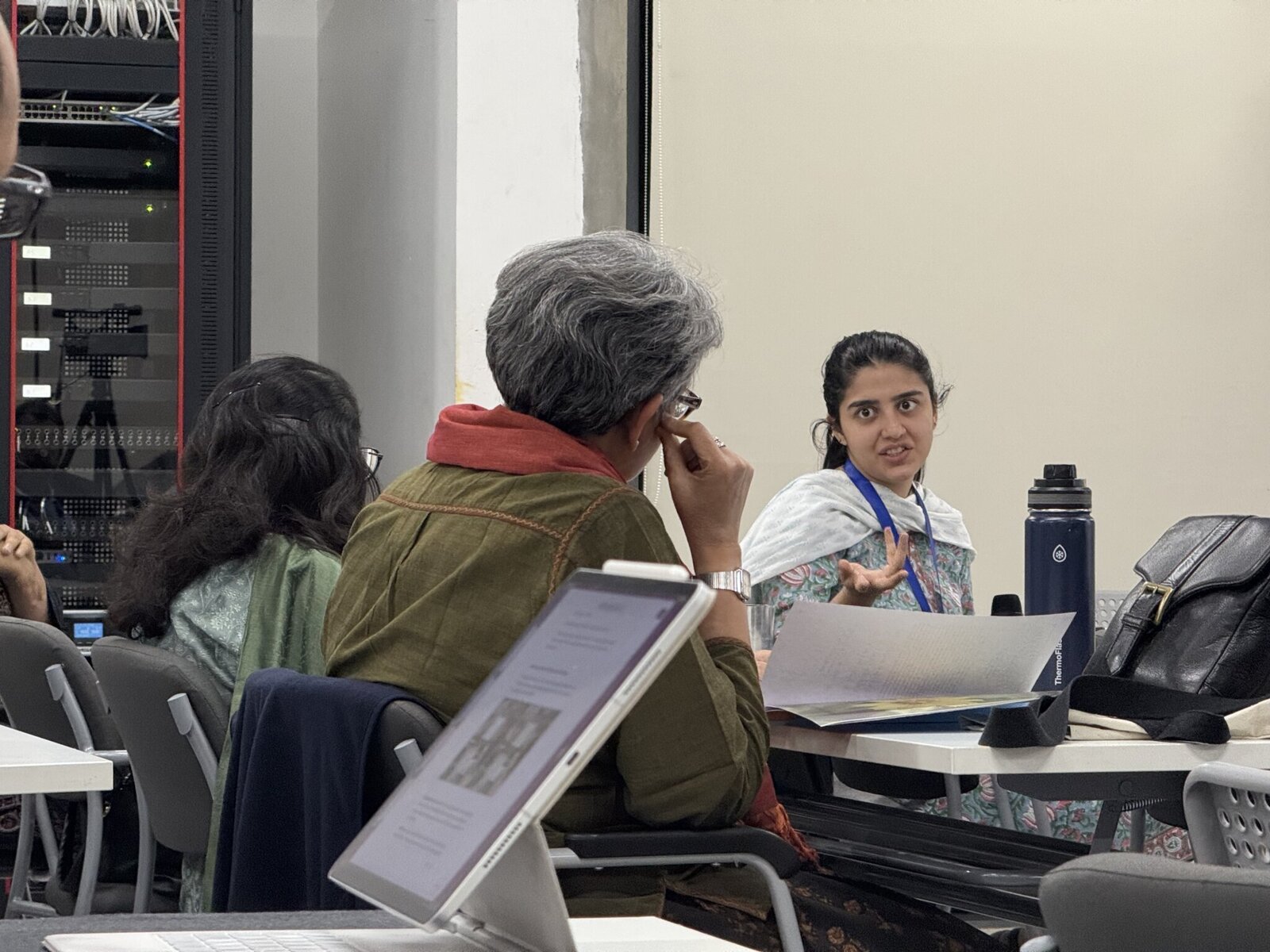
Several open discussions and debates between experts and younger researchers took place on the platform.
[Image Credit: Nandita Jayaraj]
Also speaking at the meeting was acclaimed conservationist from Assam, Bibhuti Prasad Lahkar. His organisation Aaranyak has achieved significant success in the revival of sub-Himalayan grasslands in Manas World Heritage Site, by managing invasive alien plants. This site is home to valuable native flora as well as pygmy hogs, rhinos, and rare grassland birds. Lahkar said that two of the worst species affecting the park were Chromolaena odorata and Mikania micrantha. “With manual uprooting, the area was restored,” he said, adding that eight years post-restoration, they are still monitoring the area for any relapses.
Strategies for the future
Effective communication was unanimously emphasised upon, while discussing gaps in awareness about invasive alien species. To address this, T V Padma was invited to facilitate a workshop, which was titled ‘Communicating on aliens’. The experienced science journalist pushed the academic audience to remember that aspects of the problem that are significant to experts may not seem to be for the general audience. Using role-play and case studies, the participants got a glimpse into what goes into communicating with various kinds of audiences.
The meeting ended on a positive note, with participants brainstorming on how to kick off the formation of a national forum of bioinvasion scientists. Such a forum would have three primary focus areas: creating resources like factsheets and checklists of the invasive species; providing services like developing projects and advising interested students; and organising workshops and webinars for capacity development of the invasion biologists in India. Achyut Kumar Banerjee summarised the vision of the forum: “It is envisioned to foster collaboration and partnership within and beyond academia and enhance linkages between science, policy and practice.”
About the author
Nandita Jayaraj is a science writer and communications consultant at Azim Premji University. She may be contacted at nandita.jayaraj@apu.edu.in