
Ulaganathan Sankar
Applied econometrician with contributions to environmental economics
By G. Mythili
Details
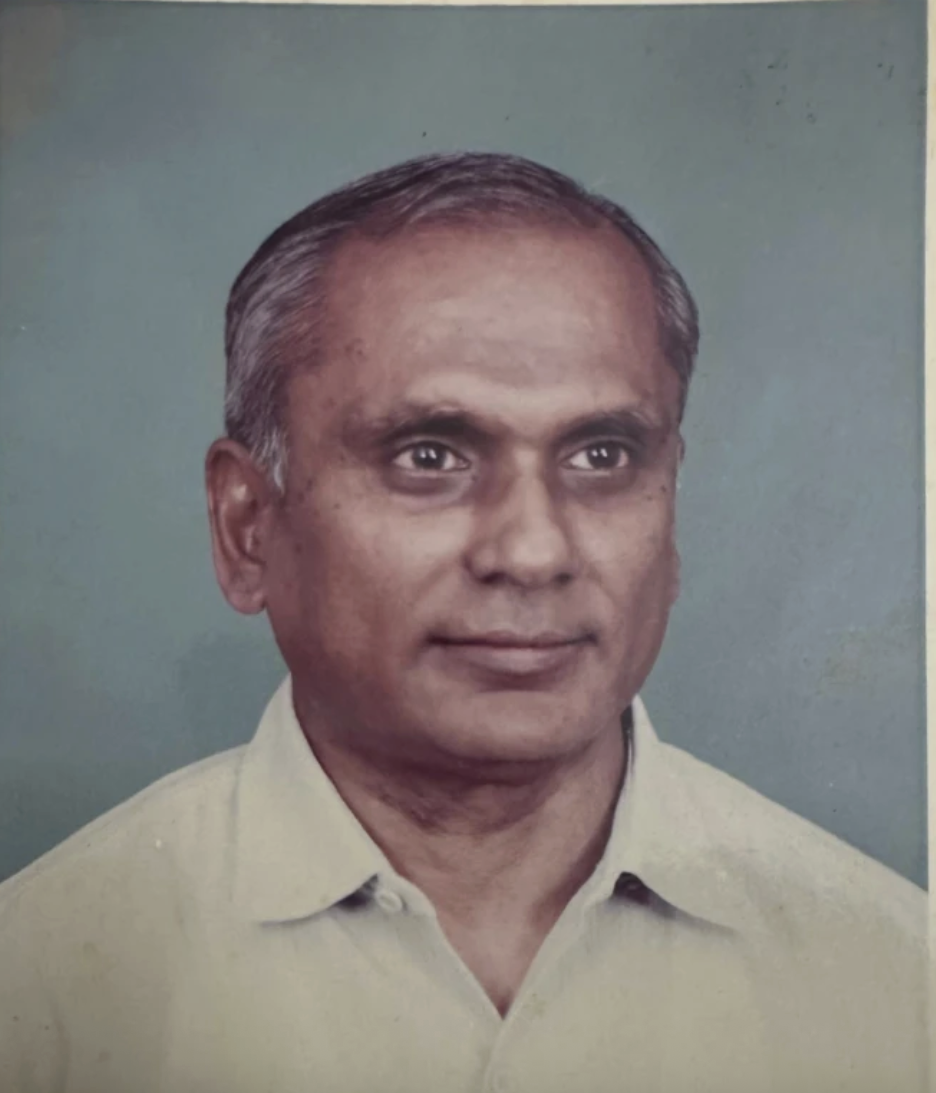
U. Sankar’s (1935−2025) distinguished career stands as a reflection of his relentless pursuit of knowledge and untiring commitment to teaching, and scholarly excellence complemented by his visionary leadership in institution building. His contributions to the fields of environmental economics, public sector economics, and agricultural economics were both substantial and enduring.
After earning his postgraduate degree from Annamalai University in 1957, Sankar commenced his career as a lecturer for a brief period before joining the Gandhian Institute of Studies at Varanasi. There, he served as a Research Associate under the guidance of Jayaprakash Narayan, whose influence profoundly shaped his intellectual outlook and instilled in him a deep commitment to Gandhian principles. This formative experience had a lasting impact on Sankar, inspiring a lifelong adherence to simplicity and ethical living.
When he embarked on his academic journey to the University of Wisconsin – Madison in 1963 to pursue his PhD, he had no formal training in mathematics or statistics. Yet, through unwavering perseverance and relentless hard work, he not only mastered these disciplines within a short period but went on to produce a thesis of remarkable depth — woven with complex mathematical and statistical procedures. He had the privilege of conducting his PhD thesis under the mentorship of Prof. A. Zellner, a renowned Bayesian econometrician. This academic engagement laid the foundation for his later contributions to the field. In Zellner’s own words about Sankar, “When he attended my courses and served as my research assistant, I learned more about his great intellect, determination, willingness to work hard…” (Mythili et al., 2005).
When the Constant Elasticity of Substitution Production Function (CES) was first introduced by Arrow, Chenery, Minhas and Solow in 1961, there was no direct estimation method because of non-linearity of the CES function. Sankar, in his PhD thesis, applied the direct method of estimation for CES production function, using Bayesian framework, analysed Indian industries and came out with some significant policy implications. Together with Zellner, he presented a path-breaking paper at an Econometric Conference in Berkeley, “On Errors in the Variables” in 1966, which made use of the Bayesian Approach to the analysis of ‘Errors in the Variables Model’ (EVM). Taking account of measurement errors, this study attempted to nest the proportionality hypothesis within a more suitable functional form and, for the first time, rejected Friedman’s proportionality hypothesis. The seminal work of Chetty and Sankar (1969) published in the Review of Economic Studies stands as one of the early Indian contributions to Bayesian econometrics.
He joined the University of Wisconsin – Milwaukee as a faculty member in 1967, where he served the department for eleven years. Even during his tenure in the USA, his quiet resolve to serve his own nation was always at the back of his mind. So when he received an invitation from the then Vice Chancellor of the University of Madras, Malcolm Adiseshaiah, to help establish a new department, he saw it not merely as a professional opportunity but as a meaningful return. He gladly accepted the offer and was ready to apply his expertise in the service of a larger national vision. He played a key role in the establishment of the Department of Econometrics in the University of Madras in 1977, marking a significant milestone as India’s first academic department devoted exclusively to the field of Econometrics. This initiative laid a robust foundation for advanced quantitative research in economics in the southern region of India. Its impact soon extended beyond the university — institutions across the region began revising their economics curricula to include econometrics, thereby reinforcing the pedagogical shift toward quantitative economic analysis as an essential component of economics education.
He helmed multiple high-impact projects at the University of Madras aimed at resolving India’s pressing economic issues and challenges, consistently integrating economic insight with empirical, solution-oriented research. In 1981, he undertook a big project spanning over 5 years, sponsored by the Ministry of Agriculture, Government of India, on the challenges to increasing groundnut production in the North and South Arcot districts of Tamil Nadu. The project generated a massive primary data set for the scholars to work on later and as many as four PhD scholars used the data for their theses at the University of Madras. The study threw up some significant evidence and identified ‘production risk’ as the major constraint that withheld farmers from allocating more land towards this remunerative crop despite the favourable climate and soil conditions in the region. The findings offered policymakers a fresh perspective, prompting renewed focus on strategies to mitigate risks in groundnut cultivation. This study culminated in the publication of a book Uncertainty and Farm Production Decisions, which subsequently emerged as a valuable resource for scholars pursuing research on related themes.
Another notable milestone in his body of work is the UGC-sponsored project titled Optimum Rate Structure for Public Enterprises, which further cemented his contributions to the field. The study focused on estimating the long-run marginal cost of electricity supply across various consumer categories, with particular emphasis on identifying the extent of subsidies and cross-subsidies involved in the tariff structure. When he presented his findings at the annual conference of the Indian Econometric Society in 1985, the work received widespread acclaim from leading economists and domain experts, resulting in his subsequent assignment to conduct similar analyses for the Airlines and Telecom sectors.
In 1992, during his sabbatical at NIPFP, he collaborated with Dr. Sudipto Mundle and Shekhar Mehta on an empirical study in environmental economics. This initiative was particularly significant, as analytical economics research in this field was still at a nascent stage of scholarly development. This study marked the first systematic effort to estimate the marginal abatement costs associated with water pollution control in Indian industries.
A scholar of distinction and a mentor of rare dedication, Sankar also championed institution-building with remarkable resolve. Together with Raja J. Chelliah, Founder Director of NIPFP, he spearheaded the idea of founding an institute of excellence in Economics in Chennai. This vision culminated in the establishment of the Madras School of Economics (MSE), which stands today as a powerful reflection of his foresight and enduring commitment. Sankar assumed charge as the founder-director of MSE in 1995.
Around this period, Sankar deepened his engagement with environmental economics, steadily expanding his academic repertoire. In 1998, he was appointed national coordinator of the World Bank – aided Environmental Management Capacity Building programme, a flagship initiative implemented by the Ministry of Environment and Forest (MoEF) and based at MSE. The programme also brought together three other core institutions — Indira Gandhi Institute of Development Research, NIPFP and Institute of Economic Growth— in a collaborative framework. In his role as national coordinator, he led four critical subcomponents focused on advancing curriculum design, pedagogical innovation, and research development in the field. The scheme extended support to numerous institutes, colleges, and university departments across India, with the aim of strengthening teaching and research in environmental economics. Economics faculty of many colleges and universities were supported by specific capacity-building training programs. The initiative played a significant role in advancing the discipline of environmental economics in India and contributed to the emergence of a new generation of experts in the field. He made several scholarly contributions to environmental economics, advancing both theoretical understanding and practical application within the field.
Sankar’s vision to establish an advanced centre for environmental economics was realised under his able leadership at Madras School of Economics. Following the successful completion of the World Bank Program in 2002, MoEF designated MSE as a Centre of Excellence (CoE) in environmental economics under its CoE Scheme. He also played an influential role in the broader context of South Asian initiative in environmental economics — the South Asian Network for Development and Environmental Economics (SANDEE). In acknowledgement of his contributions to environmental economics, he was awarded Fellow of SANDEE in 2009.
Sankar’s work on the techno-economic analysis India’s space programme was widely acclaimed for its analytical depth and policy relevance. This work was assigned to Sankar by Dr. Kasturirangan, former ISRO chairman, on the advice of Vijay Kelkar, then Finance Secretary of Government of India. The reason behind the interest of the study was to determine if the amount invested in the space program was justified on economic grounds. In a review of the book that appeared in Economic and Political Weekly, former ISRO scientist Dr. S. Chandrasekhar commended the work as “erudite and scholarly”. He further commented that the “Evaluation of the Economics of India’s Space Program states clearly and categorically that the program has more than paid for itself.”
His research trajectory in environmental economics and the techno-economic analysis of India’s space programme required a rigorous synthesis of scientific insight, technical expertise, and economic reasoning. Recognising the interdisciplinary demands of these fields, he devoted considerable effort to mastering concepts across diverse domains.
His extensive body of work bore witness to the wide-ranging areas he navigated with intellectual rigor. His impact went far beyond scholarly contributions — he played a pivotal role as a member and advisor on several influential committees, shaping policy and practice through sustained institutional engagement. To name a few, as National Coordinator of the World Bank Capacity Building Program; as an advisor of MoEF on the development of economic instruments for pollution control, eco-taxes on polluting inputs and outputs, biodiversity, and sustainable development; as a member of the National Biodiversity Authority, Ministry of Commerce and Industry; and as part of the Government of India delegation to the UN Conference on Environment and Development, Rio de Janeiro, Brazil in 2012…and many more. He also served as a member of many committees of the Planning Commission, University Grants Commission and Indian Council of Social Science Research.
He was a proud recipient of many distinguished awards and honours – UGC National Swami Pranavananda Saraswati Award in Economics, 2006; National Fellow, Indian Council of Social Science Research, 2003, 2004; President, The Indian Econometric Society, 1993 – 94; Post-Doctoral Fellow in Public Utility Economics from AT&T, 1971 – 72; Ford Foundation Doctoral Dissertation Fellow, 1966 – 67.
He led many projects that were highly impactful from a policy perspective. Some of the notable projects, other than those mentioned earlier, include
- Fiscal Reforms for Sustainable Development jointly with NIPFP, funded by World Resources Institute, Washington, 1995 – 1997.
- Economic Analysis of Environmental Damages by Tanneries and Textile Dyeing Industries and Suggestions for Policy Action 1996 — funded by UNDP — Project LARGE.
- Accelerating Growth through Globalization of Indian Agriculture, a joint project with the Australian National University, 1996 – 1999 funded by ACIAR.
- Trade and Environment: Environmental Requirements and India’s Exports of Leather and Leather Products, funded by the Ministry of Environment and Forests, 2002 – 2005.
- Insulating Public Utility Pricing from Policy Fluctuations for Sustainable Growth: Power and State Road Transport’, for the 14th Finance Commission, 2013.
I had the privilege of being his student and of working with him on several projects that he led. His dedication to teaching is second to none. His teaching provided a career-defining path for many students. His approach to mentoring was very transformative — far beyond the transmission of knowledge; it was an invitation to think freely. He nurtured intellectual independence, encouraging students to trust their instincts and engage with complexity.
In the course of collaborating with Sankar on projects, I witnessed not only his intellectual brilliance but also his exceptional administrative acumen. What left a lasting impression, however, were his qualities of empathy and profound social commitment — attributes that gave a unique depth to his professional identity. In his preface to the Festschrift Volume in Honour of U. Sankar, Raja J. Chelliah wrote: “Like a true Indian seer, he has sought little but given much.”
Standing firmly behind all his success was his wife, Thilagavathy. Until the very end, Sankar remained deeply committed to his responsibilities and professional roles. He passed away in Chennai in March 2025 at the age of 89. He leaves behind a legacy of enduring significance — one that will continue to inspire and guide all who were shaped by his wisdom.
Major works
- Chetty, V. K., & Sankar, U. (1969). Bayesian estimation of the CES production function. The Review of Economic Studies, 36(3), 289 – 294.
- Sankar, U. (1970). Elasticities of substitution and returns to scale in Indian manufacturing industries. International Economic Review, 11(3), 399 – 411.
- Shekhar, M., Sudipto, M., & Sankar, V. (1997). Controlling pollution: incentives and regulations. Sage Publications.
- Sankar U., & Mythili, G. (1991). Uncertainty and Farm Production Decisions. Himalaya Publishers.
- Sankar U., (1992). Public Sector Pricing: Theory and Applications. Indian Economic Association Trust for Research and Development.
- Sankar, U., & Mathur, O.P. (1998). Economic Instruments for Environment Sustainability. National Institute of Public Finance and Policy.
- Sankar, U. (2001a). Economic Analysis of Environmental Problems in Tanneries and Textile Bleaching and Dyeing Units and Suggestions for Policy Action. Allied Publishers.
- Sankar, U. (Ed.). (2001b). Environmental Economics. Oxford University Press.
- Sankar, U. (Ed.). (2006). Trade and Environment: A Study of India’s Leather Exports. Oxford University Press.
- Sankar, U. (2007). The Economics of India’s Space Programme: An Exploratory Analysis. Oxford University Press.
References
- Chandrashekar, S. (2007). Indian Space Effort. Economic and Political Weekly, 42(19), 1682 – 1684.
- Murty, G. R. K. (2021). An Interview with Professor U Sankar. IUP Journal of Applied Economics, 20(1), 85 – 110.
- Mythili, G., & Hema, R. (2005). Topics in Applied Economics: A Festschrift Volume for Prof. U. Sankar. Academic Foundation.
About the author
G. Mythili is a former Professor of Indira Gandhi Institute of Development Research, Mumbai. Her research interest ranges over Environmental Economics, Agricultural Economics and Interface of Nutrition, Agriculture and Environment.