
Meghnad Desai
Eclectic economist and British peer
By Deepanshu Mohan
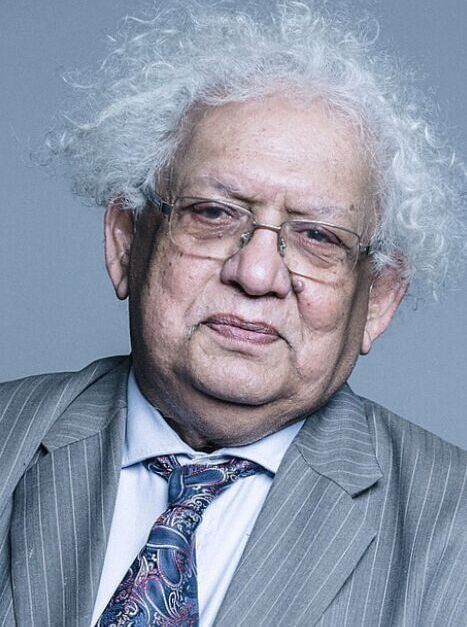
Meghnad Desai’s true loyalty was not to a specific ideology, whether it be Marxist or neoliberal, but rather to a singular intellectual methodology. His career is marked by endless questioning of wisdom on both the left and the right. It offers a powerful model for evidence-based thinking in an era where ideological polarisation is increasing. His work was a lifelong attempt to reconcile the ideal of social justice with the reality of how economies evolve. He insisted that all theories be held accountable to data and their real world consequences for human lives.
He completed his matriculation at the young age of 14 and went on to earn both his bachelor’s and master’s degrees from the University of Bombay before securing a scholarship to pursue his PhD at the University of Pennsylvania. He completed his doctoral studies in 1963 at the age of 23.
Lawrence R. Klein instilled in Desai a “lifelong commitment to quantitative analysis”. This training provided him with the crucial skills to dissect grand theories especially on their failure to withstand rigorous statistical testing. It is this deep-seated methodological discipline that serves as the unifying thread throughout his career, explaining how he could, with intellectual consistency, inhabit roles that appeared contradictory to an outside observer.
At UC Berkeley he met his long-time friend and intellectual partner Amartya Sen and participated in student protests against the Vietnam War. This combination of technical training and a strong orientation toward social justice would ultimately define his work. In 1965, he joined the London School of Economics where he became known for his unorthodox teaching methods. He famously began his introductory economics courses not with the canonical works of Adam Smith or John Maynard Keynes, but with the Italian economist Piero Sraffa, a master of formal critique. By starting his students with Sraffa’s work, which methodically critiqued the logical foundations of neoclassical economics, Desai equipped them to question the dominant economic paradigm itself, a practice that mirrored his own career-long habit of relentless, evidence-based skepticism.
The most brave expression of Desai’s intellectual evolution was his 2002 work, Marx’s Revenge: The Resurgence of Capitalism and the Death of Statist Socialism. The central argument was that capitalism’s historical mission was to create a single world market which will be complete when a transition to socialism becomes possible. The Bolshevik Revolution was a “premature aberration” that directed Marx’s original vision by putting a premature, state-led model first. Desai argued that Marx in his own writings was committed to the idea that capitalism must be allowed to “flower fully” to basically allow the bourgeois class to fulfill its “modernising destiny”. This position challenges the simplistic notion that Marx was purely an anti-market thinker.
Beyond its central idea, the book offered a detailed historical and theoretical account of global capitalism over 150 years, surveying the works of key thinkers from Adam Smith to Joseph Schumpeter, John Maynard Keynes, and Friedrich Hayek. This analysis revealed that the triumph of global capitalism was still an evolving process, not a foregone conclusion. The book simultaneously irritated orthodox Marxists, who were criticized for clashing against Marx’s name, and discomfited neoliberals who were prone to winning narratives of capitalism’s ultimate victory. This harmony of historical analysis and theoretical paradox brilliantly captured Desai’s unique intellectual position.
If Marx’s Revenge demonstrated Desai’s willingness to critique the Left, his landmark 1981 book Testing Monetarism showed that he applied the same rigorous standards to the beliefs of the Right. The historical context is essential for appreciating the significance of this work. By the late 1970s, the Keynesian consensus that had dominated post-war economics was in crisis, unable to provide an adequate policy response to the phenomenon of “stagflation,” the simultaneous occurrence of high inflation and high unemployment. In its place, Monetarism, most famously associated with Milton Friedman, ascended to a position of intellectual dominance. The central principle was that the primary driver of inflation was the growth of the money supply and that, therefore, central banks should focus on maintaining a steady, predictable growth rate of this aggregate.
At the very moment this new free-market orthodoxy was at the pinnacle of its influence, Desai subjected it to a forensic empirical examination.
Testing Monetarism was not a political theory but a methodical and econometric dissection of the theory’s core assumptions and datasets. The book specifically challenged the claim that the “velocity of money” was stable and predictable. It demonstrated that this crucial relationship did not hold up to statistical scrutiny. Historical accounts and academic papers have confirmed that the link between the money supply and nominal GDP broke down in the 1980s.
As a more recent example, one study found that between 2008 and 2011, the monetary aggregate grew by 10 percent annually while inflation averaged only 1.3 percent, supporting the theory that monetarism is an “empirically irrelevant theory of inflation”. Based on this analysis, he correctly predicted the ultimate failure and abandonment of money-supply targeting policies then being pursued by the Thatcher government. This prescient analysis serves as key evidence that Desai’s intellectual compass was guided by an insistence that the theory must fit the facts. The fact that he challenged both state-led socialism in post-independence India and free market orthodoxy in the West with the same data-driven rigour reveals a profound consistency that transcended ideological divides.
Desai played a pivotal role in the creation of the Human Development Index (HDI) and was a key collaborator alongside the brilliant Pakistani economist Mahbub ul Haq and Amartya Sen. HDI, first introduced in the United Nations Development Programme’s (UNDP) 1990 Human Development Report, revolutionised the measurement of progress by shifting the focus away from a single metric, Gross Domestic Product (GDP), towards a more holistic conception of human wellbeing. The HDI is a composite index that ranks countries based on their average achievement in three key dimensions, i.e., a long and healthy life, knowledge and a decent standard of living.
His contribution was not just in the final product but in the ongoing debate that surrounded its creation and refinement. Desai made an attempt to “introduce ways of measuring political freedom” to “overcome the limitations of HDI”. This affirms his place as a critical intellectual companion and someone who shaped the discourse surrounding HDI, even if his name did not appear on the cover of its first report. This also demonstrates that Desai’s legacy is not just in what he directly created but in the ideas he nurtured and the intellectual frameworks he helped to shape.
Desai’s public life was a natural extension of his academic work. For nearly half a century, he was a loyal member of the Labour Party, but he was never afraid to stand apart when principle demanded it. That streak of independence showed early on when he was dismissed from the Labour front bench after suggesting that Value Added Tax (VAT) could be expanded to cover essentials like food and children’s clothes. The idea clashed with the party’s political priorities, but Desai’s stance made clear that he valued honesty and intellectual rigor more than convenience. Years later, in 2020, he left the Labour Party altogether, frustrated by its failure to seriously confront antisemitism. The decision reflected the same quality that had marked both his scholarship and his politics, the courage to put truth and conviction above party loyalty.
Beyond politics, Desai poured equal energy into building institutions that would outlast him. At the London School of Economics, he founded the Development Studies Institute (DESTIN) in 1990 and, two years later, the Centre for the Study of Global Governance. Both were designed to break down disciplinary walls and encourage the kind of questioning and critical thinking that he himself embodied. He was also a trusted voice in shaping UK – India relations. He acted as a bridge between the two worlds with ease.
Perhaps his most personal project came much later, in 2014, when he co-founded the Meghnad Desai Academy of Economics (MDAE) in Mumbai. The venture brought his life’s journey full circle. Having once left India in search of the rigorous and empirical training that allowed him to challenge both Western and Indian orthodoxies, he now sought to create that very opportunity at home. MDAE was meant to close the gap between abstract theory and the data-driven economics that modern students need. For Desai, legacy wasn’t only in books and ideas but rather in the living spaces he created for young thinkers to learn, question and rebel.
He wrote with equal passion about subjects as varied as Bollywood and philosophy like Nehru’s Hero: Dilip Kumar in the life of India as well as a reinterpretation of the Bhagavad Gita. His reading of the Gita was no less striking as it was a “humanist critique” from the perspective of someone who openly called himself an atheist.
His influence reached into cultural diplomacy too. As chair of the Gandhi Statue Memorial Trust, he played a leading role in bringing a statue of Mahatma Gandhi to Parliament Square in 2015 (a symbolic act of bridge building between Britain and India).
Those who worked with him often remember his warmth, humour and generosity as much as his intellect. To many, he was a mentor and a vibrant and larger-than-life figure. Alongside his academic and cultural commitments, he also chaired the advisory board of the Official Monetary and Financial Institutions Forum (OMFIF) from 2010 until his passing in 2025, at the age of 85.
Tracing Meghnad Desai’s intellectual life is to see a mind always in motion yet grounded in one principle; does the theory fit the facts? His legacy is not a fixed doctrine but his courage underscoring the readiness to question his own side, challenge assumptions and learn from adversaries. In an age of echo chambers and rigid ideologies, Desai leaves us not with answers to recite but an enduring invitation to think critically, doubt bravely and use ideas in the service of a better world.
Major works
- Desai, M. (1973a). Marxian Economic Theory. Gray-Mills Publishing Ltd.
- Desai, M. (1973b). Growth cycles and inflation in a model of the class struggle. Journal of economic theory, 6(6), 527 – 545.
- Desai, M. (1975). The Phillips curve: a revisionist interpretation. Economica, 42(165), 1 – 19.
- Desai, M. (1981). Testing Monetarism. Francis Pinter.
- Desai, M., & Shah, A. (1988). An econometric approach to the measurement of poverty. Oxford Economic Papers, 40(3), 505 – 522.
- Desai, M. (1991). Human development: concepts and measurement. European Economic Review, 35(2−3), 350 – 357.
- Desai, M. (1995). Poverty, Famine and Economic Development. Edward Elgar Publishing.
- Desai, M. (2002). Democracy and Development: India 1947 – 2002 (pp. 105 – 118). Australia South Asia Research Centre.
- Desai, M. (2004a). Marx’s revenge: the resurgence of capitalism and the death of statist socialism. Verso.
- Desai, M. (2004b). Nehru’s Hero: Dilip Kumar in the Life of India. Roli Books.
- Desai, M. (2005a). Development and nationhood: Essays in the political economy of South Asia. OUP Catalogue.
- Desai, M. (2009). The rediscovery of India. Penguin Books India.
- Desai, M. (2014). Who wrote the Bhagavadgita. Harper Collins.
- Desai, M. (2015). Hubris: why economists failed to predict the crisis and how to avoid the next one. Yale University Press.
- Desai, M. (2016). Peasant poverty and persistence in the twenty-first century: Theories, debates, realities and policies. Bloomsbury Publishing.
- Desai, M. (2020). Rebellious Lord: An autobiography. Westland.
References
- Balakrishnan, P. (2002). Hello Marxism, goodbye Leninism! Economic and Political Weekly, 37(36), 3724 – 3726.
- Caraballo, J. (2018). Does the monetarist theory of inflation fit the data? Time to replace a ‘paradigm’. American Review of Political Economy, 12(1).
- Cherian, D. (2025, July 30). Lord Meghnad Desai belonged to no camp — and, somehow, to every camp at once. The Print. https://theprint.in/opinion/lord-meghnad-desai-lse-economist/2707231/
- Fukuda-Parr, S., & Cid-Martinez, I. (2019). Capability approach and human development. In M. Chouchane, A. D. Curzio, & A. C. K. Fosu (Eds.), The Palgrave handbook of development economics: Critical reflections on globalisation and development (pp. 441 – 468). Palgrave Macmillan.
- Jahan, S., & Papageorgiou, C. (2014). What is monetarism? Finance & Development, 51(1). https://www.imf.org/external/pubs/ft/fandd/2014/03/basics.htm
- Kumar, S. (2025, August 3). Lord Meghnad Desai: An intellectual giant, formidable economist, fearless commentator and a friendly soul. The Sunday Guardian. https://sundayguardianlive.com/feature/lord-meghnad-desai-an-intellectual-giant-formidable-economist-fearless-commentator-and-a-friendly-soul-136781/
- Marsh, D. (2025, July 30). Meghnad Desai: Mentor, rebellious lord, internationalist bridge-builder. OMFIF. https://www.omfif.org/2025/07/meghnad-desai-mentor-rebellious-lord-internationalist-bridge-builder/
- Natti, S. (2025, July 30). Lord Meghnad Desai: Economist, Mahatma Gandhi baiter, Dilip Kumar fan and much more. The New Indian Express. https://www.newindianexpress.com/web-only/2025/Jul/30/lord-meghnad-desai-economist-mahatma-gandhi-baiter-dilip-kumar-fan-and-much-more
- Stanton, E. A. (2007). The Human Development Index: A history. University of Massachusetts Amherst.
- Sultanat, A. (n.d.). Readings in human development: Concepts, measures and policies for a development paradigm. Institute of Peace and Conflict Studies. https://www.ipcs.org/ipcs_books_selreviews.php?recNo=172
- Wadhwani, S. (2025, August 5). Lord Desai obituary. The Guardian. https://www.theguardian.com/books/2025/aug/05/lord-desai-obituary
About the author
R. Ramakumar is Professor at the School of Development Studies, Tata Institute of Social Sciences (TISS), Mumbai. He works on the Indian economy, agrarian studies, and agricultural economics, with a focus on rural banking and agricultural research. He is a member of the Kerala State Planning Board. His most recent book is Distress in the Fields: Indian Agriculture after Liberalisation, published in 2022.