
M. S. Swaminathan
Agricultural scientist behind India’s Green Revolution
By R Ramakumar
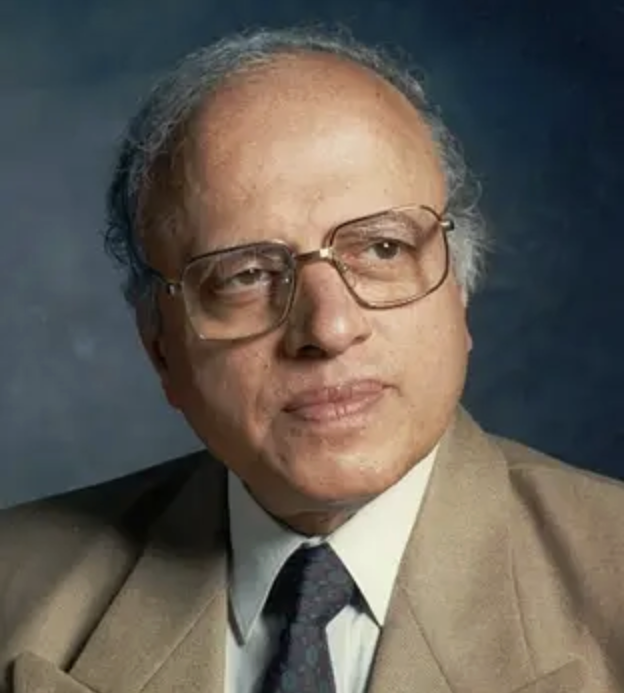
Details
When Norman Borlaug was awarded the Nobel Peace Prize in 1970 for his role in the Green Revolution, he made an extraordinary gesture. “To you, Dr Swaminathan,” he said, “a great deal of credit must go for first recognising the value of Mexican dwarfs. Had this not occurred, it is quite possible that there would not have been a green revolution in Asia.” When Borlaug passed away in 2009, Monkombu Sambasivan Swaminathan titled his obituary to him as “A Great Scientist and Humanist”. It is a description that fits Swaminathan himself with equal precision.
Swaminathan was the preeminent agricultural scientist of the developing world, an unflinching humanist, and a citizen deeply committed to the values of secularism. Between the 1950s and the 1970s, he led India’s journey from an agricultural “basket case” to a “breadbasket” — through what came to be known as its Green Revolution. India was transformed from a “ship-to-mouth” existence i.e., dependent on food aid from the United States under the “Public Law 480” programme, to a country self-sufficient in food grain production. With self-sufficiency came also political sovereignty. India could no longer be arm-twisted by Western powers to implement economic or foreign policies of their choice.
Swaminathan was born on 7 August 1925 in Kumbakonam, a town in the southern Indian state of Tamil Nadu. His father M. K. Sambasivan, a surgeon, was a follower of Mahatma Gandhi — an association Swaminathan claimed ingrained in him the “principles of secularism” and “always taking the side of the poor”. Sambasivan had built a modern hospital in Kumbakonam and was the personal doctor of the king of Travancore, the erstwhile princely state in what is today the state of Kerala.
The “M” in Swaminathan’s name referred to Monkombu, a small village in the Kuttanad region of Kerala, to which his paternal family had migrated from Kumbakonam in the 19th century. Swaminathan’s paternal grandfather had received grants of paddy land and buildings from the then king of Ambalapuzha. The family house was called “Kottaram” — a reference to the gift of a Traveller’s Bungalow from the king.
Sambasivan died when Swaminathan was 11 years old. After his matriculation, his mother Parvati Thangammal sent him to his father’s brothers in Travancore. In 1941, Swaminathan joined for a B.Sc. at the University College in Thiruvananthapuram, the present-day capital of Kerala. During his studies there, he had opportunities to visit the family’s house in Monkombu, about 150 kilometres away. These visits were his first brushes with the agricultural problems of Kuttanad, a region that would remain close to his heart till his death. More on this later.
The choice that defined a nation
Gandhi’s call for the Quit India movement in 1942 inspired India’s enlightened youth to start thinking of a “free India”. Then came the Bengal Famine of 1944 — a tragic legacy of colonial plunder — in which close to three million Indians died. As the famine was front page news in newspapers, Swaminathan was faced with two choices: join a course in medicine or a course in agricultural science. Parvati Thangammal wanted her son to study medicine and take over the family’s hospital in Kumbakonam. But fired with a dream of contributing to “free India”, Swaminathan chose to join a B.Sc. in Agriculture at the Coimbatore Agricultural College under Madras University.
He completed his B.Sc. in 1947 and went on as a graduate student in genetics at the Indian Agricultural Research Institute (IARI) in New Delhi between 1947 and 1949. Swaminathan remembered a visit by Jawaharlal Nehru, India’s first Prime Minister, to IARI where he told the scientists and students that “everything else can wait, but not agriculture”. These words stayed with him, and he would quote them in his speeches and conversations till his last days.
In 1949, Swaminathan was to travel to the Agricultural University at Wageningen in the Netherlands as a UNESCO fellow in genetics. He could travel in any liner, but he chose a ship called Jal Azad (“Free Waters”). Swaminathan later revealed that it was his “nationalist spirit” that drove this choice. Between 1949 and 1952, he studied in Wageningen and Cambridge, obtaining a PhD in genetics from the School of Agriculture in 1952. After a short tenure as a Research Associate at the University of Wisconsin, where he developed the potato variety “Alaska Frostless”, Swaminathan returned to India in 1954.
The science of breaking yield barriers
When Swaminathan returned to India, he found himself at the centre of a historic effort to build a National Agricultural Research System (NARS). Raising food production was critical to feed India’s rising population and the success of economic planning. India was importing close to 3 million tons of food grains in 1949 – 50, spending INR 150 crore at current prices. The need to raise production through a rise in yields was recognised as urgent.
In the first decade after independence, India’s food grain production was largely driven by increases in the area cultivated. But by the early to mid-1960s, the availability of new areas that could be cultivated shrank even as the population continued to rise. Frequent droughts triggered bouts of food inflation. In 1965, Prime Minister Lal Bahadur Shastri urged Indian citizens to skip a meal every week to soften inflationary pressures. This “ship-to-mouth” existence had to end.
Yields in India’s major food crops were low by any standard in the early 1960s. Swaminathan understood that there were three types of factors preventing higher yields. Yields were limited by the poverty of organic matter and the deficiency of nitrogen, phosphorus, and potassium in Indian soils. Yields were also defined by the features of climate and plant morphology. Most traditional wheat and rice plants were tall-statured, which led to crop losses through lodging — the bending or breaking of stems. These varieties were of long duration, which ruled out an additional crop in the same year. Traditional varieties were also photoperiod-sensitive, meaning that the shorter day lengths during winter led to poorer flowering. Yields were reduced by the severe susceptibility of traditional varieties to pests and diseases.
Swaminathan believed in the intensive deployment of science to improve people’s lives. Following in the footsteps of Norman Borlaug, he set out to demonstrate that all three types of yield barriers could be genetically overcome. His brilliance lay in identifying the dwarf genes in the Japanese wheat variety Norin 10 and the Chinese rice variety Dee-gee-Woo-gen as the first step to crop improvement in India. These varieties were also photoperiod-insensitive and responsive to the application of fertilisers. The plan was to cross these varieties with Indian varieties and create offspring suited to Indian conditions.
In 1954, Swaminathan was selected by the Union Public Service Commission to the post of Assistant Cytogeneticist at IARI, where he was to spend the next 18 years. The then director of IARI, the renowned wheat breeder Benjamin Peary Pal, asked him to work on transferring genes from wild to cultivated species in wheat. By 1963, Swaminathan had convinced Borlaug to visit India and confirm the possibilities of introducing dwarfing genes in Indian conditions.
In August 1964, in a meeting with the then Minister for Agriculture C. Subramaniam, Swaminathan and Pal told him that crossbreeding with these two varieties provided India with “a great possibility of leapfrogging in production”. This was music to Subramaniam’s ears. He immediately approved Swaminathan’s plan to create a national programme for developing and popularising the new seeds.
The miracle seeds
The team developed several wheat varieties — Kalyan Sona, Sonalika, Safed Lerma, Chhoti Lerma, and Sharbati Sonora — many of which could potentially yield 6 – 8 tons per hectare. In rice, scientists were still struggling for a breakthrough. Swaminathan’s team obtained seeds of Dee-gee-Woo-gen from the International Rice Research Institute (IRRI) in Manila, crossed them with a tall indica variety from Odisha called T‑141, and developed popular varieties including Jaya, Padma, Hamsa, Krishna, Cauvery, Bala, Ratna, Vijaya CO-34, Jamuna, Sabarmati, Pankaj, and Jagannath. By then, a yield of 8 to 10 tons per hectare looked eminently realisable in India.
Later, with other eminent scientists like E. A. Siddiq and V. P. Singh, Swaminathan developed the Pusa Basmati variety in 1989, which was the world’s first semi-dwarf, high-yielding basmati rice. Today, India is the leading exporter of basmati rice to the world.
These “miracle seeds” created history. In 1963 – 64, India produced just 10 million tons of wheat. By 1969 – 70, India had doubled wheat production to 20 million tons. This doubling, for Swaminathan, was what was revolutionary in the Green Revolution as opposed to the traditional evolutionary pathways of growth.
There are two distinct dimensions to Swaminathan’s contributions. First, his strategy paved the way for India to be self-sufficient in food grain production. If India produced 89 million tons of food grains in 1963 – 64, it produced 331 million tons in 2022 – 23. Secondly, even as production was catapulted, the area cultivated with food grains remained largely the same: 117 million hectares in 1963 – 64 and 130 million hectares in 2021 – 22. This was achieved because of a sharp rise in food grain yields from 687 kg per hectare in 1963 – 64 to 2419 kg per hectare in 2021 – 22. Consequently, as Swaminathan would say, India’s Green Revolution was also “forest-saving agriculture”.
The Red Queen’s race
Swaminathan once invoked the Red Queen’s race in Lewis Carroll’s Through the Looking-Glass to explain the significance of India’s achievement. The Red Queen told Alice: “it takes all the running you can do, to keep in the same place. If you want to get somewhere else, you must run at least twice as fast as that!” By the mid-1960s, there was no fresh area available for cultivation. To even keep per capita food availability constant, a significant rise in yields was required. This was the Green Revolution’s biggest success. It saved India from what Swaminathan called “a tremendous onslaught on fragile lands and forest margins” that had marked 10,000 years of traditional agriculture.
Swaminathan later wrote that in the “age of algeny”, India could achieve a “genetic destruction of yield barriers” and gain for itself much-needed political sovereignty. Western powers could no longer threaten India with blockade of food aid if India refused to tow their line on foreign or economic affairs. The country transformed itself “from an agricultural ‘basket case’ to a ‘breadbasket’”, as the official citation to his World Food Prize in 1987 read.
Building institutions for the future
In 1972, Swaminathan was appointed as the Director-General of the Indian Council of Agricultural Research (ICAR), and in 1979 he was appointed as the Principal Secretary of Agriculture to the Government of India. In 1980, Prime Minister Indira Gandhi asked him to be a member of the Planning Commission in charge of agriculture, rural development, science, and education. At his request, Indira Gandhi relieved him of the position in 1982 to allow him to take up the post of the Director-General of the International Rice Research Institute (IRRI) in the Philippines, a post he held till his retirement in January 1988.
Swaminathan’s tenure at IRRI was marked by efforts to strengthen its International Rice Germplasm Centre, a gene bank that today holds about 132,000 accessions from about 150,000 types of rice seedlings from across the world. He faced criticisms on this count — including accusations of “gene robbery” from some sections — but his position was clear and unflinching: “the loss of every gene limits our options for the future”. No rice variety was ever “stolen”; IRRI’s gene banks contained only duplicates of the original seeds. When war had destroyed many traditional rice varieties in Cambodia, its farmers could rely on the gene bank to retrieve them for cultivation. In the absence of the gene bank, such varieties might have gone extinct.
In 1986, Swaminathan was instrumental in ensuring that war-torn Cambodia was provided with copies of the traditional rice varieties the country had lost in long years of conflict. He also helped countries like Burma, China, Vietnam, Egypt, the Philippines, and Madagascar establish national rice research institutions.
After his retirement from IRRI, Swaminathan used his World Food Prize money to establish the M. S. Swaminathan Research Foundation (MSSRF) in Chennai, with which he was associated as Chairperson till August 2012. The MSSRF is one of India’s premier non-governmental institutions, undertaking basic and action research on coastal systems, biodiversity, biotechnology, ecotechnology, nutrition, and climate change.
The Indian government awarded him some of its highest civilian honours: the Padma Shri in 1967, the Padma Bhushan in 1972, the Padma Vibhushan in 1989, and the Bharat Ratna in 2024.
The humanist and the critic
Swaminathan agreed with criticisms of the Green Revolution that if it had been preceded by or accompanied by land reforms, its impacts would have been far greater and the outcomes more egalitarian. In the report of the National Commission for Farmers in 2006, which he headed, he cited “unfinished land reforms” as one key challenge India faced.
While it was undeniable that Green Revolution technologies helped India achieve self-sufficiency in food grain production, Swaminathan would always rue that India failed in the distribution of food grains and ending mass hunger and malnourishment. He was always a votary of universal food distribution and the “right to food” of every citizen.
In the National Commission for Farmers reports, Swaminathan suggested a radical idea that caught the imagination of Indian farmers: minimum support prices must be fixed 50 percent higher than the C2 cost of production. The “C2 cost” is a comprehensive measure that includes all actual expenses in cultivation plus the imputed costs of family labour and rent on owned land. This “Swaminathan formula”, as it came to be called, remains a rallying point among the contemporary demands of the Indian peasantry.
Swaminathan was also a comrade of the farmers’ movements. There was probably no other scientist in India who commanded such respect from farmers. He stood in solidarity with the historic agitation against the three farm laws in 2020 – 21. When the government withdrew the laws in November 2021, Swaminathan issued a statement expressing happiness and reemphasising the importance of his formula. He called on the government to concurrently attend to three fronts: “production, procurement and prices”.
An integrated vision for Kuttanad
Swaminathan’s attachment to Kuttanad, his ancestral region, grew over time. Kuttanad is touristically famous for its scenic backwaters and house boats, but it has also attracted the attention of agricultural scientists and ecologists for over a century. Its key agroecological feature is the cultivation of paddy at 1 to 2 metres below sea level in wetlands — resembling the Dutch polder system — formed by draining delta swamps in brackish waters. The Kuttanad Wetland Ecosystem is recognised by the Food and Agriculture Organisation as a Globally Important Agricultural Heritage System and is a wetland site designated under the Ramsar Convention.
In 2005, the Government of India asked the MSSRF to prepare a report on “the economic and ecological problems” of Kuttanad. Though specifically asked to suggest measures to address agrarian distress among farmers, the report grew into a master plan for the eco-restoration of the entire Kuttanad region.
The MSSRF report, popularly known as the “Swaminathan Commission Report”, was a landmark in the way public policy engaged with Kuttanad’s problems. As a man of science, Swaminathan was not one to fall for overly romantic notions. He did not believe that previous infrastructure-centred interventions were to be unduly problematised; he saw their value in increasing and stabilising agricultural production. If there were negative externalities, they had to be addressed through new and innovative scientific interventions.
The report contained a “malady-remedy analysis” of problems and potential solutions. It recommended a master plan for restoring the Vembanad Lake, whose flood-carrying capacity had shrunk by about 78 percent over a century due to encroachments, reclamation, and silting. It suggested measures to manage floods better, including modernising the Thottappally Spillway. It outlined a scientific approach to salinity management, urging that the third stage of the Thanneermukkam Bund be completed and that the Bund be closed only between 15 December and 15 March each year. It recommended renovating about 700 kilometres of canals and 55 public ponds, removing obstructions to water flow, and managing aquatic weeds. It also suggested measures to augment fish biodiversity, including reviving production of pearl spot and freshwater prawns. The report gave rise to the first “Kuttanad Package” in 2009.
The MSSRF was also instrumental in the advocacy for declaring Kuttanad as a Globally Important Agricultural Heritage Systems (GIAHS) site. Under Swaminathan’s supervision, the MSSRF prepared the initial proposal in collaboration with local organisations and submitted a detailed report to the FAO. In return, Swaminathan was deeply loved by the people of Kuttanad. Residents of Monkombu considered him “our boy”, who had made their little village globally famous.
Swaminathan’s memory should ignite the minds of a new generation of scientists to see the resolution of national problems — particularly of deprivation and inequality — as an abiding professional goal. In an era where irrationality and unreason are on the rise, and the social goals of science are being surrendered at the altar of private profits, Swaminathan’s contributions provide us with a manifesto for the future. A true tribute to his legacy would be to ensure that his developmental vision — for Indian agriculture, and for the nation’s food security vis-à-vis production and distribution — is realised in practice.
Major works
- Swaminathan, M. S., & Howard, H. W. (1953). The Cytology and Genetics of the Potato (Solanum Tuberosum) and Related Species. Indian Environmental Society.
- Swaminathan, M. S. (1981). Building a national food security system. Indian Environmental Society.
- M. S. Swaminathan. (1982). Economic Ecologists of India. Indian Environmental Society.
- Swaminathan, M. S. (1982). Science and integrated rural development. Concept Publishing Co.
- Swaminathan, M. S. (1983). Science and the conquest of hunger. Concept Publishing Co.
- Swaminathan, M. S. (1984). Rice in 2000 A.D. Indian National Science Academy.
- Swaminathan, M. S., & Sinha, S. K. (1986). Global aspects of food production. Tycooly International.
- Swaminathan, M. S., & Kochhar, S. L. (1989). Plants and society. Macmillan & Co.
- Swaminathan, M. S. (1991). From Stockholm to Rio de Janeiro. M S Swaminathan Research Foundation (MSSRF).
- Swaminathan, M. S. (1992). Biotechnology in agriculture. Macmillan & Co.
- Swaminathan, M. S. (1993). Sustainable Management of Coastal Ecosystems. M S Swaminathan Research Foundation (MSSRF).
- Swaminathan, M. S. (1993). Wheat revolution: A dialogue.
- Swaminathan, M. S. (1994). Ecotechnology and rural employment. Macmillan India Limited.
- Swaminathan, M. S. (1995). Farmer’s rights and plant genetic resources. Macmillan India Limited.
- Swaminathan, M. S. (1996). Sustainable agriculture. Konark.
- Swaminathan, M. S. (1998). Partnerships for food and livelihood. M S Swaminathan Research Foundation (MSSRF).
- Swaminathan, M. S. (1998). Gender Dimensions in Biodiversity Management. Konark.
- Swaminathan, M. S. (1999). A Century of Hope. East West Books.
- Swaminathan, M. S. (2002). From Rio de Janeiro. East West Books.
- Swaminathan, M. S., & Kochhar, S. L. (2003). Groves of beauty and plenty. Macmillan India Limited.
- Swaminathan, M. S., Medrano, P., & Bhavani, R. V. (Eds.) (2004). Towards a Hunger-Free World: The ethical dimensions. East West Books.
- Swaminathan, M. S. (2004). Feeding the one billion plus. Indian Institute of Management.
- Swaminathan, M. S. (2004). Technological change in food production. Chronic Poverty Research Centre, Indian Institute of Public Administration.
- Swaminathan, M. S., & Ikeda, D. (2005). Revolutions to green the environment, to grow the human heart. East West Books.
- Swaminathan, M. S. (2007). Agriculture cannot wait. Academic Foundation.
- Swaminathan, M. S. (2010). Science and Sustainable Food Security. World Scientific.
- Swaminathan, M. S. (2010). From Green to Evergreen Revolution. Academic Foundation.
- Swaminathan, M. S. (2011). In Search of Biohappiness. World Scientific.
- Kesavan, P. C., & Swaminathan, M. S. (2012). Evergreen Revolution in Agriculture: Pathways to a green economy. Westville Publishing House.
- Swaminathan, M. S. (2012). Remember Your Humanity: Pathways to sustainable food security. New India.
- Shetty, P. K., Ayyappan, S. & Swaminathan, M. S. (Eds.) (2013). Climate change and sustainable food security. National Institute of Advanced Studies.
- Swaminathan, M. S. (2015). Combating Hunger and Achieving Food Security. Cambridge University Press.
- Swaminathan, M. S., & Kochhar, S. L. (2019). Major Flowering Trees of Tropical Gardens. Cambridge University Press.
About the author
R. Ramakumar is Professor at the School of Development Studies, Tata Institute of Social Sciences (TISS), Mumbai. He works on the Indian economy, agrarian studies, and agricultural economics, with a focus on rural banking and agricultural research. His most recent book is Distress in the Fields: Indian Agriculture after Liberalisation, published in 2022.