
Krishna Bharadwaj
Classical political economist and development theorist
By G. Omkarnath
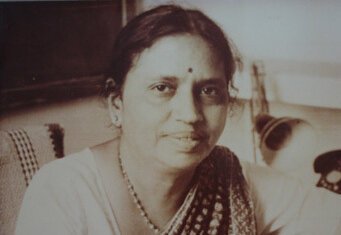
Details
Krishna Bharadwaj (1935 – 1992) was a distinguished Indian economist who contributed notably to general economic theory and development theory.
Born on 21 August 1935 in the coastal town of Karwar south of Goa, Krishna Chandawarkar was the youngest of six children of Maruti Chandawarkar and Shantabai. Father Maruti was a school teacher and the family belonged to the small community of Chitrapur Saraswats among Konkani Brahmins. The community is believed to have its ancestry in Kashmir in North India. When Krishna was two years old, the family moved to Belgaum (now Belagavi), a multi-lingual town and confluence of cultures. There Krishna completed her schooling together with training in classical music. Her music teachers hoped she would take up music for a career. In 1951, Krishna moved to Bombay (now Mumbai) for college education. In Ruia College she was fascinated by mathematics and science, but after her father’s death in 1952 she began studying economics “specifically for the potentialities it held for employment” (Bharadwaj, 1992, p. 36). Her interest in the subject was established once she took up post-graduate studies at the University of Bombay.
Krishna topped the MA class of the university in 1957 and won two scholarships. She was persuaded by her professors to continue in the university for doctoral work on the problems of the Indian economy, then at the cusp of an ambitious programme of state-led industrialisation. With the first available inter-industry transaction tables for India and only mechanical calculators to invert matrices, Krishna completed her dissertation in three years on Techniques of Transportation Planning with Special Reference to Railways in 1960. Her thesis advisor D.T. Lakdawala was to become a major figure in Indian economic policy making. After getting married to her fellow scholar and theatre enthusiast Ranganath Bharadwaj, she went on a two-year post-doctoral fellowship at MIT (Centre for International Studies then led by Rosenstein-Rodan), USA where her daughter Sudha was born in 1961. On her return to Bombay she was appointed Lecturer and a year later, Senior Research Officer (Reader) in the University of Bombay. During 1967 – 71 Bharadwaj was Fellow of Clare Hall at the University of Cambridge. After returning to India, she joined the newly set up Jawaharlal Nehru University (JNU) in New Delhi where she spent the last two decades of her life (1972−1992). She died of a lesion in the brain on March 8 1992 in New Delhi.
Bharadwaj’s career in value and distribution theory started with her well-known review of Piero Sraffa’s classic Production of Commodities by Means of Commodities for The Economic Weekly published from Bombay, following a chance request from its editor. For someone in her twenties and only recently armed with a doctorate in an Indian problem from an Indian university, the task of reviewing Sraffa’s work of pure theory1 was daunting. Her only preparation for this was a first introduction to the capital theory controversy when she attended Joan Robinson’s lectures at MIT. However, the young economist showed resolve and spent nearly two years reading the originals that underlay Sraffa’s abstruse frame of analysis. Significantly, Sraffa’s book invoked wide interest among Indian economists. At least three competent reviews had already appeared in Indian journals: Sukhamoy Chakravarty in Arthaniti, J.K.Mehta in Indian Journal of Economics, and P.R. Brahmananda in the Indian Economic Journal2. Bharadwaj’s reading of originals stood her in good stead. When her review finally appeared, Sraffa was completely impressed3 by her understanding of his propositions which had puzzled most other reviewers before her. Further, he was pleased with her suggestions on how a critique of marginalism might be developed. Bharadwaj however stood corrected on a doubt she entertained about the necessity of assuming constancy of returns in Sraffa’s sub-systems.
The review earned Bharadwaj an extended four-year (1967−71) Fellowship at Clare Hall and an association with Sraffa that lasted till the latter’s death in 1983. She remained faithful to the critical as well as the reconstructive aspects of the Sraffa project. Sraffa encouraged her initially to work on the Marshall papers which resulted in two important publications in the 1970’s. The one was on Marshall’s early writings on value which had the effect of “subversion of classical analysis” in his attempt to establish continuity of analytical development from Ricardo to the marginalists. The other was on Marshall’s closely guarded notes on Pigou’s Wealth and Welfare which seemed to challenge certain concepts and results of marginal analysis. Subsequent years saw Bharadwaj publishing important arguments against attempts to confound the distinctiveness of the structure and method of classical theory. The subjects varied from the view of Adam Smith’s system as a theory of resource allocation, the consequences of Ricardian Socialists, Samuel Hollander’s view of Ricardo’s theory of distribution, critical appreciation of Maurice Dobb and Ronald Meek on classical theory, and above all, Sraffa’s “return” to classical theory after his destructive critique of Marshall’s theory. These publications are reprinted in a volume Bharadwaj put together shortly before her illness and death, titled Themes in Value and Distribution: Classical Theory Reappraised. Another important essay she published in 1970 while still at Clare Hall concerns “switches” between methods of production of basic products, which amount to switches between distinct production systems. The essay incorporates the exchange between Peter Newman and Sraffa on the role of non-basic products in Sraffa’s analysis. Bharadwaj shows Sraffa’s economic logic in the matter to be superior to Newman’s mathematical expediency.
A work which juxtaposes these critical insights with her scholarship of classical theory in light of Sraffa, and which appeals to even the non-specialist reader, is Bharadwaj’s R.C. Dutt Lectures of 1976. The lectures trace the great analytical divide in economic theory occurring after the 1870s, namely the intellectual transition from classical political economy (CPE) to the “supply and demand” theories. The transition was marked by an ideological reaction to the classical labour theory of value and what it meant for distribution4. In analytical terms, the new theories are a generalisation of the concept of “intensive margins” in Ricardo’s rent theory5. Bharadwaj discusses the methodological implications of the shift to supply and demand theories and thus to relations in circulation6 in detail along with the recent revival and advance of CPE. A companion study devoted to economic methods is contained in Bharadwaj’s Mysore Lectures. The latter also refers to her work on the relations in the agrarian economy (see below).
Bharadwaj considered the theoretical systems of Marx and Keynes from the standpoint of the foundations of classical “surplus” approach7. While recognising Marx’s radical departures in several areas of political economy of capitalism, she argues that Marx shares the analytical bases of CPE8 which he described as scientific political economy. Further, Sraffa provides an implicit solution to Marx’s problem of transformation of values into prices of production. Bharadwaj appraised the recent critiques of the principle of effective demand and argued the case for the classical scheme of long run positions as providing the more congenial foundation for quantity dynamics. Keynes’ theory, which gives primacy to the role of expectations in investment decisions, lacks an explanation of the formation of expectations.
Perhaps less well known, especially abroad, but quite seminal is Bharadwaj’s contribution to development theory. As noted, she began her career as a graduate student and later junior faculty of the University of Bombay working on Indian problems of development. Her work in development theory ran parallel to her engagement with value and distribution theory. For this purpose, she always kept the post-colonial Indian economy in the empirical foreground. What started as a problem of planning for railways in India took two directions in critical theory. The first was a rejection of the neo-classical depiction of backwardness in terms of shortages of factor supplies, their adverse proportions, and the use of “shadow prices” for policy making in a backward economy. The other strand related to post-war development economics. She was critical of basing policies of industrialization on given technological relationships in an inter-industry framework, to the exclusion of considerations of income and demand formation. A variation in the theme was a critique of Hirschman’s concept of “key” sector. Such a sector could be identified only with respect to alternative programmes of investment.
Bharadwaj’s big break into development theory occurred with the completion of her study on Indian agriculture in 1969 in the Cambridge Department of Applied Economics, published by the Department five years after. Production Conditions in Indian Agriculture did not merely clinch an argument, but offered a whole new framework for the study of the post-colonial agrarian economy. It formed the foundation for her further work in the analysis of the macro-economy, the process of commercialization, agriculture-industry relation and so on. Significantly, she described her 1974 study as her “first work to extend classical political economy into development theory.” The 1960s saw an intense debate on agriculture in India. A number of hypotheses on observed small farm efficiency and an inverse relation between farm size and productivity were being argued, variously invoking conventional marginalist concepts and measures. Using much the same official data from Farm Management Surveys, Bharadwaj argued that small landholders’ decisions about crop choices and input use are shaped by the structure of class differentiation in production on the one hand, and the type of market involvement that such differentiation engenders, on the other. Extra-economic power relations dominate the definition and operation of contracts between landowners, tenants, moneylenders and farm workers in such a way that feasible choices of the weaker party in a given market cannot be specified ex ante independent of choices in other markets. This gives rise to the phenomenon of what Bharadwaj called “inter-linked” market transactions. Such inter-linked markets must be distinguished from the markets in conventional theory which are linked by prices alone, and where the feasible choices in one market are ex ante independent of choices in other markets. The complex nexus of agrarian relations are moreover not amenable to analysis in terms of either market “imperfections” or game-theoretic models.
There were important papers seeking extensions of the 1974 framework, for example on tenurial conditions, and on a detailed critique of “production functions” approach to the study of agriculture. However, the next milestone in Bharadwaj’s development theory was her essay on commercialization of agriculture and capitalist development. This relates to the asymmetry in the development of markets in India’s post-colonial agrarian economy. While the market for products may expand rapidly in such an economy, the input (factor) markets tend to be persistently under-formed. Commercialisation in other words need not entail capitalist development. This result on the dynamic of the Indian rural economy shows in stark terms why the debate on “mode of production” in Indian agriculture, so passionately pursued in the late 1960’s and early 1970’s, was inconclusive. Many of Bharadwaj’s studies in development theory are reprinted in her selection Accumulation, Exchange and Development posthumously published.
An estimate of Bharadwaj’s contribution to economic theory would be incomplete without her role in institution building. She founded in 1972 the Centre for Economic Studies and Planning (CESP) in JNU and nurtured it to excellence. CESP came to be known for its innovative teaching programmes combining Walrasian, Keynesian, Classical and Marxian systems, and research on the Indian economy. Bharadwaj was admired for her personal qualities of disinterested scholarship and disarming humility. After Sraffa’s death in 1983, she catalogued the mass of unpublished papers housed in Trinity College, Cambridge and, but for her own premature death in 1992, would have edited the volume of Sraffa’s early writings and notes until 1930.
Bharadwaj, K. (1962a). Notes on Some Aspects of Transportation Planning. Indian Economic Journal, 126 – 42.
Bharadwaj, K. (1962b). Structural Linkages in Indian Economy. The Economic Weekly, August 18, 1339 – 42.
Bharadwaj, K. (1963). Value through exogenous distribution. Economic Weekly, 15, 1450 – 1454.
Bharadwaj, K. (1966b). The Logic of Implicit Prices. Indian Economic Journal, 14(2), 191.
Bharadwaj, K. (1974). Production Conditions in Indian Agriculture — A Study based on Farm Management Surveys. University of Cambridge, Department of Applied Economics, Occasional Paper 33.
Bharadwaj, K. (1978). Classical Political Economy and the Rise to Dominance of Supply and Demand Theories. Orient Longmans.
Bharadwaj, K. (1980). On some issues of method in the analysis of social change Vol. 78. Prasaranga, University of Mysore.
Bharadwaj, K. (1988). The analytics of the agriculture-industry relation. In K. J. Arrow (ed.) The Balance between Industry and Agriculture in Economic Development: Volume 1: Basic Issues (pp. 198 – 217). Palgrave Macmillan UK.
Bharadwaj, K. (1989). Themes in Value and Distribution — Classical Theory Reappraised. Unwin Hyman.
Bharadwaj, K. (1991). Value and prices in the classical theory: a Sraffian Perspective. In G. Caravale (ed.) Marx and Modern Economic Analysis. Edward Elgar.
Bharadwaj, K. (1992). Krishna Bharadwaj. Philip Arestis and Malcolm Sawyer (eds.), A Biographical Dictionary of Dissenting Economists. Edward Elgar.
Bharadwaj, K. (1994). Accumulation, Exchange and Development — Essays on the Indian Economy. Sage.
Sraffa, P. (1960). Production of Commodities by Means of Commodities — Prelude to a Critique of Economic Theory. Cambridge University Press.
About the author
Goddanti Omkarnath is former Professor in School of Economics, University of Hyderabad.
Sraffa modelled production in an economy through a system of linear equations such that different sectors produced commodities produced by other sectors as means of production. With given techniques, the determination of relative prices occurs simultaneously with the determination of income distribution between workers, capitalists and landlords. ↩︎
Sraffa modelled production in an economy through a system of linear equations such that different sectors produced commodities produced by other sectors as means of production. With given techniques, the determination of relative prices occurs simultaneously with the determination of income distribution between workers, capitalists and landlords.
Arun Bose was engaged with Sraffa in relation to Marx, and Gautam Mathur in relation to John von Neumann. Mathur was perhaps the first to teach the Sraffa system in an Indian university.↩︎
Arun Bose was engaged with Sraffa in relation to Marx, and Gautam Mathur in relation to John von Neumann. Mathur was perhaps the first to teach the Sraffa system in an Indian university.
See Omkarnath (2005).↩︎
See Omkarnath (2005).
According to the labour theory of value, labour is the source of value addition in the process of production. The capitalists’ share of the net product is a function of their private ownership of means of production, or “capital.” This view of distribution is starkly from the one in neoclassical economics, in which labour and capital both earn returns as factors of production that are equivalent to their contribution to production at the margin.↩︎
According to the labour theory of value, labour is the source of value addition in the process of production. The capitalists’ share of the net product is a function of their private ownership of means of production, or “capital.” This view of distribution is starkly from the one in neoclassical economics, in which labour and capital both earn returns as factors of production that are equivalent to their contribution to production at the margin.
In Ricardo’s Principles of Political Economy and Taxation, agricultural land is taken to be finite in quantity and variable in quality. The best quality lands are assumed to be the first to be brought under cultivation, and successive production must take place on land plots of declining productivity. Therefore, the productivity on the marginal plot of land is diminishing. The concept of diminishing productivity did not extend to other sectors such as industry in Ricardo’s analysis. The new theories generalised this concept to all production activities. ↩︎
In Ricardo’s Principles of Political Economy and Taxation, agricultural land is taken to be finite in quantity and variable in quality. The best quality lands are assumed to be the first to be brought under cultivation, and successive production must take place on land plots of declining productivity. Therefore, the productivity on the marginal plot of land is diminishing. The concept of diminishing productivity did not extend to other sectors such as industry in Ricardo’s analysis. The new theories generalised this concept to all production activities.
In classical political economy, the source of value or wealth is located in the labour expended in the process of production. The value of a commodity regulates its price. The distribution of the net product between workers and capitalists is subject to relations of power and private property. In the neoclassical system, prices are regulated by demand and supply of commodities. Exchange takes place between equally-placed buyers and sellers in the realm of circulation. The value of a commodity is expressed in the amount of money or other commodities a consumer is willing to forego to consume each additional unit of the commodity.↩︎
In classical political economy, the source of value or wealth is located in the labour expended in the process of production. The value of a commodity regulates its price. The distribution of the net product between workers and capitalists is subject to relations of power and private property. In the neoclassical system, prices are regulated by demand and supply of commodities. Exchange takes place between equally-placed buyers and sellers in the realm of circulation. The value of a commodity is expressed in the amount of money or other commodities a consumer is willing to forego to consume each additional unit of the commodity.
In the surplus approach, the total product created in a time period in any society can be decomposed into the part of the product that is necessary for the reproduction of the system i.e., necessary product, and the remainder that is referred to as the surplus product. The necessary product includes the raw materials and replacement of tools and implements required in production, as well as the basket of goods required by the direct producers to meet their historically and socially determined standard of living. The surplus product accrues to the class of people who are not directly engaged in production and who instead wield power over the processes of production and distribution.↩︎
In the surplus approach, the total product created in a time period in any society can be decomposed into the part of the product that is necessary for the reproduction of the system i.e., necessary product, and the remainder that is referred to as the surplus product. The necessary product includes the raw materials and replacement of tools and implements required in production, as well as the basket of goods required by the direct producers to meet their historically and socially determined standard of living. The surplus product accrues to the class of people who are not directly engaged in production and who instead wield power over the processes of production and distribution.
The analytical bases of CPE include “the fundamental importance of analysing the process of production, the importance of the notion of surplus, of the component parts of the requisites of production, of the expanding course of generalised (sic) commodity exchange through the division of labour and, above all, of the division of society into distributive classes with their specific relations in production” (Bharadwaj 1989, p. 206). ↩︎
The analytical bases of CPE include “the fundamental importance of analysing the process of production, the importance of the notion of surplus, of the component parts of the requisites of production, of the expanding course of generalised (sic) commodity exchange through the division of labour and, above all, of the division of society into distributive classes with their specific relations in production” (Bharadwaj 1989, p. 206).