
Ashok Rudra
Agrarian political economist
By Srishti Yadav
Details
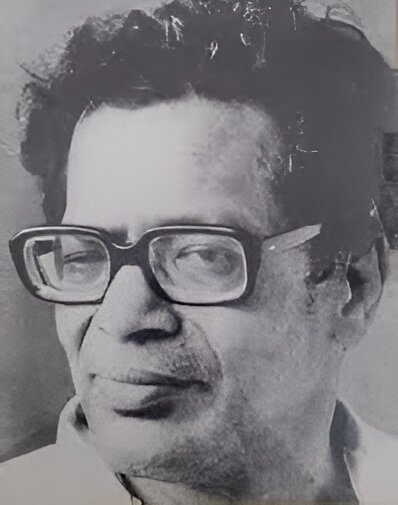
Ashok Rudra (1930 – 1992) was a multi-faceted academic best known for his work in agrarian political economy and development planning. Born in Myanmar (then Burma), Rudra’s family followed the teachings of the Brahmo Samaj. Thereafter his family moved to Calcutta, where he completed his graduation in statistics from Presidency College in 1950. His family then moved to England, where he completed his doctorate in statistics from London University in 1953 under the mentorship of renowned statistician Karl Pearson. In this time, Rudra got married to Colette, with whom he returned to India in 1953.
Upon his return, Rudra first joined Indian Statistical Institute (ISI) Calcutta, an institution with which he maintained a lifelong association in varied roles, the first of which was as a Research Officer. Between 1958 and 1960, he served as the Director of the Bureau of Economic Studies for the government of Kerala. In 1960, he joined ISI Delhi, where he became part of the Perspective Planning Division of the Planning Commission. It is here that Rudra became engaged in the work of building models for the planning process.
At ISI Delhi in 1964, Rudra wrote “Relative Rates of Growth: Agriculture and Industry” in The Economic Weekly, a piece that generated considerable debate, in which he created and estimated a model of inter-sectoral relations and growth in the Indian economy to show that the gap in relative growth rates of agriculture and industry is likely to result in massive price rise of foodstuffs. In official capacity, Rudra along with Alan S. Manne created in 1965 a “Consistency Model of India’s Fourth Plan,” which is often referred to as the Manne-Rudra model. In 1966, Rudra published a general equilibrium model for decentralised planning. Interestingly, in 1967 Rudra wrote “An Over-consistent Plan” in which he raised concerns about the lack of coordination between different Working Groups of the Planning Commission and the different Ministries in the creation of the Fourth Five-Year Plan.
By 1965, Rudra had left ISI Delhi first for Bombay University, and then in 1967 for Delhi School of Economics. It is at the Delhi School of Economics that Rudra began to engage with agricultural economics and the political economy of agrarian change. His first foray was into the Farm Size-Productivity debate. Rudra took on the dominant view presented by A.K. Sen, A.M. Khusro (1964), Dipak Mazumdar (1963), and C.H. Hanumantha Rao on the presence of an inverse relationship between farm size and yield. Specifically, Rudra argued that an F‑test is more appropriate to test the relation between farm size and yield instead of the commonly used linear regression. His careful analysis showed the relationship between farm size and yield to be spurious for disaggregated FMS data, and only retained validity for small-sized farms.
Rudra joined Visva Bharati University at Santiniketan in 1968 (the first, and shorter, of his two stints at Visva Bharati). From here, his next foray initiated what would be called the Mode of Production debate on Indian agriculture. In a three-part series of articles based on survey data collected by the Agro-Economic Research Centre, Rudra sought to counter impressionistic views by Daniel Thorner and others about the emergence of “gentlemen farmers” or capitalist farmers in the wake of the introduction of new techniques in agriculture. While parts one and two in this series presented descriptive statistics, in part three Rudra sought to test for the presence of capitalist farmers by examining the statistical association between key indicators of capitalist farming. Finding none, Rudra concluded that the existence of “the animal which has been named the capitalist farmer” cannot be ascertained.
This series of articles generated a flurry of responses, chief among them from Utsa Patnaik, who castigated Rudra (rather sharply) for a lack of theoretical engagement, and for confusing a tendency with its outcome. For the next few years, as the Mode of Production debate picked up pace and attracted more players to enter the arena, Rudra refrained from commenting directly on the nature of production relations in agriculture after an initial defensive spar with Patnaik. Instead, during this period Rudra directed his energies to the examination and documentation of various aspects of agrarian relations through Farm Management Surveys at Visva Bharati, which he oversaw.
Rudra briefly left Visva Bharati for ISI Calcutta between 1973 and 1979, before returning to the former till his retirement in 1990. In this intervening period (1974 – 1977) he also served as senior fellow at the Indian Council for Social Science Research (ICSSR). During this time, Rudra turned his attention to a critique of the neoclassical treatment of agriculture. Using survey data collected in Bengal, Rudra argued against various aspects of the neoclassical framework, such as the marginalist explanation of labour intensity in small farms, allocative efficiency of farmers, and the received view on the relationship between farm size and marketable surplus. These interventions coalesced into Indian Agricultural Economics: Myths and Realities, a book-level treatment published in 1982 that was to become a classic textbook for agricultural economics (later revised into Political Economy of Indian Agriculture published in 1992). Rudra continued this strand of work in the 1980s, returning to the non-maximising behaviour of farmers and the inability of neoclassical economics to explain labour relations in agriculture.
Rudra’s next intervention in the Mode of Production debate was a response to the semi-feudalism thesis, in particular Amit Bhaduri but also Pradhan Prasad and Nirmal Chandra. In another series of articles using FMS data, Rudra showed the absence of any differences in the economic behaviour and performance of owner-operated and tenant farmers among medium and large farms. The most influential of this series is the co-authored article with Pranab Bardhan titled “Interlinkage of Land, Labour and Credit Relations: An analysis of village survey data in east India” which would later receive book-length treatment as Agrarian Relations in West Bengal: Results of two surveys published in 1983. This series put paid to the assumption that tenancy need only be feudal in nature. It indicated the change in Rudra’s position on the question of Mode of Production, influenced not only by continued engagement with survey data but also his personal impressions from the field, and deeper engagement with theory.
In 1978, Rudra penned another three-part series titled “Class Relations in Indian Agriculture” in which, according to Alice Thorner, Rudra did a complete volte-face. Rudra adopted an understanding of class as based on contradictions, following Mao, and argued that the only two clearly defined classes are landlords (among whom there was not much difference between feudal or capitalist ones) and landless labourers. In a sparkling piece titled “Against Feudalism” written in 1981, Rudra engaged with the debate among historians on what defines feudalism, critiquing the conception of feudalism in the Mode of Production debate as propounded by R.S. Sharma and B.N.S. Yadava, and argued for the use of the concept of Brahminism instead of Feudalism in the Indian context. Turning the tables on orthodox Marxists who had previously called his theoretical understanding poor, Rudra now chides them for their lack of originality.
Meanwhile, by the mid-1970s, Rudra had returned to the Farm Size-Productivity debate with more empirical substantiation of his earlier position. In two articles (1976; 1977) written with Manabendu Chattopadhyay, Rudra raised concerns over the allegedly well-established inverse relationship between farm size and productivity by questioning the use of linear regression in the analysis. Rudra’s discomfort with the fitting of functional forms onto data by economists was an old one, reflected in a 1966 article on the (mis)use of frequentist methods. Instead, Rudra and Chattopadhyay presented straight lines hand-fitted through scatter plots of FMS data, for which a simple visual inspection revealed the absence of a consistent inverse relationship. However, the real bombshell in this debate arrived in 1980, when Ashok Rudra and Amartya Sen jointly published an article, stating that they have more in common than had previously appeared. Whether in Indian academia or elsewhere, this is a rare case of supposed adversaries finding common ground.
In the late 1980s, Rudra engaged with and wrote extensively on the transition debate, pre-capitalist modes of production, and on Marx’s theory of history. In this period, he returned to larger questions of planning and development, especially in response to the churn in Indian politics and policymaking in favour of liberalisation. Rudra was critical of the planning process, and consistently maintained his belief in the alternative of a cooperative-based economy (as opposed to a liberalised, market-led economy). Rudra clearly had friends on the “other side,” such as T.N. Srinivasan, but he did not hesitate to critique them in his writings.
Apart from his humongous corpus of academic writing (comprising more than 100 articles and eight books, two of which were in Bengali), Rudra wrote extensively on political matters. He wrote a regular column in the Bengali newspaper Bartamaan. Never having been a part of the parliamentary Left, Rudra provided a principled and consistent critique of the same in West Bengal. He wrote extensively on art criticism and literary criticism, including a book on Tagore, and penned two novels. He also wrote a book on the Brahmo Samaj in Bengali. His last book, a biography of P.C. Mahalanobis (to whom he was personally close) was published posthumously in 1996. Rudra died young, at the age of 62, in Calcutta.
Rudra, A. (1964). Relative rates of growth: Agriculture and Industry. The Economic Weekly.
Rudra, A. (1966a). Decentralised Longterm Planning — A Frame. Indian Economic Review, 1(1), 45 – 78.
Rudra, A. (1966b). Use of probability in economics. Economic and Political Weekly, 317 – 322.
Rudra, A. (1967). An Over-Consistent Plan. Economic and Political Weekly, 279 – 284.
Rudra, A. (1968a). Farm size and yield per acre. Economic and Political Weekly, 1041 – 1044.
Rudra, A., Majid, A., & Talib, B. D. (1969a). Big farmers of Punjab: some preliminary findings of a sample survey. Economic and Political Weekly, A143 – A146.
Rudra, A. (1970). In search of the capitalist farmer. Economic and political weekly, A85-A87.
Rudra, A. (1971). Capitalist Development in Agriculture: Reply. Economic and Political Weekly, 2291 – 2292.
Rudra, A. (1972). Use of shadow prices in project evaluation. Indian Economic Review, 1 – 15.
Rudra, A. (1974). Semi-feudalism, usury capital, Etcetera. Economic and Political Weekly, 1996 – 1997.
Rudra, A. (1978b). Class relations in Indian agriculture: II. Economic and Political Weekly, 963 – 968.
Rudra, A. (1981). Against feudalism. Economic and Political Weekly, 2133 – 2146.
Rudra, A. (1982). Indian agricultural economics: myths and realities. Allied Publishers Ltd.
Rudra, A., & Bardhan, P. (1983). Agrarian relations in West Bengal: results of two surveys. Somaiya.
Rudra, A. (1988b). Emerging Class Structure in Indian Agriculture. In T.N. Srinivasan and P.K. Bardhan (eds.), Rural Poverty in South Asia. Oxford University Press.
Rudra, A. (1988d). Some Problems in Marx’s Theory of History. Orient Longman.
Rudra, A. (1991). Privatisation and deregulation. Economic and Political Weekly, 2933 – 2936.
Rudra, A. (1992a). Political economy of Indian agriculture. K.P. Bagchi and Company.
Rudra, A. (1992b). In Defence of Planning and Socialism. Indian Economic Review, 27, 187 – 198.
Rudra, A. (1996). Prasanta Chandra Mahalanobis: A Biography. Oxford University Press.
Khusro, A. M. (1964). Returns to scale in Indian agriculture. Indian Journal of Agricultural Economics, 19, 51 – 80.
Mazumdar, D. (1963). On the economics of relative efficiency of small farmers. Economic Weekly, 15(28−30), 1259 – 1263.
Sen, A. (1962). An Aspect of Indian Agriculture. Economic Weekly, 14(4−6), 243 – 246.
About the author
Srishti Yadav is Assistant Professor in Economics at the School of Arts and Sciences, Azim Premji University, Bengaluru. She holds a PhD in Economics from the New School for Social Research, New York. She works in the fields of political economy and agrarian change. [Full Profile]