
T.N. Srinivasan
Theoretical and empirical development economist
By Avinash Tripathi
Details
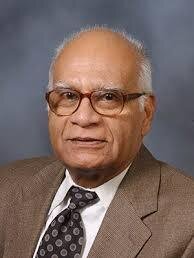
Thirukodikaval Nilakanta Srinivasan (27 March 1933 – 11 November 2018), more popularly known as T.N. Srinivasan, was a prolific economist and contributor to the Indian economic debates.
T.N. Srinivasan had a unique educational and professional trajectory. After completing his post graduation in Mathematics from the University of Madras, he enrolled for Professional Training in Statistics at the Indian Statistical Institute (ISI), Kolkata. A short stint in the Quality Inspection Unit in the same Institute as a Statistical Quality Control Officer followed. Later, he completed his PhD from Yale University. At Yale, Srinivasan’s PhD was supervised by the economic theorist Tjialling Koopmans.
After completing his PhD, he worked in the Planning Commission of India as a consultant before settling in as an academic. Primarily, his academic career included positions at the Indian Statistical Institute (1964−1979) and Yale University (1980 onwards). He held a number of visiting and advisory positions in MIT, World Bank, Stanford University, Institute of Economic Growth, and University of Minnesota among others.
This educational and professional background — theoretical and empirical, abstract and applied — made him a unique economist. He combined many specialisations rarely found together in the economic profession. In what follows, his contributions are summarised, though it must be kept in mind that given his prolific contributions, omissions are inevitable.
One strand of his theoretical work followed from the celebrated paper of Bhagwati and Ramaswami (1963). One of the fundamental results of welfare economics is that under a broad set of conditions, an economy can be shown to be efficient in the sense that it is not possible to make someone better off without making someone else worse off. One implication of this view is that there is no need for any economic policy since it is not possible to make anyone better off without making someone worse-off, and inter-personal welfare judgements are considered beyond the scope of the subject. What happens when those conditions are not satisfied and the economy can not attain the first best outcome? In such cases, it is possible to design appropriate ‘win-win’ policies. However a given departure from optimality can be addressed by a number of policy instruments. Which policy is the most appropriate for a given distortion?
Bhagwati and Ramaswami had shown the ranking of policies in the presence of domestic and foreign distortions. In particular, they had argued that in the presence of domestic distortions, a domestic policy was always superior to trade policy. Srinivasan, together with Bhagwati, extended this insight in a number of papers. Bhagwati and Srinivasan in a series of papers provided a ranking of wage subsidy, production subsidy, consumption subsidy and trade policy in the presence of Harris-Todaro type wage rigidity when the country under consideration is closed, open but small, and open large economy respectively1.
Moving from the somewhat abstract problem of appropriate policy in the presence of economic distortions, a related question is the project appraisal in the second best world. Motivating this question, Bhagwati and Srinivasan wrote: “Trade theorists have generally considered second-best problems characterising the nature of optimal policy intervention when the given distortions cannot be (directly) removed. Project analysis, on the other hand, poses a related, but different, question: if the given distortions defining current resource (and expenditure) allocations cannot be removed, would the introduction of a project which withdraws resources from this existing allocation for project use be welfare-improving?”
Interestingly, this strand of Bhagwati-Srinivasan research had an Indian connection as well. IMD Little, a pioneer in applied welfare economics, was tasked with the benefit-cost analysis of an electrical equipment plant in Bhopal. While evaluating the net economic contribution of this plant, Little realised that it was viable as long as the domestic prices of input and output were considered for computation of value added. However, when the same project was evaluated using the international prices, the project was economically unviable as it was making negative value added at those prices. In other words, if the plant were shut down and the resources used in production were exported, not only the quantity being produced could be imported but the government would be left with a surplus as well.
The key insight was that in the absence of international trade, domestic prices may not be the best way of project appraisal. This insight triggered a larger debate about the appropriate ‘shadow prices’ for project appraisal in the developing countries. Srinivasan, together with Bhagwati, made a number of contributions in this debate. They showed the conditions that shadow prices need to satisfy in order to reflect the true opportunity cost of the resources being used in the project. Moreover, they looked at the two metrics used in the project appraisal, namely Domestic Resource Cost (DRC) and Effective Rate of Protection (ERP) and showed that the true opportunity cost must be appropriately defined DRC (Bhagwati and Srinivasan, 1980; 1978).
Bhagwati and Srinivasan’s ‘Foreign Trade Regimes and Economic Development: India’, published in 1975, analysed what they called “the anatomy of exchange control”: the regulatory regime shaping the trade and investment policies introduced following the 1956 forex crisis. This was followed by a study of the ‘Liberalisation’ attempted during the 1960s.
In 1966, the Indian rupee was devalued by 57.5% for making the official exchange commensurate with the unofficial exchange rate. The move was seen as a tentative step towards liberalisation and came under heavy criticism. Critics alleged that the move was announced due to the influence of Aid India Consortium – a group of nations providing foreign aid to India.
Srinivasan, together with Bhagwati, studied the economic and political impact of this episode. They showed that the devaluation did improve the export performance as intended. Together with easier foreign aid, the Balance of Payment improved somewhat. However the removal of the import entitlement scheme – an important export incentive – reduced the effectiveness of the exchange rate devaluation. Furthermore, as the promised aid dried up, the liberalisation attempt ended in failure.
The Indian planning experiment ran into troubles after the 1966 devaluation. There was a drought and five-year plans were temporarily discontinued for three annual plans, a period known as planning holidays. Furthermore, by the time planning was resumed, the planning priorities had changed. Rather than Mahalanobis strategy of driving on the ‘growth turnpike’, priority was accorded to the political slogan of ‘Garibi hatao’. Thus the fourth and fifth plans were based on a different strategy compared to the first three plans.
Srinivasan and NSS Narayana wrote about the change of priorities as reflected in the planning targets for basic goods such as steel. He criticised the fourth and fifth five-year plans for the lack of public investment. Arguing for the return to serious planning, he advocated for public investment. This is curious given his later vigorous support for the 1991 economic reform package including privatisation of public sector units. He hoped that “the sixth plan would indeed be a plan unlike its two immediate predecessors”, implying that fourth and fifth plans were less than ‘proper plans’.
Following the 1991 Balance of Payment crisis, the Government of India introduced an economic policy reform package. It consisted of immediate stabilisation measures including devaluation of rupee and fiscal deficit compression. At the same time, structural reforms such as abolition of industrial licensing, liberalisation of foreign investment and trade regime were announced as well. In a sense, 1991 became an important turning point in Indian economic history.
In order to build broader support for the programme, the Government of India enlisted the support of prominent economists such as Jagdish Bhagwati and Srinivasan. Bhagwati and Srinivasan, on the invitation of the then finance minister Dr. Manmohan Singh, wrote a report “to study the reforms underway and to make recommendations for future action.”
The Bhagwati-Srinivasan report set out to provide the rationale and logic to the economic policy package. This report divided the proposed policy measures in two groups: macroeconomic reforms and microeconomic reforms. Macroeconomic reforms were related to the adjustments of fiscal deficit and limits on external borrowings. Microeconomic reforms included abolition of trade and industrial licensing; a grand bargain to accept IPR rules to attract FDI; privatisation of public sector enterprises and financial sector overhaul following the Narasimham Committee report. The Bhagwati-Srinivasan report contained a discussion of the agricultural policy and revamp of the Public Distribution System (PDS) as well.
In another article published in the Economic and Political Weekly (EPW) in 1991, Srinivasan outlined six major areas of reforms of economic policy. These areas included: redefining the scope of the public sector; relook at the protection offered to small and village enterprises; focussing on self-reliance (in contrast to “self-sufficiency”); balanced regional development; concentration of industrial ownership; and attainment of production targets as laid down in five year plans. The list is curious in that many nuances, for example, the distinction Srinivasan drew between “self-sufficiency” and “self-reliance” later dropped out of the reform debate. Srinivasan argued that the regulatory structure that grew around these objectives was “discretionary” and “anticipatory”. He lamented that in India we had “curative health policy and preventive industrial policy”.
His remedy was complete overhaul of the regulatory apparatus: “Tinkering with the system here and there but leaving its structure largely intact will not do. The entire system of discretionary, quantitative restrictions, whether they are imports and distribution or any other economic activities, has to be abandoned once and for all.”
Interestingly, in the report and the articles written for EPW, there is hardly any discussion of the political constraints facing the executive. To put the issue in context, Srinivasan and Bhagwati had written at length about the political aspects of the 1966 debacle, and the Rao government did not have an absolute majority in the parliament.
Sometimes called the “most knowledgeable person about the Indian Statistical System”, Srinivasan had a deep interest in the measurement issues. He made multiple contributions in the debates surrounding the Indian Statistical System (ISS) in the last couple of decades.
Estimation of national income has been a central concern of the ISS. Following the introduction of a new NAS series in 2015, there were questions surrounding the conceptual and statistical aspects of the GDP estimation. In a paper co-authored with R Nagraj, Srinivasan looked at the technical aspects of this debate (Nagraj and Srinivasan, 2017). In particular, this paper argued that a number of methodological choices new series made — including the blowing up factors used for estimation of the value added in private corporate sector, use of production function approach for estimation of value added in informal sector, and use of single deflator both for input and output — were arguable. However he was cautious not to abandon the entire GDP estimates. He wrote: “In my view, whatever legal remedies — along with incentives and punishments — are needed to achieve full compliance with the filing mandate should be adopted as soon as possible.”
Another academic controversy with enormous welfare implications relates to the measurement of employment statistics. In 2017, the Ministry of Labour and Employment had constituted a task force to revamp the employment statistics in the country. Listing the advantages of the enterprise survey over household survey for the estimation of employment creation, the task force in its report had noted: “While not as exhaustive as household surveys in their coverage of the labour force, enterprise surveys have the advantage of capturing more accurately the industry structure of employment, associated wages and other enterprise characteristics. Enterprises have a more accurate idea of their industry classification than households, which increases the accuracy of workers’ industry classification in these surveys.”
Srinivasan in 2018 criticised this position as an adequate sampling frame for enterprise surveys was not available. Furthermore, he pointed out that since annual household surveys are conducted in independent quarterly sub-samples, they can be used for calculation of employment statistics on a quarterly basis as well, provided the sample size of annual household survey is increased.
Similarly following the Finance Minister’s assurance to the parliament in 2008 that a new index for measuring inflation was being considered, Srinivasan wrote a paper at the time, recommending the introduction of the Producer Price Index (PPI) whose weighing diagram reflects the production patterns. He argued for replacing four measures of Consumer’s Price Index (CPI-AL, CPI-RL, CPI-UNME and CPI-IW) with two CPIs for rural and urban areas. Furthermore, he advocated the introduction of true ‘Cost of Living Inflation (CoLI)’ measures.
Much of Srinivasan’s writings deal with economic issues. However, his concerns extended beyond economics as well. Future of Secularism, a book edited by Srinivasan, is a collection of essays written by “some of the world’s leading scholars who hail from multicultural and multiethnic societies.” Beyond understanding the challenge posed to the current praxis of secularism, the book sought to discuss various “options to diffuse the crisis”. In a moving tribute after his death, Abhijit V Banerji described his interest in Carnatic music, showing him as a person with refined aesthetic sensibilities. Growing up in the temple town of Thanjavur, he retained a lifelong interest in the history and architecture of temples.
Srinivasan received many accolades including the Anne O Krueger Award for Scholarship and Service in International Development and the Padma Bhushan, the third highest Indian civilian award. He was noted for generously mentoring young scholars as well. In his longtime collaborator Jagdish Bhagwati’s words:
“T.N., as Professor Srinivasan was known given his long first name — which, according to South Indian custom, was in fact that name of the village he came from — was not just a great economist but also a hugely generous scholar who extended a helping hand through timely commentary on their manuscripts to countless aspiring young economists around the world.”
Bhagwati, J., & Srinivasan, T.N. (1975). Foreign Trade Regimes and Economic Development. Columbia University Press.
Bhagwati, J., & Srinivasan, T.N. (1993). India’s Economic Reforms. In U. Kapila (ed.), Recent Developments in Indian Economy Part III – The Ongoing Economic Reforms. Academic Foundation.
Srinivasan, T.N., & Bhagwati, J. (1975). Alternative policy rankings in a large, open economy with sector-specific, minimum wages. Journal of Economic Theory, 11(3), 356 – 371.
About the author
Avinash Mani Tripathi is Assistant Professor in Economics at Azim Premji University. He works in the fields of industrial organisation, macroeconomics and finance, and computational economics. [Full profile]
An open economy is considered to be small if its trade policy can not affect world prices. Otherwise it is called a large economy. ↩︎
An open economy is considered to be small if its trade policy can not affect world prices. Otherwise it is called a large economy.