
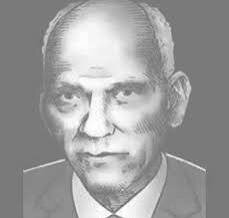
B.R. Shenoy
India’s premiere Austrian economist
By Samrudha Surana
Details
Milton Friedman called Indian economist B.R. Shenoy (1905−1978) a “prophet without honour in his own country.” As one of India’s most prominent dissenters against socialist economic policies, Shenoy championed economic freedom and market-driven solutions during a period dominated by central planning. His critique, rooted in the Austrian school of economics, remains relevant for understanding the challenges and consequences of state-led economic strategies.
Shenoy was born in the town of Bellikoth, present-day Karnataka. His early life was marked by a deep sense of commitment to the independence movement. He ran away from home to join the non-cooperation movement of 1921 – 22, during which he was imprisoned and met Madan Mohan Malaviya. Malaviya later became the Vice-Chancellor of Banaras Hindu University. Shenoy followed Malaviya there to study economics. After topping his MA examination, his professor Gurumukh Nihal Singh facilitated his admission to the London School of Economics.
At the London School of Economics, Shenoy took courses in currency and finance. In 1931, he attended F.A. Hayek’s lectures, which would later be published as Prices and Production (1932). Hayek’s theories were rooted in the Austrian tradition, a school of thought founded by Carl Menger. Shenoy remarked to his daughter that studying Austrian economics under Hayek had “immunised him against every other framework.”
During this period, against the backdrop of the Great Depression, an intellectual debate was unfolding between F.A. Hayek and Cambridge economist John Maynard Keynes. This debate unfolded mainly as a series of articles in the Economic Journal. The debate was on monetary macroeconomic dynamics and the role of the government in mitigating economic downturns. Shenoy, who was interested in monetary economics, and would write his MS thesis on “Some Aspects of a Central Bank for India”, followed the debate closely.
Shenoy was drawn to Hayek’s views opposing artificial credit creation, which contrasted with the Keynes’ advocacy of deficit spending to combat economic slumps. Influenced by Hayek, Shenoy critiqued Keynes’ Treatise on Money (1930) in two articles published in the Quarterly Journal of Economics, published by the University of Oxford. These were “An Equation for the Price-Level of New-Investment Goods” (1932) and “The Interdependence of Price-Levels” (1934). These pioneering publications, among the first by an Indian economist in top journals, established Shenoy as a sharp monetary theorist. In these papers, Shenoy challenged Keynes’ assumptions that the price of investment and consumption goods were independent — a position that aligned closely with Hayek’s later critique of Keynesian theory.
After his return to India, Shenoy led what historian Aditya Balasubramanian has described as a peripatetic career. His career spanned multiple institutions, including Rajaram College in Kolhapur, Ceylon University College in Colombo, and the Reserve Bank of India. His work with the Indian Mission at the International Monetary Fund and authorship of influential works like The Post-War Depression: The Way Out (1941) and Ceylon Currency and Banking (1941) established him as a leading monetary theorist. In 1954, he became Director of Social Sciences at Gujarat University, where he served until 1968. During this period, he was elected President of the Indian Economic Association in 1957 and joined the Mont Pelerin Society, an international group of liberal scholars set up by Hayek. In 1968, he founded the Economic Research Centre in New Delhi, which he led until his death in 1978.
In 1955, Shenoy was invited by Prime Minister Nehru to join a panel of economists tasked with reviewing and preparing background papers for the Second Five-Year Plan (1956 – 61). Under statistician P.C. Mahalanobis this plan marked an ambitious shift from its predecessor’s modest goals, embracing Soviet-style heavy industrialisation. The government aimed to control the economy’s “commanding heights” through state enterprises, deficit financing, and extensive regulations spanning price controls, industrial licensing, and import restrictions.
While contemporary economists on the panel like C.N. Vakil and P.R. Brahmananda limited their criticism to the plan’s neglect of agriculture, Shenoy questioned the very reason for central planning. In his “A Note of Dissent on the Memorandum of the Panel of Economists”, Shenoy drew on Austrian economists F.A. Hayek and Ludwig von Mises to argue that centralised planning was inherently flawed. He identified three critical problems: the inflationary consequences of deficit financing, the problem of utilising dispersed knowledge in society without market-generated monetary prices, and that the controls required in central planning were incompatible with democratic values. Shenoy would expand these critiques in his Sir William Meyer Memorial Lectures (1955−56), later published as Problems of Indian Economic Development (1958) by the University of Madras.
Shenoy’s critique of deficit financing in the Second Five-Year Plan drew from Hayek’s warnings about government intervention. He argued that the increased government spending which would be financed by creating money to finance deficits, would involve investments in heavy industries and elongate the structure of production. This meant that it would take longer to produce the required output, creating a lag between when investments were made and when goods became available in the market. In this period, increased incomes from government spending would fuel demand while the supply of goods lagged, causing inflation. Shenoy warned that this inflation would erode the purchasing power of fixed-income groups, highlighting the dangers of applying Keynesian policies in a context where capital and consumer goods were already in short supply.
Shenoy’s critique also addressed the use of price controls to combat inflation, which was recommended by some economists like D.R. Gadgil. He likened such measures to damming a flood, arguing that while they might temporarily restrict prices in one sector, they would redirect inflationary pressures to other areas, fostering black markets and corruption. He stressed that tackling inflation required addressing its root cause — deficit financing — rather than suppressing its symptoms.
Shenoy’s arguments against central planning were deeply informed by the Socialist Calculation Debate. He echoed Ludwig von Mises’ contention that without market-determined monetary prices, central planners lacked the necessary knowledge to allocate resources efficiently. In an essay titled “The Right Road to Indian Progress” published in Fortune Magazine in 1960, Shenoy argued that bureaucrats could not possibly understand the “local circumstances and conditions” necessary for decision-making in a diverse economy like India’s. Shenoy’s emphasis on the role of localised, tacit knowledge, conveyed through price signals, drew directly from Hayek’s seminal 1945 essay, “The Use of Knowledge in Society.”
Shenoy’s critique of the industrial licensing system and protectionist policies under the Second Five-Year Plan focused on their distortion of relative prices and inefficient resource allocation. The licensing system, requiring government approval for new ventures and expansions, created barriers to entry and concentrated economic power in bureaucratic hands. Shenoy argued that these decisions, often driven by political considerations rather than market signals, stifled entrepreneurial activity and promoted rent-seeking. Politically connected industries gained undue advantage, while genuinely competitive businesses were sidelined, perpetuating inefficiencies and stifling innovation.
In a 1977 article “Capital Starvation of Agriculture” Shenoy pointed out the fact that while public sector enterprises consumed up to 60 – 66 percent of investible capital, they only contributed up to 6.3 percent of the national output. Shenoy warned that this misallocation diverted resources from sectors like agriculture and small-scale industries, which could have delivered higher economic returns and created more employment. Protectionist measures, including tariffs and import restrictions, further insulated these inefficient enterprises, enabling poor performance without accountability.
Shenoy was a staunch critic of India’s fixed exchange rate regime under the centrally planned economy. He emphasised its role in causing recurring balance of payments crises. He argued that pegged exchange rates distorted market mechanisms by overvaluing the rupee. While other economists focused on the impact of this overvaluation on the elasticity of exports and imports, Shenoy focused on its effect on the structure of production, and focused again on how the central planning mechanism which focused on heavy industries meant that current demands diverged from current production, which could have been exported. This created a gap between imports and exports, which was a factor for the recurring balance of payments crises. Brahmananda saw this as an extension by Shenoy of Hayek’s model, by looking at the effects of exchange rate on foreign trade, and thus, the savings-investment gap in the country.
Shenoy’s critique of central planning went beyond pointing out its technical and economic inefficiencies; he argued that it fundamentally violated democratic principles and perpetuated social injustice. He believed that centralised planning concentrated economic power in the hands of a bureaucratic elite, stripping individuals and communities of their autonomy to make economic decisions. For Shenoy, this undermined the essence of democracy, where power should be dispersed and people empowered to act freely in their best interests. He often emphasised that true democracy required not only political freedoms but also economic systems that respected individual sovereignty.
In 1976, at the height of the political emergency, Shenoy wrote “Development Strategies: Need for Alternatives” for a seminar. In the paper, Shenoy elaborated on the unjust nature of central planning. He highlighted how socialist policies — such as licenses, quotas, and restrictions on the movement of goods — created artificial monopolies, transferring wealth from the public to a privileged few. For instance, import licensing inflated costs by introducing vast gaps between actual import prices (including costs, insurance, and freight) and the prices consumers paid. These gaps, Shenoy argued, led to windfall profits for license holders and government revenue through duties, all at the expense of ordinary citizens. Combined with monopoly gains from other planning instruments, such as public sector dominance and corruption, these transfers often consumed a significant share of the annual increase in national income, leaving the masses with less.
Shenoy was also concerned with the effect of inflation on the poor. He argued that deficit financing through creating money, which India’s central plans relied on, caused inflation that eroded the purchasing power of labourers, pensioners, and others with fixed incomes. While policymakers introduced price controls and rationing to combat inflation, it would only lead to the creation of exploitative black markets. This, Shenoy argued, compounded the hardships of the most vulnerable while protecting the privileged few benefiting from state-controlled economic systems.
His unwavering commitment to economic freedom and consumer sovereignty reflected his belief that true democracy could only flourish in an environment where individuals retained control over their economic choices. His prescient critiques of central planning, particularly his warnings about inflation, resource misallocation, and balance of payments crises, were confirmed by the very outcomes he foresaw. Yet, in his own time, Shenoy’s insights were dismissed by Indian policymakers as they were from an ‘acknowledged madman’, as these policymakers remarked to Peter Bauer, a renowned development economist.
Shenoy’s sound economic reasoning and steadfast belief in the power of freedom — both economic and individual — were a guiding light in a period dominated by centralisation and control. His work continues to illuminate the path toward a more prosperous and free society.
Shenoy, B.R. (1940). Report on the Economic Survey of Kurunegala District. Ceylon Government Press.
Shenoy, B.R. (1941). Ceylon Currency and Banking. Longman, Green and Company Limited.
Shenoy, B.R. (1944). The Post-War Depression: The Way Out. Kitabistan.
Shenoy, B.R. (1944). The Bombay Plan: A Review of its Financial Provisions. Karnatak Publishing House.
Shenoy, B.R. (1946). The sterling assets of the Reserve Bank of India. Indian Council of World Affairs.
Shenoy, B.R. (1953). Static equilibrium theories of saving. Indian Economic Review, 1(4), 45 – 67.
Shenoy, B.R. (1957). The Indian economic scene: Some aspects.
Shenoy, B.R. (1958). Problems of Indian economic development. University of Madras Press.
Shenoy, B.R. (1962). Indian planning and the common man. Forum of Free Enterprise.
Shenoy, B.R. (1963). Indian Planning and Economic Development. Asia Publishing House.
Shenoy, B.R. (1966). Fifteen years of Indian planning.
Shenoy, B.R. (1968). Indian economic crisis: A program for reform. Economics Research Centre.
Shenoy, B.R. (1968). Indian Economic Policy. Popular Prakasam Humanities Press.
Shenoy, B.R. (1974). PL480 and India’s Food Problem. Affiliated East-West Press.
Shenoy, B.R. (1974). Food Crisis in India: Causes and Cure. Reprinted in B.R. Shenoy & M.A. Srinivasan Food Crisis in India: Causes and Cure. Forum of Free Enterprise.
Shenoy, B.R. (1980). Economic growth with social justice. Forum of Free Enterprise.
Shenoy, B.R. (1996). Planned progress or planned chaos: Selected Prophetic Writings of Prof. B. R. Shenoy (M. Bhatt, ed.). East West Books.
Amin, R.K. (2002). Money, market, marketwallahs. Centre for Civil Society.
Balasubramanian, A. (2021). Alone at home, among friends abroad? B. R. Shenoy from Austrian school monetary economist to Cold-War public intellectual. In A functioning anarchy? Essays for Ramachandra Guha (p. 370). Allen Lane.
Friedman, M. (2012). (P. J. Shah, Ed.). Friedman on India. Centre for Civil Society.
Rajagopalan, S. (2021). Ideas and origins of the Planning Commission in India. In S. Mehrotra & S. Guichard (Eds.), Planning in the 20th century and beyond, 1st ed. (pp. 61 – 88). Cambridge University Press.
Sreenivasan (1975), Food crisis in India: Causes and cure. Forum of Free Enterprise.
White, L.H. (2012). The clash of economic ideas: The great policy debates and experiments of the last hundred years. (1st ed.). Cambridge University Press.
About the author
Samrudha Surana is a PhD student in Economics at George Mason University and a Graduate Fellow with the F. A. Hayek Program in Philosophy, Politics, and Economics at the Mercatus Center. His research interests lie in the political economy of peace and comparative institutional analysis. [Full profile]