Piecing Together a Forgotten Part of Rayalaseema’s History
Chakali Chandra Sekhar is recovering the overlooked history of Dalit Protestant Christianity in Rayalaseema through archival research and oral traditions
Details
When Chakali Chandra Sekhar is not teaching English to undergraduate students at Azim Premji University, it’s easy to imagine him wearing a detective’s hat and poring over large volumes of archival material to piece together clues from the past. For the past 13 years, he has been tracing the history of Dalit Protestant Christianity in the Rayalaseema region of Andhra Pradesh between 1820 and 1940, a period when Protestant missionaries from England were highly active there. Using archival and ethnographic research, he is reconstructing the fragmented histories of Dalit communities and uncovering stories of conversion shaped by the search for dignity and equality.
A significant biography that has emerged from his research sheds light on the life and legacy of Aguta Nanchari, a weaver-trader from the Mala community, who is one of the earliest recorded Dalit converts in the region. A single paragraph in a Telugu vernacular book became the first clue that Nanchari was a leading figure in a mass conversion movement.
“Conversions were considered to be the missionary’s success story and Dalits were seen as passive recipients. But my research has revealed that conversions were often driven by a deep search for dignity, recognition, literacy, and a different kind of community.”
To understand how this historical figure mobilised an entire community to embrace Christianity in Rayalaseema in the mid-19th century, Chandra Sekhar spent countless hours sifting through the archives of the two main mission organisations that operated in the region – the London Mission Society and the Society for the Propagation of the Gospel (SPG). Field work in Nanchari’s village of Rudravaram helped him uncover the oral traditions that have kept the first convert’s memory alive. Over a period of seven years, he was able to assemble the fragments of Nanchari’s story and even ended up locating the weaver-trader’s great-granddaughter in the process.
Studying individual lives is helping Chandra Sekhar better understand why many Dalit communities chose to convert to Chrisitanity during this period.
“Conversions were considered to be the missionary’s success story and Dalits were seen as passive recipients. But my research has revealed that conversions were often driven by a deep search for dignity, recognition, literacy, and a different kind of community.”
In reconstructing Nanchari’s story, Chandra Sekhar discovered a deeply spiritual man who was reportedly imprisoned after trying to enter a temple in Ahobilam, a major pilgrimage site dedicated to Lord Narasimha. While serving his time in Cudappah jail, he encountered Protestant missionaries who influenced him to convert. When Nanchari returned to his village, he led many families from his community to do the same, and even went on to establish a church of the SPG Telugu Mission in 1852.
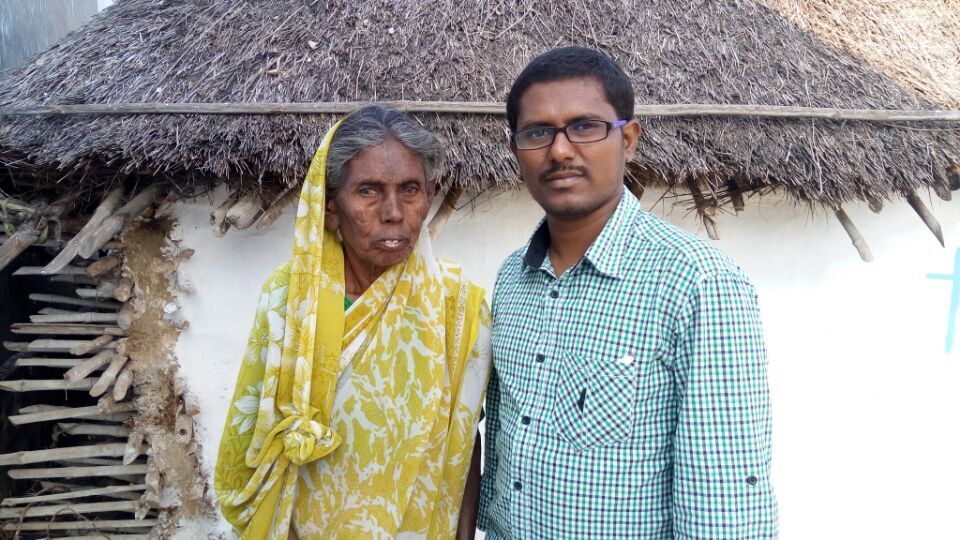
Chandra Sekhar, a native of one of the districts of the Rayalaseema region, became interested in the history of Dalit Protestant Christianity in the region during his PhD at the English and Foreign Languages University (EFLU). The prominent historian P Sanal Mohan’s research on Dalit Christians in Kerala inspired him to dig deeper into his own region’s history.
“Rayalaseema has rarely been studied as a distinct region in the history of Protestant Christianity. It is mostly subsumed by the broader history of Telugu or Andhra Christianity,” he says. “However, Rayalaseema witnessed mass conversions among Dalits to Protestantism in the 1850s, making it significant in its own right.”
The region’s unique history became an important setting for Chandra Sekhar to understand Dalit conversions to Christianity. In the 19th century, the region faced recurrent droughts, famines, and agrarian poverty. The Mala and Madiga Dalit communities were subjected to deeply entrenched forms of caste discrimination. They lived in segregated settlements and were historically denied access to temples, wells, schools, land, and other public spaces due to their caste location.
Hidden in the archives
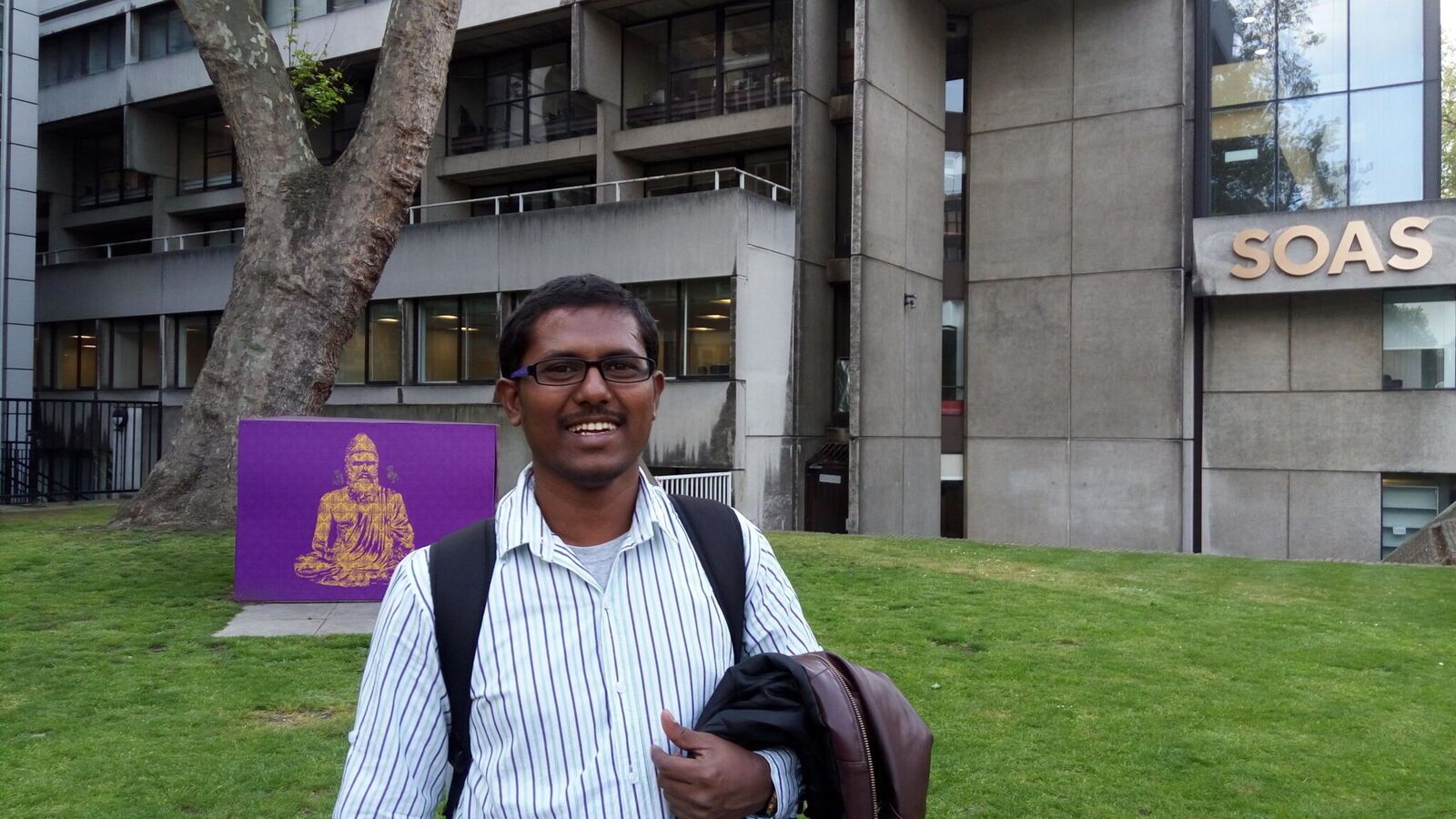
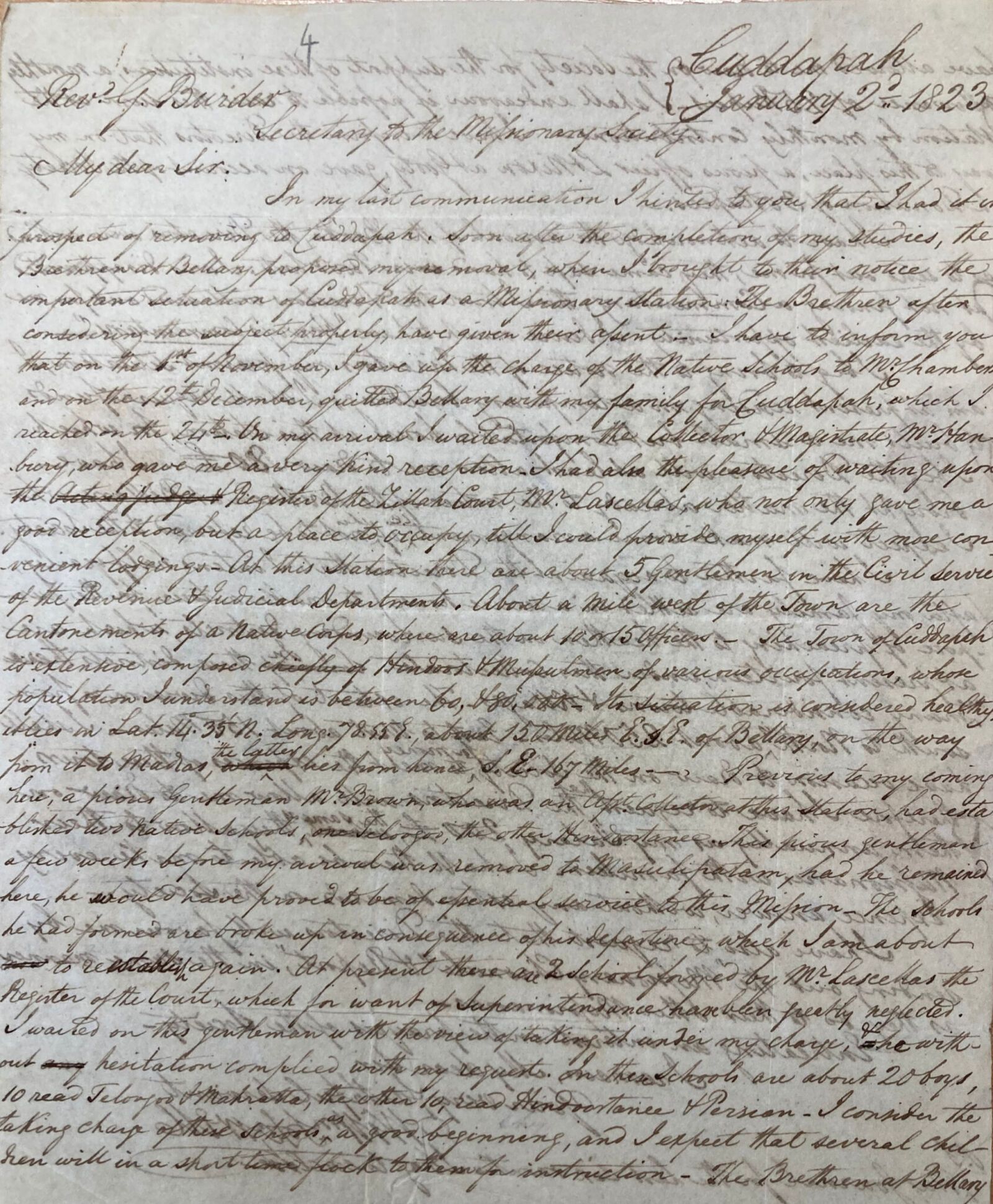
Archival research has been the backbone of Chandra Sekhar’s work. Over the years, he has spent countless hours examining stacks of missionary records, vernacular material, handwritten notes, colonial state reports and faded letters at the SOAS, British and Weston libraries, state archives in Tamil Nadu, Andhra Pradesh and Telangana, the old libraries in Rayalaseema and Andhra Pradesh, and the libraries of theological colleges in South India. The small details he gathered along the way helped him make sense of how larger social and historical structures shaped people’s lives.
One of the key questions in his research is how conversion impacted the lives of Dalit women in the 19th century. Following the mass conversion movements, missionaries established night schools in Dalit settlements to teach reading and writing. Although their primary aim was to enable Bible reading, literacy became a means of social change. In a society where education was largely denied to women, it paved the path for some of them to become ‘Bible women’ or preachers in the 1870s.
“Until then Dalit women’s mobility and social interactions were limited. With their new identity as Bible women, they entered the public sphere. For the first time, they earned a salary. Although they were recruited to evangelise other women, the profession opened up new possibilities beyond the confines of caste and patriarchy.”
Chandra Sekhar has pieced together the lives of the first three Bible women from Rayalaseema – Mary Wesley, Martha Reuben, and Bathsheba. On the archival trail, he discovered that the women’s work wasn’t limited to preaching; instead, they were also reading, teaching, singing, interpreting texts, comforting the sick, and creating new spaces for women’s participation.
Reconstructing the history of a marginalised community comes with its own set of challenges. Missionary reports were usually written for donors in England to highlight conversions and other missionary achievements. They rarely mentioned family histories, caste backgrounds, or even the full names of local workers and converts.
In the initial years of mission work, missionaries repeatedly named themselves but did not name local converts, and provided detailed biographies of Brahmin converts while referring vaguely to Dalits. “This silence tells us whose life was considered worthy of documentation. However, this changed and Dalit subjectivity entered into the archives after mass conversion movements,” Chandra Sekhar remarked.
Working with fragmented records in his research on Bible women occasionally led him to dead ends. Other times, some smart sleuthing came to the rescue. For example, the reports did not directly state the caste identities of Mary and Martha. Chandra Sekhar had to find the evidence in small clues. A breakthrough came when he discovered a report stating that a lady belonging to a dominant caste refused to eat food cooked by Mary because the former believed that it would affect her caste status. Another report described the women Martha met as belonging to a caste higher than her own.
Connecting the dots
Chandra Sekhar cautions that archives are not neutral nor complete accounts of the past, but they are especially valuable for dates, correspondence, institutional decisions, and small incidents that may not survive elsewhere. The researcher has to read against the grain and corroborate evidence across sources.
For many Dalit communities, it is the oral traditions that ultimately preserve community memories and histories that official records often overlook.
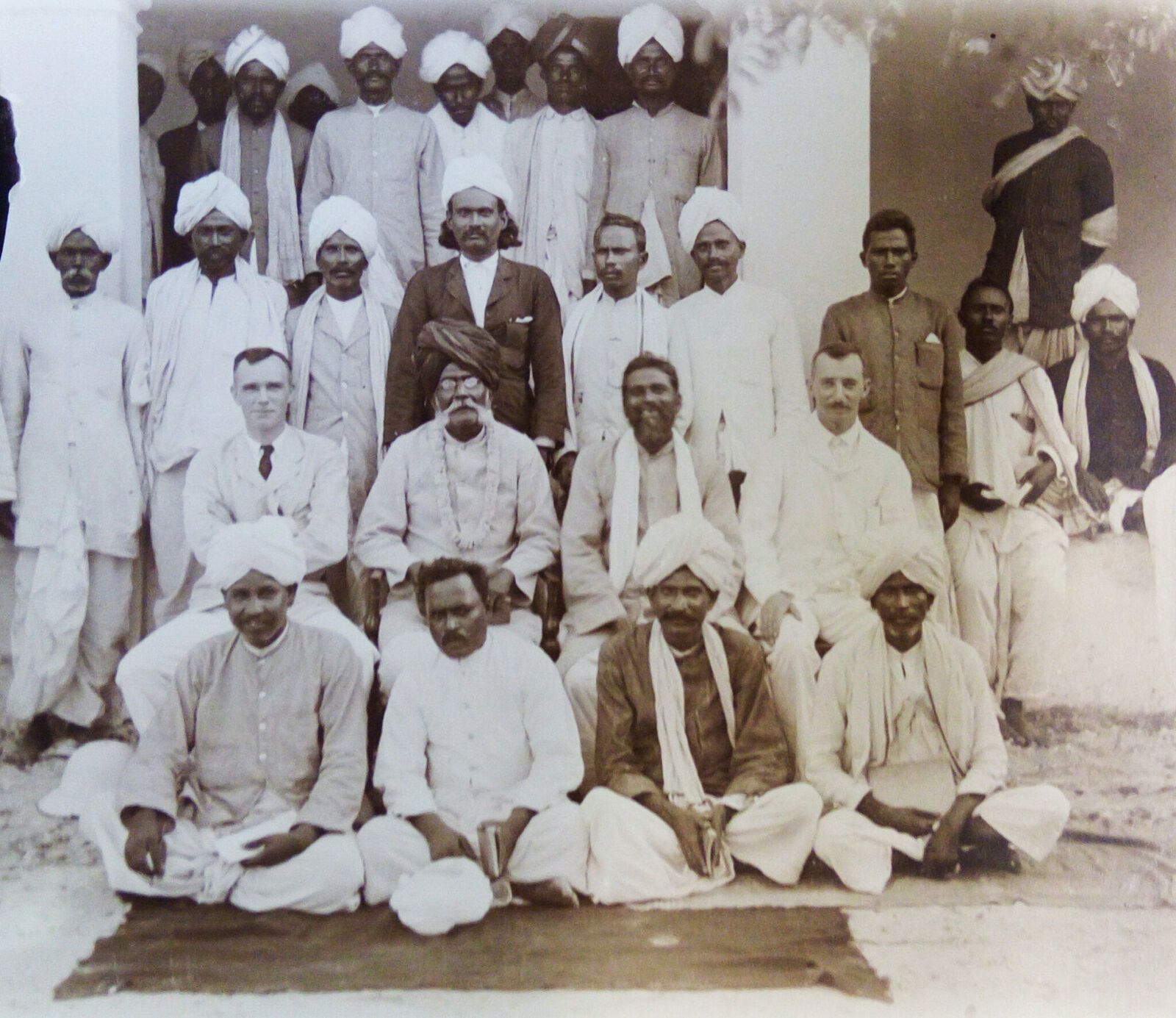
“In my work, the most meaningful history emerged by bringing these sources together. The archives supplied fragments and chronology, while oral and vernacular accounts helped me understand what those events meant to the communities themselves.”
More than a decade into his research, Chandra Sekhar continues to uncover new leads. Only a few months ago, he got access to a biography with new information about Nanchari. During his next trip to London, he hopes to search prison records for more answers on the first convert. His upcoming book, by Cambridge University Press, detailing the history of Dalits’ encounter with Protestant Christianity in colonial Rayalaseema and the social transformations that followed conversion is a significant step towards ensuring these forgotten lives and histories are no longer confined to the archives.
About the author
Meryl Garcia is a consultant with Azim Premji University’s Research Centre. She spends her time exploring research projects across the social sciences and uncovering the stories hidden within them.