How small acts of care are transforming human-elephant interactions in Valparai
A human-elephant conflict mitigation programme is quietly shaping coexistence on the ground in Valparai, writes Meryl Garcia.
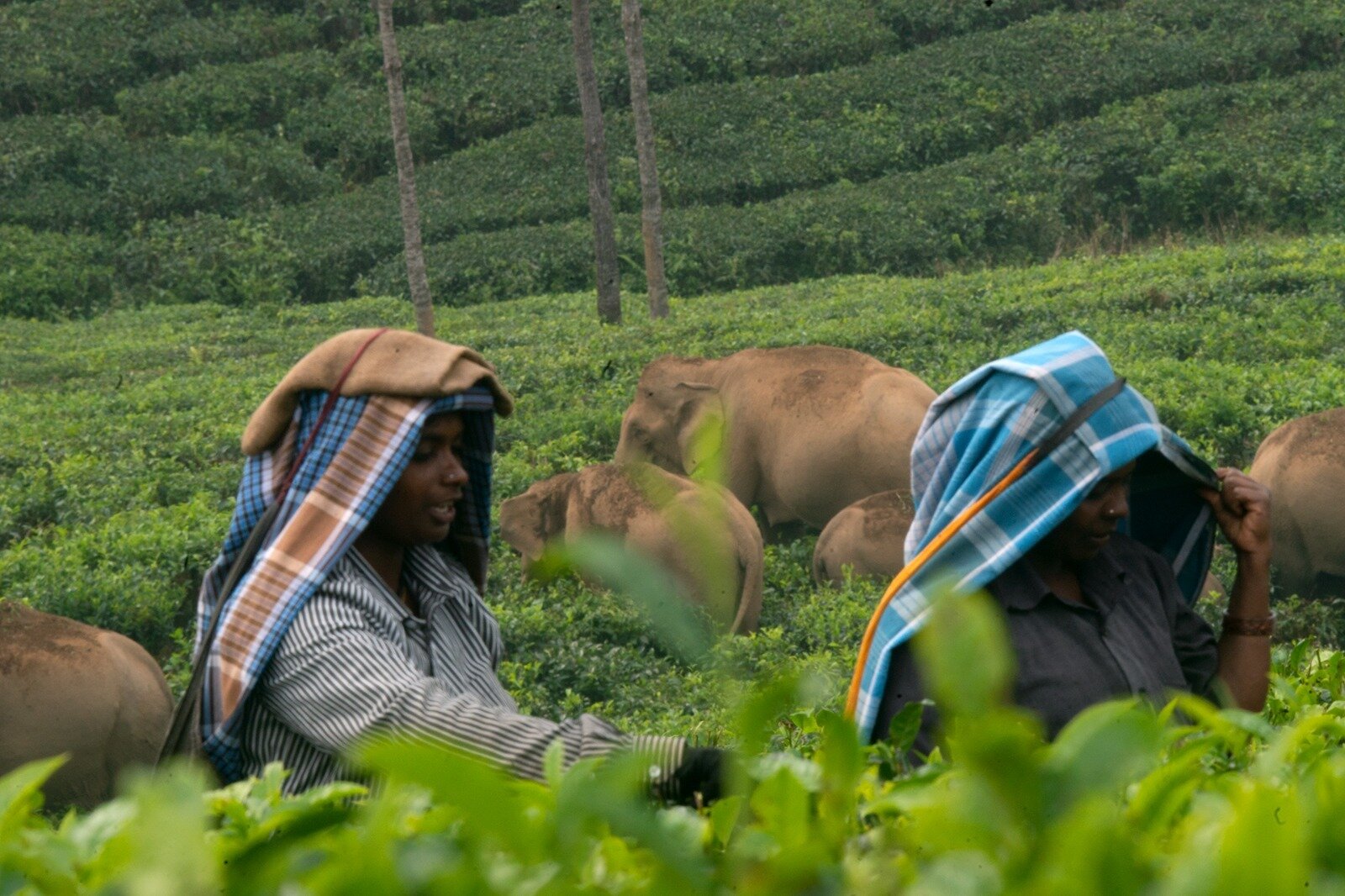
Tea pluckers at work as a herd of elephants passes behind them in a Valparai estate. Image credit: M Ananda Kumar
Details
At a time when human-elephant conflicts pose a major conservation challenge in many parts of the world, the Valparai plateau in Tamil Nadu stands out as a unique example of how thoughtful mitigation efforts are paving the way for co-existence. Located in the Western Ghats and surrounded by Anamalai hills, Valparai is inhabited by over 70,000 people, most of whom work in its tea and coffee plantations or ‘estates’ as they are popularly known. The area is also home to around 120 Asian elephants who frequently move from one protected area to the other.
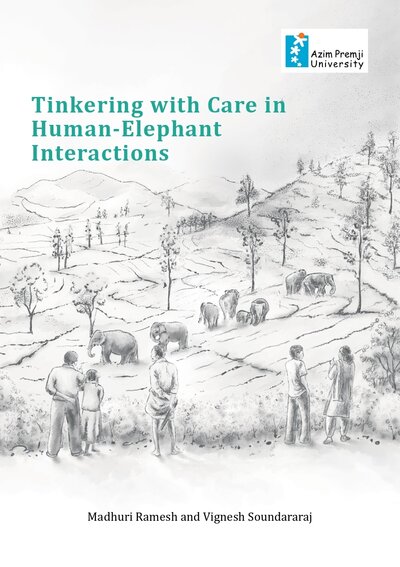
What does it take to reduce conflict between people and elephants in a landscape where their lives often spill into one another? The answer lies less in grand interventions and more in deliberate community-focused actions of communication, care, and tinkering. This is what researchers Madhuri Ramesh and Vignesh Soundararaj explore in their book Tinkering with Care: Human-Elephant Interactions in Valparai that focuses on a human-elephant conflict mitigation programme anchored by a non-governmental organisation, the Nature Conservation Foundation (NCF).
“I’ve been interested in how conservation plays out when it’s not a formal protected area like a wildlife sanctuary or a national park. There are people, transport systems, infrastructure, and wildlife in the middle of all of that.”
As the book notes, the programme grew out of scientist M Ananda Kumar’s conviction that “for people to believe in coexistence, conservationists have to work to remove that fear”. In 2006, Anand and his team set out to do just that, working closely with local communities to ease fear and build practical support systems in Valparai.
NCF’s programme has been complemented by the efforts of the Anti-Depredation Squad (ADS) of the Tamil Nadu Forest Department since 2014. Together, they strive to ensure the safe passage of elephants through the landscape while trying to safeguard people’s lives and properties.
Understanding human-elephant conflict
Around the world, changing land-use patterns and the loss of elephant habitats have pushed humans and elephants to share the same fragmented spaces. The same holds true for Valparai where people from Tamil Nadu, Jharkhand, Assam, and elsewhere work across 56 estates. The plateau is also home to indigenous communities like the Kadar, Muthuvar and Malai Malasar.
For the elephants, the human settlements in Valparai offer access to a variety of food from sugar to bamboo. In the book, Kumar*, from the Kadar community, observes that when food and water are scarce in the summer, elephants come searching for water. Swamps and forest fragments serve as resting grounds during their seasonal migration from one forest to another. People, in turn, use the forest patches to collect fuelwood, water or simply take a quicker route.
When humans and elephants live and interact in such close quarters, conflict becomes inevitable. Property damage is frequent when elephants raid homes and ration shops in search of food like rice and sugar. Sometimes people get injured and occasionally, there is loss of life. There are times when crackers are thrown at elephants or they are chased and injured.
Practical pathways to coexistence
In the last two decades, NCF has closely studied elephant behaviour in this landscape, identifying its habitat, route, and interactions with people. Working in tandem with the forest department and plantation companies, it has implemented a series of practical interventions like moving shops away from housing colonies and encouraging companies to insure specific at-risk buildings.
One insight that stood out early on is that many fatal encounters stemmed from people not knowing that elephants were nearby. To address this critical gap, NCF implemented an innovative early warning system which passes on messages about elephant presence to the people living there. This system has been built by tracking, mapping and learning to predict the routes of various herds in the plateau.
Tasked with composing the SMS, voice messages, and ticker text for the local TV channel, NCF member Chitra highlights the importance of the early warning system. “Our alerts must not miss reaching anyone — no one must suffer because I made a mistake,” she comments in the book, adding that after over a decade of doing this work, sending messages in the morning and evening has become second nature.
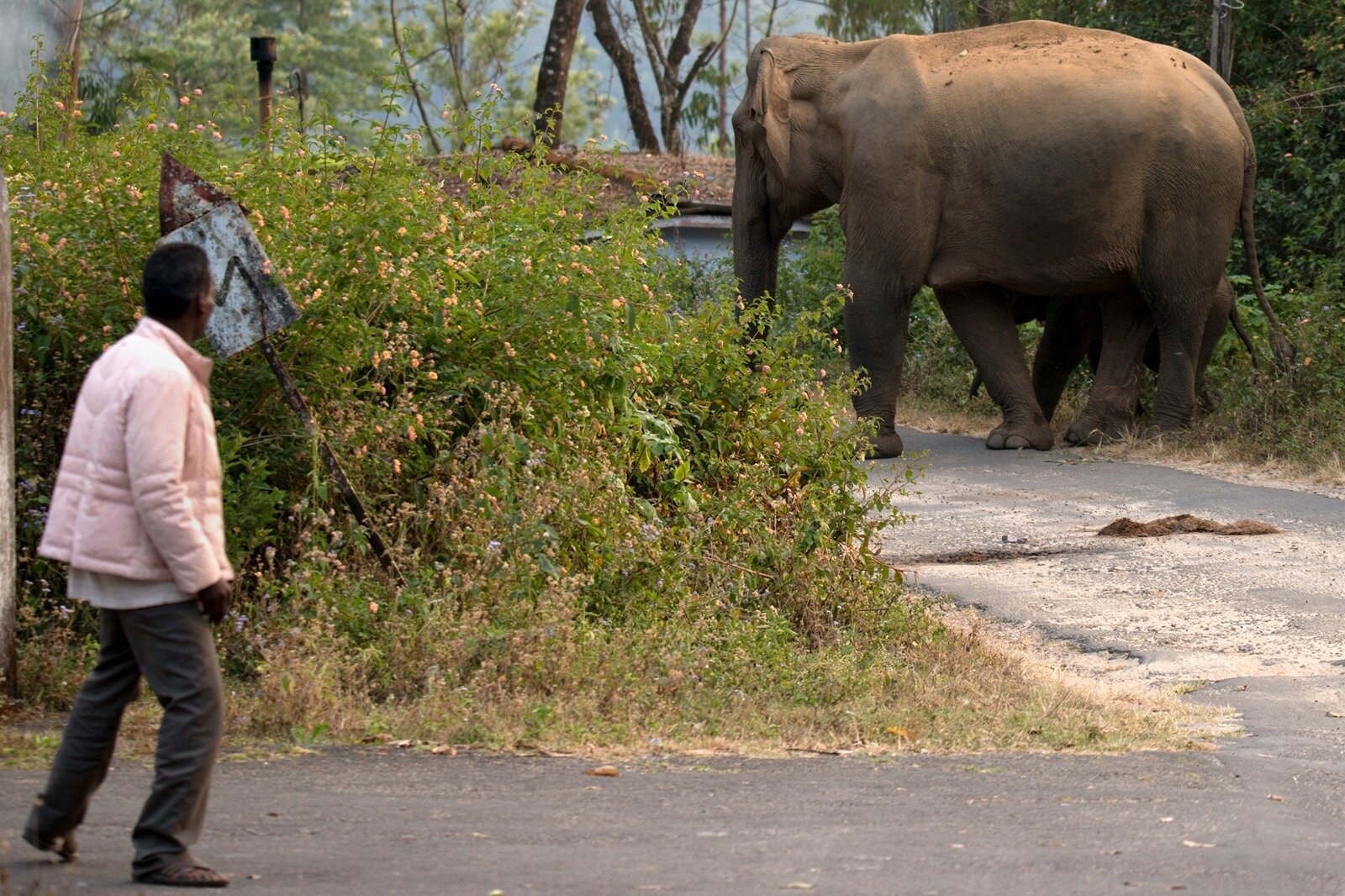
A Valparai resident looks on as an elephant and its calf cross the road.
Mounted red indicator lights are another solution to alert people about the presence of elephants, especially at night. While negative encounters leading to human injuries and deaths still occur in Valparai, NCF data suggests they have drastically declined since the programme has been implemented.
Occasionally, NCF uses interactive skits for the estate workers, reminding them what it means to live alongside elephants each day. These skits feature familiar, real-life scenarios involving people and elephants. The audience is encouraged to weigh in, offering a chance to collectively arrive at safer ways of navigating these moments.
Conservation through the lens of care
Curiosity about the experience of people living in a conservation landscape drew Madhuri, a faculty member at Azim Premji University, Bengaluru, to study the programme. With a PhD in Conservation Science and Sustainability Studies, she was keen to apply an anthropological approach to understand the programme and track its impact through the lens of care work.
“I’ve been interested in how conservation plays out when it’s not a formal protected area like a wildlife sanctuary or a national park. There are people, transport systems, infrastructure, and wildlife in the middle of all of that,” says Madhuri. Her work examines how care is built on careful observation, an understanding of needs and behaviours and adapting solutions based on context and practical constraints. In the context of Valparai, the task of care is to reduce the occurrence of such encounters or to increase awareness on how to conduct oneself in the proximity of elephants.
Everyday acts of care
The book highlights the small but impactful ways in which the local population attempts to show care towards the animals. It is commonplace here for vehicles to slow down and wait patiently for a herd to cross the road, with drivers restraining themselves from honking or flashing headlights. Despite frightening encounters, it is heartening to see people’s empathy for the elephant.
“They consider the elephant’s hunger to be much bigger than theirs. If the elephant comes to eat one’s sugar or rice, then letting it do so in itself is a big act of generosity.”
“Avalo periya vayaru vechchitu adhu sapadukku evalo thedavendirukkum [Imagine with that huge stomach, how hard it (the elephant) must be searching for food!]” is a common refrain among the old estate workers, who themselves struggle to make ends meet.
Vignesh, the co-author who spent almost a year in Valparai for field work, explains how humans and elephants are connected by a common sense of hunger. “They consider the elephant’s hunger to be much bigger than theirs. If the elephant comes to eat one’s sugar or rice, then letting it do so in itself is a big act of generosity.”
Vignesh is also fascinated by how instead of a top-down approach, the strong social networks help in building co-existence. “Rather than a vertical traditional passage of knowledge, it is more about the horizontal communitarian understanding of knowledge – they teach each other through friendship, companionship, and self-help groups. These are the moments that make the Valparai people who they are,” he says.
Where the people make the programme
The establishment of support systems has helped ease the path to coexistence. Though people may still feel anger when their homes are damaged, the forest department and plantation management assist with repairs. The ADS team, which tracks elephant movement and alerts residents, is quick to respond when people make frantic calls about elephants near their homes.
While technology-driven early warning systems and other interventions by the conflict mitigators are important dimensions, the ‘micropractices of care’ carried out by people like bus drivers, tea pluckers, and cattle herders determine what happens in the moment an elephant appears. It is in these small, everyday moments that the success of the programme truly lies.
*The book uses pseudonyms to protect the confidentiality of individuals.
For a closer look at the programme and the people behind it, read ‘Tinkering with Care: Human-Elephant Interactions in Valparai’ here.
- Published
- Authors
- School of Development
Abstract
In the Valparai plateau in southern India, encounters between people and Asian elephants (Elephas maximus) are common and sometimes they result in conflict. Building on almost a year of fieldwork, this book presents a polyvocal account of how the Nature Conservation Foundation along with other actors such as the forest department, workers and management of tea plantation companies and ordinary residents engage in a range of care-ful and caring practices that enable people and elephants to share space and cultivate a sense of interspecies sociality. This book speaks to the anthropology of biodiversity conservation, human-wildlife coexistence and multispecies studies.
Authors: Madhuri Ramesh, Vignesh Soundararaj
Links
Image credits: M Ananda Kumar
About the author
Meryl Garcia is a consultant with Azim Premji University’s Research Centre. She spends her time exploring research projects across the social sciences and uncovering the stories hidden within them.