Daily Reflections as a Pedagogical Resource
Anuja Jose highlights how students’ reflections helped ideate ways to explore pedagogy without a predesigned curriculum.
Details
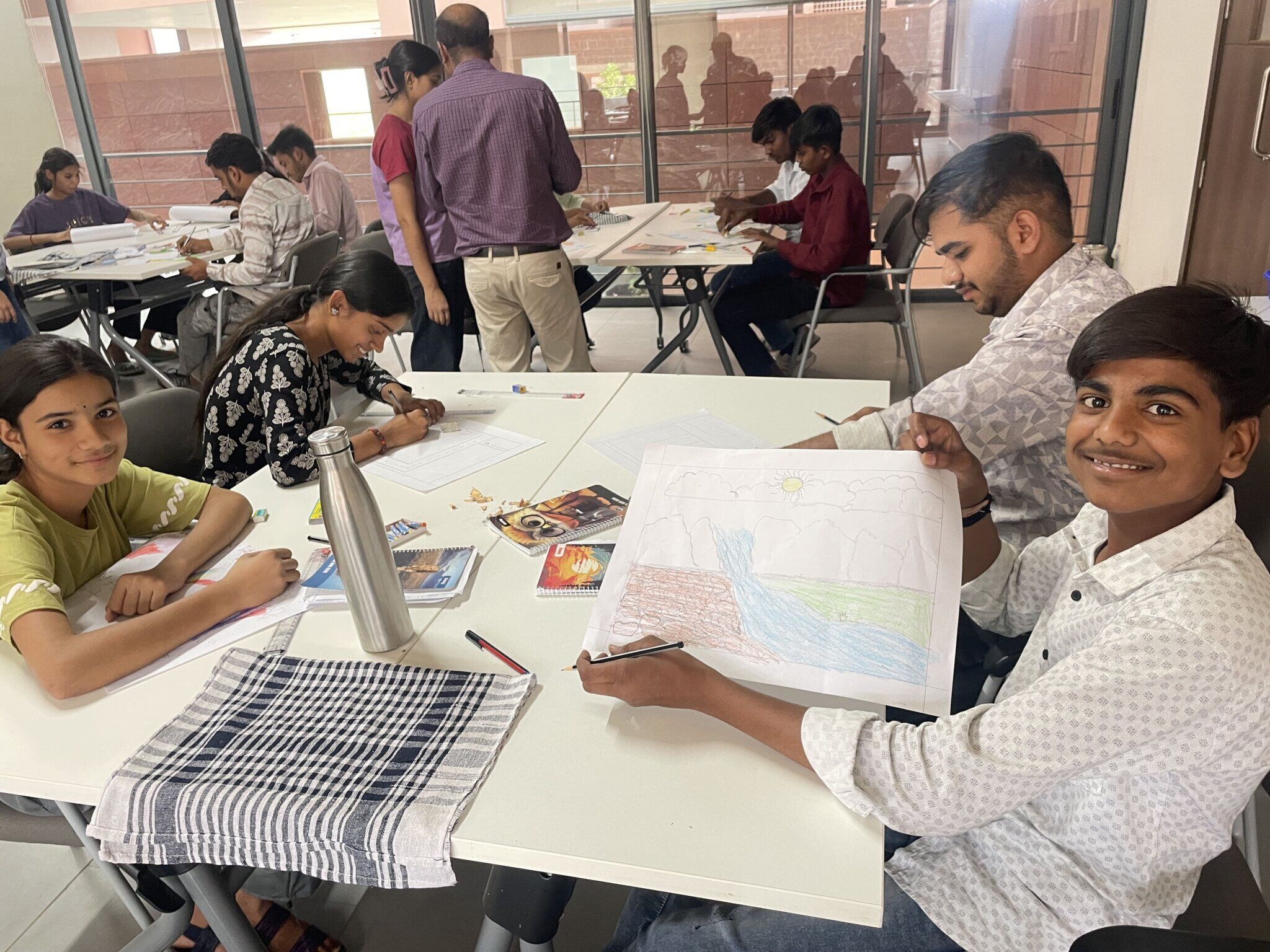
“What is your vision in life?” When school students from Pipaliya Jahir Peer and Kalyanpur, Bhopal were asked this eliciting question, most of them were silent, while some giggled at the absurdity.
It felt strange for the students, both boys and girls, of these villages that they were allowed to imagine a greater life for themselves when they knew that their roles were predetermined. The motivation, thus, for the ‘Padhenge Hum Badhenge Hum’ community engagement initiative at Azim Premji University, Bhopal was simple — to teach students to think.
Teaching how to think, however, cannot be divested from how students perceive themselves as individuals in a society. It has to be taught by demonstrating how their thoughts are valid and integral to the construction of the present and the future. The students who registered for the programme, between grades VII-XII, were primarily from school systems that still regarded thinking independently as secondary to reproducing textbook content (activities included), conventions and beliefs.
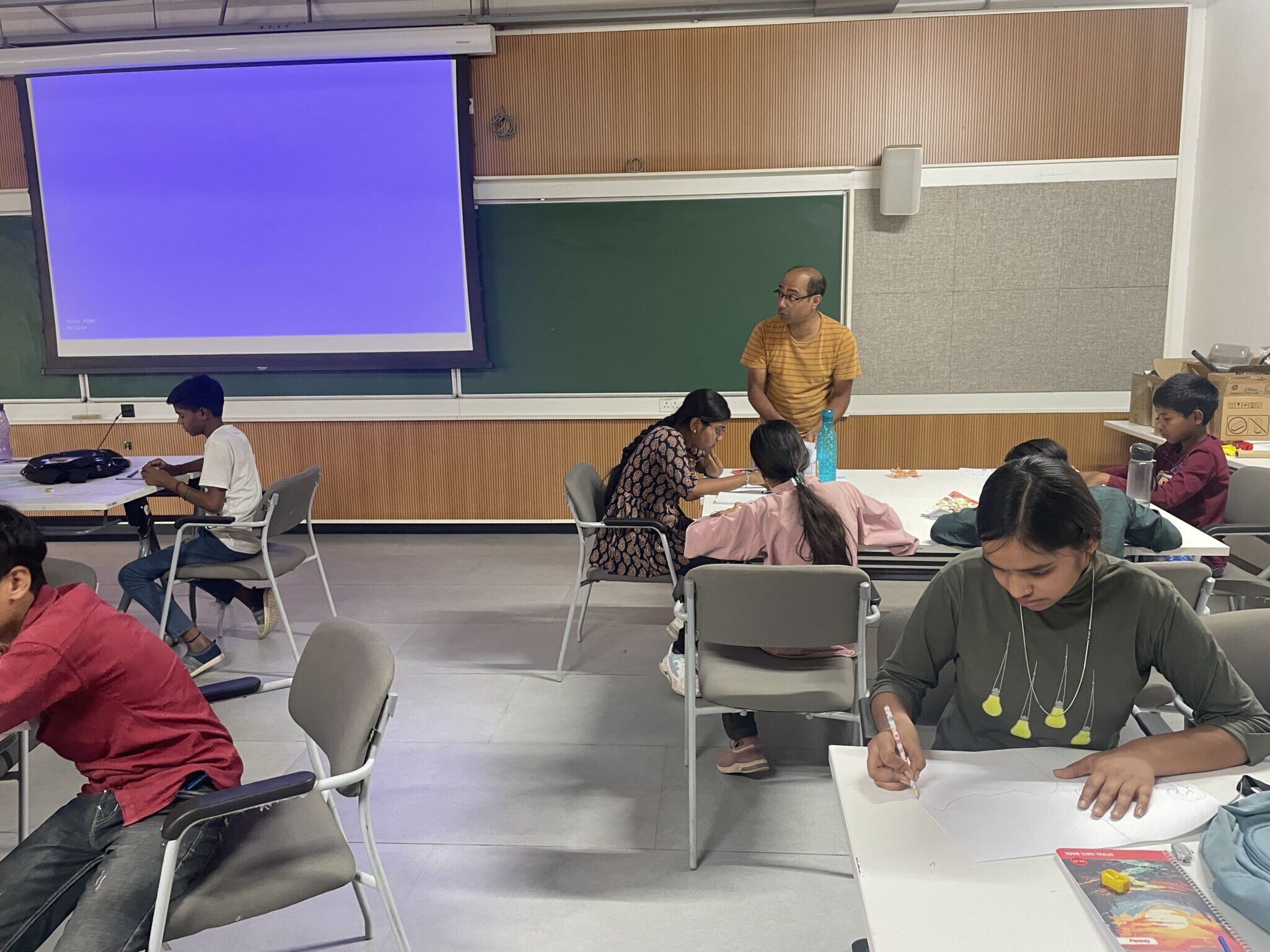
Guiding these students to question, evaluate, investigate and become conscious had to be integrated meticulously into the teaching methods and materials that were used in the programme. One such activity was a dedicated daily session on writing reflections. As can be expected, the students found the exercise of reviewing their experiences, feelings and learning cumbersome in the initial days. Students largely saw it as a form of a report writing — parroting the topic that was covered during the day.
For instance, students would copy a maths problem that was solved in class onto the reflection sheet or would simply state a topic from Ancient History that was discussed. It gradually became evident that students had to be guided into the art of expressing their thoughts. They needed prompts on areas that they could lead their thoughts to, in order to express themselves more efficiently.
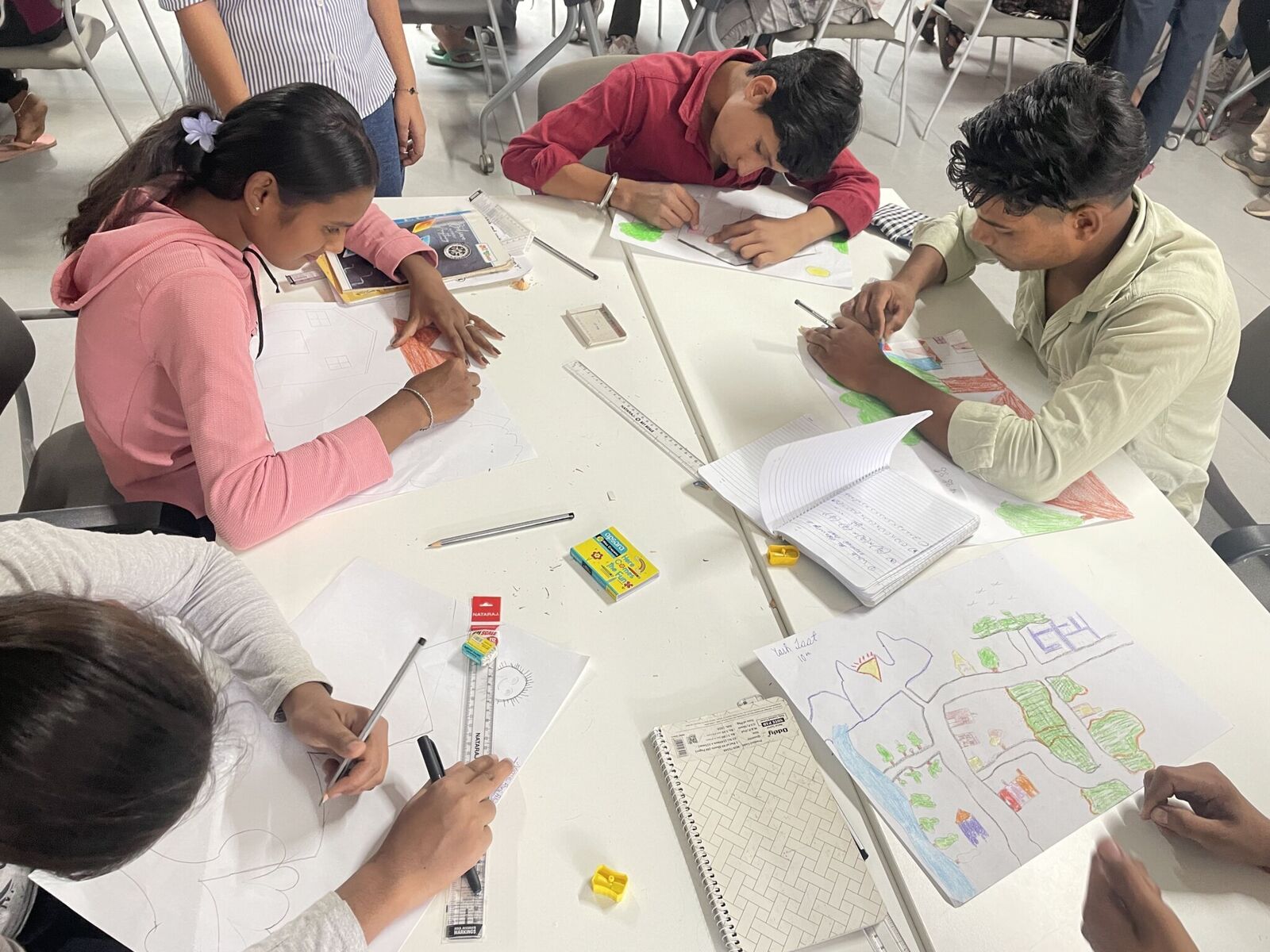
Hence, the students were asked, at the start of the day, their opinions on fictitious scenarios that were likely to occur in their village and surroundings, their feelings about past events in their personal life and even questions that could create ethical dilemma. Interestingly, some students began to catch onto the objective of the exercise, showing better responses in their daily reflections.
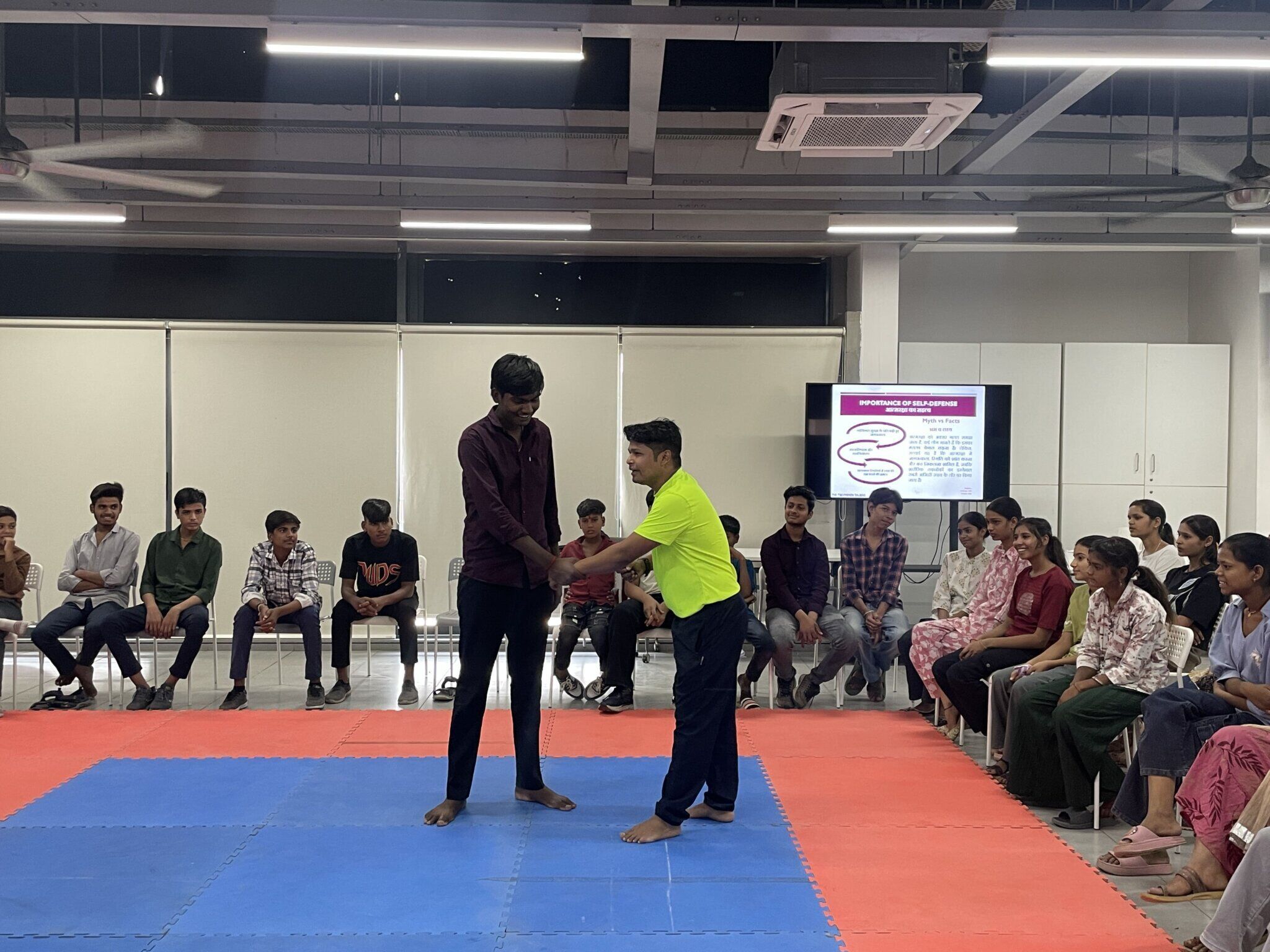
Let us consider the above excerpts as examples. Through the six subjects (English, Hindi, Mathematics, Science, History and Physical Education) that were introduced, students began to observe, examine and differentiate the knowledge, experiences, and learning received at school with that of the programme.
Although the students did not exhibit a comprehensive critique, as one would fancifully expect, by attempting to compare and contrast at an elementary level, one cannot deny that the students were dabbling with the art of critical analysis. They also slowly began to learn self-reflexivity that is required to gauge their individual growth, and the kind of effort they need to put in to perform better. This is evidenced in how one student is conscious of how he is developing the habit of writing Hindi, and the other is reaffirming himself to practice more to become proficient in English.
Examples of daily reflections from other students include recognising how their routines have accommodated study hours, suggesting a realisation that their habits are gradually changing and how they have learnt manners and civic sense through the programme. These daily reflections, while prodding students to explore their intelligence, have also served as pedagogical inquiry for the faculty involved in the programme.
“पिछले एक महीने के इस कार्यक्रम लेने के बाद मैंने अपने बारे में बहुत कुछ सीखा है। जैसे कि मैंने अंग्रेज़ी में देखा कि अगर अंग्रेज़ी बोलना, लिखना और सीखना है तो रोज़ लिखना और बोलने का प्रयास करना होगा। तभी अंग्रेज़ी बोलना सीख जाऊँगा और मैं रोज़ प्रयास करूँगा।“
(After participating in this one-month programme, I learned a lot about myself. For example, I realised that if I want to learn to speak and write English, I have to practise daily. Only then will I be able to speak English fluently. I will continue to practise every day, and I will definitely learn to speak and write English.)
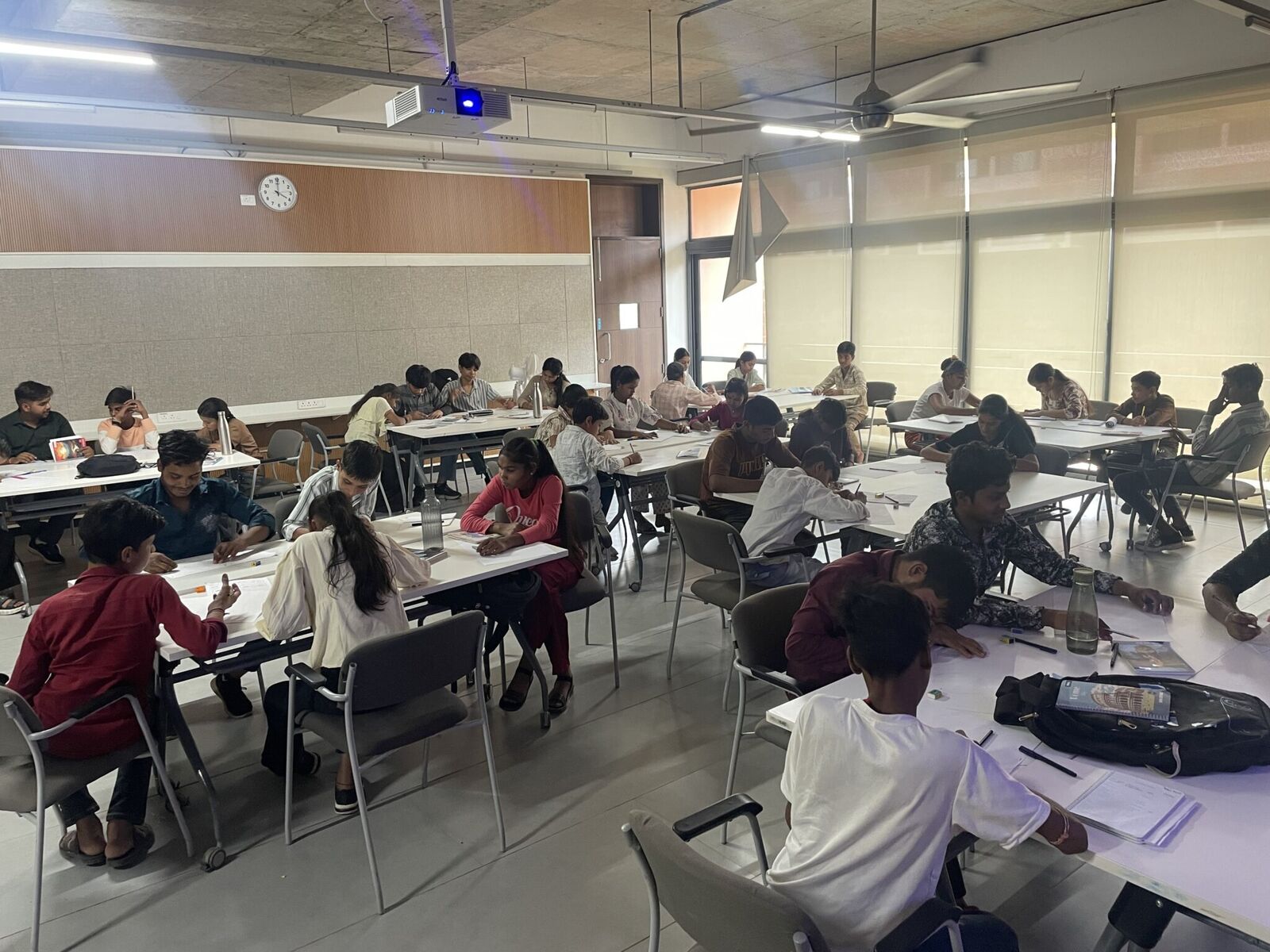
Weekly meetings for faculty members engaged in the programme were conducted to reflect on how they can use the daily reflections as a resource to evaluate their teaching methods and understand the positionality of the student. The community engagement coordinator also gave valuable inputs and experiences of engaging with the families of these students, which helped the team deliberate on pedagogical approaches. The reflections were read, discussed and commented upon to ideate ways to explore pedagogy without a predesigned curriculum.
As mentioned earlier, an understanding that the students’ roles in their community as predetermined was obtained through these collective exchanges. By the sixth week, students began enquiring about the programmes offered at the university and the prospect of higher education. Measuring the success of a programme such as ‘Padhenge Hum Badhenge Hum’ lies in this: broadening students’ vision to new possibilities.
“पिछले एक महीने में हमने अंग्रेज़ी में टेंस को समझा, जो आज तक हमारे स्कूल में नहीं समझाया गया था।वह हमें यूनिवर्सिटी ने सिखा दिया। हिंदी की बात करें तो हिन्दी हमें पहले लिखना नहीं आता था, पर अब हमें हिन्दी लिखना आने लगा है।हमें हिन्दी लिखने कीआदत हो गई है।“
(In the past month, we learned tenses in English, which had never been explained to us in our school before. The University taught us this. As for Hindi, we did not know how to write in Hindi before, but now we have started learning to write. We have also developed the habit of writing in Hindi).