
Mahila Sabhas in Mandla, Madhya Pradesh: Strengthening Local Governance for Social Outcomes
Collective action in Mandla’s villages helps women engage with district administration to improve water access and address alcoholism and domestic violence.
Ritwika Mitra | Oct 2026
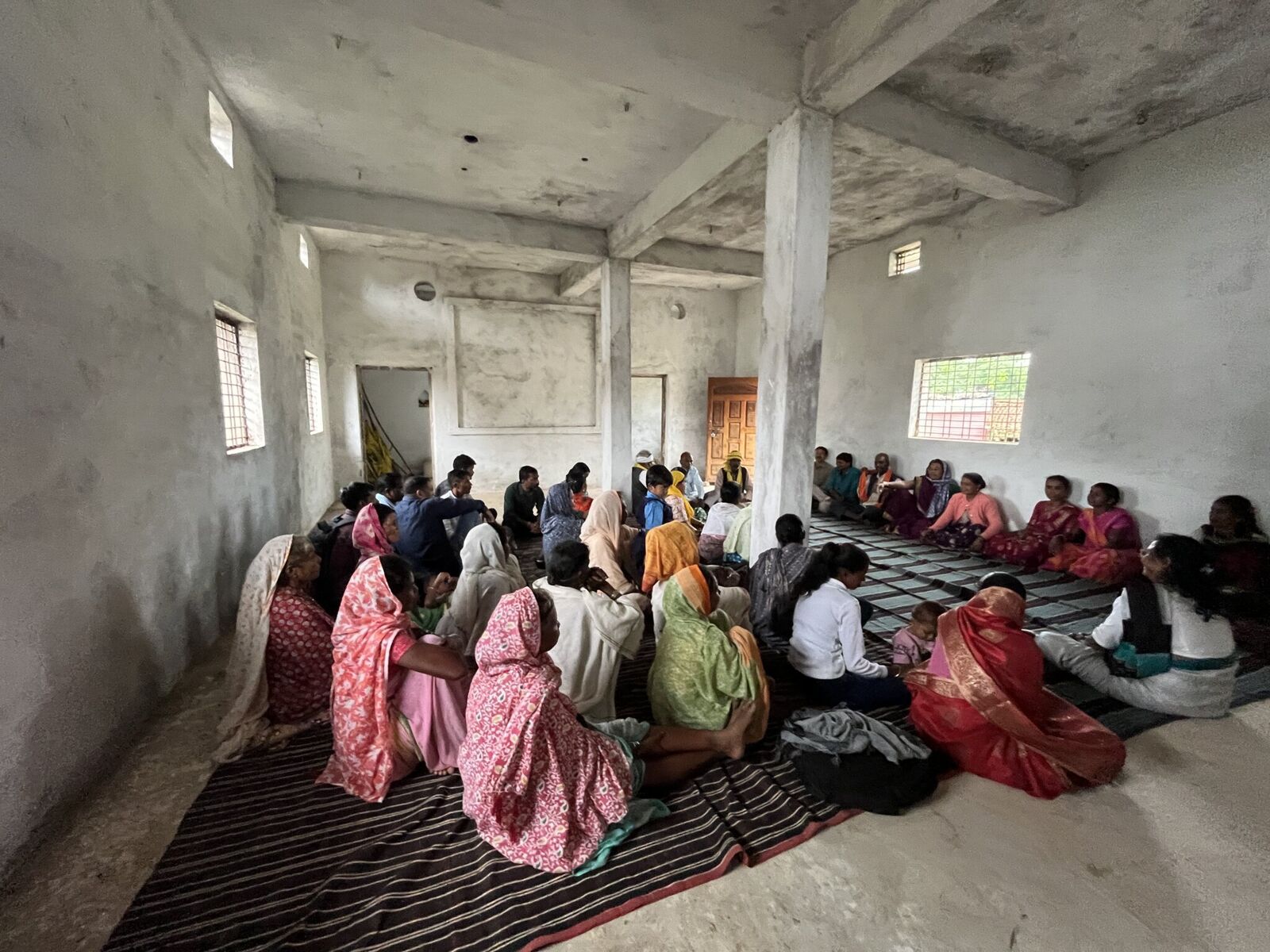
Details
In Surehala village in Madhya Pradesh’s eastern district of Mandla, a village tubewell was a distant dream till mid 2025. For the administration, 57 families were not a compelling reason to provide them with a hand pump in the area. The roughly 1.5 km walk to the neighbouring village for water was not considered a big deal. But the women decided otherwise: they took empty matkas (pitcher) as a symbol of protest and decided to reach the collectorate to meet the district collector and demand access to water in the village. The point was made; before they had reached home, the tankers had reached their village, and soon a hand pump was installed.
As the rain splattered on an August afternoon, women negotiated the muddy roads to reach the Ajeevika Bhavan (A space where women assemble to discuss matters that affect them in particular. This is statutorily mandated in MP) near the primary school for a meeting: the umbrellas queued up outside the room as the chatter kept steadily rising inside. The conversations centred on the day’s meals, vegetables dried for year-round use, the need for better menstrual hygiene, and the fact that no Gram Sabha had been held in the past year.
The women start the meeting with a prayer written on the wall. Soon, they candidly talk about what they have achieved by mobilising women to join Mahila Sabhas: anyone above the age of 18 years is encouraged to join the Sabha. The hand pump is just one of the many outcomes they have achieved. The quorum for the Sabha is 10 percent of the total number of women voters in the respective Gram Panchayat — if the quorum is not met, it must be cancelled and a new date decided.
Over the past 10 years, the women have managed to raise awareness around school roofs which had collapsed, how to better the farming practices, and exchanging recipes so that the traditional food items live on through the exchange of wisdom between the elderly and the young women.
“Bazaar se kharide toh paisa zada lag jaega, ek dusre ko pooch sakte hain, paisa bachega (If you have to buy from the market, it would be more expensive. Ask each other for tips to save some money”) the women tell each other about the right mix of fertilisers.
Tribals make up over 21 percent of Madhya Pradesh’s population. Over 28.8 percent of Mandla’s population is multi-dimensionally poor, according to the Niti Aayog’s MDP index. The numbers have significantly come down from the data collected during NFHS‑4 when over 48 percent were multidimensionally poor. The female literacy in the State was slightly less than 60 percent as compared to the male literacy of almost 79 percent.
The women in Mandla district have been actively trying to change that — despite the poor literacy rate, their involvement in matters of local governance has meant active changes at the village level which have gone a long way in achieving tangible and intangible benefits.
Somti Dhurway says, “We pooled in money from our pockets and went to Mandla town. Even before we had returned to our village, two tankers had reached here.” The women laugh, taking a few moments to reminisce about how that victory felt.
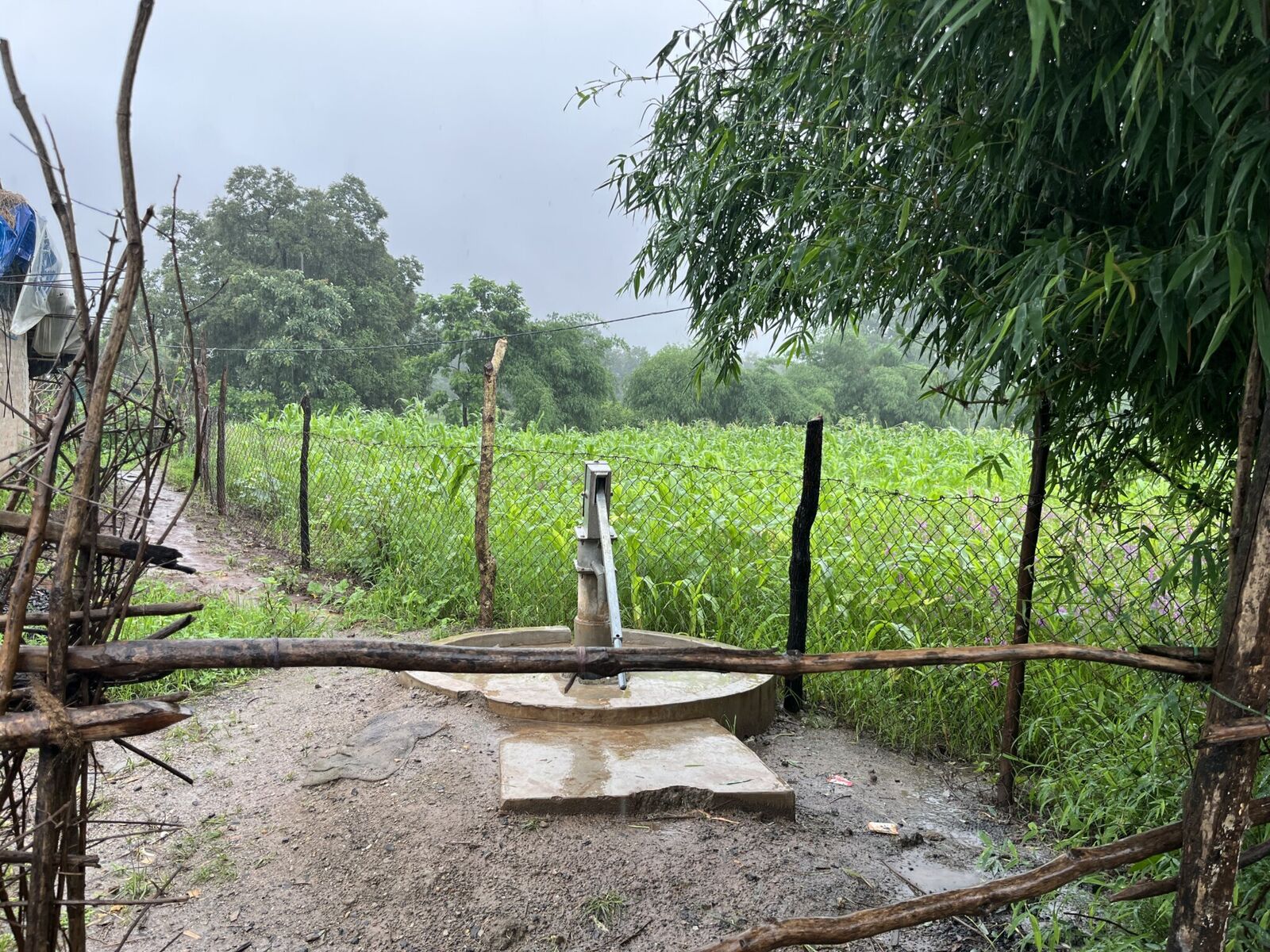
Surehala village has a hand pump now after the women rallied for it.
It was not easy for Somti to be part of the Mahila Sabha. In the initial days, she was scared to talk to other women in the village but gradually found a way around it. The pressure from her in-laws and husband added another layer of barrier. The questions would not stop coming — “What do you do by attending these meetings? What really happens at these meetings?”
“But I did not pay attention to it. When there was good work achieved and the women also got the opportunity to learn something, I gradually started liking speaking to women. I started solving their problems — they would talk to me and listen to me! Now, a lot of women are getting benefits by joining us,” she adds.
For Somti, the biggest takeaway has been to understand that the coming together of more women can help them get out of their homes, without family members asking too many questions. Mobilising women also has meant cracking down on domestic violence in villages. “We penalise men who perpetrate violence. All of us women gather and go to her home when a woman reports domestic violence. There has been an improvement — the men are now scared,” says Somti.
“We penalise men who perpetrate violence. All of us women gather and go to her home when a woman reports domestic violence. There has been an improvement — the men are now scared,” says Somti.
The Mahila Sabha is a platform which encourages women’s participation in the decision-making process, starting at the village level. The focus is to instil confidence among the women to voice their concerns, get their due rights and understand how they can contribute to the welfare of the village by actively playing a role in village-level decision-making forums and the Gram Sabha.
For Sukmaniya Dhurve, who has studied till class 8, the story is somewhat similar. When she started coming for the meetings, there would be heated exchanges at home. She tried to take one day at a time and kept attending the meetings — which happen mostly twice in a month. If any urgent issues come up, they inform each other through word of mouth at a given time. Many of the meetings also happen organically.
As the Mahila Sabha made progress on social outcomes, Sukmaniya’s bargaining power at home improved. “I remember having conversations at home, asking them to change their behaviour towards me for attending these meetings. Personally, these Sabhas taught me that girls and boys should have equal access to education. It felt good.”
In the neighbouring village Jhulup, during an afternoon sabha women collectively talk about how far they have come. “In other years, you could not have imagined walking on this road,” says one woman. Another woman joins in, “The mud would be waist-deep because of the condition of the roads. It is because of our coming together and rallying for this that things are different this year.” The other women unanimously agree with them.
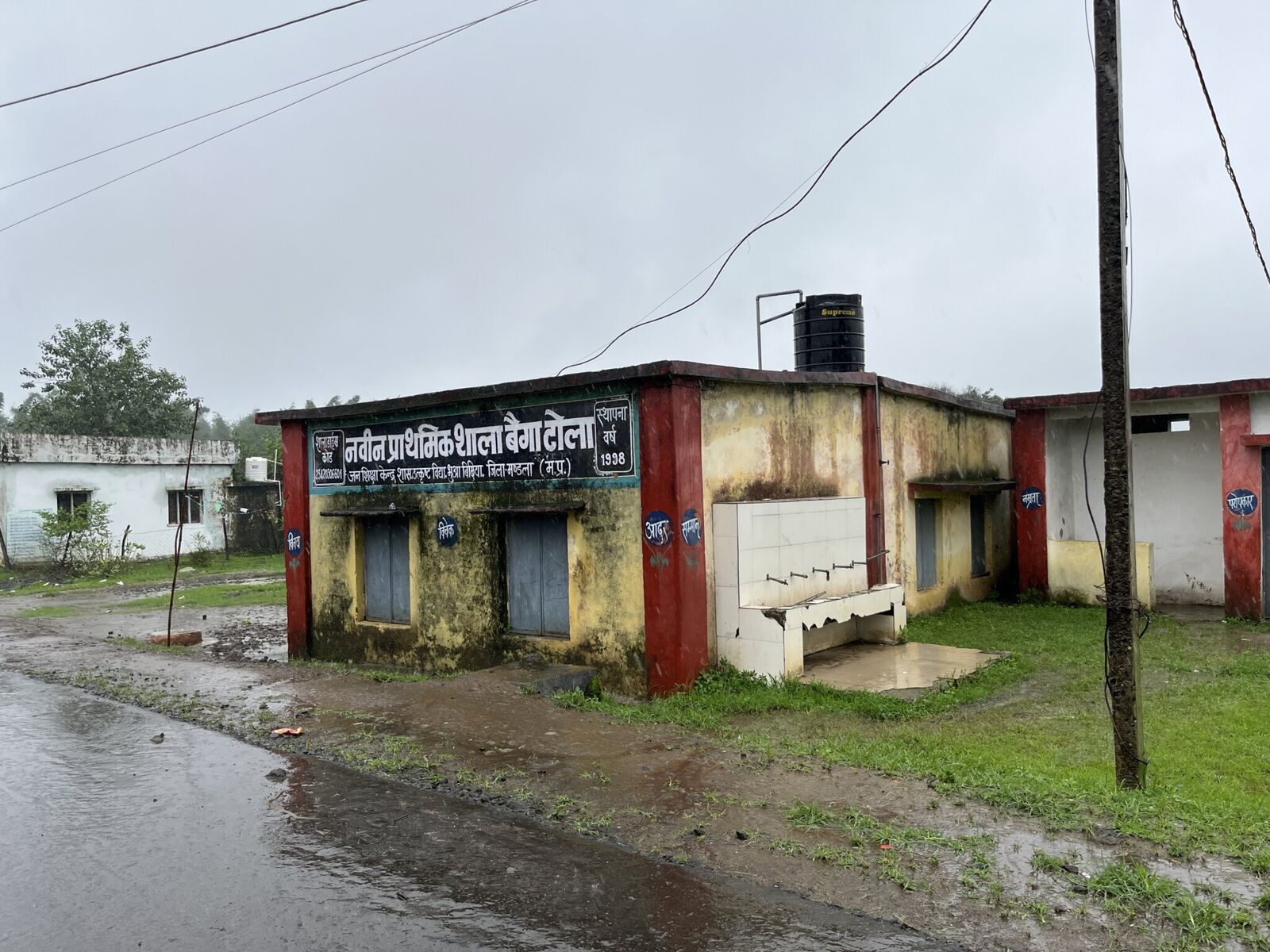
Children have to huddle in the school kitchen for classes as other parts of the building remains largely inaccessible during the rains.
Sampatiya Yadav, 33, speaks about her ambition of serving as a Panch in her village someday. “The benefits of a woman being a Panch and Sarpanch are many. Currently, we have women serving as both Panch and Sarpanch. Say, I become a Panch in the coming days — I would be able to do so many things when it comes to roads, schools which are in poor shape here. There are so many problems that school children face. They get out of the house for school and get muddied passing through these roads. I will bring about a real change in their situation,” says Sampatiya.
“As part of Mahila Sabha, we discuss the traditional and indigenous ways of cultivation. We talk about recipes with Mahua – which many of us may not know these days — some women bring over what they have cooked at home so that others can taste. This helps us understand more about our traditional way of eating which is getting erased,” she adds.
The women argue about the next course of action, and which agenda to focus on the first. “The rainy season is the most difficult. Put all these points about the forest division road, and the school in the agenda for Gram Sabha. Mohalla wale pareshan hain (People in the locality are in difficulty),” says a lady.
Mahila Sabha acts as a pressure group across different levels
Ragini Parte, 52, who hails from Barkheda village, says the Mahila Sabha serves as the launching pad for women where they can develop their leadership skills and nurture the ambition of serving as a leader in the community.
“From here, women enter the local governance system for the long term — serve as Panch and Sarpanch. This is just the foundation stone for women leaders. We get a different kind of energy when we can help other women get justice,” says Ragini as women and men stream in the recently constructed Adivasi Bhavan in Sijhora village.
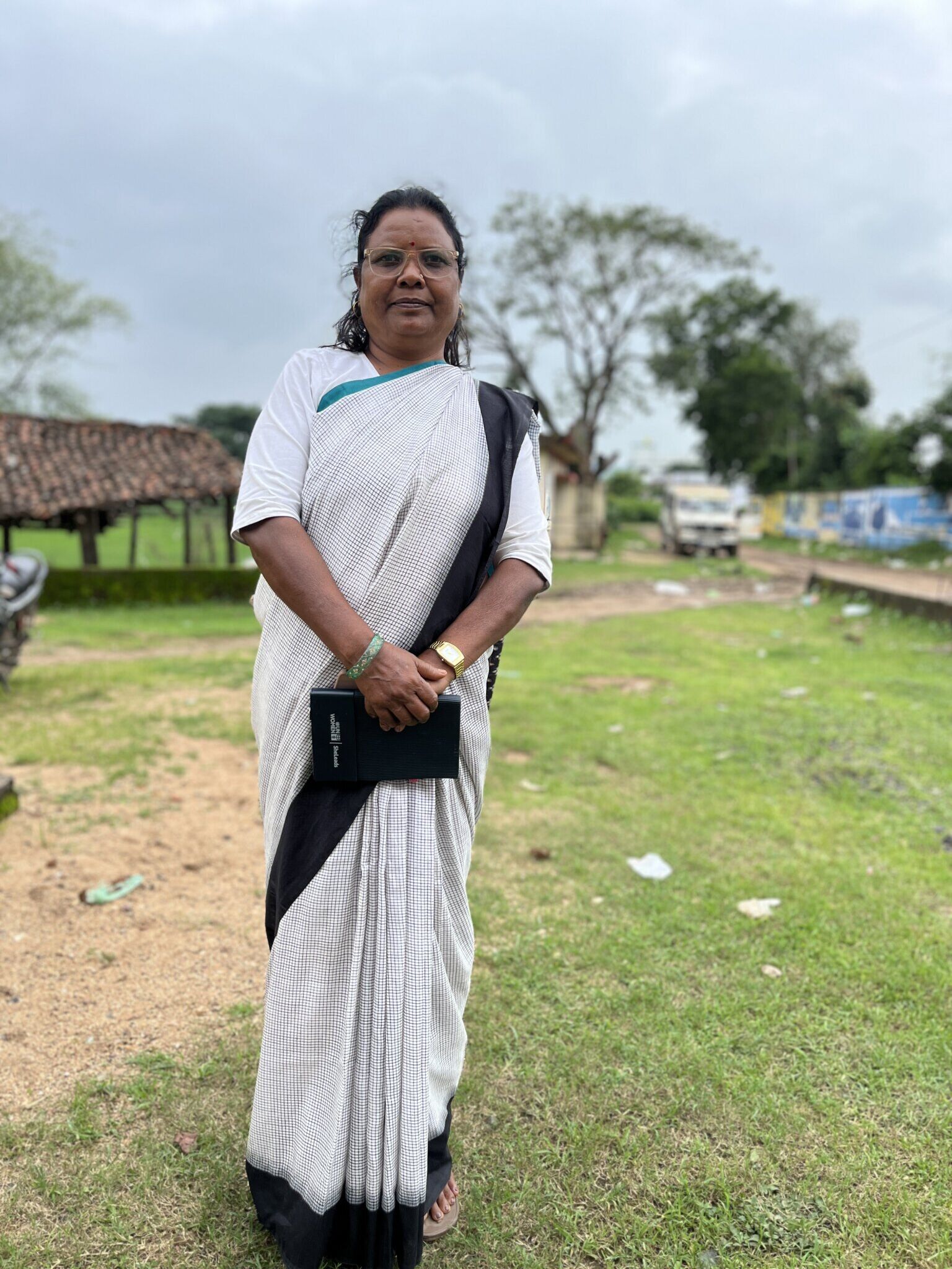
Ragini Parte, 52, says the mahila sabhas serve as a platform where women can nurture their leadership skills and ambitions of serving as community leaders.
Young children arrive with their mothers — some half asleep and others prancing around the room as discussions unfold. About 30 people joined the meeting from 22 villages in Bichhiya block.
For over an hour, the meeting held by Bichhiya Vichar Manch — a platform where representatives from 240 villages at the block-level meet every three months — discuss multiple issues: the future of Mandla which is already the production hub of Kodo and Kutki millet, reclaiming the traditional ways of living, parity in education of girls and boys, and the need for improved menstrual hygiene for better health outcomes for adolescent girls and women.
On the day, I attended the meeting it was a scaled-down version of the original format where there are more attendees from a greater number of villages. This meeting of multiple representatives is to bring about systemic change on issues ailing their everyday lives in villages and which do not find resolution in Mahila Sabhas or Gram Sabha.
For many of the women participants, it was partaking in the Mahila Sabhas which encouraged them to come and represent their issues at a bigger platform like the Bichhiya Vichar Manch. In many ways, mahila sabha serves as the first step to promote women’s participation and leadership in village affairs. At the Bichhiya block level, there are 375 Mahila Sabhas, according to the non-profit, Foundation for Ecological Security (FES) which works on improving grassroots democracy.
Mahila Sabha first emerged as a concept in Maharashtra when self-help groups and women members of the community came together to fight alcoholism in villages. In 2003, the Maharashtra government acknowledged its importance and issued a circular for conducting Mahila Sabha before Gram Sabha meetings.
As the meeting progresses in Sijhora, a woman emphasises that every woman should speak out, each one is a leader — this is met with a round of applause. Another woman chips in; men and women should participate equally and listen to each other during discussions — another round of applause follows. As an infant grows restless, a young girl takes it on herself to play with him so that his mother can focus on the meeting.
The major themes that emerge are availability of water in villages, and the practice of organising voluntary labour that has helped overturn this problem. With scarcity of water at villages during summer months, women from several villages said how they voluntarily donate hours every summer to put sacks at dams and nullahs (canals) so that the village population can access water for their everyday lives.
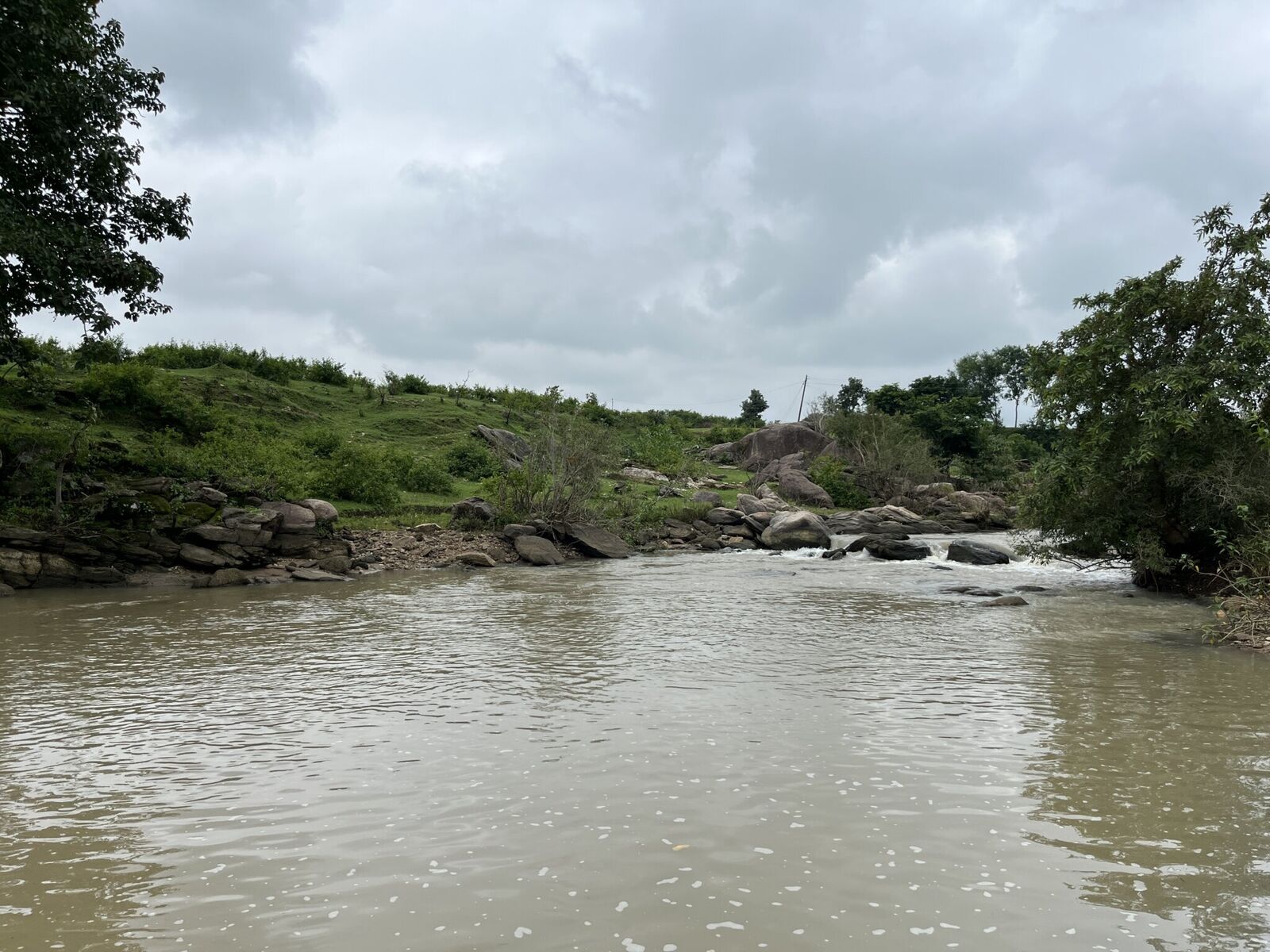
In Mandla district, the local population across villages have found a way to access water during the summer months by putting gates near the dams and boulders so that water is retained.
“We will do the needful so that all villages can have access to water. We have seen the results where we have united to fight this problem. We are ready to give our labour. We are not just reliant on the administration.” says 54-year-old Laichibai Uikey from Umarwada village.
Laichibai was married off when she was 13 years old. “I am the mother of five children. I am not educated, and I had no idea I could help other people. But joining a Mahila Sabha and then representing issues at tola sabha (a hamlet level assembly of women) helped me make decisions,” adds Laichibai.
When it came to resolving water issues at her village, she helped mobilise the local population to work voluntarily to put sacks at a nullah to be able to use water for irrigation and other purposes in 2017.
“Earlier people would have had to travel a kilometre or more to take a bath. People were in awe when this problem got resolved. And it was all voluntary — people ate khichdi at their own homes and came forward for this cause. There was no money involved. Now, cattle and birds can drink water, farmers can cultivate their lands,” says a beaming Laichibai. When she was asked to talk about her work at an event in Thailand, she said a firm no. She asked people around her how she could sit in an airplane when she had never sat on a swing even as a child. “But everyone supported me so much that I could eventually go,” she adds with a smile.
“I remember having conversations at home, asking them to change their behaviour towards me for attending these meetings. Personally, these Sabhas taught me that girls and boys should have equal access to education. It felt good.”
For 35-year-old Koushalya Tegam from Khulwa village, fighting alcoholism and poor access to menstrual hygiene products through her participation in Mahila Sabha and subsequently other forums have been the biggest victories. “Young men drink and drive their bikes recklessly. Husbands drink and come home, and it impacts our children’s education. We discussed this at Mahila Sabha, and then at Gram Sabha. We decided to penalise the bhatti person (owner of the local brewery) if he would not stop brewing alcohol. He relented, and stopped brewing liquor,” says Koushalya.
When issues do not get resolved at the level of Mahila Sabha, the issues go to the Gram Paryavaran Samiti, which is a village-level assembly of leaders, and then the Gram Sabha. If still unresolved, the issues are discussed at the federation-level — a federation typically consisting of villages in the river catchment area and meets once a month. The issues go to the block level at a platform like the Bichhiya Vichar Manch. Bichhiya has four such federations which find representation at the block level.
Women and men who attend the block-level meetings go back to their villages and share their learnings or resolution of issues during Mahila Sabha or Gram Sabha while the attendees at the Sabha also give the representatives ideas on which issues are most pressing. This way, the local population ensures that the information flow is both ways.
“We are pressing the Gram Sabha to earmark a budget to distribute sanitary pads. For now, the Anganwadi provides sanitary pads to young adolescents, but women still do not have adequate access to pads. This is a crucial issue — it impacts our health,” she adds.
‘Our labour has helped us achieve concrete outcomes’
In Khisi village, Anita Yadav has neatly arranged four small boxes of Mahua aachar in the middle of the circle before the meeting starts. She reiterates the uses of Mahua are many, and she makes different items, depending on the season. She calls herself a leader and a small-scale entrepreneur who sells her handmade pickles.
When we meet later at her home, she talks about how joining the Sabha six years back was a turning point not only for her but also her husband. “I would barely go out before that. My husband would fight a lot before. I have tried to make peace with him to maintain harmony at home. There is awareness at my home now. Earlier, I was scared that my husband, and in-laws will scold me if I go for meetings. Now, I am fearless,” says Anita.
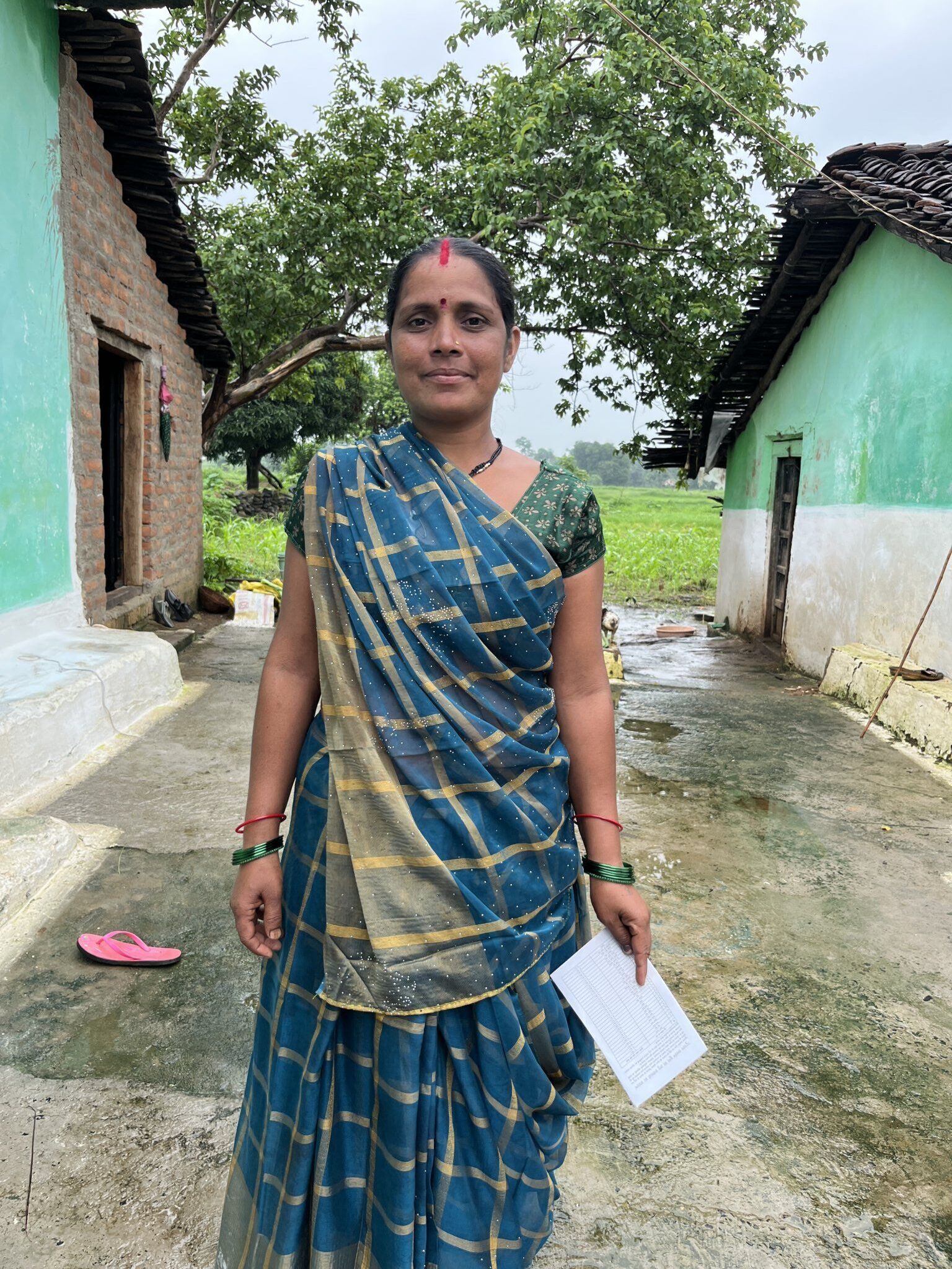
Anita Yadav sees herself as a leader and small-scale entrepreneur after being associated with the mahila sabha.
Anita, along with other women, actively plans on how to integrate important issues into the formal Gram Panchayat Development Plan (GPDP), and present it before the Gram Sabha.
One of her most successful efforts has been to convince a family to let the daughter study alongside their boy child which inspired other families to follow their lead. The women also help hold Kishori Sabhas where adolescent girls gather to discuss issues that concern them.
The other win has been to procure a tendu job card on her name instead of her husband. A tendu job card serves as an identity card for forest dependent communities. It typically serves as a log where the daily collection of tendu leaves is recorded. The money is transferred to the cardholder.
“This means that whatever money comes in is spent on the family. Men often go and spend the money outside,” adds Anita. Other women in her village have also benefited from this — with the money being deposited by the government in the accounts of the job card holders.
Back at the meeting, Anita talks about how the women have started planting saplings when daughters are born and new brides come to the village. The other women agree it would go a long way in celebrating women.
When asked how the women ideated on this, an elderly woman says, “Parei likhe bahu beti ke buddhi se aage bar rahe hain (We are progressing with the knowledge of our educated daughters-in-law and daughters).” The women break into laughter.
“Earlier people would have had to travel a kilometre or more to take a bath. People were in awe when this problem got resolved. And it was all voluntary — people ate khichdi at their own homes and came forward for this cause. There was no money involved. Now, cattle and birds can drink water, farmers can cultivate their lands,” says Laichibai Uikey.
Among the issues the Sabha deliberates on, children’s education is central to it. Baisakhiya Yadav says, “Children had to go to a faraway school because there was no teacher. We went to Jan Sunwai (public hearing) where (district) collector madam heard us out and ensured that there is a teacher for our children. Now, children are occupied with studying and things are better,”
While the tangible benefits of the meetings are many and primarily have succeeded in water reaching villages using indigenous methods, fixing of roads, fuliya or small bridges over the water bodies, fixing issues in government schools, the intangible benefits cannot be ignored. One of them is the new way, weddings happen.
The women rallied hard to bring down the cost of weddings to bring parity in expenses in the community — no DJ, no jaimala — big garlands that the bride and groom exchange as part of the wedding ritual.
There were some practical choices to be made: the village elders would bless the newly married couple with utensils or clothes. The women realised both were redundant — people would complain about the quality of clothes. Instead, they encouraged people to give cash, even if it is INR 100.
“Even if they gave a small amount of money, it would help the couple. This has helped bring about a new culture in the village,” Says Sukahrani Uikey who joined the Sabha in 2016.
“My husband gave me a lot of support which helped me find strength in myself. My in-laws were trying to set me back. I hope we are always at the service of people in the village,” she adds.
Everyday life is steeped with significant challenges for the local population in Mandla’s villages — be it the social ills of restricted mobility for women, dowry and domestic violence or poor village infrastructure like crumbling schools, lack of drinking water and broken roads. None of these are specific to Mandla but a part of the broader inequalities in rural and urban India.
The Mahila Sabhas have given women the opportunity to come together and build solidarity with one another and find allies in men. During my ground visit, several women fondly spoke of the friendship and autonomy, they have experienced by joining the Sabhas. On dull days at home, they look forward to the gathering day when they would exchange recipes, life updates, and some cooked food items. But most importantly, they wait for the Mahila Sabha to be able to vocalise the everyday challenges they face and take crucial decisions collectively and acting on them. The goal is simple: securing a better future for themselves and their children.
About the author
Ritwika Mitra is an independent journalist based in Kolkata. She writes about the climate crisis, gender, caste and hunger across India.
Image credits - Ritwika Mitra
About the series
This series will spotlight local democratic practices from across the country that demonstrate innovation, effectiveness and good governance.
This work is facilitated by the Centre for Local Democracy, Azim Premji University.
The Centre for Local Democracy supports the work of Azim Premji Foundation and others working on deepening and widening local democracy across India. The Centre enhances the work done in rural, forest, PESA and urban settings through educational programmes, documentation, dissemination of good practices and research in emerging thematic areas.