Fists Of Fury — How boxing saved Sarita Devi from becoming a militant
If she hadn’t discovered sports, champion boxer Sarita Devi might have joined the insurgency in Manipur. In Fists Of Fury, we bring you the story of a resilient athlete who punched back against disappointment and a broken friendship with Olympian Mary Kom to continue fighting

Details
Laishram Sarita Devi’s journey from the insurgency-affected streets of Manipur to the international boxing arena is one of defiance, resilience, and hard-earned success. After the tragic loss of her father, a young Sarita was tempted to join the insurgency, even transporting weapons for militants. But before she could lose herself to that life, her brother intervened, steering her toward sports.
Sarita initially took out her frustration in taekwondo before transitioning to boxing under the guidance of coach Ibomcha Singh at his academy. Here, she met fellow-boxer Mary Kom and the two became fast friends. This shift didn’t just save her — it ignited a passion for boxing and a dream to represent India. Her rise began in 2005, with a bronze at the World Championships in Podolsk, Russia. Just a year later, she clinched gold in New Delhi. Over the years, she added five Asian titles and a Commonwealth Games silver to her name, becoming a versatile and dominant figure in the sport. At a time when financial struggles plagued her family, her victories also secured a stable job with the Manipur Police, giving her the security to continue boxing.
The defining moment of her career came during the 2014 Asian Games, where she controversially lost a semifinal bout to South Korea’s Park Ji-Na, despite a dominant performance. In protest of what she saw as biased judging, Sarita refused to accept her bronze medal, attempting to place it around Park’s neck. Her defiant stand drew condemnation from officials, leading to a one-year ban, but it also sparked conversations about fairness in sports.
The fallout strained her relationship with fellow boxer Mary Kom, whose gold medal that day was overshadowed by Sarita’s protest. Despite this, Sarita’s courage turned her into a symbol of integrity, inspiring a generation of athletes, even as her own career dimmed in the years that followed.
At the end of this episode of Almost Perfect, our series about women athletes who competed alongside the best but faded from the spotlight, Sarita Devi shares a special message for Indian youth.
This show is produced by Confluence Media for Radio Azim Premji University.
Credits
Achie Humtsoe, Anisa Draboo, Gautam Datt, Jasleen Bhalla, Josy Joseph, Omair Farooq, and Siddhartha Mishra
Radio Azim Premji University:
Akshay Ramuhalli, Bijoy Venugopal, Bruce Lee Mani, Narayan Krishnaswamy, Prashant Vasudevan, Sananda Dasgupta, Seema Seth, Shraddha Gautam, Supriya Joshi, and Velu Shankar
Resources
News Articles
- India Today: Asian Games: Sarita Devi loses controversial bout, settles for bronze
- The Hindu: Indian boxing team protest against Sarita’s loss rejected
- The Bridge: Mary Kom vs Sarita Devi: How two best friends turned into worst enemies
- East Mojo: Not on my watch: How boxer Sarita Devi saved her Kuki students from the mob
- The Quint: From Carrying Guns for Militants to a Boxing Legend: Story of Sarita Devi
- The Arunachal Times: Sports saved me from becoming insurgent: Boxer L Sarita Devi
Listen to more episodes of Almost Perfect
-


200 Metres From Glory — Rita Gombu Marwah’s Story
In 1984, Bachendri Pal became the first Indian woman to conquer Mount Everest. Rita Gombu Marwah, from a renowned mountaineering family, was part of the same expedition. Despite coming close to the summit, Rita was stopped by harsh weather conditions just 200 meters away. While Bachendri’s success brought joy, Rita and her teammates were haunted by missed opportunities, highlighting the bittersweet nature of sporting achievements. Listen to Rita’s story in the first episode of Almost Perfect
-

Why ace archer Chekrovolu Swuro bowed out
Chekrovolu Swuro, the talented archer from Nagaland, represented India at the 2012 London Olympics. Followers of the sport may remember that she had competed in the same team as Deepika Kumari, the teenage sensation who rose to great heights. Despite culminating in defeat, Swuro’s story of resilience continues to enthuse aspiring archers. Listen to ‘Missing The Mark’, the second episode of the Radio Azim Premji University series ‘Almost Perfect’, which unearths the stories of Indian women athletes who competed alongside the best but fell short of success.
-

Game. Set. Mismatch. No love lost for Archana Venkataraman
In the 1990’s, Archana Venkataraman was a star on the rise. Since she was four, her tennis-obsessed family shuttled her from one tournament to another, one coaching clinic to the next. At seventeen, she was crowned the National Champion. Her place did not go unchallenged. At the finals of the National Games in 2002, Archana came up against a younger, hungrier, grittier rival — 16-year-old Sania Mirza. Playing the newcomer on her home turf in Hyderabad and booed by a hostile crowd of spectators, Archana went down in a firestorm of deuces. It takes a lot to succeed in a sport as expensive and competitive as tennis, more so for an Indian woman. In over a century, only four have made it to a Grand Slam event. Viewed in that sobering light, Archana Venkataraman’s story is one worth telling. Listen to it on Almost Perfect.
-
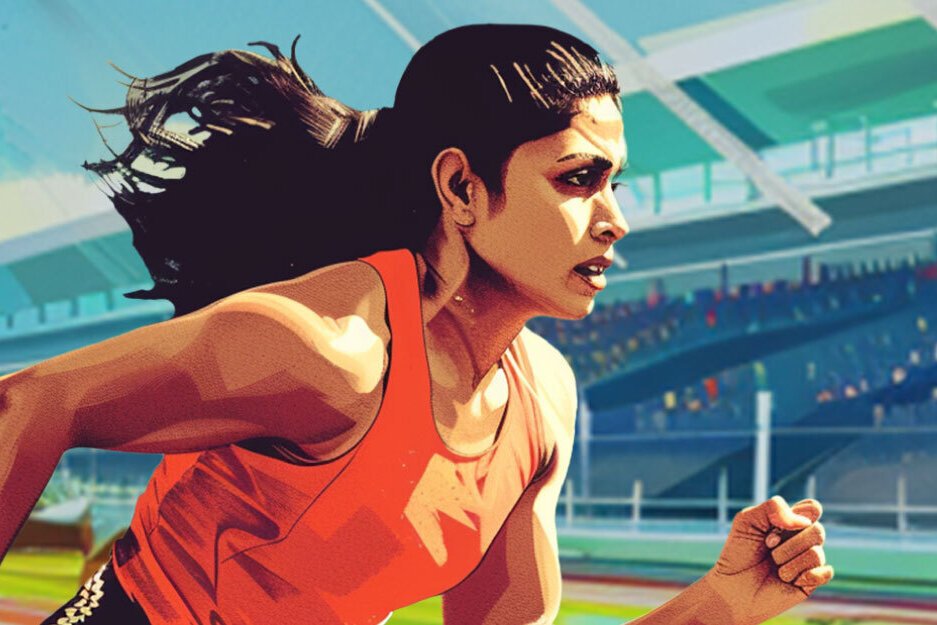
Get. Set. Gone. How Vandana Rao sprinted into the shadows
Vandana Rao, along with PT Usha, was part of the quartet of “Golden Girls” that set a new Asian record at the Los Angeles Olympics in 1984. However, just as her star began to rise, she encountered a different set of obstacles that led to her departure from athletics forever. This is her story.