People, Plants and Places: A Summer of Ethnobotany
A simple exercise of documenting local vegetation during the summer holidays transformed how three budding biologists view their hometowns, writes Nandita Jayaraj.
Details
Kajal Mahor remembers her grandmother bustling around their home in Wardha, Maharashtra, tending to the numerous plants that grew in the garden. “She would tell me about the plants, what they were, how they were useful, in very interesting ways. After she died, there was no one to tell me about these things.”
Years later, as an undergraduate student of biology at Azim Premji University, Bhopal, Kajal was presented with an opportunity to revive her childhood interest in plants. Her professor Alok Bang, encouraged her class to spend their summer break connecting with nature more intentionally, and through the lens of an ethnobotanist.
The field of ethnobotany deals with the relationships between plants and human societies. In India, it was pioneered in the mid-1900s by the cytogeneticist E K Janaki Ammal, who is credited with the revival of the Botanical Survey of India in 1954. Though not an ethnobiologist himself, Alok believed that an at-home plant documentation exercise could be of benefit to his soon-to-be second year students, most of whom were yet to experience what it was like to conduct research. “As biology students, they generally have a very specific way of looking at nature from a scientific view,” he explained. “But I asked them to find out how people around them look at plants.”
A different way of seeing
“The idea was for them to take biology beyond the university, beyond the highly structured approach, and relate it with society. I told them to investigate how people were perceiving nature and integrating it into their lives. I also advised them to find out a little bit about the social backgrounds of their sources… a very basic and distilled form of ethnobotany.”
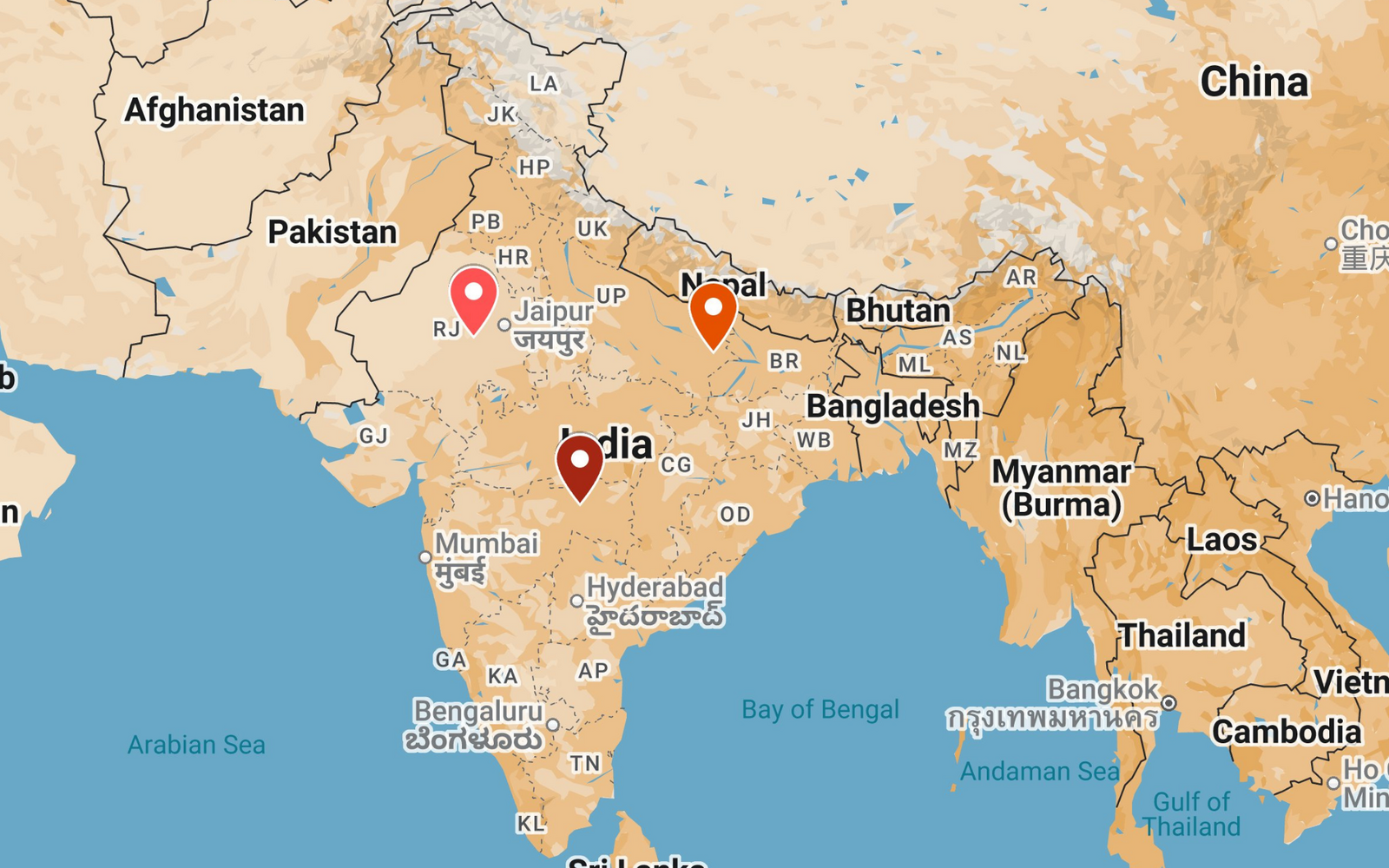
The locations of the three districts (Wardha, Maharashtra; Mau, Uttar Pradesh; Ajmer, Rajasthan) to which Kajal, Lakshmi and Khushabu belong. Credit: Google Maps
There is an urgency to this work. Smaller cities like Wardha — which is also where Alok is from — are undergoing intense and rapid changes in landscape. “So much is happening in such a small city,” stresses Alok. “We are losing hundreds of trees, big trees that are 90 – 100 years old. They took generations to grow, and we are losing them in a year or so. This kind of record could serve as a temporal track as to how our landscapes are changing.”
Loss of green cover in her village Itaura in Uttar Pradesh’s Mau district was something that bothered Lakshmi Bharti, another biology student at the university. “There were so many plants in my childhood. I remember playing in the grasslands. We never felt the difference between summer and winter, but today, I understand the role of temperature,” she says.
Extreme heat is a phenomenon that Khushabu Kumawat is no stranger to, coming from Pisangan, a village in Ajmer, Rajasthan. As part of an NGO in the area, the biology undergraduate had been part of plantation drives in the area even before she joined the university in Bhopal. “People now understand that we are able to survive because of trees.”
Experts in unexpected places
The three students returned to their villages in the summer of 2024, with the mission to learn more about the greenery around them. In the process, they ended up acquainting themselves with neighbours and other locals with whom they had never before considered having a conversation with. Khushabu was especially surprised to find out how much the elderly people of her village knew about trees. A distant relative,Chhotu Ram, who had never received formal education, accompanied her for data collection multiple times. “He could tell me multiple names for a single tree — its uses, harmful effects, associated myths… he was very helpful.”
“There’s a persistent assumption that valuable scientific research must be expensive and equipment-intensive, but this project shows otherwise.”
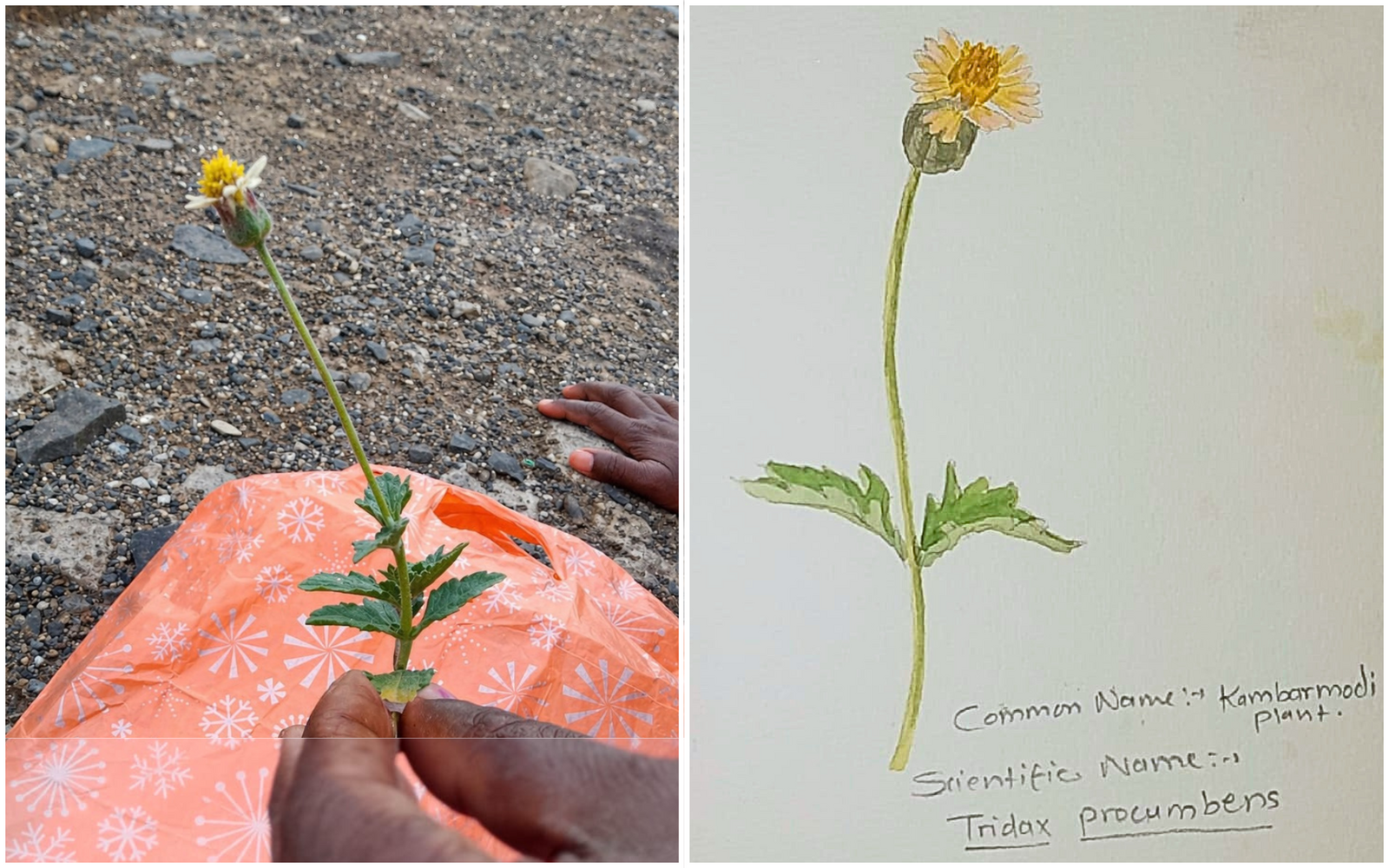
Documenting the Kambarmodi plant (Tridax procumbens), which is used in traditional medicine. (right) one of Kajal’s botanical illustrations. Image credit: Kajal Mahor
Khushabu would go under the canopy of large trees where she knew old people liked to sit and chat, or to fields where farmers would be at work. Besides recording their observations, they also engaged in lively discussions and debates. “Trees like Khejri (Prosopis cineraria), the state tree of Rajasthan, have become very rare. People give it a lot of importance, but many trees are burnt for a ritual during the Holi Dahan festival,” she said. She tried to convince them to avoid destroying whole trees and instead using a symbolic branch, but this proved challenging. “When it comes to religious practices, people become sensitive and even aggressive.”
Lakshmi too encountered unexpected reactions from her surroundings during the course of her project, especially when she started collecting live insects to document the local insect diversity. “When people saw me, they would ask if I had gone mad,” she laughs. Later, however, Lakshmi would notice that her parents understood the value of doing so. “By the end of the summer, my father would call out for me when he saw something interesting.”
By and large, the students were appreciated by their communities. When Lakshmi informed some of her neighbours about the ill-effects of the invasive lantana plant, they agreed with her and removed the plants from their fields. “Usually no one asks these people to share their knowledge, so they felt good when we did. They knew we were not there to judge them and they felt good that their knowledge was being passed on to the young people of their village,” says Khushabu.
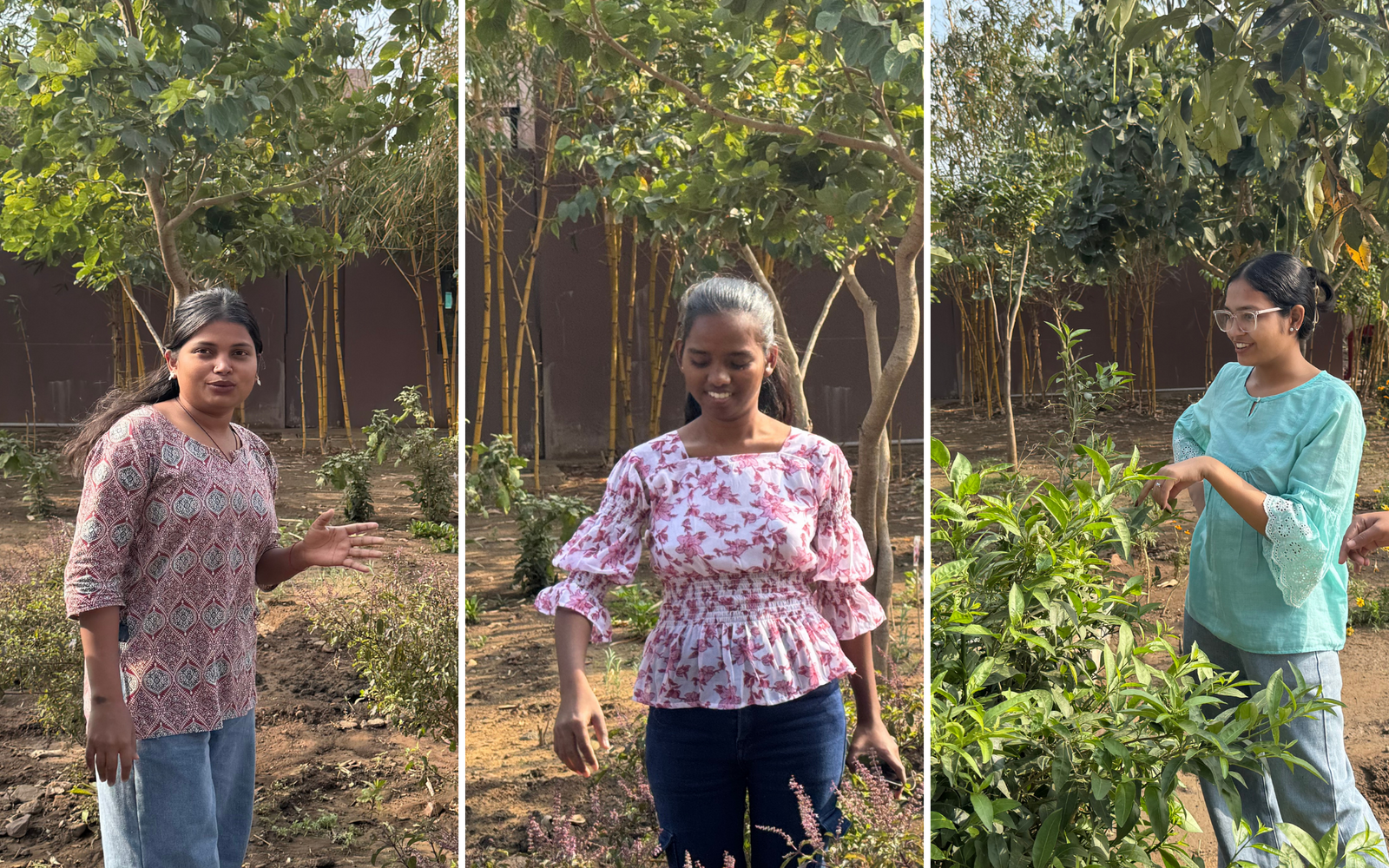
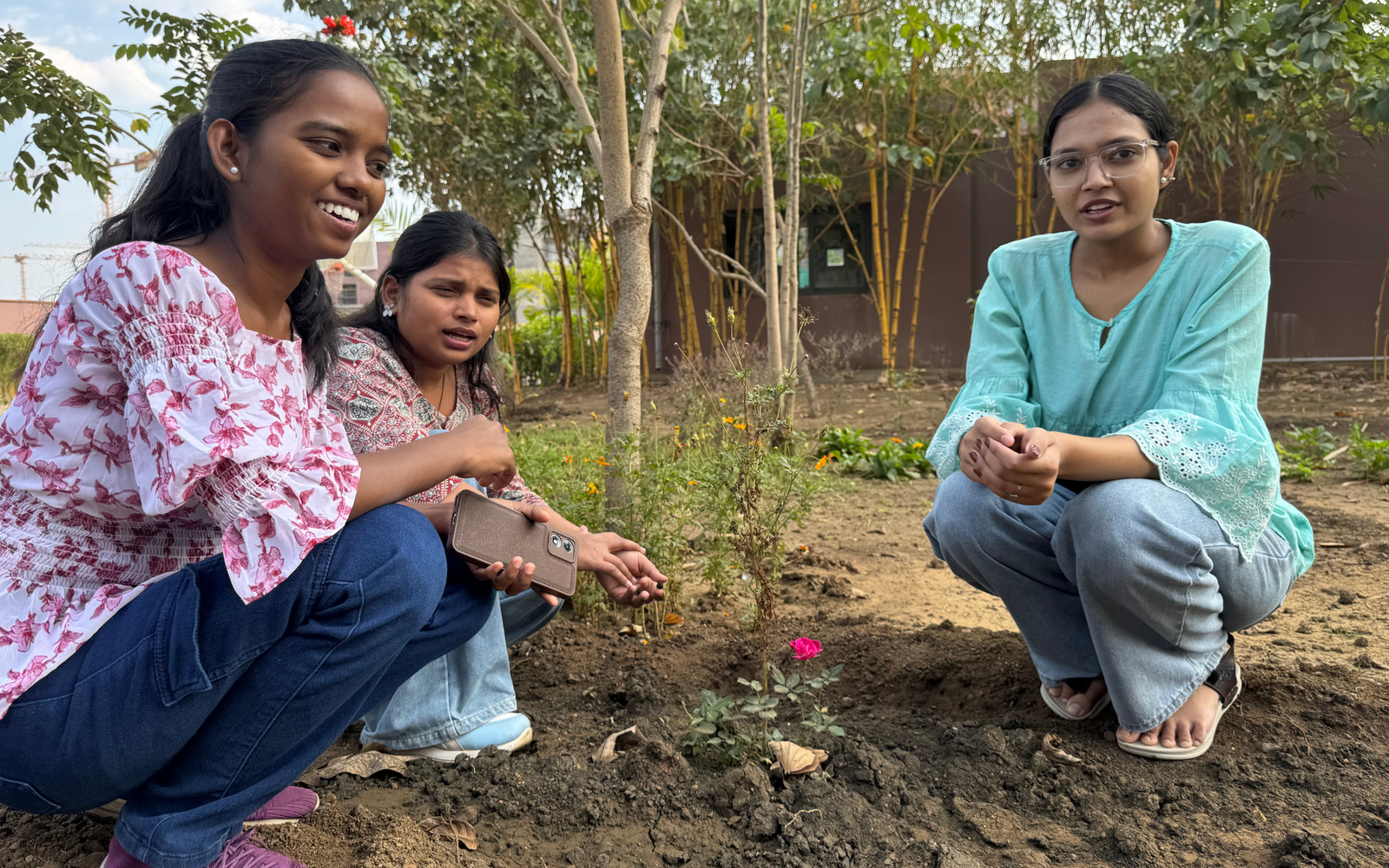
Lakshmi Bharti (left), Kajal Mahor (centre) and Khushabu Kumawat (right) point out the plant diversity within the Azim Premji University, Bhopal campus. Image credit: Nandita Jayaraj
During those holidays, Kajal documented a total of 44 species, Lakshmi 107, and Khushabu 38. Between the three of them they interviewed 93 residents in their villages. The database that emerged out of this exercise included fields such as plant identification (common name, local name and scientific name), date of record, place, habitat, name of respondent, uses, problems, and more. Alok envisions future iterations of the database to also include richer variables such as rural/urban context, caste, religion, age, gender, and education levels of respondents.
Gradual and growing research
When they reunited in the new semester and compared notes, they were fascinated to spot the differences and similarities in their data. For example, Lakshmi wrote about the fear associated with the pipal tree (Ficus religiosa) in her village in Uttar Pradesh. A pipal nearby was a sign of ghosts or black magic. She was dismayed that the population of trees associated with negative superstitions such as pipal tended to be on the decline despite their biological and ecological importance.
On the other hand, Kajal noted that in Wardha, the pipal had more of a sacred and positive reputation. “Buddha is supposed to have meditated under a pipal tree so the Buddhists in my village related to the tree,” she says. Similarly, neem (Azadirachta indica) – a popular avenue tree in Rajasthan where Khushabu lives– is more known for its pesticidal properties in Maharashtra, where agriculture is more predominant.
The students have communicated their findings over multiple fora such as the Science Undergraduate Research Conference and Nurturing Nature conferences that took place in 2026. Over the past two years, Alok watched, heartened, as this documentation exercise introduced his undergraduate students to research in a gradual, layered way. He is currently guiding them to move toward more advanced analyses and, hopefully, a full-length research paper by the end of their course. “There’s a persistent assumption that valuable scientific research must be expensive and equipment-intensive, but this project shows otherwise,” he says.
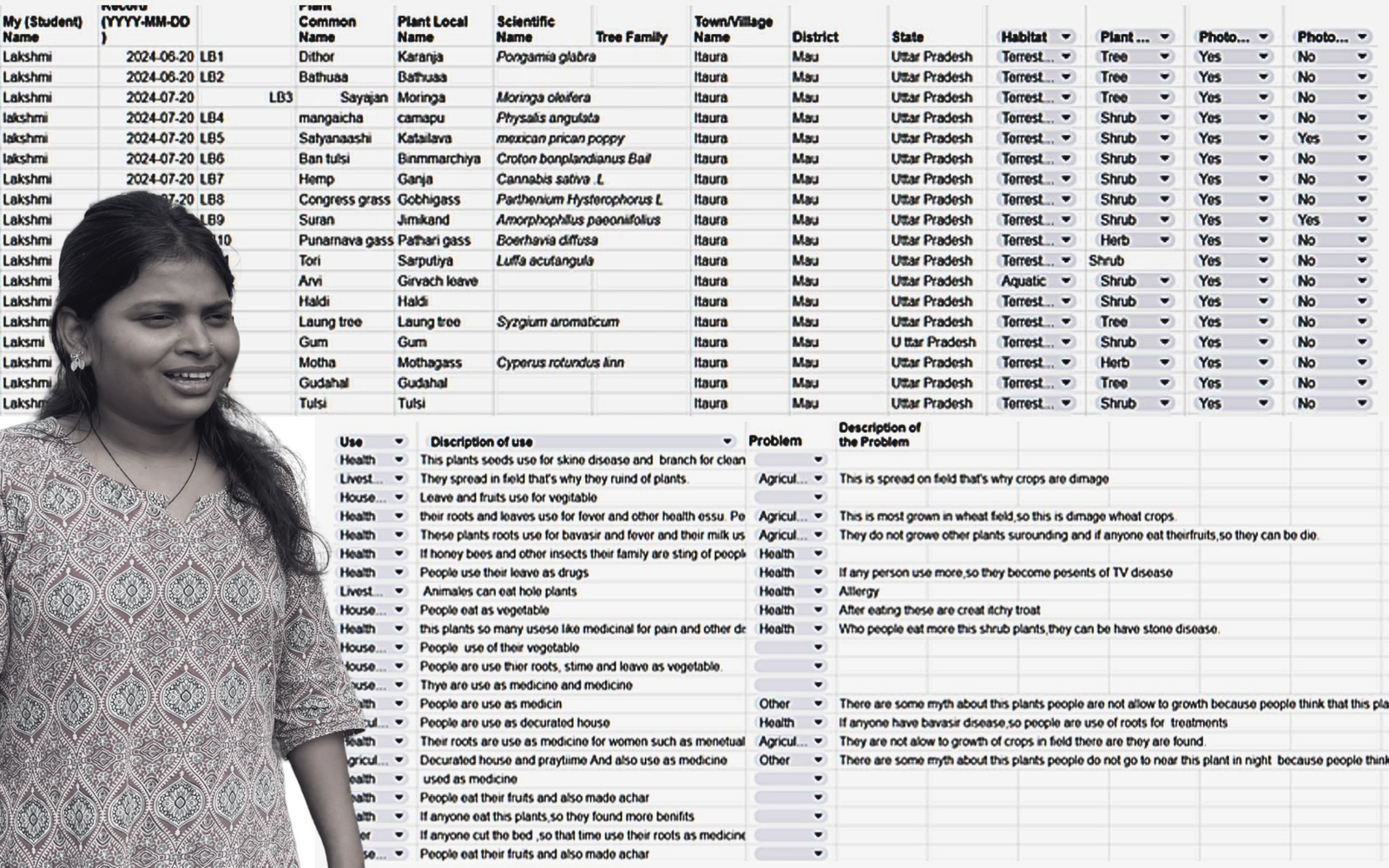
A glimpse of Lakshmi’s database.
Over the years, the colonial practice of scientists from the outside extracting knowledge from locals without duly crediting them is now being rightly critiqued. In an interview with Frontiers, Bolivian ethnobiologist Narel Y Paniagua-Zambrana said, “As scientists, we often ask questions rather than listen, allowing ourselves to be carried away by curiosity or the objective of our research. But, when working with people who not only share their knowledge with us, but also their time, it is important to take the time to listen to them, especially when many research projects do not compensate them financially for this time.”
In this context, training students to conduct these studies in their hometowns in collaboration with their fellow locals makes a lot of sense — both ethically, and from the point of view of filling up the data gap. For Alok, this is a step towards the Gandhian ideal of Paryaavaran Swaraj or ecological self-governance. There are thousands of remote villages in India like Lakshmi’s where vegetation and local ethnobotanical knowledge have likely never been documented, he reminded. “Now, thanks to a student, that village has its own biodiversity register… a very primordial one, but it’s still an achievement.”
Meet Alok Bang, a biologist, educator, and storyteller who transforms the way students engage with science. At Azim Premji University campus in Bhopal, Alok teaches ecology and evolution — not as a list of facts, but as a living, breathing inquiry into the world around us.
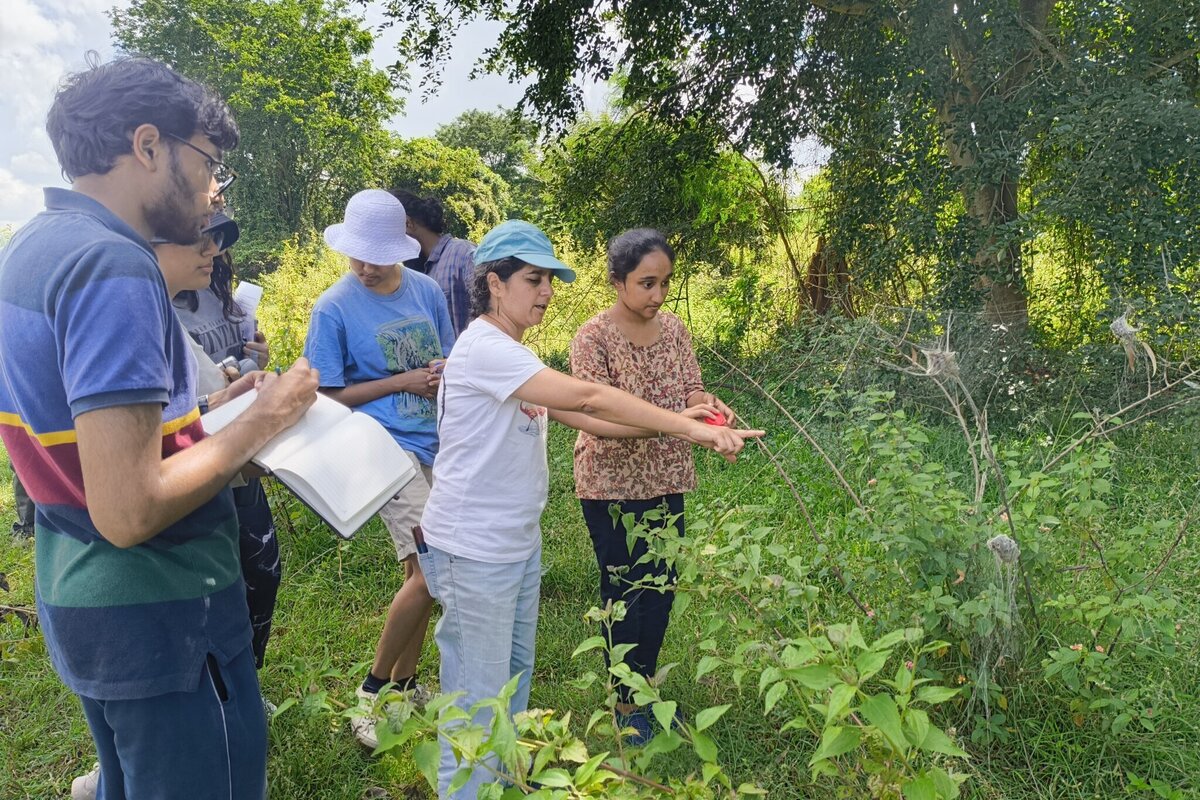
About the author
Nandita Jayaraj is a Science writer and Communications Consultant at Azim Premji University.