Burp! Guess who had a husband for dinner?
Yes, they eat their mates, but spiders are perhaps the most misunderstood creatures. Hollywood films portraying them as hairy, ravenous monsters haven’t helped their cause. If spiders went extinct, earth’s ecosystem would collapse. Learn more about these fascinating creatures in this episode of Story Of…

Details
What has eight legs and might have just had a husband for dinner? Most likely a spider.
Often confused with insects, spiders have long been the subject of myths and stereotypes in literature, movies, and pop culture. Hollywood often depicts them as big, hairy, and dangerous monsters with ravenous appetites. However, this portrayal overlooks the critical role spiders play in the world’s ecosystems, explains biologist Divya Uma from Azim Premji University in conversation with Richa Govil in this episode of Story Of…
Spiders are far from the villains they are often made out to be. In reality, they are a crucial component of the food web. Their presence helps maintain ecological balance, and without them, Earth’s ecosystem would face dire consequences. Among the thousands of spider species, some stand out for their size, venom, and unique behaviours.
One of the most impressive is the Goliath Birdeater, native to the rainforests of northern South America. This spider holds the title of the world’s largest by both body mass, reaching up to 175 grams, and body length, growing up to 13 centimeters. Despite its size, it is not considered a threat to humans.
While all spiders are venomous, most are harmless to people. However, Australia is home to some of the deadliest species. The Sydney funnel-web spider, often found in the moist habitats of eastern Australia, is considered the world’s most dangerous spider. With fangs capable of piercing human fingernails, this spider has a fearsome reputation. Another notorious species is the Redback spider, which, despite its venomous bite, has not caused any fatalities in over fifty years.
Many venomous spiders are called “Widow” species due to their habit of eating their mates after mating. In these species, the females are often much larger than the males, who serve as a convenient, protein-rich meal after fertilizing the eggs. The most infamous of these is the Black Widow, recognisable by its shiny black body and red hourglass marking. Found across North and Latin America, the Black Widow’s bite can cause severe symptoms, though fatalities are rare.
Cultural perceptions of spiders vary widely. While modern Western media often portrays them as menacing creatures, in ancient folk tales and parables, as well as in some parts of India, spiders are revered.
The story of Robert Bruce and the spider, for example, tells of the Scottish king who learned perseverance by watching a spider’s tireless efforts to build a web. Inspired, he ultimately led his forces to victory in battle.
In literature, the wise spider Charlotte from E.B. White’s *Charlotte’s Web* demonstrates a more compassionate and intelligent side of these creatures, as she saves her friend Wilbur the pig by writing messages on her web.
Interestingly, some spiders, like the Signature Spider, are believed to create cryptic patterns on their webs that resemble writing. These patterns might serve as a warning to birds, deterring them from flying into and damaging the webs.
Spiders even have their place in religious and cultural traditions. In Kerala’s Pathanamthitta district, the Kodumon Chilanthiyambalam temple is dedicated to spiders, and people visit it in hopes of being cured of spider bites.
But perhaps the most fascinating aspect of spiders is their silk. Spider silk is produced with special appendages on the spider’s abdomen called spinnerets. Composed mainly of protein, spider silk is a highly versatile product. It can be of various kinds depending on the function it needs to perform, from sticky silk for trapping prey, soft silk for wrapping egg sacs, strong silk for building the structural elements of the web like arches and scaffolds, and so on. The silk produced by spiders, despite their lightness, has other properties like high tensile strength, ductility, and stability at high temperatures, which makes it a material that arouses the interest of architects and structural engineers. Some scientists believe that spider silk, if it can be successfully synthesised in laboratories, could well be the fibre of the future.
Beyond their fascinating behaviours and cultural significance, spiders are indispensable for their role in biological pest control. Their extinction would lead to a cascade of ecological problems, including a surge in insect-borne diseases and crop failures due to uncontrolled pest populations.
In a world where spiders are often misunderstood, it’s crucial to recognise their importance and the delicate balance they help maintain in nature. Without them, the world as we know it would be a much darker place.
Can you crack this spidery crossword?
Credits:
Akshay Ramuhalli, Bijoy Venugopal, Bruce Lee Mani, Narayan Krishnaswamy, Prashant Vasudevan, Sananda Dasgupta, Seema Seth, Shraddha Gautam, Supriya Joshi, and Velu Shankar
Further Reading
- Spiderwebs and spider silk, explained | National Geographic.
- Of dancing spiders, inquisitive scientists and arecanut dancefloors| Azim Premji University.
- Beleyur, T., Murthy, T.G., Singh, S., Somanathan, H., & Uma, D. (2021). The web architecture, dynamics, and silk investment in the social spider Stegodyphus sarasinorum. Animal Behaviour, 179, 139 — 146.
- Ellendula, S., Tresa, C., & Uma, D. (2021). Influence of prey availability on web-building in the social spider Stegodyphus sarasinorum (Araneae: Eresidae). The Journal of Arachnology, 49(1), 141 — 145.
- Vijayan, S., Balasubramanian, P., Casiker, C., & Uma, D. (2021). Non-mimetic jumping spider responses towards three species of ants and their mimics. Journal of Ethology, 39(1), 65 — 72.
- Dubey, S., Joshi, C. H., Veer, S., Uma, D., Somanathan, H., Majumdar, S., & Pullarkat, P. A. (2020). Strain softening and stiffening responses of spider silk fibers probed using a Micro-Extension Rheometer. Soft Matter, 2.
- Ramesh, A., Vijayan, S., Sreedharan, S., Somanathan, H., Uma, D. (2016). Similar yet different: Differential response of a praying mantis to ant-mimicking spiders. Biological Journal of the Linnaean Society, 119(1), 158 — 165.
- Beleyur, T., Uma, D., Somanathan, H. (2015). Long-term behavioural consistency in prey capture but not in web maintenance in a social spider. Behavioral Ecology Sociobiology, 69, 1019 — 1028.
- Uma, D., Durkee, C., Herzner, G. & Weiss, M.R. (2013). Double deception: Ant mimicking spiders elude both visually- and chemically-oriented predators. PLoS One, 8(11), e79660.
- Uma, D. & Weiss, M.R. (2012). Flee or fight: Ontogenetic changes in the behavior of cobweb spiders in encounters with spider-hunting wasps. Environmental Entomology, 41(6), 1474 — 1480.
- Durkee, C., Uma, D. & Weiss, M.R. (2011). Ant mimicry lessens predation on a North American jumping spider by larger salticid spiders. Environmental Entomology, 40(5), 1223 –1231.
- Herberholz, J., Mishra, S.H., Uma, D., Germann, M.W., Edwards, D.H., & Potter, K. (2011). Non-invasive imaging of neuroanatomical structures and neural activation with high-resolution MRI. Frontiers in Behavioral Neuroscience, 5(16).
- Uma, D., & Weiss, M.R. (2010). Chemical mediation of prey preferences in spider-hunting wasps. Ethology, 116(1), 85 — 95.
- Vaccaro, Rosanna, George W. Uetz, and J. Andrew Roberts. “Courtship and Mating Behavior of the Wolf Spider Schizocosa bilineata (Araneae: Lycosidae).” The Journal of Arachnology 38, no. 3 (2010): 452 – 59.
- Römer, Lin, and Thomas Scheibel. “The Elaborate Structure of Spider Silk: Structure and Function of a Natural High-Performance Fiber.” Prion 2, no. 4 (2008): 154 – 61. .
- Ko, Frank K., and Lynn Y. Wan. “Engineering Properties of Spider Silk.” In Handbook of Properties of Textile and Technical Fibres, 2nd ed., edited by Anthony R. Bunsell, 185 – 220. The Textile Institute Book Series. Woodhead Publishing, 2018.
- Girard, M. B., M. M. Kasumovic, and D. O. Elias. “Multi-Modal Courtship in the Peacock Spider, Maratus volans (O.P.-Cambridge, 1874).” PLOS ONE 6, no. 9 (2011): e25390.
Enjoy all episodes in the series
-
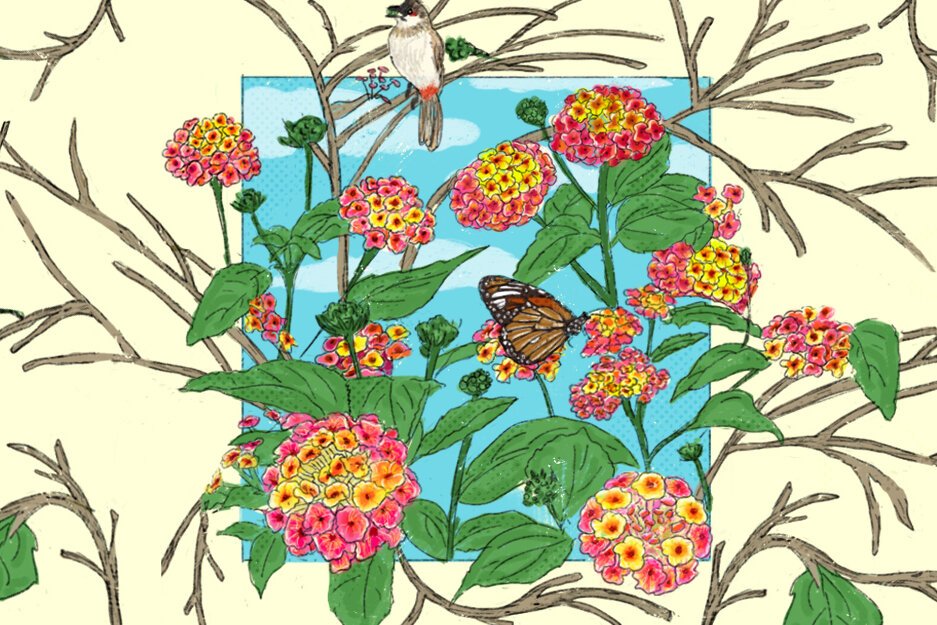

Lantana — the unwelcome guest that refused to leave
In Story of Lantana, the third episode in our series “Story Of…”, Richa Govil and Madhuri Ramesh ponder the differences between alien and invasive species, mulling over the role that humans have played in altering biodiversity around the world. They reflect on the broader implications of introduced species and confront the complexities of categorising organisms as invasive or desirable.
-
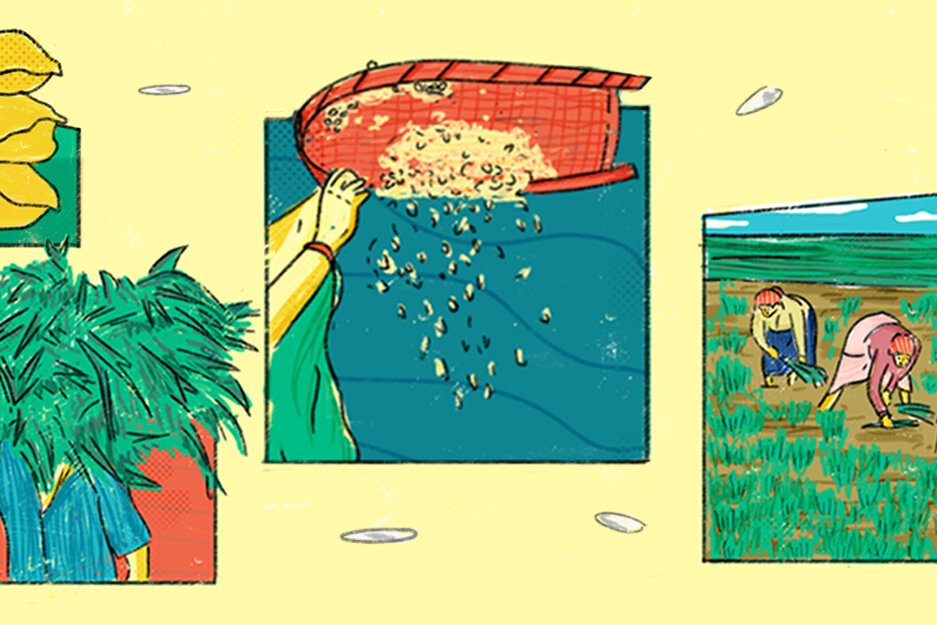
Story of Rice — How a white grain became a staple food
What does it take to put a plateful of rice on your table?
In this episode of “Story Of…”, Richa Govil examines the layered role of rice in Indian society and economy. Joining her is Manikandan V, faculty at Azim Premji University and an expert in food rights and social inclusion.
-
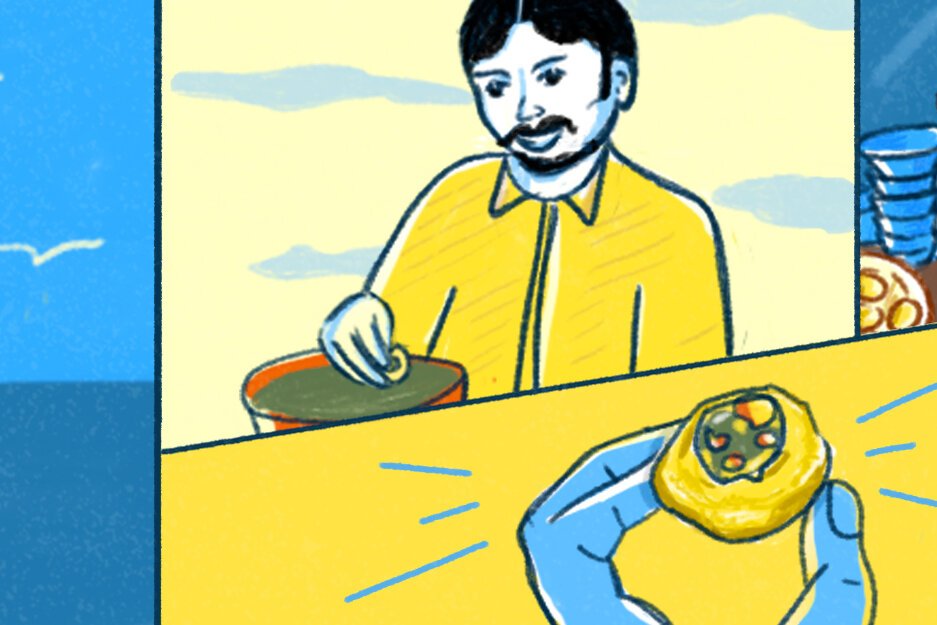
Crunch! Slurp! The Story of Pani Puri in India
Pani Puri! Behind every morsel of the mouthwatering street snack is a human story of migration, entrepreneurship, labour, and the right to work. Listen to the first episode of “Story Of…” on Radio Azim Premji University.
-
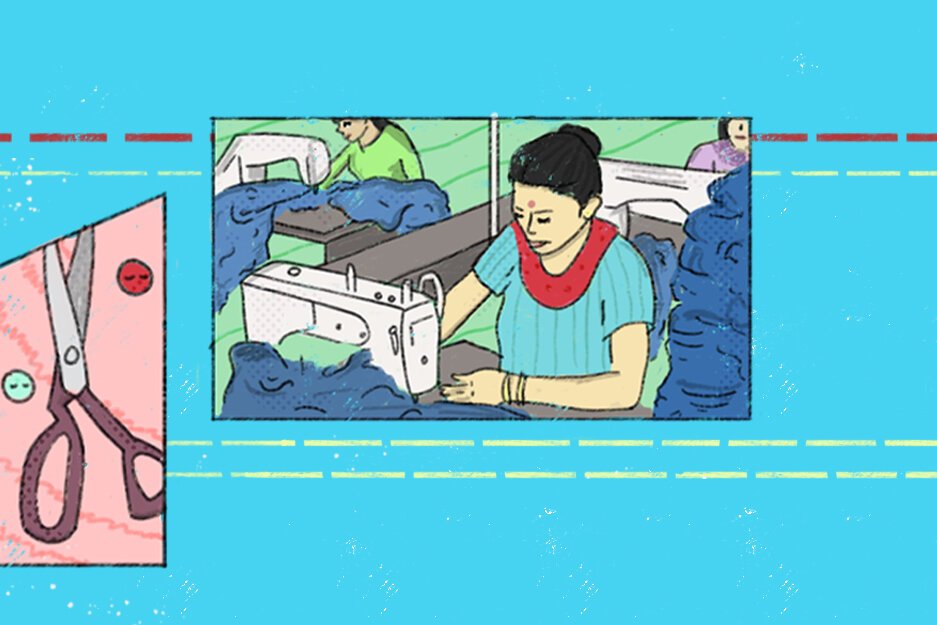
Killer Jeans — Why Are Women Garment Workers Dying Young?
There’s a harrowing story of livelihood, labour, and premature death stitched into the fabric of your denim. The next time you buy a pair of jeans, remember the young women who crafted them, balancing dreams and hardships, somewhere on a shop floor in a Bengaluru industrial estate