
Publications & Resources
Our faculty, students and researchers work together everyday to contribute to a better world by grappling with urgent problems we are facing in India. We conduct rigorous work to produce high quality learning resources and publications to contribute to public discourse and social change. Here, we feature a sample from our work for everyone to access. You can explore featured resources, policies, and the latest publications from the University.
To explore all the work of our University, please visit our publications repository.
List of Publications & Resources

- Published
- Authors
Abstract
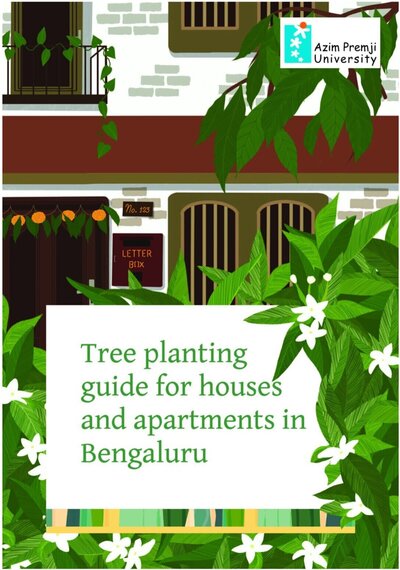
“We stay in an apartment, and there is very little space around. What trees can we plant?”
“I live in an independent house, and we would like to have trees. But we are worried the roots will damage our walls and underground sump.”
These are questions we have often been asked by residents of Bengaluru. What it tells us is that while there is an interest in planting trees, there are also concerns about what kind of trees are most suited owing to constraints of space and potential damage to infrastructure.
This guide is aimed at addressing some of these concerns. We have included 26 species of trees that can be grown in independent houses or apartment complexes in Bengaluru. We have included a basic description of each of the species, how to plant and care for the trees, the different kinds of uses and a fun fact or information nugget. The guide also contains information on installing root barriers to protect infrastructure from being damaged by tree roots. We have also included how diseased or damaged trees can be treated.
Links

- Published
- Authors
Abstract
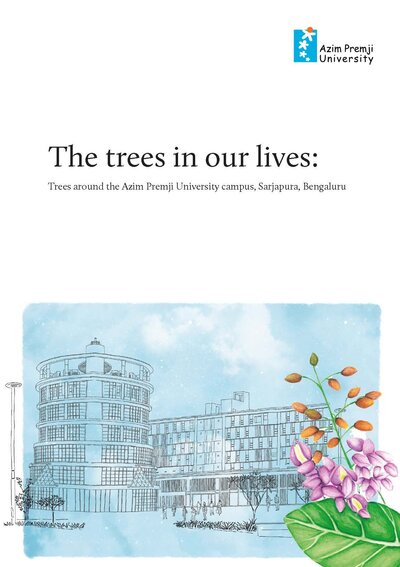
The carbon mapping exercise is a ritual done by the batches who take the course “Sustainability in Urban Social-Ecological Systems” (earlier “Urban Sustainability in India: A Social Ecological Perspective”). Our campus is in the rapidly expanding peri-urban interface of Bengaluru city at Sarjapura. Sarjapura’s peri-urban area can seem dystopian with tiled roof homes next to multi-story apartments, cows ambling on mud paths and cars zipping on tarred roads, and agricultural activities amidst businesses. Working in groups of two, each group selected three trees of different species. They were required to identify the species, giving the scientific, common and Kannada names. Using their phones, they collected the GPS points of the trees, marking the location where each of the trees stood. They calculated the height of the tree using a clinometer, measured the girth in the field, and this data was used to calculate the above ground and below ground biomass, as well as the carbon stored by these trees. They also measured the ambient temperature using a high accurate hygro thermometer and the road surface temperature using an infrared thermometer. They also gathered secondary data on the social and cultural significance of the species, recording the numerous daily benefits that trees provide. They photographed the different parts of the tree — bark, flower, fruit, seed pods, seed, leaves— and tried sketching different parts of the tree as well.
Links

- Published
- Authors
Abstract
An exercise done consecutively in two years may not constitute a tradition. But for the students of the elective “Urban sustainability in India: A social-ecological perspective”, mapping and knowing about the trees in the immediate vicinity of their campus is a ritual (read assignment). Working in groups of two, each group selected three trees of different species. They were required to identify the species, giving the scientific, common and Kannada names. Using their phones, they collected the GPS points of the trees, marking the location where each of the trees stood. They calculated the height of the tree using a clinometer, measured the girth in the field, and this data was used to calculate the above ground and below ground biomass, as well as the carbon stored by these trees. They also collected information on the economic, social, and cultural uses of the different species, documenting the multiple everyday benefits that we all derive from the trees around us. This booklet is the collective output of the class, based on their observations, the data collected by them in the field and secondary information sourced mainly from the internet. 30 trees of 16 species around the campus were mapped.
Links