
Water to Wealth: Planning, Design and Management of Small Irrigation Systems January 2027 Batch
Details
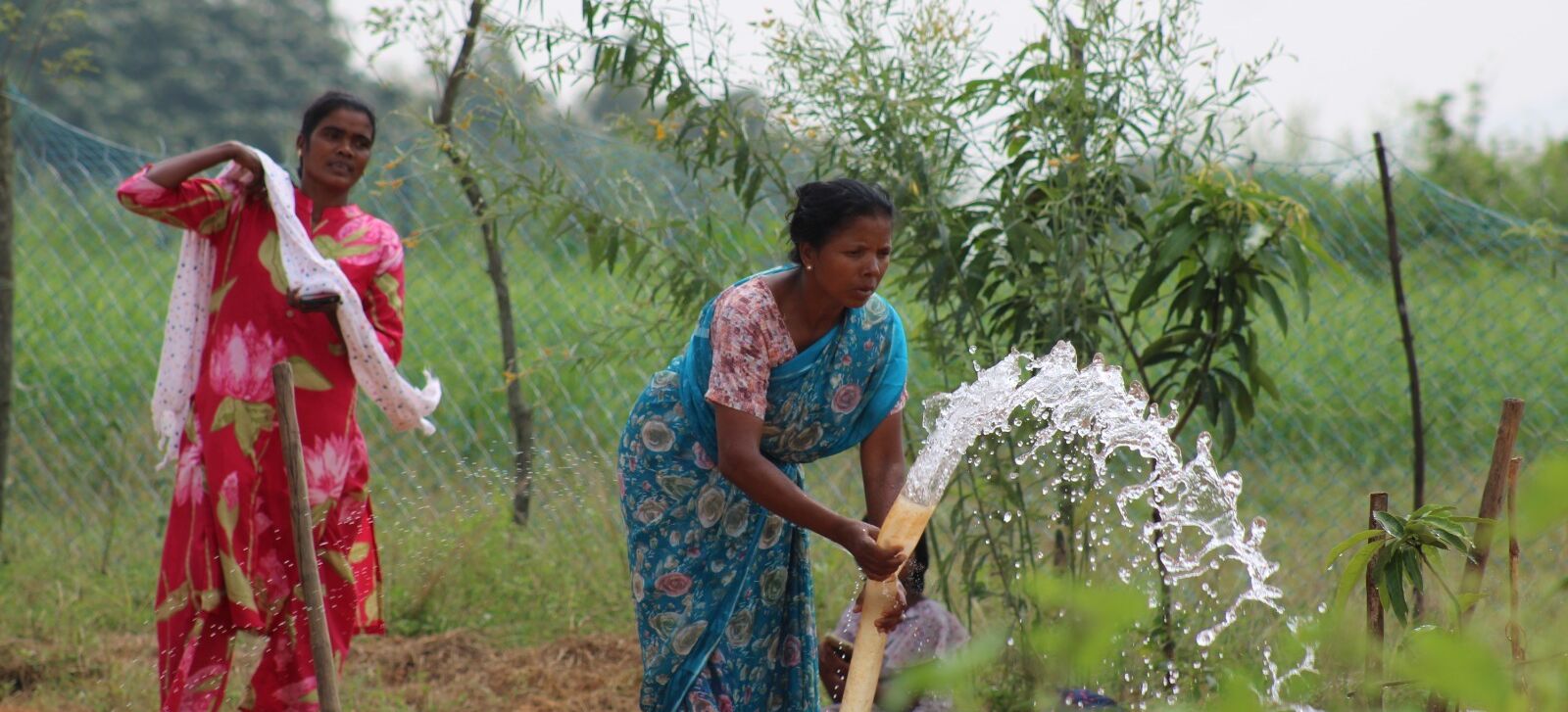
India’s rainfed regions support a large share of the country’s smallholder and tribal farmers and contribute significantly to food production. Despite receiving substantial seasonal rainfall, these regions continue to face agricultural vulnerability because water is inadequately captured, stored and distributed beyond the monsoon period. In the context of increasing climate variability, decentralised irrigation has become critical for enhancing agricultural productivity, strengthening livelihood resilience and improving water security for rural communities.
Civil Society Organisations (CSOs) working in these regions are important actors in watershed development, community mobilisation and natural resource management. However, consultations with practitioners reveal a critical capacity gap. While many organisations are able to create water-harvesting structures, they often lack the technical and institutional capabilities required to assess irrigation potential, design small irrigation systems, access government support mechanisms and establish sustainable community-led management. As a result, water conservation efforts frequently do not translate into improved irrigation and livelihood outcomes.
The proposed course addresses this capacity gap and equips irrigation development practitioners in planning, designing and governance of small irrigation systems relevant to rainfed regions of India.
Who should attend?
Project managers and frontline functionaries who work on the ground to guide the implementation of NRM/irrigation projects in rural areas.
| Day and Topic | Sessions |
|---|---|
| Day 1 Critical perspective on irrigation in rainfed areas | Sessions 1 – 4: Context, Irrigation Evolution, Livelihood Systems, Water Budgeting |
| Day 2 Landscape Assessment and Irrigation System Selection | Sessions 5 – 8: Hydraulics, Site assessment, Field measurements, Learning circle |
| Day 3 Engineering design — life irrigation, Diversion-based irrigation and Earthen tank systems | Sessions 9 – 12: Design Foundations: Diversion, Solar lift, Tank design; Cost estimation |
| Day 4 Field immersion | Sessions 13 – 16: On site survey, command area assessment, observing technical components, operator interview, interaction with WUA — guided framework |
| Day 5 Integrated design studio | Sessions 17 – 20: Design exercise using field data, Cross-learning, Presentations, Review |
| Day 6 Construction, commissioning and O&M | Sessions 21 – 24: Construction and commissioning of lift, diversion and tank; Troubleshooting |
| Day 7 Social, institutional and sustainability aspects | Sessions 25 – 28: Inclusion, Governance, Financial sustainability, Project development |
| Day 8 Project preparation and assessment | Sessions 29 – 32: Irrigation project proposal, Project review & revision, Assessment & evaluation, Action plans & closing |
Eligibility and selection
Applicants must have a working knowledge of Hindi and English, basic arithmetic skills, and more than three years of experience in community-managed small irrigation, NRM or other water resource development projects. Applicants will be selected based on their application and profile.
Important dates to remember
Apply by this date
Payment following selection by this date
Pedagogy
The course will be transacted through lectures, discussions, small group activities, videos, hands on exercises, case stories, exposure visits, etc.
Medium of instruction: A mix of English and Hindi. The course will be conducted face-to-face only. Course materials will be available in English.
Certificate of participation
The participants will be awarded a Certificate of Participation after successfully attending all the days and submitting assignments.
Get in touch
You could write to us at: water.course@apu.edu.in
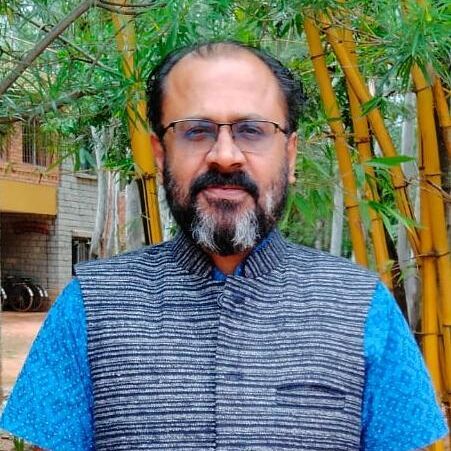
The course will be facilitated by Binju Abraham, Manas Kr Satpathy, Pankaj Kumar, Prabhat Kr Jha and Sumit Sow, faculty members of Azim Premji University and a pool of noted resource persons from across India.
Course Faculty
-

Binju Abraham
Binju is a faculty at the School of Continuing Education – University Resource Centre (SCE-URC), Azim Premji University. He contributes to the University’s work on rural livelihoods and the design and delivery of practice-based learning programmes for civil society organisations, practitioners, and government functionaries.With over 25 years of experience at PRADAN, one of India’s leading…
-


Manas Satpathy
Manas Satpathy is a Visiting Faculty at the School of Continuing Education, Azim Premji University and a senior development practitioner with over 36 years of experience in rural development in India. He is particularly interested in strengthening the resilience and prosperity of rural communities in rainfed and resource-constrained regions through better management of natural resources,…
-


Prabhat Kumar Jha
Prabhat Kumar Jha works on rural livelihoods, sustainable agriculture, water management and climate resilience. At Azim Premji University, Ranchi, he designs practice-based learning programmes. His work draws on nearly two decades of experience across civil society, government and CSR sectors.
-


Sumit Sow
Sumit Sow is a faculty with the School of Continuing Education — University Resource Centre (SCE-URC), Azim Premji University. He previously worked as a Senior Research Fellow under the Soil Health Project, funded byCornell University, USA, at Dr. Rajendra Prasad Central Agricultural University (RPCAU), Pusa, Bihar, India.He completed his graduation from Visva-Bharati, West Bengal, and…
Fee Structure
| INR 11505 | For individuals from non-partner organisations |
|---|---|
| INR 1770 | For individuals from partners of Azim Premji Foundation, including field practice partners of Azim Premji University. |
*This fee includes GST.
*Accommodation and food will be borne by Azim Premji University.