
Sustainable Development: From Ideas to Action April 2026 Batch
Adding sustainability to development through iterative processes
Details
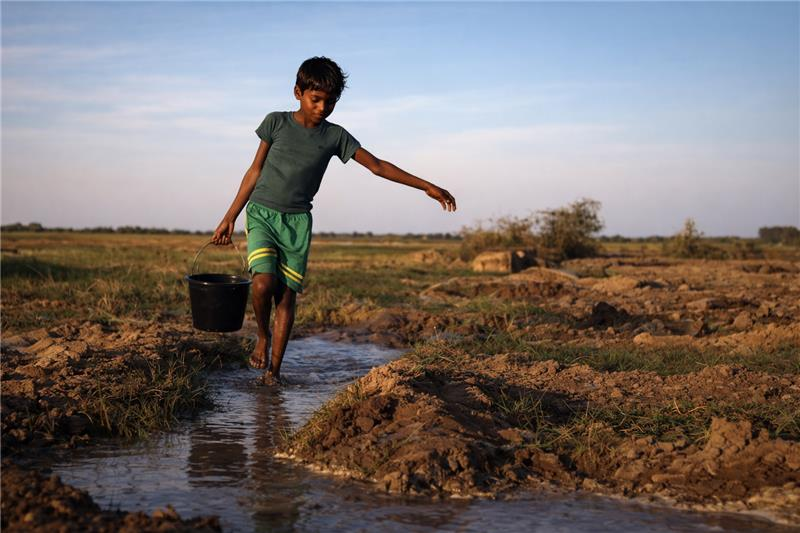
Around the world, sustainable development continues to be an important concern in the 21st century. Balancing the twin factors of economic growth and healthy environments continues to be a profoundly challenging process. Moreover, the phenomenon of climate change has also sharply focused our attention on the many ways in which our quality of life is acted by both these factors. This is particularly clear in countries of the Global South, such as India, where the approach to sustainable development needs to be participatory, varied and iterative so that it caters to the evolving needs and constraints of a large and diverse population. This course aims to facilitate greater involvement of field-level actors in transitioning to sustainability. It hopes to nudge various actors to integrate sustainability in their developmental work.
By the end of this course, participants will be able to:
- Present a historically informed view of why sustainable development is a global concern
- Explain the Indian perspective on sustainable development
- Analyse interrelated dimensions of sustainability — economic, social and environmental
- Identify socially just pathways in designing interventions for sustainable development
Anyone above the age of 18 years, especially those interested in adding a sustainability dimension to ongoing development interventions, in urban and rural contexts.
Unit 1: Introduction
Video 1: What is sustainable development?
Video 2: Tracing the global history of sustainability
Video 3: Sustainable development – the Indian story
Video 4: Introducing the 3 E framework for sustainable development
Unit 2: Main debates
Video 1: The global debate: who should prioritise sustainability and why?
Video 2: Sustainable development and India: Where do different stakeholders stand on this issue?
Video 3: Policy tools supporting action in India
Unit 3: What can we do? Action by local institutions
Video 1: Introducing a decision-making framework for sustainable development
Video 2: What can local institutions do: Panchayats
Video 3: What can local institutions do: Civil Society Organisations
Unit 4: What can we do? Actions by individuals
Video 1: Public spaces and sustainable development
Video 2: Solid waste in peri-urban areas
Video 3: Water resource management
Video 4: The case of textiles in a rural setting
Video 5: Summing up and looking ahead – from ideas to action
The course will be conducted online, in the asynchronous mode.
• The course will comprise four units, with 3 – 4 short videos each (of about 20 min duration).
• Units 2, 3 and 4 feature a diverse set of guest speakers and case studies.
• Participants will be expected to watch one video a week and take the multiple-choice quizzes at the end of each unit.
Discussion hour: Apart from the video tutorials, the instructors will be available online for 1 hour once a month, for participants to clarify doubts, discuss topics, share examples from their own work, etc.
Guest speakers
- Amita Deshpandey (Recharkha Organisation)
- Arvind Lakshmisha
- Aravindhan Nagarajan
- Elango Rangasamy (Former Panchayat President, Kuthambakkam, Tamilnadu)
- Manu Mathai (Visiting faculty, Azim Premji University)
- Mansi Patel
- Manikandan V
- Nikhil Desai
- Vishwanath (Visiting faculty, Azim Premji University)
Apply here.
Note: Seats will be filled on a first-come, first-served basis.
A certificate of participation will be presented to participants who score at least 50 percent in the multiple-choice quizzes.
Course Faculty
-


Pijush Kumar Dutta
Pijush Kumar works on community-based natural resource management and conservation-linked livelihoods.
-


Gautam Ganapathy
Gautam Ganapathy works on the relationship between water and society, especially the intersection of ecology, politics and technology.
-
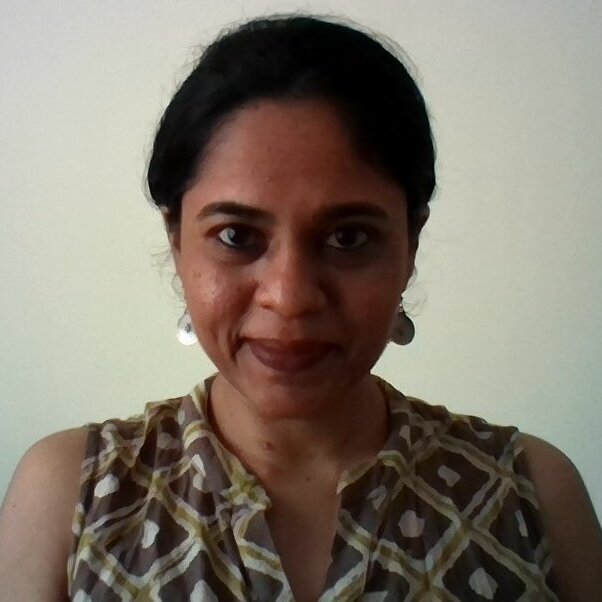

Madhuri Ramesh
Madhuri Ramesh works on nature-society interactions, inclusive conservation and nature-based livelihoods.
Fee Structure
| INR 1180 |
|---|