
Sustainable Agriculture: Perspectives and Principles
A five-day course that explores sustainable agriculture in depth — its perspectives, field practices, and outcomes — drawing from organic, natural, permaculture, and deep ecology approaches.
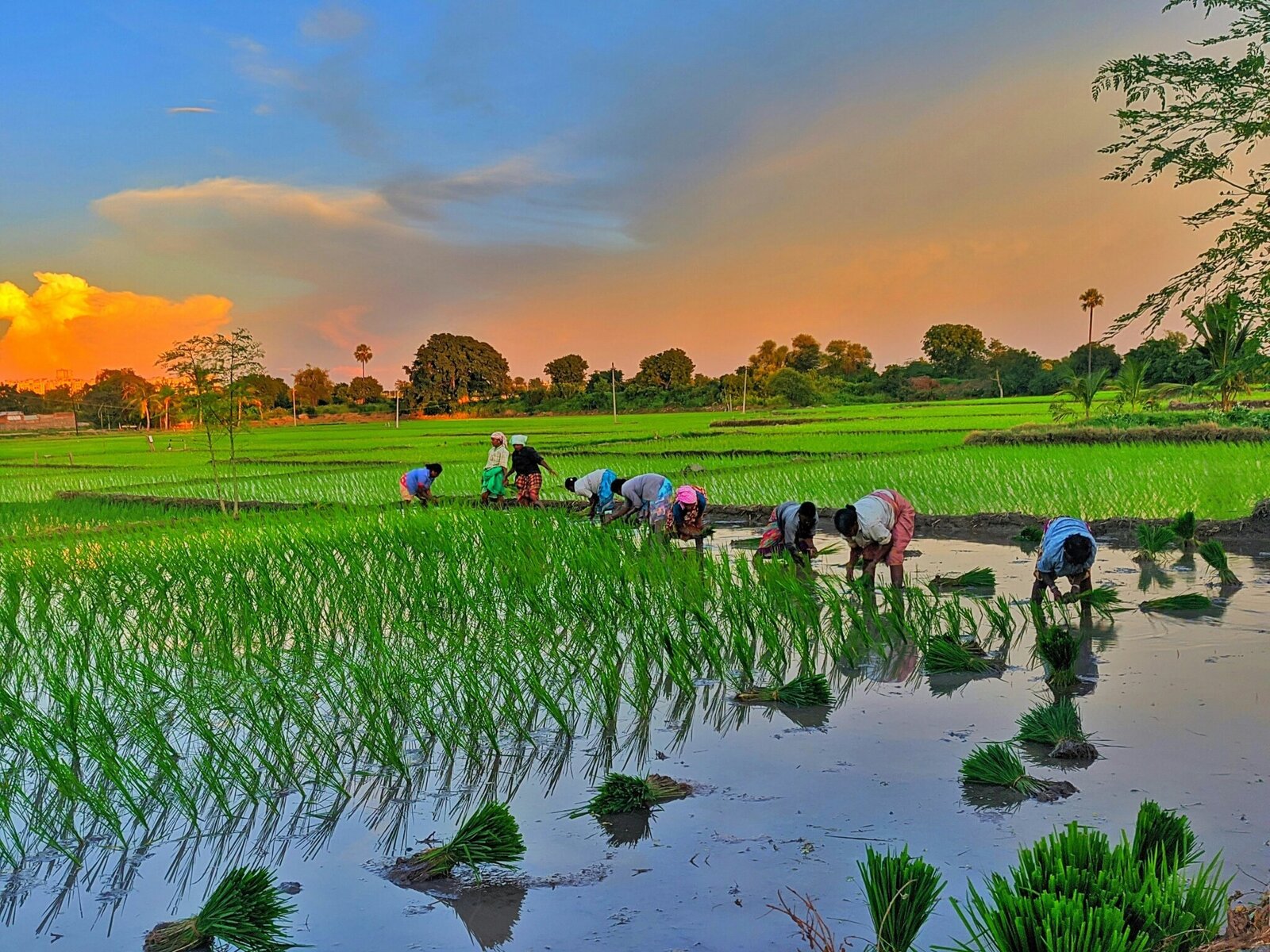
Photo credit: Prahlad Inala, Unsplash
Details
While the adverse impacts of current dominant agricultural practices on soil, water, the environment, and human health are now well known, various alternatives, broadly known as sustainable agriculture practices, have also gained ground and entered mainstream policies. Several State governments, as well as the Union government, now have schemes to support such practices. Hundreds of social sector organisations across many states are also engaged in promoting sustainable agriculture while striving to enhance farmers’ income and wellbeing.
However, a broad consensus on what truly constitutes sustainable agriculture is yet to emerge. Diverse practices related to soil, seeds, pesticides, fertilisers, and irrigation are seen on the ground, all claiming to be sustainable. Often, the discourse on sustainable agriculture — mostly among practitioners — is shaped by ideological preferences stemming from different interpretations of sustainability. Interestingly, these differences appear more on the input side of practices, and much less on the outcome side — in terms of soil health, water table depletion, biodiversity, environmental outcomes, and impacts on human health.
Educational programmes on sustainable agriculture also vary widely. Most are hands-on trainings focused on imparting skills related to a crop’s “package of practices.” Few offer a comprehensive understanding of sustainable agriculture — its science, diverse practices, and their links to outcomes, particularly how farmers perceive them economically and through their own sustainability lens.
Therefore, Azim Premji University, in collaboration with the Centre for Sustainable Agriculture (CSA), has designed this course to fill that gap and provide a well-rounded learning experience.
What does the course offer?
This course offers a comprehensive understanding of sustainable agriculture, encompassing its key perspectives, practices, and outcomes at the farm and farmer levels. It draws from diverse approaches such as deep ecology, organic, natural, and permaculture farming, which differ in their on-ground practices and methods.
Participants will explore various ideas of sustainability in agriculture, key scientific principles, and the diversity of practices. The course will also address soil health, pest and disease management, seed systems, farm economics, and farmer behaviour, concluding with the challenges of scaling up.
Who can apply?
This course is designed for founders, senior functionaries and others engaged in Sustainable Agriculture/Rural Livelihood practices in social sector organisations, along with government functionaries of appropriate levels. The course is also open to scholars, consultants and others. A foundational understanding or some experience with the subject will be helpful, but the course welcomes participants from diverse backgrounds.
Course Faculty
-


Manjula M
Manjula M works on the ecological, social and economic dimensions of rural livelihoods especially sustainable agriculture and conservation of natural resources.
-


Preeti Singh
Preeti teaches a hands-on Sustainable Farming course, where students engage in farming practices to learn sustainability. Her work focuses on sustainable agriculture within the broader domain of rural livelihoods, gender, and youth. She teaches a hands-on Sustainable Farming course, where students learn sustainable practices by directly engaging in farming activities.She is also working on bringing…