
Perspectives and Capacity Development on Rural Employment Guarantee programme November 2026 Batch
An Initiative by School Of Continuing Education, Azim Premji University
Details
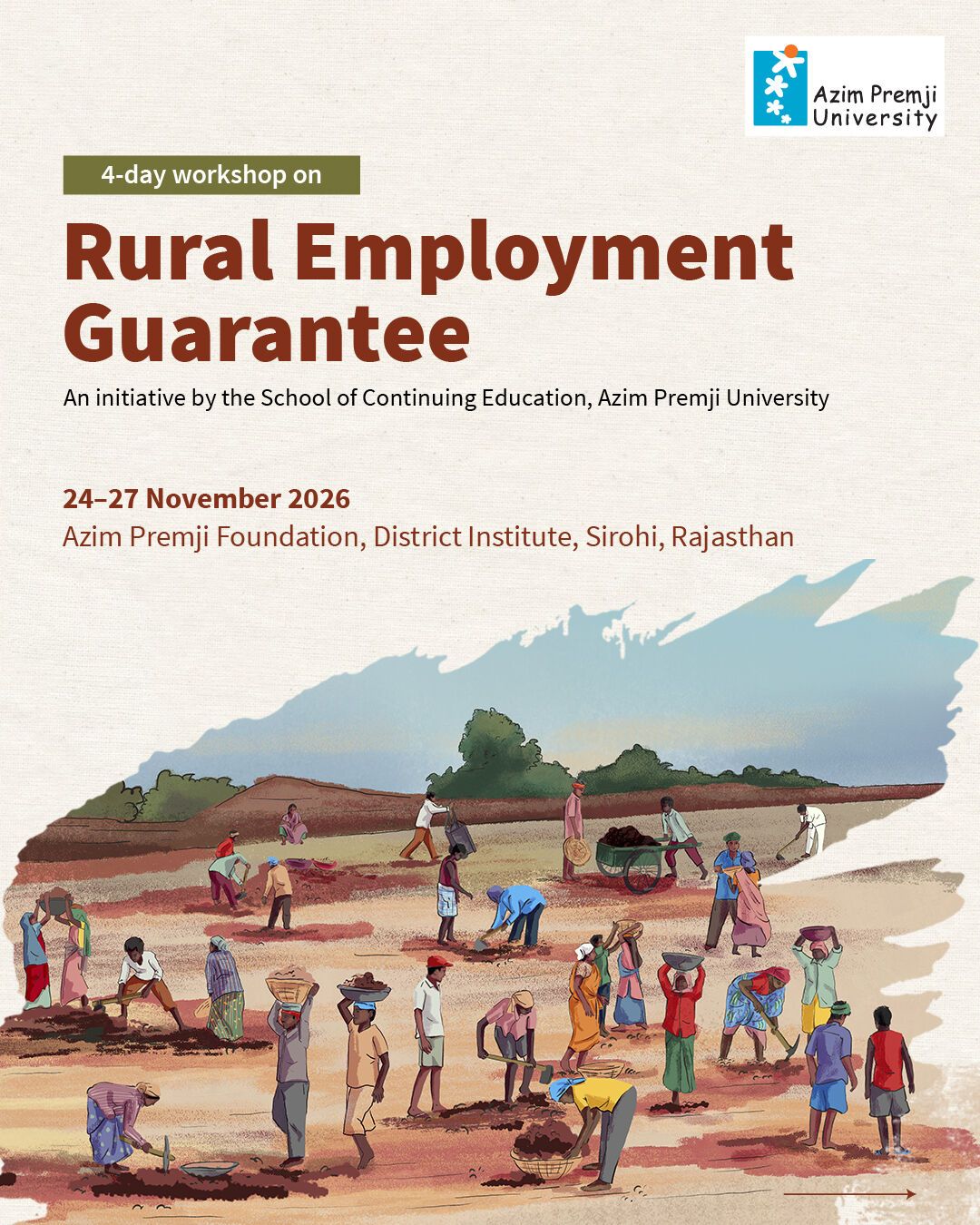
The landscape of rural employment guarantee in India is presently undergoing a major transition. After nearly two decades of implementation of the Mahatma Gandhi National Rural Employment Guarantee Act (MGNREGA), the programme has now moved into a new policy phase with the introduction of Viksit Bharat – Guarantee for Rozgar and Ajeevika Mission (Gramin) — (VB-GRAM‑G). This transition has generated significant debates around workers’ rights, decentralisation, financing structures, technology-driven governance and the future of rights-based welfare programmes in India.
Over the years, MGNREGA emerged as one of the largest public employment programmes in the world and played an important role in strengthening rural livelihoods, supporting vulnerable households, creating natural resource assets and enabling democratic participation through Gram Panchayats and Gram Sabhas. At the same time, the programme witnessed multiple implementation challenges including delayed wage payments, weak grievance redress systems, technological exclusions, corruption, declining decentralisation and shrinking political commitment.
Civil Society Organisations (CSOs), workers’ collectives, researchers and social movements played a critical role in sustaining public engagement with employment guarantee. Through campaigns, social audits, workers’ mobilisation, help desks, legal interventions and community facilitation, many organisations helped workers access entitlements and strengthen accountability mechanisms.
The introduction of VB-GRAM‑G has opened a new phase of engagement and critical reflection. Questions related to fiscal sustainability, centralisation of governance, role of Panchayats, use of technology, labour rights and future models of employment guarantee have become increasingly important.
The School of Continuing Education at Azim Premji University has therefore designed a broader workshop mode course on Rural Employment Guarantee. It seeks to help participants understand the historical evolution of employment guarantee in India, critically reflect on the experiences and lessons from 20 years of MGNREGA, understand the emerging framework of VB-GRAM‑G and develop capacities for community action, policy engagement, participatory planning and evidence-based advocacy.
At the completion of the workshop the participants will be able to-
- Explain the key lessons from 20 years of MGNREGA implementation
- Strategise CSO’s engagements based on various factors including governance bottlenecks affecting employment guarantee.
- Explain the opportunities and concerns regarding the application of the provisions of VBGRAMG.
Structure of the workshop
The course will comprise 16 sessions conducted over four days. Each session of 90 minutes will combine lectures, discussions, group work, films, case studies and participatory exercises.
| Day | Sessions |
|---|---|
| Day I | Session I (9.00−10.30 AM) Introductory session, participant expectations, overview of the course and contemporary context of Rural Employment Guarantee. |
| Session II (11.00 AM-12.30 PM) Constitutional values, structural inequalities, poverty, caste, gender and the ethical-economic basis of employment guarantees and welfare rights. | |
| Session III (1.30−3.00 PM) NREGA as an idea and promise: rights-based employment guarantee, social justice, livelihood security, decentralisation and the broader vision of welfare. | |
| Session IV (3.30−5.00 PM) Reflection session‑I: Twenty Years of NREGA. Productive asset creation, natural resource management, rural infrastructure and contributions to the rural economy. | |
| Day II | Reflection session II: Twenty years of NREGA. NREGA as a booster for rural wages, livelihood generation, migration reduction and economic security. |
| Reflection session III: Twenty years of NREGA. Women’s participation, work-pay parity, financial inclusion, dignity and social transformation. | |
| Reflection session IV: Twenty years of NREGA. Decentralised planning, Panchayats and Social Audits: achievements, limitations and lessons. | |
| Bottlenecks I: Corruption, accountability deficits and workers’ experiences. | |
| Day III | Bottlenecks II: Gradual centralisation, shrinking decentralisation and emerging governance challenges. |
| Bottlenecks III: Funding constraints, delayed payments, administrative bottlenecks and implementation challenges. | |
| Understanding VB-GRAM‑G: Major provisions, comparison with MGNREGA and key policy debates. | |
| Understanding VB-GRAM‑G: Major provisions, comparison with MGNREGA and key policy debates. | |
| Day IV | Learning from MGNREGA Strategies for VB-GRAM‑G Action‑I: Civil society engagement, workers’ organisations, Kaam Mango campaigns, legal strategies and narrative building. |
| Learning from MGNREGA Strategies for VB-GRAM‑G Action-II: Designing local interventions, community mobilisation, evidence building and social monitoring. | |
| Learning from MGNREGA Strategies for VB-GRAM‑G Action-III: Developing state, district and organisational action plans for strengthening employment guarantees. | |
| Final reflection, certificate presentation, future action planning, feedback and closing session. |
Eligibility criteria
- Participants should be engaged in rural development, livelihoods, local governance, employment guarantee or related social sector work with at least 3years of experience in the related field. Some work experience on MGNREGA will be preferable.
- Participants should have prior field engagement with rural communities, Panchayats or workers’ collectives.
- The course is designed primarily for senior functionaries, programme coordinators, trainers and researchers associated with civil society organisations and networks.
Certificate of participation
Participants will receive a ‘Certificate of Participation’ from Azim Premji University upon attending all the sessions.
Contact us
You could write to us at ruralemploymentguarantee.course@apu.edu.in
Course Faculty
-


Debmalya Nandi
Debmalya is a faculty member at School of Continuing Education University Resource Centre, Azim Premji University.He is a development practitioner with over 17 years of experience working on rural development, local democracy, welfare rights, and social policy implementation in India. He has also been writing quite frequently in different media platforms.His earlier work lies at…
-


Gurjeet Singh
Gurjeet Singh is a faculty member at the School of Continuing Education — University Resource Centre (SCE-URC), Azim Premji University.He holds a master’s degree in history from Vinoba Bhave University, Hazaribagh, Jharkhand, and a Postgraduate Diploma in District Health Management from IGNOU.After completing his Merchant Navy training at TS Rajendra (1982 – 83 batch), he served with…
-

Nikhil Shenoy G
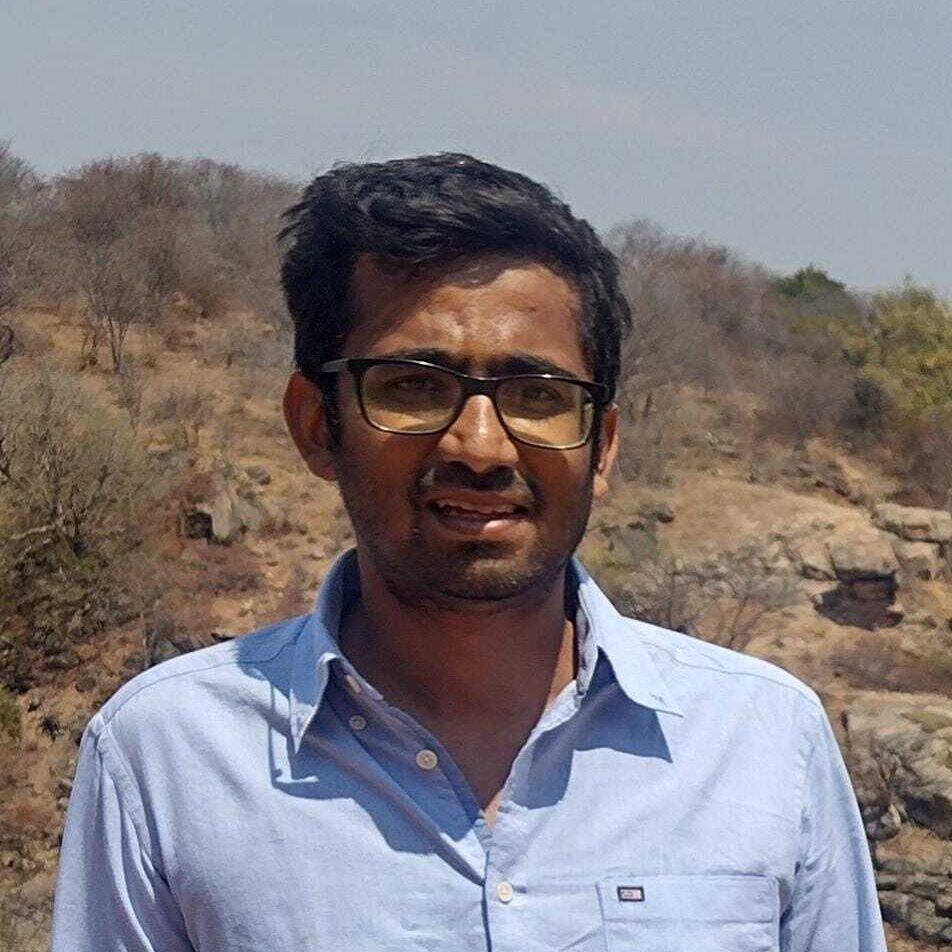
Nikhil Shenoy G is a development practitioner with over a decade of grassroots experience working on NREGA implementation, wage security, and labour rights in India. He is a founding member of the Rajasthan Asangathit Mazdoor Union (RAMU), a women-focused union of over 10,000 rural NREGA worker families. With the Mazdoor Kisan Shakti Sangathan, he helped formulate the Government of Rajasthan’s “Poora Kaam Poora Daam” NREGA campaign, which not only helped raise the average wages and work days in Rajasthan but also created a transformational shift in the appointment of women mates(worksite supervisors). He has also led large-scale outreach programs on rural employment and social security entitlements covering six-states that reached over 50,000 families and secured a doubling of social security pension coverage in Rajasthan and Jharkhand. He was part of the 100-day “Jawabdehi Yatra” demanding an accountability law in Rajasthan. He is currently engaged with the School of Continuing Education — University Resource Centre, Azim Premji University.
Fee Structure
| INR 1770 | Inclusive of GST and accommodation for Azim Premji Foundation partner members |
|---|---|
| INR 7080 | Inclusive of GST and accommodation for non-Azim Premji Foundation partner members |