
Perspectives and Capacity Development on Rural Employment Guarantee programme
An Initiative by School Of Continuing Education, Azim Premji University
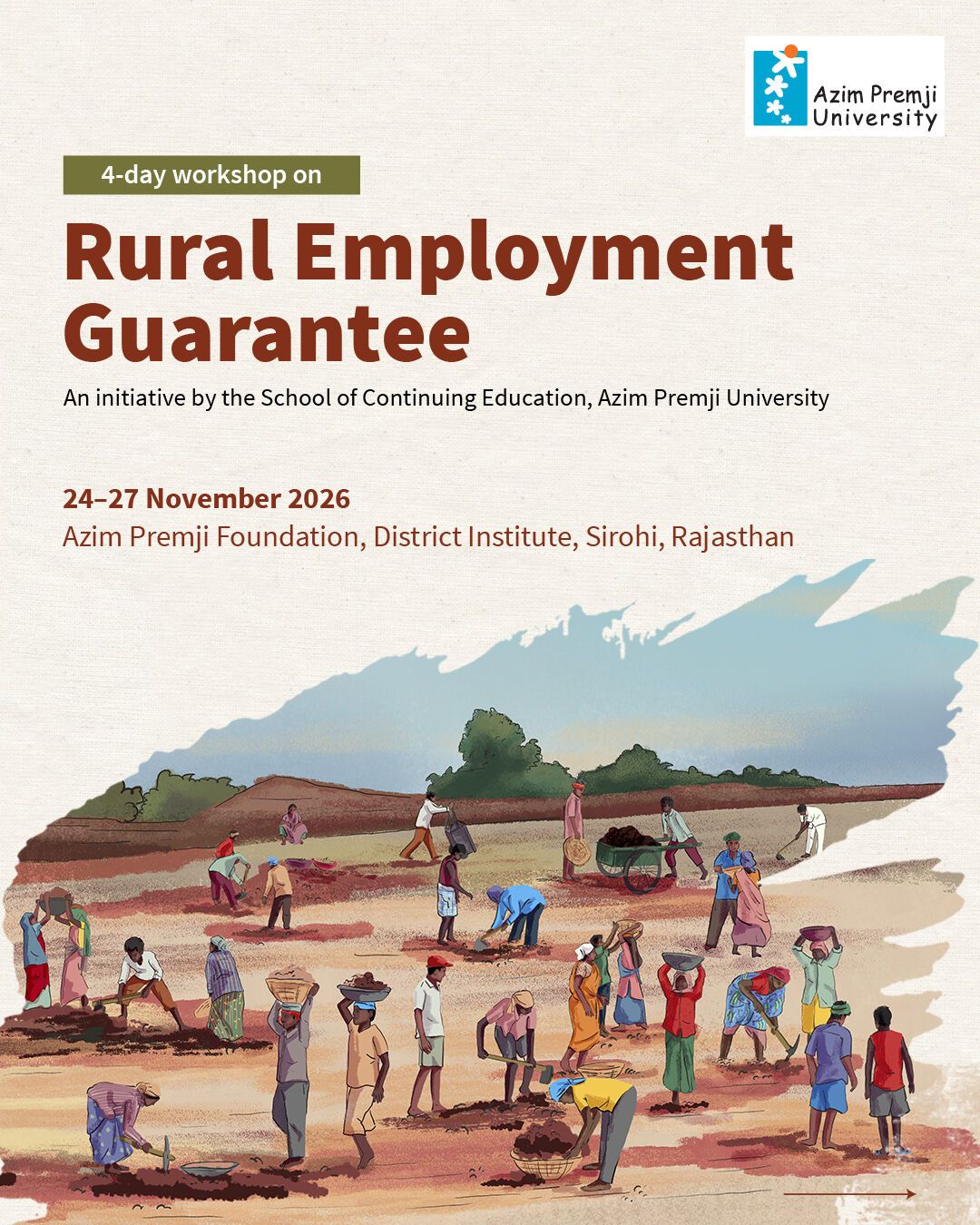
Details
The landscape of rural employment guarantee in India is presently undergoing a major transition. After nearly two decades of implementation of the Mahatma Gandhi National Rural Employment Guarantee Act (MGNREGA), the programme has now moved into a new policy phase with the introduction of Viksit Bharat – Guarantee for Rozgar and Ajeevika Mission (Gramin) — (VB-GRAM‑G). This transition has generated significant debates around workers’ rights, decentralisation, financing structures, technology-driven governance and the future of rights-based welfare programmes in India.
Over the years, MGNREGA emerged as one of the largest public employment programmes in the world and played an important role in strengthening rural livelihoods, supporting vulnerable households, creating natural resource assets and enabling democratic participation through Gram Panchayats and Gram Sabhas. At the same time, the programme witnessed multiple implementation challenges including delayed wage payments, weak grievance redress systems, technological exclusions, corruption, declining decentralisation and shrinking political commitment.
Civil Society Organisations (CSOs), workers’ collectives, researchers and social movements played a critical role in sustaining public engagement with employment guarantee. Through campaigns, social audits, workers’ mobilisation, help desks, legal interventions and community facilitation, many organisations helped workers access entitlements and strengthen accountability mechanisms.
The introduction of VB-GRAM‑G has opened a new phase of engagement and critical reflection. Questions related to fiscal sustainability, centralisation of governance, role of Panchayats, use of technology, labour rights and future models of employment guarantee have become increasingly important.
The School of Continuing Education at Azim Premji University has therefore designed a broader workshop mode course on Rural Employment Guarantee. It seeks to help participants understand the historical evolution of employment guarantee in India, critically reflect on the experiences and lessons from 20 years of MGNREGA, understand the emerging framework of VB-GRAM‑G and develop capacities for community action, policy engagement, participatory planning and evidence-based advocacy.
At the completion of the workshop the participants will be able to-
- Explain the key lessons from 20 years of MGNREGA implementation
- Strategise CSO’s engagements based on various factors including governance bottlenecks affecting employment guarantee.
- Explain the opportunities and concerns regarding the application of the provisions of VB-GRAM‑G.