
Education-Development Interlinkages (Part XXI)
Does education contribute to sustainable development?
Q&A with Santhakumar V | 16 Feb 2026
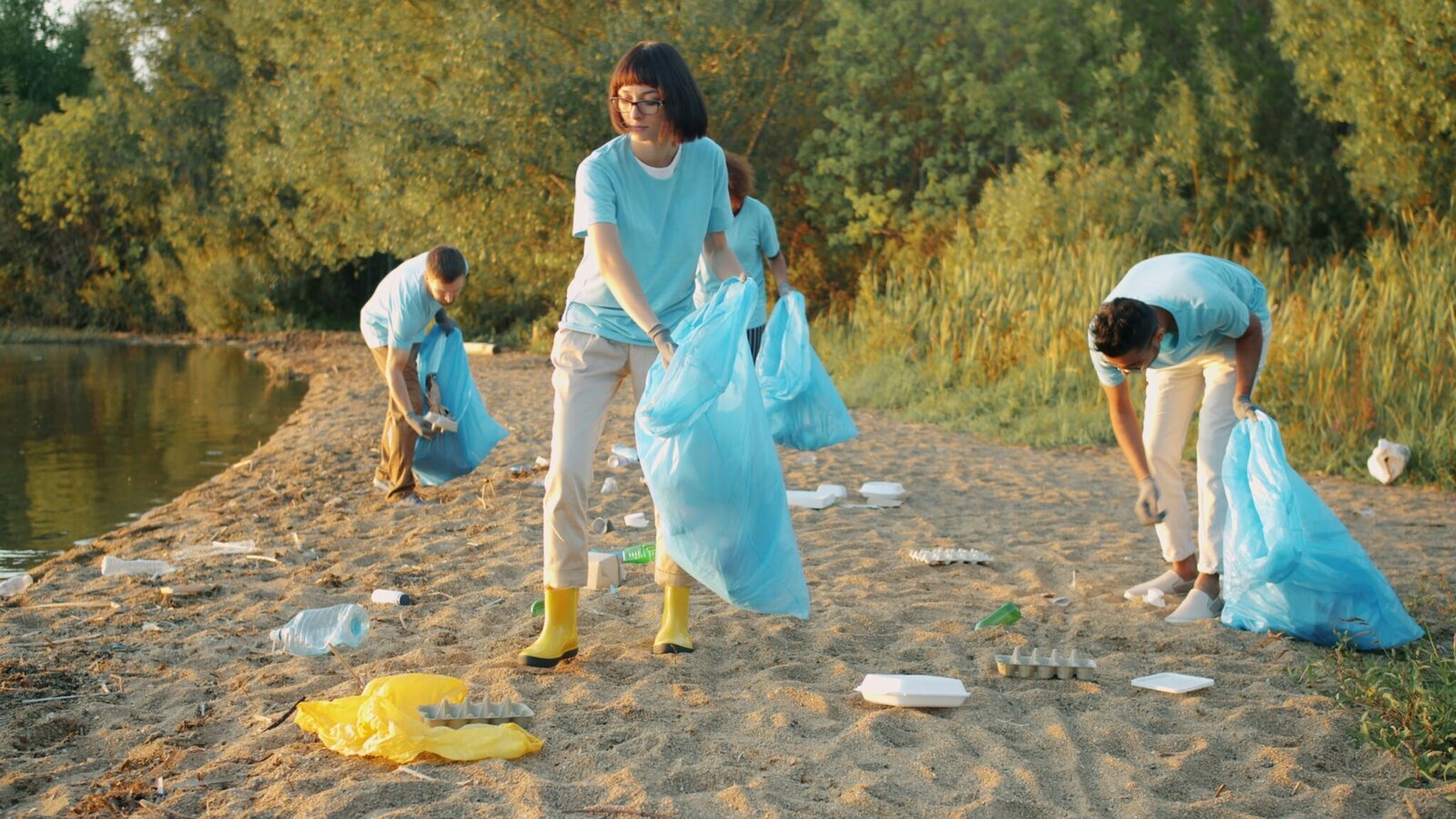
Students who participate in environmental projects develop a better attachment to the community than those who work on civic issues.
Details
Q. Generally, are educated people more concerned about the issues of environmental sustainability and willing to take actions in this regard in comparison with those who are less educated?
A: This question can be answered theoretically and/or empirically. There can be different pathways through which education influences human behaviour. For example, an educated person may be in a position to respond in a more informed manner to the needs of the context, which may reflect in their actions. Education can lead to a certain moral or value-based transformation of individuals and may encourage them to be proactive in protecting the environment. Education may encourage individuals to think more deeply and independently about such matters and, thereby, help them to better understand their own position vis-à-vis environmental conservation. Education may help individuals to reduce the consumption of materials that are harmful to the natural environment. There is a need to consider these different pathways, though it is uncertain whether all these can be realistically captured in empirical studies.
Q. Does education reduce material consumption?
A: Educational status, in theory, could play an important role in the consumption pattern of individuals. First, education could be a substitute for conspicuous consumption as far as the social signalling role is concerned; that is, educated people need not depend fully on conspicuous consumption to signal their status in society. Education or consequent academic capabilities can also be a source of happiness, and hence, there could be a lesser need to depend on material consumption for educated people to achieve a given level of happiness. Educational level is associated with the consumption of high-culture products, such as opera, theatre, ballet, and classical music. Higher education could lead to greater happiness, life satisfaction, self-esteem, self-efficacy, and reduced risk of depression (Sabates & Hammond, 20081). These positive effects of education could be due to the higher income, non-alienating work, household composition, health behaviours and use of health services, emotional resilience, social capabilities and probably better physical health among older adults.
However, education may also enhance the aspiration levels, which may result in higher levels of consumption. Adults with higher qualifications may report relatively low job satisfaction, raised aspirations and expectations that are unmet. Given these contradictory possibilities, the actual empirical evidence on the relationship between education and consumption may depend on the contextual factors (for specific groups of people).
It is well known that education leads to non-monetary or non-income benefits. These may increase the efficiency of consumption, as education could be an input into the process of consumption. Hence, education may enhance the level of satisfaction/happiness for a given level of consumption. Education provides the possibility of leading a relatively happier life with a given level of consumption. If it is so, it may indicate some substitutability between education and consumption. Does it happen in reality? There is no conclusive evidence.
Q. Does education encourage pro-environmental actions?
A: Those who have higher levels of education are likely to have more extensive knowledge about environmental issues. But does this enhanced knowledge of environmental issues foster a pro-environmental behaviour in these people?
There may not be a direct relationship between knowledge of the environment and pro-environmental behaviour. Environmental concerns (or the consequent readiness to change behaviour or take action) could be influenced by a number of factors, including demographic, ideological and other characteristics of individuals, in addition to their economic backgrounds.
Among these, age and education are expected to be related to environmental awareness, and both seem to be associated with environmental attitudes.2 Age seems to be negatively related to environmental concern, and education is positively related. Several recent research projects in developed and developing countries have found positive relationships between general educational status and ecological worldview (see, for example, Reyna et al., 20173). What generally makes older people less concerned about environmental issues? This could be due to a familiarity with the earlier social life in which such environmental concerns were not that pressing, the absence of a long-term vision, and so on. Though gender seemed to have an influence, the evidence does not indicate a consistent direction of the impact.
A 2011 assessment in the UK, based on data from more than 22,000 individuals, found that the highly educated are more likely to display their environmental credentials through what they buy rather than with actions such as turning off lights.4 According to this study, people with educational degrees are, on average 25 percent more likely (than those with no education) to adopt pro-environmental behaviours in terms of paying more for environmentally friendly products. However, there is no evidence to indicate that people with higher education are likely to turn off the TV overnight or use public transport.
The literature mentioned above has looked at the impact of education in shaping concerns about climate change. It is noted that education does not have a simple positive effect on this concern.5 The positive role of education, if any, is overshadowed by ideological moorings. Being a strong republican in the US would mean a lower likelihood of considering climate change as a serious threat. The reach of ideologically motivated campaigns to educated sections of party sympathisers is better as compared to the less educated ones. This shows the need to address ‘ideology’ explicitly as part of education.
Education, in general, may not be enough to enhance concern about the environment. Whether people have desirable environmental awareness and what the exact nature of it is are important issues. Kempton et al (1995)6 indicate that most people do not know enough about environmental issues. It is interesting to note that the knowledge on environmental issues of different groups of people, including strong environmentalists and strong anti-environmentalists, could be low, as evident from surveys such as Kempton et al (1995). A major driving force for pro-environmental behaviour seems to be situational and other internal factors, and not necessarily environmental awareness.
In general, people are probably reluctant to adopt those environment-friendly behaviours that have a high personal cost, even though they are aware of the importance of doing so. This is evident from the correlations seen in empirical studies between environmental attitude and low-cost pro-environmental behaviour (e.g. recycling). Hence, people who are aware of environmental issues may be willing to engage in activities such as recycling, but may be reluctant to change their other activities (like the reduced use of motor cars or flights). However, even such marginal change may be useful, as these people who are not willing to make substantial changes in their lifestyle may support political changes, like higher fuel taxes, that are beneficial for the environment.
It may be that people are concerned more about their well-being (in the way they define it for themselves) and adopt pro-environmental behaviours which are in alignment with these personal priorities. Or this could be related to their personal belief systems. Even when people are exposed to information on environmental dangers, we may only filter in information which is in consonance with our mental frameworks. Hence, information that supports our existing values and mental frameworks is accepted, whereas that which contradicts our beliefs is rejected. Hence, people with a strong belief in growth and technological solutions may not see the need for, and will be less willing to engage in, pro-environmental behaviour.7
Another way to look at this issue is to see whether educated people, on an average (after controlling for other relevant factors), are willing to pay more for protecting environmental resources. One such study examined the patterns of willingness to pay across households with different incomes and countries with different levels of GDP, using household-level data from the third round of the World Values Survey (WVS).8 This survey has covered 70,000 respondents in 48 countries. The study found strong relationships between (marginal) willingness to pay (MWTP) for the environment and individual characteristics, such as age, income, and education. It found that more educated respondents, in general, are willing to pay higher amounts than those respondents who have less formal education.
A study9 has categorised 18 factors which influence pro-environment behaviour into personal and social factors. Personal factors help understand the very complex nature of human beings, their decisions and include childhood experience, knowledge and education, personality and self-construal sense of control, values, political and world views, goals, felt responsibility, cognitive biases, place attachment, age, gender and chosen activities. Social factors include religion, urban – rural differences, norms, social class, proximity to problematic environmental sites and cultural and ethnic variations while trying to understand the problem. There is a hypothesis that childhood experiences influence the formation of different value priorities (Inglehart, 197710). Experiencing economic hardship, war, or social and political upheavals lead to the development of materialist values. If it is relevant, then one should not be surprised to see the emerging middle class in the previously poorer countries focusing somewhat excessively on material consumption. In that sense, education could play an important role in encouraging the middle and affluent classes of the developing world, too, to adopt pro-environmental behaviour over time. The mixed evidence on the actual link between education and pro-environmental behaviour, evident from this review, highlights the need for more conscious efforts to make this link stronger.
Q. Does environmental education make people act in environmentally conscious ways?
A: So far, we have talked about the impact of education on environmental sustainability in general. However, there are attempts to make education more focused on environmental and sustainability themes to make the link between education and sustainability stronger. Environmental education (EE) programmes in schools and colleges adopted in different parts of the world are of this kind. Environmental education was defined as a learning process that increases knowledge and awareness about the environment and associated challenges; develops the necessary skills and expertise to address these challenges; and fosters attitudes, motivations, and commitments to make informed decisions and take responsible action.11 There can also be different modes of application of such EE: as part of school education as an additional subject; or the teaching of other subjects in an environment-friendly manner (as in ‘greening the curriculum’); or it can include different forms of outdoor education. Through a few of these, like ‘nature walks’, were part of education in different contexts for a long time, conscious efforts to integrate EE started after the late 70s. So, let’s see what the impact of this EE on pro-environmental behaviour or sustainable development is.
There were studies in the last century which focused on the impact of EE. These attempted to measure students’ environmental knowledge, behaviours, and attitudes, as well as similar constructs. A review of 96 studies on the impact of EE[i^12] found that outdoor programmes tend to have a positive impact on adolescents’ behaviour, self-concept, and academic performance. There are also problems with the scope and objectives of this research, limiting their usefulness for our purpose. Other reviews summarised in Wheeler et al (2007),13 found that, in general, research has been done on the level of students’ factual environmental knowledge, skills and behaviour, not on the outcomes of EE programs or determining what factors determine these outcomes; most studies found relatively low levels of environmental knowledge. Students’ attitudes tend to be pro-environmental but may be less so when the issue has a more direct impact on their lifestyle choices (i.e. vehicle use), and the research on behaviour tends to rely on self-reported data.
In general, reviews of studies reported until the 1990s, which measured students’ environmental knowledge, attitude and behaviour, do not note an improved understanding of environmental issues among them (Wheeler et al, 2007)14. However, a set of these studies indicates a correlation between participation in EE and improved academic achievement. According to them, EE may increase learning achievement for both high-ranking and low-ranking students. This was found to be especially so for mathematics and science achievement.
All these studies reported some evidence that participation in specific EE programmes could increase civic engagement. However, most of the studies used self-reported data on civic engagement. There were a number of methodological problems in these studies, and none of them could be called robust. There are study samples where parents have reported that their wards who have participated in outdoor-science programmes engage in significantly positive pro-environmental actions at home. Pre and post behaviour-checklist analysis carried out by Smith (1995)15 has indicated that students became more responsible, more considerate and trusting of others, more independent, better able to establish rapport with adults, better able to control anger, more enthusiastic about life, more relaxed and calmer, and capable of some insight into their problems. According to Battersby (1999),16 students developed a sense of ownership of the world and of responsibility through EE, which allowed them to express their opinions, feelings and concerns and demonstrate their values. Billig, Root and Jesse (2005)17 have explored the impact of different community action projects on students. Students who select these projects develop better civic knowledge than students who work on environmental projects. On the other hand, students who participate in environmental projects develop a better attachment to the community than those who work on civic issues. Grassi, Hanley and Liston (2004)18 document that students and parents have reported increased engagement in the community as an outcome of such education programmes.
Internationally, and with respect to school-based education, Sweden leads the way with its efforts to educate for sustainable development in its schools, and its research to demonstrate the positive impact of this education on indicators, such as sustainability consciousness (see, for example, Boeve-de Pauw et al, 201519). Other countries have a lot to learn about EE and Education for Sustainable Development (ESD) from Sweden. Although many institutions report progress in improving indicators, such as environmental literacy, it is rarely clear if these impacts will translate to improved sustainability-related behaviours. Research in this broad area does not necessarily produce good news for environmental educators. Research from the University of Michigan, an institution with a recognised sustainability focus, found ‘ … no evidence that, as students move through [the University], they became more concerned about various aspects of sustainability or more committed to acting in environmentally responsible ways, either in the present moment or in their adult lives’ (Schoolman et al. 2016, 49720).
About the author:
Santhakumar V is a former Professor, Azim Premji University, Bengaluru
Featured image by Vitaly Gariev on Unsplash
Endnotes:
R. Sabates and C. Hammond (2008). “The impact of lifelong learning on happiness and well-being.”↩︎
R. Sabates and C. Hammond (2008). “The impact of lifelong learning on happiness and well-being.”
C. Mobley, W.M. Vagias and S.L. DeWard (2010). “Exploring additional determinants of environmentally responsible behavior: The influence of environmental literature and environmental attitudes.” Environment and Behavior, Vol. 42, No. 4, pp. 420–447.↩︎
C. Mobley, W.M. Vagias and S.L. DeWard (2010). “Exploring additional determinants of environmentally responsible behavior: The influence of environmental literature and environmental attitudes.” Environment and Behavior, Vol. 42, No. 4, pp. 420–447.
C. Reyna, E. Bressán, D. Mola, A. Belaus and M.V. Ortiz (2017). “Validez estructural de la Escala del Nuevo Paradigma Ecológico en ciudadanos argentinos utilizando diferentes abordajes.” Pensamiento Psicológico, Vol. 16, No. 1, pp. 107–118.↩︎
C. Reyna, E. Bressán, D. Mola, A. Belaus and M.V. Ortiz (2017). “Validez estructural de la Escala del Nuevo Paradigma Ecológico en ciudadanos argentinos utilizando diferentes abordajes.” Pensamiento Psicológico, Vol. 16, No. 1, pp. 107–118.
Economic and Social Research Council (2014). “When it comes to the environment education affects our actions.” ESRC News. Accessed May 14, 2014.↩︎
Economic and Social Research Council (2014). “When it comes to the environment education affects our actions.” ESRC News. Accessed May 14, 2014.
L.C. Hamilton (2008). “Who cares about polar regions? Results from a survey of U.S. public opinion.” Arct Antarct Alp Res, Vol. 40, No. 4, pp. 671–678.↩︎
L.C. Hamilton (2008). “Who cares about polar regions? Results from a survey of U.S. public opinion.” Arct Antarct Alp Res, Vol. 40, No. 4, pp. 671–678.
W. Kempton, J.S. Boster and J.A. Hartley (1995). “Environmental Values in American Culture.” MIT Press.↩︎
W. Kempton, J.S. Boster and J.A. Hartley (1995). “Environmental Values in American Culture.” MIT Press.
L.M. Gigliotti (1994). “Environmental issues: Cornell students’ willingness to take action.” The Journal of Environmental Education, Vol. 25, No. 1, pp. 34–42.↩︎
L.M. Gigliotti (1994). “Environmental issues: Cornell students’ willingness to take action.” The Journal of Environmental Education, Vol. 25, No. 1, pp. 34–42.
D. Israel and A. Levinson (2004). “Willingness to Pay for Environmental Quality: Testable Empirical Implications of the Growth and Environment Literature.” Contributions to Economic Analysis and Policy.↩︎
D. Israel and A. Levinson (2004). “Willingness to Pay for Environmental Quality: Testable Empirical Implications of the Growth and Environment Literature.” Contributions to Economic Analysis and Policy.
R. Gifford and A. Nilsson (2014). “Personal and social factors that influence pro‐environmental concern and behaviour: A review.” International Journal of Psychology, Vol. 49, No. 3, pp. 141-157.↩︎
R. Gifford and A. Nilsson (2014). “Personal and social factors that influence pro‐environmental concern and behaviour: A review.” International Journal of Psychology, Vol. 49, No. 3, pp. 141-157.
R. Inglehart (1977). “The silent revolution: Changing values and political styles among Western publics.” Princeton University Press.↩︎
R. Inglehart (1977). “The silent revolution: Changing values and political styles among Western publics.” Princeton University Press.
UNESCO (1978). “Intergovernmental Conference on Environmental Education Final Report.”↩︎
UNESCO (1978). “Intergovernmental Conference on Environmental Education Final Report.”
J. Hattie, H.W. Marsh, J.T. Neill and G.E. Richards (1997). “Adventure education and outward bound: Out of class experiences that make a lasting difference.” Review of Educational Research, Vol. 67, No. 1, pp. 43-87.↩︎
J. Hattie, H.W. Marsh, J.T. Neill and G.E. Richards (1997). “Adventure education and outward bound: Out of class experiences that make a lasting difference.” Review of Educational Research, Vol. 67, No. 1, pp. 43-87.
G. Wheeler, C. Thumlert, L. Glaser, M. Schoellhamer and O. Bartosh (2007). “Environmental Education Report: Empirical Evidence, Exemplary Models, and Recommendations on the Impact of Environmental Education on K-12 Students.” Washington Office of Superintendent of Public Instruction.↩︎
G. Wheeler, C. Thumlert, L. Glaser, M. Schoellhamer and O. Bartosh (2007). “Environmental Education Report: Empirical Evidence, Exemplary Models, and Recommendations on the Impact of Environmental Education on K-12 Students.” Washington Office of Superintendent of Public Instruction.
Ibid (No. 13)↩︎
Ibid (No. 13)
T. Smith (1995). “An experiential adventure school for adolescents.” In “Experience and the Curriculum,” Association for Experiential Education, pp. 217-234.↩︎
T. Smith (1995). “An experiential adventure school for adolescents.” In “Experience and the Curriculum,” Association for Experiential Education, pp. 217-234.
J. Battersby (1999). “Does environmental education have ‘street credibility’ and the potential to reduce pupil disaffection within and beyond their school curriculum?” Cambridge Journal of Education, Vol. 29, No. 3, pp. 447-460.↩︎
J. Battersby (1999). “Does environmental education have ‘street credibility’ and the potential to reduce pupil disaffection within and beyond their school curriculum?” Cambridge Journal of Education, Vol. 29, No. 3, pp. 447-460.
S. Billig, S. Root and D. Jesse (2005). “The impact of participation in service-learning on high school students’ civic engagement.” National Service Learning Clearinghouse. Accessed Aug. 20, 2007.↩︎
S. Billig, S. Root and D. Jesse (2005). “The impact of participation in service-learning on high school students’ civic engagement.” National Service Learning Clearinghouse. Accessed Aug. 20, 2007.
E. Grassi, D. Hanley and D. Liston (2004). “Service-learning: an innovative approach for second language learners.” Journal of Experiential Education, Vol. 27, No. 1, pp. 87-110.↩︎
E. Grassi, D. Hanley and D. Liston (2004). “Service-learning: an innovative approach for second language learners.” Journal of Experiential Education, Vol. 27, No. 1, pp. 87-110.
J. Boeve-de Pauw, N. Gericke, D. Olsson and T. Berglund (2015). “The Effectiveness of Education for Sustainable Development.” Sustainability, Vol. 7, pp. 15.693–15.717.↩︎
J. Boeve-de Pauw, N. Gericke, D. Olsson and T. Berglund (2015). “The Effectiveness of Education for Sustainable Development.” Sustainability, Vol. 7, pp. 15.693–15.717.
E.D. Schoolman, M. Shriberg, S. Schwimmer and M. Tysman (2016). “Green cities and ivory towers: how do higher education sustainability initiatives shape millennials’ consumption practices?” Journal of Environmental Studies and Sciences, Vol. 6, No. 3, pp. 490–502.↩︎
E.D. Schoolman, M. Shriberg, S. Schwimmer and M. Tysman (2016). “Green cities and ivory towers: how do higher education sustainability initiatives shape millennials’ consumption practices?” Journal of Environmental Studies and Sciences, Vol. 6, No. 3, pp. 490–502.