
Education-Development Interlinkages (Part VI)
Challenges in the education of children from tribal communities in India: What can be attempted
Q&A with Santhakumar V | 14 Feb 2025
Tribal communities should have greater control over those schools where their children study. The higher representation of tribal people as teachers may facilitate this process. Moreover, local governments which have a higher representation of tribals may be given a greater role in the management of schools.
Details
Q. How do children from tribal communities, on average, differ from the rest in terms of their performance in education?
A: In general, the educational achievements of children from the tribal population are notably lower than those of others. This is evident from a few indicators, such as around a 14-percent-point gap between the literacy rates of Scheduled Tribes and the rest of the population (based on the 2011 census); nearly 50 percent of the children from this social group dropping out while transitioning from primary to secondary grades; nearly 80 percent of them stopping education when they are in class X; and only 20 percent of them appearing for the high school examination.
Q. What are the major challenges in education for children from tribal communities?
A: Some of their challenges are the same as those faced by other poor sections of Indian society in which parents have no or limited education. Poverty and limited interest in education work against the education of children from tribal communities. However, there are additional challenges they face. First, many tribal communities have their own languages, and these languages are not used in formal school education. This can create a disconnect for younger children between instruction in schools and conversation in their family/community environment. Though children are capable of learning multiple languages, there could be a disconnect since teachers in schools may not be able to communicate in the language of these children. Having more school teachers from tribal communities could have helped this situation, however, there are not many such qualified teachers.
There is a perception that the family environment of these children is not conducive to their education. Hence, there was an attempt to create residential schools. The small number of children in classes in each tribal hamlet, the remoteness of such hamlets, the lack of enough teachers from these localities, the difficulty in commuting between hamlets, etc., make residential schools a necessity in certain contexts. However, these schools, when managed by non-tribal people, may become alien spaces for children from tribal communities. Non-tribals in India have many prejudices regarding the life and culture of tribals, and these are reflected in the interactions between teachers and students in residential schools. So, although residential schools are necessary, they create another set of challenges in these children’s learning.
Tribal communities have very little say and control over their education in most parts of India. This is generally due to their lack of political influence. This is accentuated by their fragmented settlements. Around one-fifth of the tribal habitations have populations of less than 100 while more than half of these may have less than 500. They are also not politically mobilised in most parts of the country and may serve as vote banks for major political parties. An inadequate expression of their voice in political domains sustains their underdevelopment. It is mostly other people who debate and contest the nature of development and education for these communities.
Q. These challenges are known. What are the efforts of governmental and non-governmental organisations to address these challenges?
A: Many well-meaning non-governmental organisations have made attempts to create residential schools for tribal communities which are a lot more conducive to their education. One such experiment is mentioned here. However, most of these schools are run by people belonging to the mainstream community and these do not reflect the needs and aspirations of tribal people. One experiment was attempted by a few women from a tribal community, but such experiments are beset by inadequate financial resources. In general, there are non-governmental organisations which are concerned about the challenges of children from tribal communities and hence attempt innovative experiments which are a lot more inclusive but these could not make a major change in the public education system as a whole.
The state of Odisha started mother-tongue-based, multi-lingual education for children from tribal communities in grades I to V in 2007. The mother tongue (MT) was made the medium of instruction from grades I to III, after which, it remained as one of the languages in the higher grades. The official language of the state of Odisha – Odia, is studied as a language in grades II and III and becomes the medium of instruction after grade III. English is also taught as a subject from grade III. This programme is currently on in 21 tribal languages.
Several formal evaluations of this method of teaching have been conducted and these indicate a positive outcome. The teaching of tribal languages and their use as a medium of instruction in grades I to III seem to have reduced the fear of schooling among the children and have enhanced their attendance, participation and learning achievements.
However, there are a number of persisting challenges. The foremost being the shortage of teachers who know both languages – native and mainstream – in which teaching has to be carried out. Not many from these communities are trained to be teachers. So, although more than half of the language instructors or teacher assistants are hired from the tribal community, they do not have the educational background and training to be full-time teachers who can teach all the subjects. Hence, the schools have to depend on people from other social groups to teach subjects, such as maths.
Q. What are the current debates on the education of children from tribal communities?
A: Debates on the education of children from tribal communities are regarding their economic development. Conventionally, there were two extreme views in this regard. One was to integrate these communities coercively as part of the mainstream society. This view takes the specific features of the tribal communities as inferior and inimical to their economic and human development. The other extreme view is to keep these communities as isolated as possible from the mainstream population. This is based on the presumption that the integration/mixing with the mainstream population would lead to the decimation of their cultural features. In reality, there is a certain kind of integration that is happening but not necessarily in a desirable manner. Modern education is not internalised well by these communities, and hence they remain on the margins (or as poorer or lower-tier workers) of the mainstream society. The private interests of mainstream people and their incursion into the territories of tribal people have led to a continuous decline of the latter’s access to key resources because of which they have remained at a subsistence level.
There are problems with both these extreme views. First, these are from the perspectives of outsiders, and the views of tribal people themselves are overlooked. It is obvious that the imposition of modernisation is leading not only to the disappearance of their cultural practices but also to the erosion of happiness and meaning in their lives. On the other hand, the denial of appropriate education reduces their capabilities to deal with mainstream society, and this can lead to their exploitation in the hands of people who are powerful. Hence, there is a need for a perspective which can enhance their capabilities while also enabling their autonomous choice in terms of modernity versus tradition in their lives. No community rejects/embraces modernity in its totality (and such a fear is unrealistic). What happens usually is an opportunistic acceptance of a combination of traits of modern life and tradition (and this can be seen among Jews or Tamil Brahmins who are at the forefront of modern education). When tribal communities get an appropriate education, they may reflect on their own life, carry on with those traditions which they consider would enrich their lives and reject some other practices, such as marriages among cousins or excessive consumption of alcohol. Similarly, they would accept some but not all practices of modern society. For example, family planning is important because if there is uncontrolled population growth among this population, the resources that they have access to may not be enough for them and this can enhance poverty and vulnerability among them.
There is no doubt that tribal communities need formal education. However, it should be in a language that children from these communities can understand. Education should enhance their capability to flourish in this increasingly complex world. At the same time, it should enable them to reflect on their culture and make autonomous choices regarding the continuation of their traditions.
Q. Are there experiences from other countries which may throw light on desirable changes in the education for children from tribal communities?
A: Though tribal population or the so-called ‘Scheduled Tribes’ is an Indian phenomenon, there are similar populations in other countries. Groups of indigenous people who have been depending on forests for their livelihood in different countries are similar to India’s tribal population in many ways (though tribal communities may not be called the ‘indigenous people of India’, mainly due to the claims of indigenousness by others.) The experience of the education of indigenous people in other countries mainly from Latin America may provide important insights on the education of children from tribal communities in India.
If we take Brazil or other countries in Latin America, one can see different phases in the education of indigenous people. The first one was during the colonial period when the purpose of education was to modernise them. Then the post-independent governments in these countries also tried to impose a common education on its entire population including indigenous people, with nationalist goals. However, later on, anthropologists and progressive elements in the Church emphasised culture, including the language of indigenous people, in the education of their children. The codification of indigenous languages was part of these efforts. However, in the current stage of education, indigenous groups have moved further ahead. These communities have greater control over their schools, and this was an outcome of the political influence that they could exercise over national governments over time. The share of school teachers from these communities has gone up and countries like Brazil have used innovative teachers’ training programmes for this purpose.
The idea that formal education is not consistent with the long-term needs of indigenous people has become redundant through this process. On the one hand, education for indigenous people is now closer to their needs so they can exercise greater control over their education process. On the other, the acquisition of education is not encouraging them to leave their culture and livelihood patterns. There is a greater reflective acceptance of modernity and continuation of a set of traditional practices (and rejection of others) as part of their development trajectory, and education is playing an important role in this regard.
Q. What is the thinking and understanding at the global level regarding the education of groups like tribal or indigenous people?
A: UN agencies have developed the concept of intercultural education for this purpose. On the one hand, it is a strategy to deal with classroom diversity which aims at going ‘beyond passive coexistence, to achieve a developing and sustainable way of living together in multicultural societies through the creation of an understanding of, respect for and α productive dialogue between the different groups”.1 An important aspect of intercultural education that goes beyond conventional good quality education2 is ‘developing an understanding of other people and an appreciation of interdependence – carrying out joint projects and learning to manage conflicts – in a spirit of respect for the values of pluralism, mutual understanding… (and) peace’.3 Such an education is expected to instil knowledge, skills and values that sustain cooperation in societies. Intercultural Education is also expected to inculcate the ‘learning to be … so as to better develop one’s personality and be able to act with ever greater autonomy, judgement and personal responsibility’.4 This may strengthen a sense of identity and personal meaning for learners and may benefit their cognitive capacity too.
Given that there are unequal power relationships in different social contexts, the cultural heritage of certain social groups may be neglected or destroyed. This is severe in the case of minorities of different kinds — religious, ethnic, regional, racial and so on in each country and indigenous communities over which external forces have established supremacy. Through this process, valuable parts of the common cultural heritage of humanity may be destroyed. The role of education is multifold here.5 It should lead to the protection of endangered cultures; enable learners to reflect on multiple cultural heritages (including those which are marginalised or suppressed); and nurture the common cultural heritage without affecting the organic transformation of society that enhances the freedoms of all human beings.
Intercultural education (IE) goes beyond the sustenance of multiculturalism in education or multicultural education. Though IE is built on the foundation of multiculturalism, it promotes an equitable interaction of diverse cultures and the possibility of generating shared cultural expressions through dialogue and mutual respect.6
Q. Given the experience from other parts of the world what could be the appropriate strategies to address the challenges in the education of children from tribal communities?
A: We may have to follow different strategies for this purpose. As far as possible, there should be a provision for Early Childhood Education (ECE) and primary schools in all settlements of tribal communities. However, an upper primary or secondary school may not be viable (due to the lack of enough children) in some of these settlements. Commuting to a distant school also may not be feasible in many contexts. Travelling 15 ‑20 km through unpaved roads in difficult terrains every day is difficult. Hence, residential schools cannot be avoided. However, the education in all these schools has to be a lot more connected to the needs and aspirations of tribal communities.
There should be adequate representation of tribal languages in their education. Tribal languages should be the medium of instruction in ECE and primary grades. There should be greater flexibility in higher grades. There is nothing wrong if a section of these children receives an English medium education in higher grades (rather than in the state/national language as the medium of instruction.)
The curriculum and pedagogy should be more in tune with intercultural education. As noted earlier, there are two major elements in this regard. First is the need to develop a reflective understanding and assimilation of their own culture among students from tribal communities. The second is to understand and enhance the ability to deal with the other (or the mainstream society). These two aspects may enable youngsters from tribal communities to have an autonomous choice in choosing aspects both from their own cultures and of the mainstream world. Elements of IE should be there in all schools so that mainstream society also gets accustomed to the culture and needs of the tribal population.
A greater share of teachers in the schools where tribal children study should come from their own communities. Currently, there are not enough qualified teachers from these communities. Moreover, they are not exposed to the imperatives of IE. Hence, there should be special programmes to train youngsters from tribal communities in IE. This may reduce the cultural distance between teachers and children in these (including residential) schools.
Tribal communities should have greater control over those schools where their children study. The higher representation of tribal people as teachers may facilitate this process. Moreover, local governments which have a higher representation of tribals may be given a greater role in the management of schools. This role should not be limited to administration and finances. Instead, these communities should be in a position to contribute a lot more to the curriculum and pedagogy in these schools.
A sustainable and appropriate change in the education of children from tribal communities may take place only when these have higher political power and a relatively better quality of life. The so-called Forest Rights Act has the potential to improve their quality of life as evident from the few contexts where it is implemented effectively. However, it is yet to be implemented effectively in many parts of the country. Hence, an effective implementation of the FRA has to be an important part of empowering tribal communities and enabling their educational improvement.
Santhakumar V is a former Professor, Azim Premji University, Bengaluru
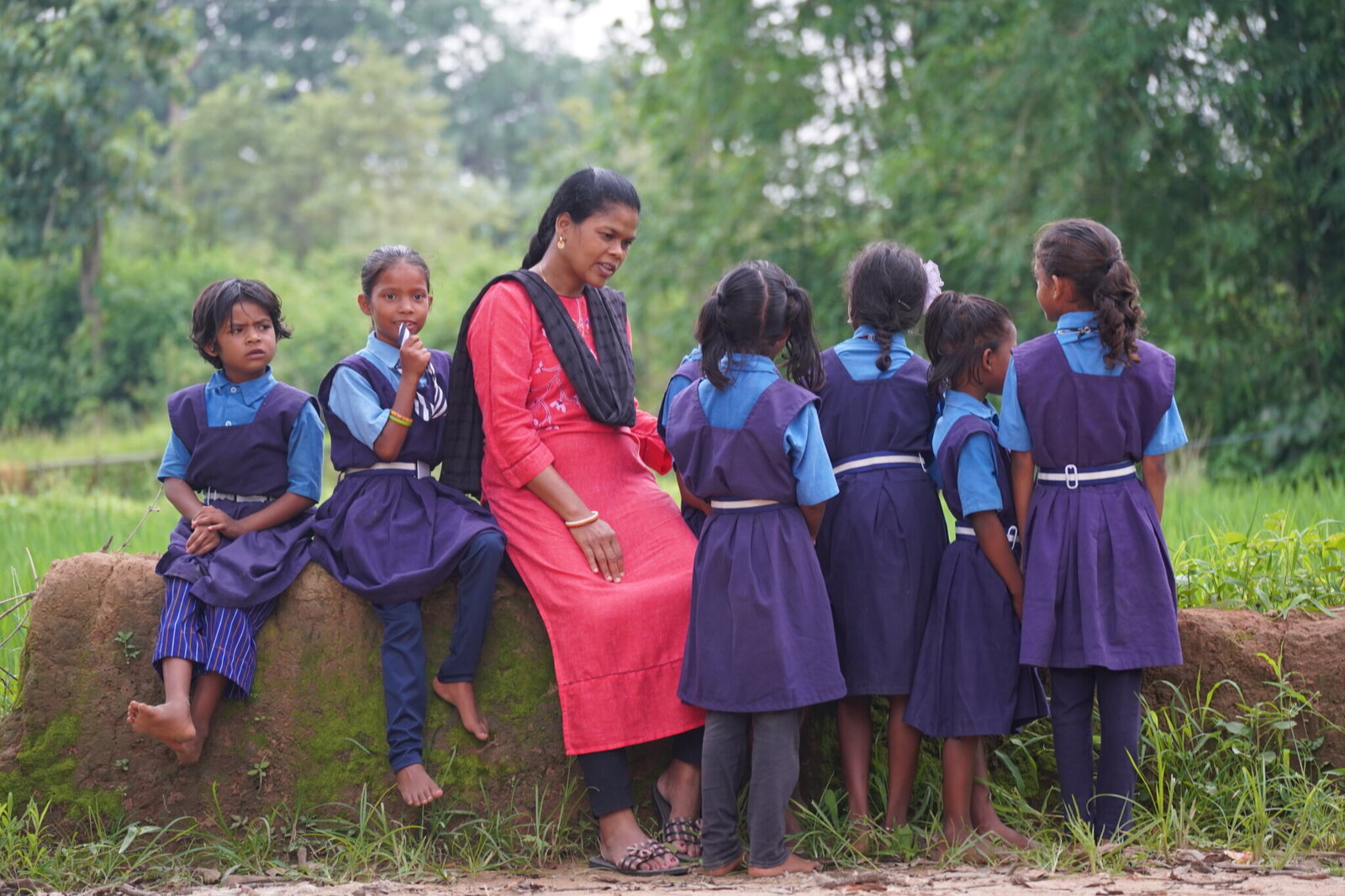
Featured photo credit: Purusottam Singh Thakur, Azim Premji Foundation
Primary reading material
Indira Vijaysimha. Teacher Capacities, Attitudes and Inclusion of Teachers from the Adivasi communities
Shipra Suneja, Ritika Gupta, Rema Devi. Safeguarding Tribal Languages: Lessons from the Bhasha’s Adivasi Academy, Tejgadh
Indira Vijaysimha. Creative Language Development Among Tribal Children: Lessons from Agragamee’s CLDE Project
Asim Siddiqui and Pragati Tiwari. Public Education System and the Adivasi Child: A Panel Discussion
Santhakumar V and Amarendra Das. Development Path for Indigenous People: Lessons from India and Brazil
Santhakumar V. India Needs Intercultural Education
Santhakumar V, Rema Devi. The Need for Intercultural Education in India: Lessons from QUEST, Maharashtra
Santhakumar V and Anant Gangola. The Education of Scheduled Tribes in a Conflict Zone: Lessons from Sukma, Chhattisgarh
Santhakumar V and Nazrul Haque. The Role of Non-Governmental Organizations in the Education of Scheduled Tribes in India: Lessons from Sikshasandhan, Odisha
Santhakumar V and Amarendra Das. Schooling of the Scheduled Tribes in India: Lessons from the Education of Indigenous People in Brazil
Which may include aspects like `Learning to Know’ and `Learning to Do’↩︎
Which may include aspects like `Learning to Know’ and `Learning to Do’
Some of these issues are discussed in Zhang (2019). Zhang, J. (2019) Educational Diversity and Ethnic Cultural Heritage in the Process of Globalisation, International Journal of Anthropology and Ethnology, 3↩︎
Some of these issues are discussed in Zhang (2019). Zhang, J. (2019) Educational Diversity and Ethnic Cultural Heritage in the Process of Globalisation, International Journal of Anthropology and Ethnology, 3