
Education-Development Interlinkages (Part VIII)
The possible role of communities in education and challenges in India
Q&A with Santhakumar V | 04 Apr 2025
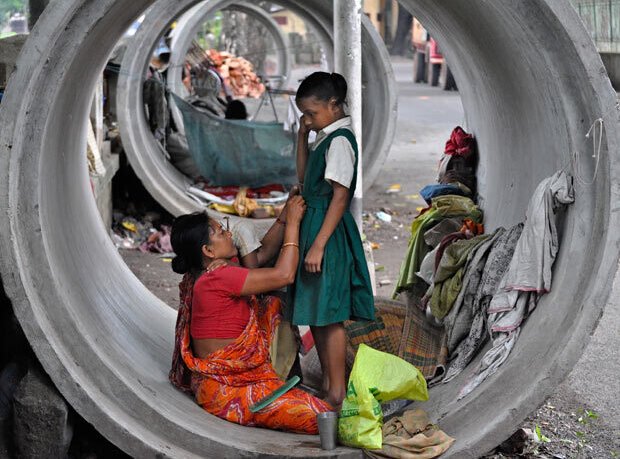
There should be attempts to form SMCs and PTAs in all schools. Even in those schools where head teachers find it difficult to form these committees, non-governmental organisations and social activists can help with it. There should be a continuous effort on the part of teachers and these organisations/activists to connect with parents either as part of, or outside, these forums.
Details
Q. There is talk about enhancing the role of communities and parents in improving the quality of education. How do you view this discussion?
A: Yes, there is an important role for communities and parents in this area. This is in addition to what parents can do to improve the learning of their children (which we have described in previous Q&A notes). Parents and communities can take certain actions to improve the public education system as a whole. They may be able to express their dissatisfaction (voice) when government schools do not have enough facilities and/or are not functioning properly. They can also complain to or pressurise elected representatives to make different tiers of government act to improve public schools. There are also arguments for enhancing the community’s role in mobilising resources and managing schools, or even in improving curriculum and pedagogy. There is a need to be critical and reflective about these. Many people, including scholars and officials of international organisations, unthinkingly argue for enhancing the role of communities without reflecting on what they can do in specific contexts. That is the reason why we see mechanisms, like school management committees (SMCs) or parent-teacher associations (PTAs), being ineffective in different contexts. Hence, there is a need to be clear about: (a) what can be a desirable role for communities and parents in education, and (b) what could be the reasons why we may not see communities performing that desirable role in many contexts. The answers to these two questions should enable us to think about a feasible role of communities in countries like India.
Q. What are the activities/functions in education in which communities can play a role?
A: It may be better to consider first certain activities in education in which parents and communities should not have a role. First is the assessment and evaluation of the performance of students. Though parents can complain if teachers do not follow national standards and stipulations in assessment, this should be left to teachers, since parents may have a conflict of interest. The second is the assessment and evaluation of the performance of teachers. Though parents can take up the issue with higher-level authorities if they have issues with the performance of teachers, the actual monitoring and assessment of the work of teachers should be carried out by senior teachers or higher-level education functionaries. This is due to parents’ possible lack of information and expertise. Similarly, communities should not have a major role in the appointment of teachers, since in poorer countries this can lead to the appointment of unqualified or less qualified teachers. One cannot expect communities to mobilise a major part of the financial resources towards school management because this may reduce access to quality education, especially for parents who belong to poor or financially vulnerable sections.
Q. You have focused on what communities and parents should not do. However, what are the activities in which communities and parents can have a positive role?
A: Communities and parents can work with governmental or non-governmental organisations to see that there are efforts outside the school to reduce dropouts and provide additional academic support to those children who may require it. As noted earlier, they should raise their voice if the school is not providing the service that is expected of it. Additional resources for certain activities, say, that for organising an exhibition, a tour of students, or for the construction/maintenance of a small additional facility, can be mobilised by the community. There can be certain efforts to connect the teaching with the local context. Some members of the community may have knowledge of, say, local history, and there can be platforms to use this knowledge to complement classroom teaching. All these are possible and desirable.
Q. Though these are possible and desirable roles of communities in developing countries, what is the reality in this regard?
A: In general, the effectiveness and positive impacts of community participation in education are somewhat mixed. There is a small share of government schools in India where communities are playing a useful role (we may have to think about the enabling conditions in this regard). There are many government schools where children from poorer families study, but where one may not see effective community participation. There are schools where SMCs or PTAs are not formed or are functioning only on paper (due to the mandates of the Education Department). There are also cases where the actual community participation is leading to a certain level of corruption in the use of public resources or conflicts between parents and teachers, which affect the functioning of the school.
Nearly 30 percent of children, mostly from middle and upper-middle class families, attend private schools of one or the other kind in India, and in this case too, there is not much participation of community or parents in the affairs of school (other than some forums available to parents to discuss the learning status of their children with the teachers). These are not unique features of schooling in India. Though community participation is advocated in many developing countries, the extent of its impact on the access to and quality of education is not very promising in many parts of the world, including South Asia and Africa, where poverty and other problems of underdevelopment are also higher. Poorer parents in many such countries are also not expressing their voice inside or outside these SMCs and PTAs to highlight the educational challenges of their children.
Q. What may be limiting the role of communities in education in India?
A: There could be a number of probable reasons for this state of affairs. The majority (if not all) of middle-class parents have moved out of government schools (to private schools where education is like a service to be bought, and hence, the participation of parents is limited to paying the fees). This reduces the ability of those parents whose children remain in government schools to articulate their demands or influence their functioning. Those parents who continue to use government schools can be divided broadly into two categories. One, those who have a higher demand for the education of their children, and second, those who may not have such a demand. Depending on the relative share of these two groups, there can be challenges in the collective action of parents to improve the functioning of schools.
If the first group is dominant, they may neglect the minority, which belongs to the second category and take proactive actions to see that the school provides an education that they want for their children. On the other hand, if the second category is dominant, they may become indifferent to what happens in school, and collective action may be ineffective even if there are fewer parents who take such proactive steps. This may encourage the minority (or the first category of parents) to opt out of government school if they can afford it and may be one reason why sections of urban poor (who are more likely to have seen the benefits of education) and lower middle-class families moving to fee-paying private schools, even though this may enhance the financial burden on them.
We may note that there can be other constraints against the collective action of parents. There is an opportunity cost of time, which may prevent poorer parents who have informal sector jobs from taking time from their work to attend SMC/PTA meetings. The caste and religious fragmentation that exists in many villages of India may work against the coming together of all sections of parents and their collective action. The patriarchal norms may prevent mothers from participating effectively and voicing their opinions in these forums. One can see politicians and landlords taking an interest in school matters for non-educational reasons (as a way to demonstrate power or to gain financially from contracts for the construction of school buildings, etc.), which are not conducive to the effective functioning of SMC/PTAs.
Q. When parents send their children to private schools, there is little room for them to participate in the affairs of the school. Why are they happy with this situation?
A: It may be incorrect to presume that all parents have an intrinsic demand to participate in the affairs of school education. What they want is what they consider ‘good-quality’ education. What they recognise as good quality may not be ‘desirable’ to educationists. For example, some parents send their children to schools that have unqualified teachers and limited infrastructure but are where the medium of instruction is English. Moreover, as noted earlier, education in this case has become a service to be bought from the market. When we buy an item from a shop, and if we have problems with it, we do not participate (use the voice option) to get it corrected. We may shift to another supplier (the exit option). The voice option is applicable for services provided by the government.
Q. Where do we see PTAs or SMCs relatively successful in India? What could be the enabling factors?
A: It is noted that PTAs are relatively more active in states like Kerala and Himachal Pradesh, which are also doing well in terms of enhancing access to school education. But it may be a mistake if we presume that active PTAs or SMCs have led to an improvement in educational status. It could be that there are enabling socioeconomic and political factors which have led to an improvement in educational status, but these may have also enhanced the relative effectiveness of PTAs and SMCs. We have discussed the importance of demand for education by parents as an important factor in enhancing access to and quality of education. This demand on the part of most parents (including poorer ones) may encourage them to actively participate in the affairs of the school. That could be the reason for the relatively better performance of PTAs and SMCs in certain contexts.
Q. How do teachers and head teachers view or respond to the participation of parents/community in the affairs of schools?
A: This may depend on the context. There were sections of teachers (including head teachers) in all historical contexts who have taken proactive steps to ensure that children from all backgrounds get an education. Some of them may have come from elite/educated backgrounds, but they may have taken a paternalistic attitude towards students, especially those who come from poorer backgrounds, which may have enabled education. There might not have been much active participation of parents in these contexts. There are contexts where (even good) teachers are unhappy when parents question and interfere in the affairs of schooling. Where parents are politically mobilised, they may use political connections to make changes in the affairs of schools. This may not be liked by teachers. On the other hand, there are contexts where teachers and parents jointly make efforts to improve the infrastructure and quality of instruction in schools.
Q. Do communities have a role in influencing the government to improve the quality of schools? How does it work? What could be the enabling factors in this regard?
A: As noted earlier, people have two ways of influencing the provision of public services. These are voice and exit options. ‘Voice’ is the public expression of the dissatisfaction of people with regard to the provision of a specific public service. They may express it directly to the providers (like school teachers) or elected representatives of different tiers of government, or may conduct public agitations to get the attention of governments to highlight their grievances. The exit option manifests when people leave specific providers (like a government school) and opt for another provider, which can be government or private. At the larger level, the exit option means voting against an elected representative or government (which did not respond to their grievances).
There have to be a number of enabling conditions for the effective correction of public service through these options. People should know that they have these options and have confidence that they can use them. We cannot expect such knowledge and capability among all (especially poorer people) in countries such as India. Such actions may not be effective if only a few individuals are involved. There should be a sufficient number of people willing to exercise such options. This may require certain mobilisation and collective action, and these may not happen in all contexts.
People also should have the perception that they can pressurise public service providers or the government to respond to their grievances. This may depend on their past experiences, and it is incorrect to expect all governments (especially in developing countries) to have such a readiness to respond to people’s demand. Instead, governments may be indifferent or neglect people’s representations or even suppress public agitations. To make participation effective, certain political transformations, which may include the mobilisation of non-elites, are needed. The functioning of democracy may matter, since the competition of parties in democracy may compel the government to take the demands of the public (including the poor) who vote in elections, seriously. How do politicians get elected may matter in this regard — are they buying votes? Are people voting based on caste or religion, which are unconnected to the provision of public services? Are there legal provisions that compel the government to meet certain standards in public service? (The Right to Education Act of India can be one such legal measure.) Do people use such laws to improve governance? Though India has the Right to Information Act, which can be used by any citizen to get information on governance (including the status of public services), the actual level of use is not high. Hence, the legal provisions per se are not enough, and people should understand the importance of using these measures. These may also be connected to political awareness and mobilisations in a context. (A detailed discussion on the possible connection between political transformation and education development is taken up in another Q&A Note.)
Q. Given this understanding of the possibilities and challenges of the role of communities in education in the Indian context, what do you suggest as a feasible option?
A: There should be attempts to form SMCs and PTAs in all schools. Even in those schools where head teachers find it difficult to form these committees, non-governmental organisations and social activists can help with it. There should be a continuous effort on the part of teachers and these organisations/activists to educate parents (especially the poorer ones) on the importance and possibilities of these forums for the education of their children. Teachers have to make consistent efforts to connect with parents either as part of, or outside, these forums.
Communities have to see their primary role in strengthening the school in their localities. They can collaborate with teachers to ensure that all children attend the school regularly. They may be able to work with teachers in identifying children who are dropping out and taking possible steps to avert this situation. Communities can provide additional resources (it could be in the form of labour and/or materials) to augment the infrastructure and other facilities in schools. There can be extracurricular activities in sports and arts like competitions, festivals, exhibitions, etc. which can be organised in collaboration with parents’ forums. Some of these can be designed in ways that would enhance the context-specificity of the curriculum in schools. Teachers should ensure the inclusive participation of all parents, including those from underprivileged groups, women, etc.
Ideally, there should be an avoidance of an adversarial relationship between parents and teachers. If parents feel that the school is not functioning well, they may communicate with higher-level education functionaries, and if this fails, they may reach out to other government officials or elected representatives. Parents/community members may not interfere directly with the academic management of the school. All parents should ensure that some of them do not take advantage of these forums for personal or private gains. The construction of buildings and contracts for these and other purposes can be sources of petty corruption, which needs to be forestalled.
Policymakers and educationists should have a realistic understanding of the role of communities. They should see that a lot of context-specific (including political) factors may determine the effectiveness of these community activities in education. A national mandate on what SMC/PTAs should do and the struggle of head teachers to achieve this target only leads to a wastage of resources.
Author
Santhakumar V is a former Professor, Azim Premji University, Bengaluru
Photo
Featured photo credit: Purusottam Singh Thakur, Azim Premji Foundation
Primary reading material
Burns, B. Filmer, D. and Patrinos, H. A. 2011. Making Schools Work: New Evidence on Accountability Reforms. Washington, DC. World Bank.
De Grauwe, A., Lugaz, C., Baldé, D., Diakhaté, C., Dougnon, D. Moustapha M, and Odushina, D. 2005. Does decentralization lead to school improvement? Findings and lessons from research in West Africa. Journal of Education for International Development, 1(1).
Heystek, J. 2003. Parents as governors and partners in schools. Education and Urban Society, 35(3): 328 – 51.
Santhakumar V. Community participation in school management: Reasons it may not work in India. University Practice-Connect. https://azimpremjiuniversity.edu.in/notes-on-strategy-series/community-participation-in-school-management-reasons-it-may-not-work-in-india
-

Education-Development Interlinkages (Part I)
Educationists should think about the social context; Development practitioners cannot neglect education
Q&A with Santhakumar V | Nov 15, 2024
All systematic studies globally have shown that children drop out of school due to one or more familial, social, and economic reasons. These may include poverty, ill health, gender norms (which may prevent girls from attending schools and completing secondary education), discrimination prevalent in certain contexts, etc.
-
Education-Development Interlinkages (Part II)
About Children who do not Complete School Education in India
Q&A with Santhakumar V | 6 Dec 2024
The EDIL perspective should highlight the importance of poverty eradication and employment generation even if the purpose is to see that all children get the benefit of school education. Effective functioning of the Public Distribution System and Employment Guarantee Schemes is important even for enhancing access to school education.
-

Education-Development Interlinkages (Part III)
Children not Learning Well in Schools: Familial and Socio-Economic Factors
Q&A with Santhakumar V | 3 Jan, 2025
The finding that well-educated parents positively impact the education of their children is not very useful from a policy perspective because it may give the impression that nothing can be done in the short term to improve the learning of children with less educated or uneducated parents.
-
Education-Development Interlinkages (Part IV)
How have other countries addressed the problem of access to education? What are the reasons for India’s relatively poor performance in this regard?
Q&A with Santhakumar V | 17 Jan, 2025
-

Education-Development Interlinkages (Part V)
On the possible connection between India’s economic/human development and performance in education
Q&A with Santhakumar V | 30 Jan 2025
The demand for education will increase and enrolment at all levels may go up. However, there may be a set of youngsters who may drop out in higher grades in schools, and the share of this population could be higher in India than in countries which have similar levels of economic development.
-
Education-Development Interlinkages (Part VI)
Challenges in the education of children from tribal communities in India: What can be attempted
Q&A with Santhakumar V | 14 Feb 2025
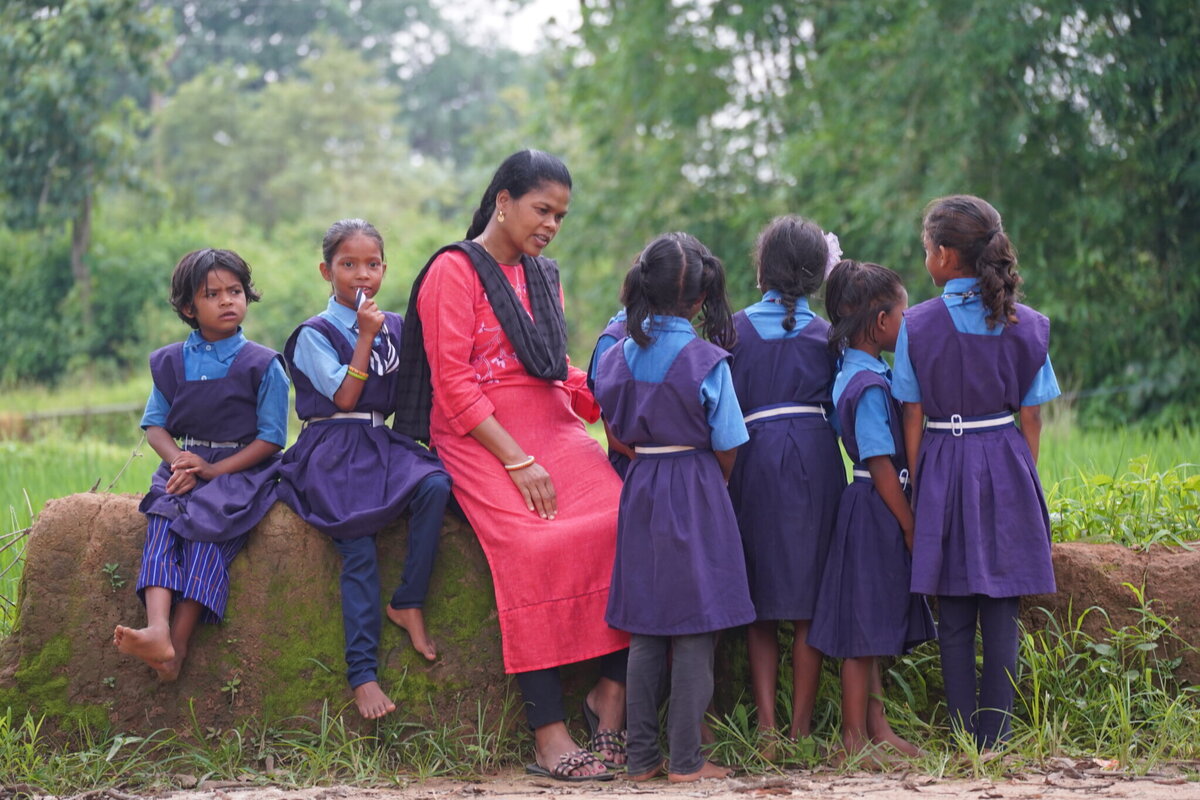
Tribal communities should have greater control over those schools where their children study. The higher representation of tribal people as teachers may facilitate this process. Moreover, local governments which have a higher representation of tribals may be given a greater role in the management of schools.
-
Education-Development Interlinkages (Part VII)
Can a dependence on private schools address the challenges of school education in India?
Q&A with Santhakumar V | 14 March 2025Most people would agree that there is a need for some form of government intervention in education. Does that mean that governments must run all schools and colleges? Can private schools and colleges not provide education within the regulatory framework of governments?
https://www.researchgate.net/figure/Educational-Expansion-in-China-1978-2005_tbl1_235284896↩︎
https://www.researchgate.net/figure/Educational-Expansion-in-China-1978-2005_tbl1_235284896
https://revolutionarydemocracy.org/rdv14n1/education.htm↩︎
https://revolutionarydemocracy.org/rdv14n1/education.htm