
Education-Development Interlinkages (Part IX)
Political transformation and educational development
Q&A with Santhakumar V | 16 Apr, 2025
Political development can play an important role in making public debates and education policies balanced and comprehensive.
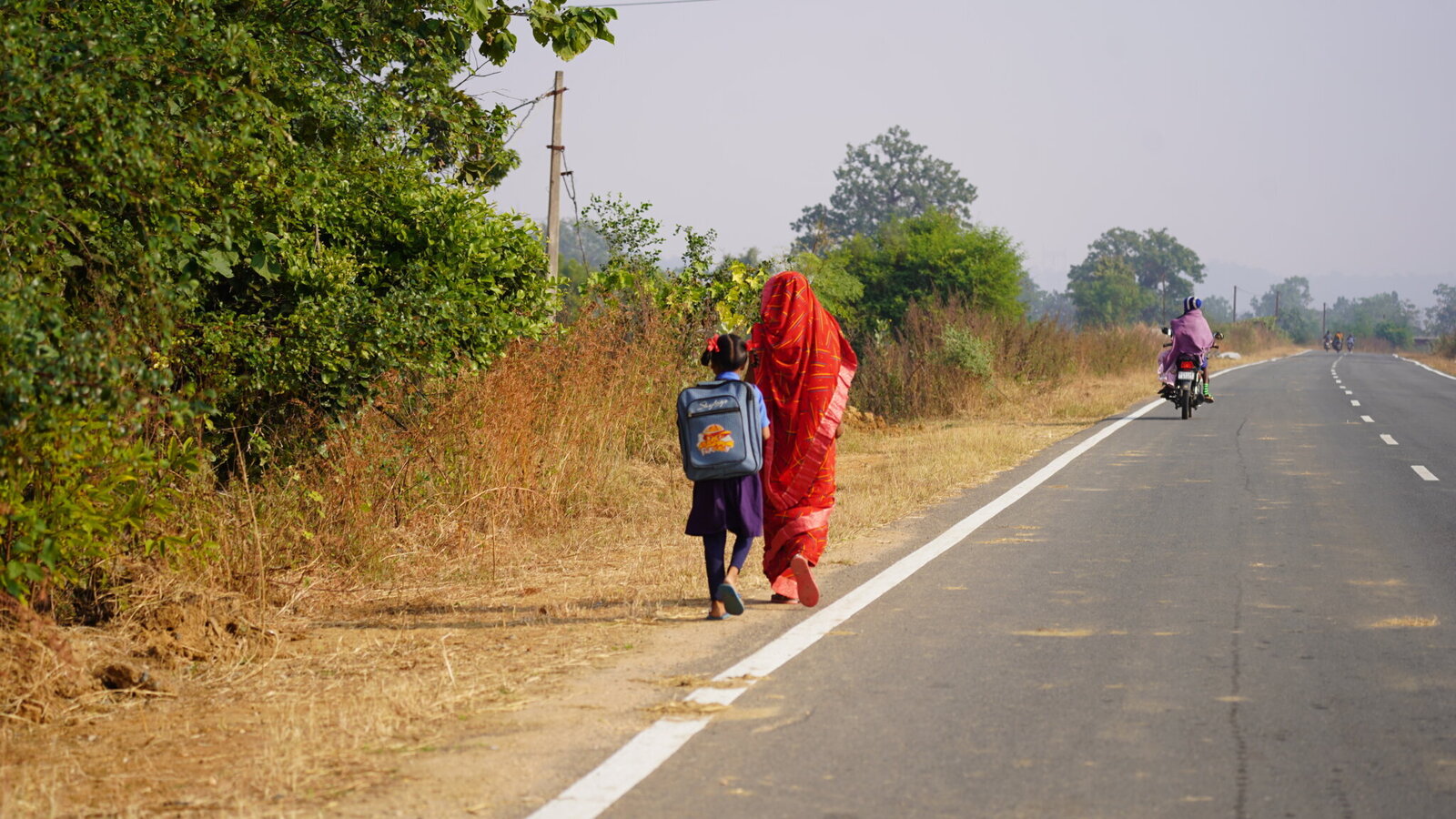
Details
Q. In the previous Q&A notes, you have indicated the possible connection between political transformation and educational development. Can you elaborate?
A: Historically, the governance of all societies was controlled by elites. There were different sections of the elite. People who had a higher ability in mobilising coercive power (army) would capture territories and become rulers. They would become wealthy too. There would be big traders who accumulated money. Then there would be cultural elites, godmen, powerful priests, etc. These different sections of the elite controlled governments in all parts of the world. Sections of these elites had a certain interest in spreading literacy and education. For example, the Church wanted to spread literacy so that people could read the Bible (whereas Hindu priests or Brahmins did not have the same interest since they did not want everybody to read the sacred texts of Hinduism). There were sections of dictators/kings who wanted to create industrial workers to facilitate industrial development, which motivated them to provide education (in a few countries in East Asia).
However, elite control/capture of governments, in general, is not conducive to the expansion of education to the masses. Educational facilities are not enough or accessible to all sections of the population in an elite-controlled society. Even where there are schools, many people may not be able to send their children due to poverty. Poorer people need the children to work on farms, in factories or at home. Elites who control the governments may not have an interest in addressing the poverty of the majority. (Elites may not face democratic elections since these countries may not be democracies. Even when there are formal democracies and elections, the majority of people may not be politically aware or mobilised and hence, may serve as vote banks for elite politicians).
There could be sections of the elites who may think that the poor do not need or want education. The poor may be working as agricultural workers, peasants or unskilled workers, and hence, they may not show enough interest in education on their own under the circumstances. Elite rulers who are not interested in changing the living conditions of the majority, may not see the need for education for the masses, as the latter themselves are not showing much interest in education.
There can be what can be called ‘experience gaps’ between the elites and the poor. For example, brahmins were trying to get an education for generations in the past. On the other hand, sections of lower castes were not getting an education. This may lead to a persistence of the lower demand for education from the latter, which cannot be understood by the former. This may lead to a thinking on the part of upper castes that the lower castes may not want/need education.
I am not taking a conspiratorial view on the attitude of elites. It is a fact that they controlled governance in the past, and the socioeconomic circumstances might have encouraged them to neglect the need for education of the population as a whole.
Q. The control of elites in politics and governance has declined in most parts of the world. How does this change affect the provision of education?
A: Yes, non-elites in most parts of the world are mobilised currently (though such a mobilisation is yet to take place adequately for sections of non-elites in less developed societies). Such a mobilisation has happened in both capitalist countries and those which have tried out one or other type of socialism in the past. In socialist societies, communist parties mobilised the working class, peasants and the poor, and these have captured power (probably through revolutions). On the other hand, in capitalist societies, parties representing workers, the lower-middle class and the poor have become stronger and won elections. The election of the Labour Party in the UK or socialist or social-democratic parties in other European countries are examples.
Generally, non-elites are mobilised based on class. The mobilisations by communist, socialist or other working-class parties are based on class or economic conditions. However, non-elites in many parts of the world have also been mobilised based on one or the other social identities — religion, caste, race, region, ethnicity, etc. These identity-based mobilisations have also captured power in different parts of the world through elections or other ways of regime change. The Islamic Revolution in Iran, the capture of power in South Africa by the black-dominated African National Congress, and the arrival of the Dravida Munnetra Kazhagam (DMK) government in Tamil Nadu are a few of many examples of this kind.
When the mobilised non-elites come to power, they have a greater interest in using public resources for the welfare of people at large. (This can happen even under elite-capture when ruling elites feel that non-elites may mobilise and uproot elite control in governance. For example, kingdoms in the Middle East currently transfer a significant share of public resources for the welfare of their citizens). This can be useful for educational development in two ways. If people at large have a higher demand for education, the non-elite mobilisations which control governments may devote more resources to that purpose. The greater focus on education (and the decision to pay salaries of teachers of even private schools) by the first state government of Kerala in independent India is an example. Moreover, these governments may use a greater part of public resources to reduce poverty, improve healthcare, etc. The development of a Public Distribution System (PDS) that distributes food grains at highly subsidised rates among poorer people could be one such strategy. These efforts can help educational development indirectly. When poor people get enough food, they may be able to release the time of their children from work (on farms and in homes) and allow them to attend school. Access to basic healthcare can also help children’s attendance in school regularly. Hence, the lack of mobilisation of all sections of non-elites in certain states of India could be a reason for their relative underperformance in terms of education.
Q. What could be the difference between class-based and identity-based political mobilisations in terms of their support for educational development?
A: In general, class-based mobilisations are concerned about the economic deprivation of the poor and workers, and there is an interest in improving their economic conditions. Since education is important for such an improvement, most class-based mobilisations have worked towards the education of the masses. This can be seen in western countries (when labour/socialist parties came to power), or in socialist countries, or even in developing countries where the underclass came to power (such as Kerala).
The case of identity-based parties can be different, and educational development may not be a priority for all such mobilisations. Their interest may be conditioned by different factors. In general, such mobilisations are interested in preserving one or other social identity (like religious values) and hence may not be very interested in social change or modernisation. They may be interested only in such an educational development which strengthens the conservation of this ‘identity’. It may imply the provision of an education with a greater focus on traditional values (which can mean even denying education to girls, as in the case of the Taliban in Afghanistan). It may be noted that elite-controlled or even Russian-influenced rulers of Afghanistan were a lot more interested in providing education to girls, compared to an indigenous mobilisation of Afghans based on a version of religious identity, that is Taliban.
Identity-based mobilisations may have both elites and non-elites in the same formation (and these can be populist in nature), and the leadership could be in the hands of elites. These leaders may not be interested in spreading education to all. Certain identity-based mobilisations of the less-privileged people may focus more on acquiring political power, and the spread of education among their own people may not be an important agenda. To some extent, this is my reading of the case of the Bahujan Samaj Party (BSP) — a lower-caste political mobilisation in India. (On the other hand, middle-caste or lower-caste reformers in Kerala or Maharashtra saw the spread of education as a way to achieve economic and social mobility for their constituencies.) One can see kinship- or ethnicity-based mobilisations capturing power in sub-Saharan African countries, but their efforts in education are also not adequate. Though one can see the Bhartiya Janta Party (BJP) in India also as a non-elite mobilisation (based on Hindu identity), I sense that its focus on ‘education for all’ is also not enough. That may be the reason for the dropout of nearly one-fifth of girls in secondary grades in Gujarat, where the party has been in power for the last three decades. This can be partly due to its belief in economic growth (as against human development) but can also be due to the party’s reluctance to work against social norms (including those related to intense patriarchy), which work against higher levels of education for girls.
Q. What could be the role of democracy in education development?
A: Yes, democracy helps, and we can talk about it in detail soon. However, formal democracy per se may not be that helpful, especially if elites control it, as I have noted earlier. The process of democratisation, or whether the majority (if not all) of the population participate in public choices or not, makes a difference. One can consider India and China in this regard. India became a formal democracy in 1960, but was not democratised adequately. On the other hand, China is not a formal democracy, but it was democratised significantly in 1960 due to the political mobilisation of non-elites. Democratisation can help in educational development.
Yes, there are ex-socialist countries which have become non-democracies, though these have undergone certain democratisation. They are stuck with one-party democracy (with certain internal democracy in the main political party). But in the democratic world, the deepening or strengthening of competitive democracy happens through the mobilisation of non-elites. For example, the competition between the Congress and the Communist Party deepened democracy in Kerala. The division within the DMK in Tamil Nadu and the competition between DMK and All India Anna Dravida Munnetra Kazhagam (AIADMK) strengthened the competitive democracy there. When two parties compete intensely, each party (coalition) may try to win by offering more public resources to the poor and underprivileged. This may include food and other basic goods, but may also include access to education and healthcare. Both can facilitate educational development. This may be called populism or the provision of freebies, but these are useful to enable people to use education for their children.
The lack of competition in democracy can be harmful to educational development. The ruling party does not have a strong incentive to meet the basic needs of people. This can be seen in two cases in India. Despite the presence of the Left Front, which has an interest in the mobilisation of non-elites, its governance in West Bengal for three successive decades did not lead to a notable improvement in human development (which requires the spread of education also). On the other hand, the Left Democratic Front in Kerala had to compete with the Congress-led front to be in power almost alternately, and the competition between these two fronts helped the education development in the state. One can see a similar difference in Gujarat and Tamil Nadu. Both have experienced a higher level of industrialisation, and this generates more public resources. However, nearly 20 percent of children drop out in secondary grades in Gujarat, whereas it has come down drastically in Tamil Nadu. Moreover, the enrolment in higher education has gone up drastically in the latter. Hence, real competition in democracy is important for the spread of education.
Q. Political transformation helps enhance access to education, but can it help in improving its quality?
A: Quality is a complex issue, and normal political transformation may not help immediately or directly. That is why the quality of education is a challenge even in some developed countries, such as the USA. Quality issues may not become the focus of political debates as easily. These may require a lot more information and expert knowledge. On the other hand, issues of access and infrastructure may attract the attention of the public at large.
The kind of political transformation that we have talked about here can enhance human development. When almost everybody gets a school education and a section of the population gets higher education, the size of the middle class can increase, especially when they can get salaried jobs. (If there are not enough salaried jobs within the economy, migration may provide such opportunities.) Middle-class parents may have an interest in the quality of education for their children. (Though poorer parents also may have an interest, they may not be able to judge the quality well.)
The increasing interest among the middle class in having better quality education for their children may lead to different outcomes. One possibility could be an increased use of private schools by this class. They may see difficulties in improving the quality of education in government schools and may find private schools affordable, facilitating their movement out of the former. This can have negative implications, as in the case of India, where government schools are used mainly by the poorer parents, and they may not have the ability to demand better quality education. However, there may be situations where the middle class may be able to join with the poorer parents and improve the quality of education in all schools. There are indications that the quality of infrastructure in government schools has improved significantly in Kerala, and this may be due to the politics in the state, driven by the middle class. Sections of parents belonging to this class use such schools within the state. The Aam Aadmi Party (AAP), which has roots among the middle-class people in the state of Delhi, has taken efforts to improve the quality of education in government schools there. One can see the politics of Himachal Pradesh (and here too, the population is not that polarised between the rich and the poor) helping to improve the standards of school education. Moreover, the quality of education in Western European (say, Scandinavian) countries is recognised better globally, and there too, the social democratic policies, which are shaped by the middle-class population, have impacted this. In summary, the political transformation can help the quality of education in the long run and indirectly.
Q. What may be the connection between politics and educational development in developed countries?
A: Investments in education are an important focus of political debates in the developed world. Whether the parents should have the choice to select the school (through vouchers) is a major issue in the United States, with the conservatives in general arguing for such a choice, and the democratic party (and teacher trade unions) opposing it. What should be the content of education is also highly contested in the US, with the conservatives taking positions against liberal (sometimes scientific) interpretations on different matters, including religion and sexual orientation in the school curriculum. There can also be contestations on what is to be taught in history and social sciences. These contestations may encourage some people to be concerned about the role of politics in education. However, we may note that keeping politics away from education is not going to work, and desirable changes in education can be sustained only with widespread social support.
Q. What can be the lessons from the connection between political transformation and education development for activists who want to improve access to and quality of education?
A: There may be a greater role for NGOs and education activists where non-elites are not mobilised. A sizeable section of parents may not have access to quality education. Elite rulers may be indifferent to the actions of these outsiders as long as such actions are non-threatening to them. On the other hand, these outsiders may face greater challenges where non-elites are getting mobilised. In the conflict between elites and non-elites, outsiders may be perceived as collaborators of one by the other, and such perceptions may create an adversarial attitude towards them.
Education activists should understand that political transformation is necessary and goes hand in hand with educational development. Political transformation cannot be the product of the intervention of concerned activists and educationists. Hence, the actions towards education development should not be discouraging or work against political transformation. There are contexts where non-elites (poor or lower castes) are getting mobilised politically, and these may create practical challenges for the education activism of outsiders. The acceptance of NGOs or philanthropical organisations may come down where political mobilisations are stronger. These should be understood as necessary developments as part of sociopolitical transformation.
There will be issues of education (especially those related to quality, curriculum and pedagogy), which may be neglected in the political processes which impact education. Hence, education activists and intellectuals may have to play an important role in all contexts. However, this may be to influence public discourses. Systemic changes in such contexts may have to be based on widespread social support, and the role of educationists is to influence public discourses (rather than to influence specific policy makers or the practices in specific schools).
It is also incorrect to presume that academics or researchers have an unbiased understanding. There can be ‘fashions and fads’ in such academic disciplines, too. Subjects like philosophy, psychology, economics or sociology, which inform education science, can also be influenced by specific ideas at certain times, and these may lead to the neglect of certain other aspects. Political development can play an important role in making public debates and education policies balanced and comprehensive.
Author
Santhakumar V is a former Professor, Azim Premji University, Bengaluru
Photo
Featured photo credit: Purusottam Singh Thakur, Azim Premji Foundation
Primary reading material
Santhakumar, V. (2014). Roots of Ill-Governance and Corruption, New Delhi: Sage Publishers
-

Education-Development Interlinkages (Part I)
Educationists should think about the social context; Development practitioners cannot neglect education
Q&A with Santhakumar V | Nov 15, 2024
All systematic studies globally have shown that children drop out of school due to one or more familial, social, and economic reasons. These may include poverty, ill health, gender norms (which may prevent girls from attending schools and completing secondary education), discrimination prevalent in certain contexts, etc.
-
Education-Development Interlinkages (Part II)
About Children who do not Complete School Education in India
Q&A with Santhakumar V | 6 Dec 2024
The EDIL perspective should highlight the importance of poverty eradication and employment generation even if the purpose is to see that all children get the benefit of school education. Effective functioning of the Public Distribution System and Employment Guarantee Schemes is important even for enhancing access to school education.
-
Education-Development Interlinkages (Part III)
Children not Learning Well in Schools: Familial and Socio-Economic Factors
Q&A with Santhakumar V | 3 Jan, 2025
The finding that well-educated parents positively impact the education of their children is not very useful from a policy perspective because it may give the impression that nothing can be done in the short term to improve the learning of children with less educated or uneducated parents.
-
Education-Development Interlinkages (Part IV)
How have other countries addressed the problem of access to education? What are the reasons for India’s relatively poor performance in this regard?
Q&A with Santhakumar V | 17 Jan, 2025
-

Education-Development Interlinkages (Part V)
On the possible connection between India’s economic/human development and performance in education
Q&A with Santhakumar V | 30 Jan 2025
The demand for education will increase and enrolment at all levels may go up. However, there may be a set of youngsters who may drop out in higher grades in schools, and the share of this population could be higher in India than in countries which have similar levels of economic development.
-
Education-Development Interlinkages (Part VI)
Challenges in the education of children from tribal communities in India: What can be attempted
Q&A with Santhakumar V | 14 Feb 2025
Tribal communities should have greater control over those schools where their children study. The higher representation of tribal people as teachers may facilitate this process. Moreover, local governments which have a higher representation of tribals may be given a greater role in the management of schools.
-
Education-Development Interlinkages (Part VII)
Can a dependence on private schools address the challenges of school education in India?
Q&A with Santhakumar V | 14 March 2025Most people would agree that there is a need for some form of government intervention in education. Does that mean that governments must run all schools and colleges? Can private schools and colleges not provide education within the regulatory framework of governments?
-

Education-Development Interlinkages (Part VIII)
The possible role of communities in education and challenges in India
Q&A with Santhakumar V | 04 Apr 2025
There should be attempts to form SMCs and PTAs in all schools. Even in those schools where head teachers find it difficult to form these committees, non-governmental organisations and social activists can help with it. There should be a continuous effort on the part of teachers and these organisations/activists to connect with parents either as part of, or outside, these forums.