
Public Health in Practice: Stories from the Field | Poster Exhibition 2026
A platform for Master of Public Health (MPH) students to reflect on how their experiences shaped their understanding of public health.
Campus
Bhopal
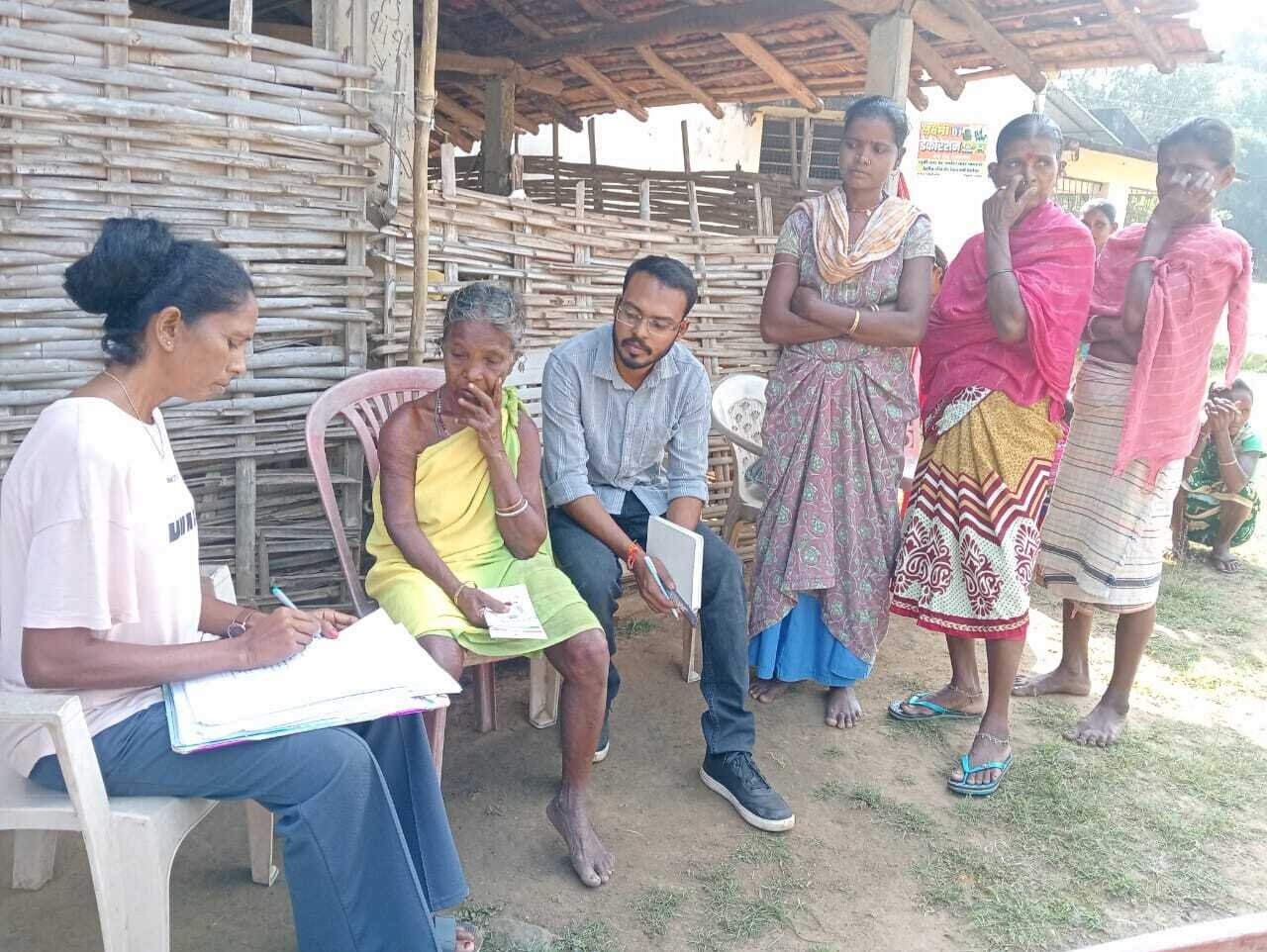
Image credit: Suraj Paswan
Details
“There were no words. Only patience, smiles, and a quiet understanding. When I asked him who his best friend was, he always pointed at me — with an excitement and shine in his eyes. It broke something open in my heart. Vijay will stay with me because he taught me friendship without language, and humanity beyond ability,” says Lakeshwari.
Lakeshwari and Tanvi worked with Asha Kiran Society, Odisha as part of their Master of Public Health (MPH) community immersion (under their field practice component). It was there that they met Vijay, a child with cerebral palsy. They visited a hospital in Koraput where people from the Bonda tribe (Particularly Vulnerable Tribal Group, i.e. PVTG) reside. Though peaceful to outsiders, distance, language barriers, and lack of services shape the health of the residents.
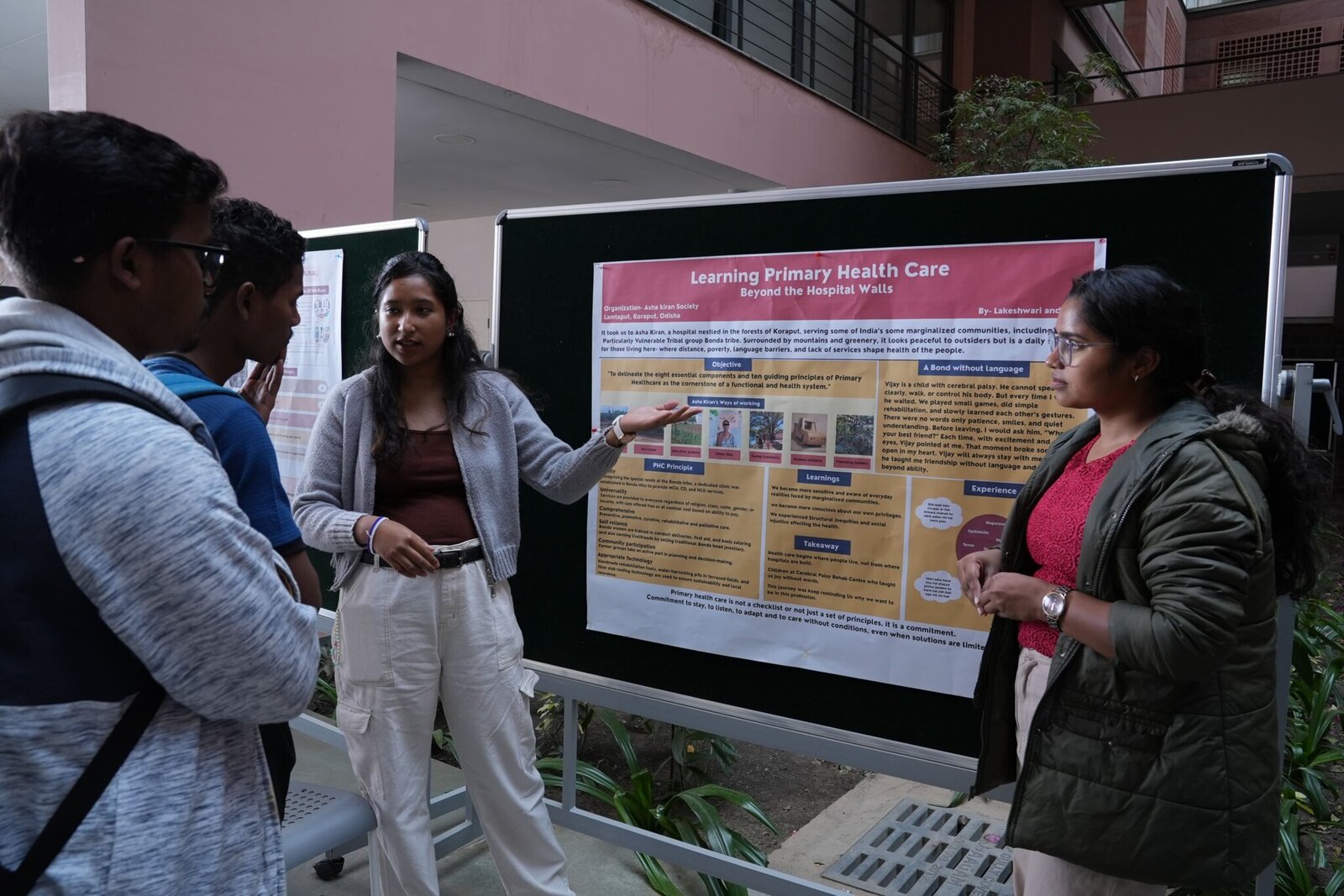
Lakeshwari and Tanvi
“Working with stroke patients, persons with disability, poverty, and neglect with Asha Kiran, an organisation in Odisha, made me empathetic, grounded, emotionally stronger, patient, grateful, and aware of my privileges.”
Community immersion in MPH
Community immersion allows students to deeply engage with the contexts of organisations working in remote rural and tribal areas across India. During this month-long engagement, they discover the principles of primary healthcare by tracing their historical roots and observing how these organisations apply these principles in their everyday work with the community.
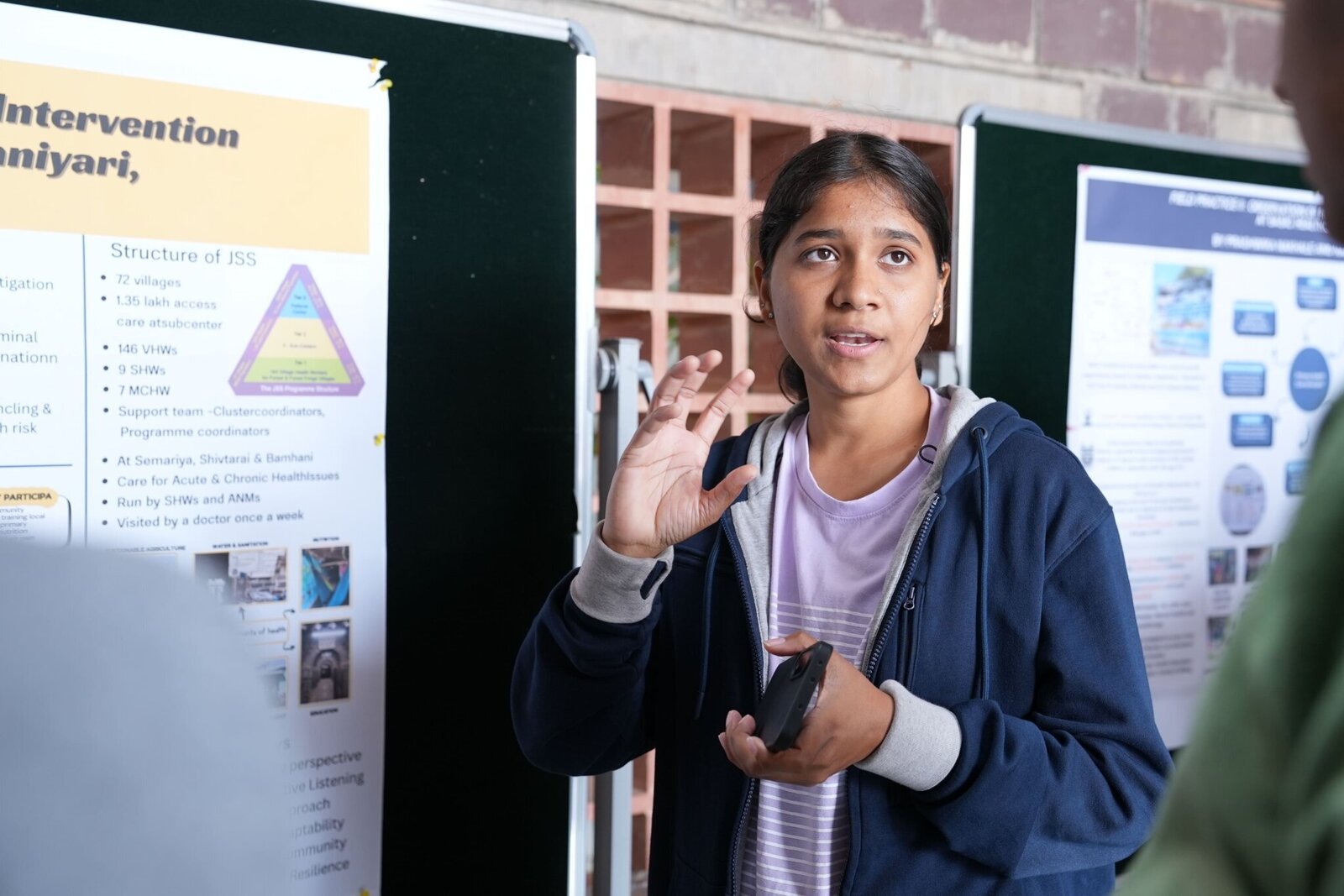
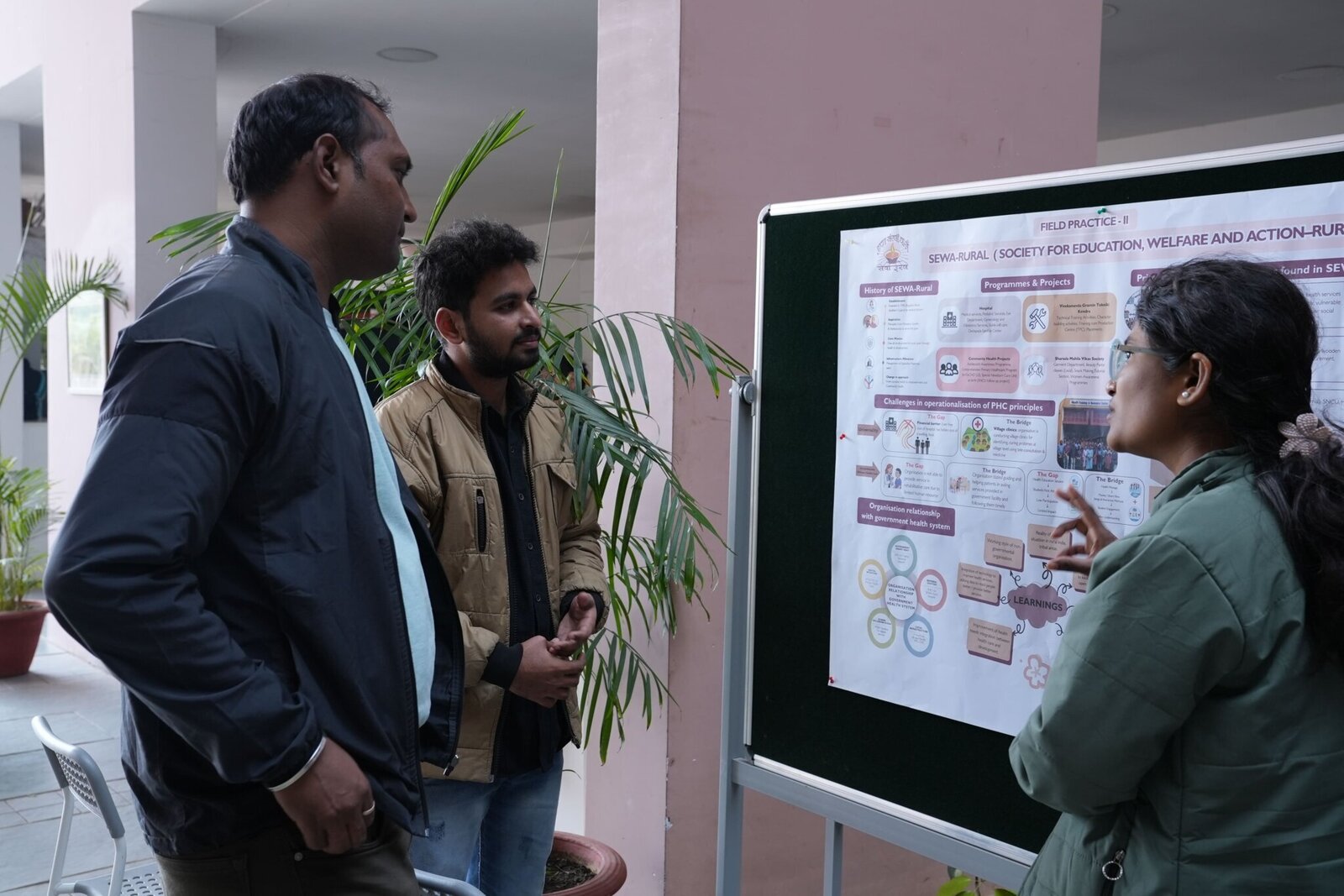
Recently, the MPH class of 2025 exhibited their field observations — enhanced by peer learning, and faculty mentoring — in the form of posters from their experiences from six Indian states. Each poster reflected not only academic insights, but their personal journeys of observation and engagement with communities in diverse field settings.
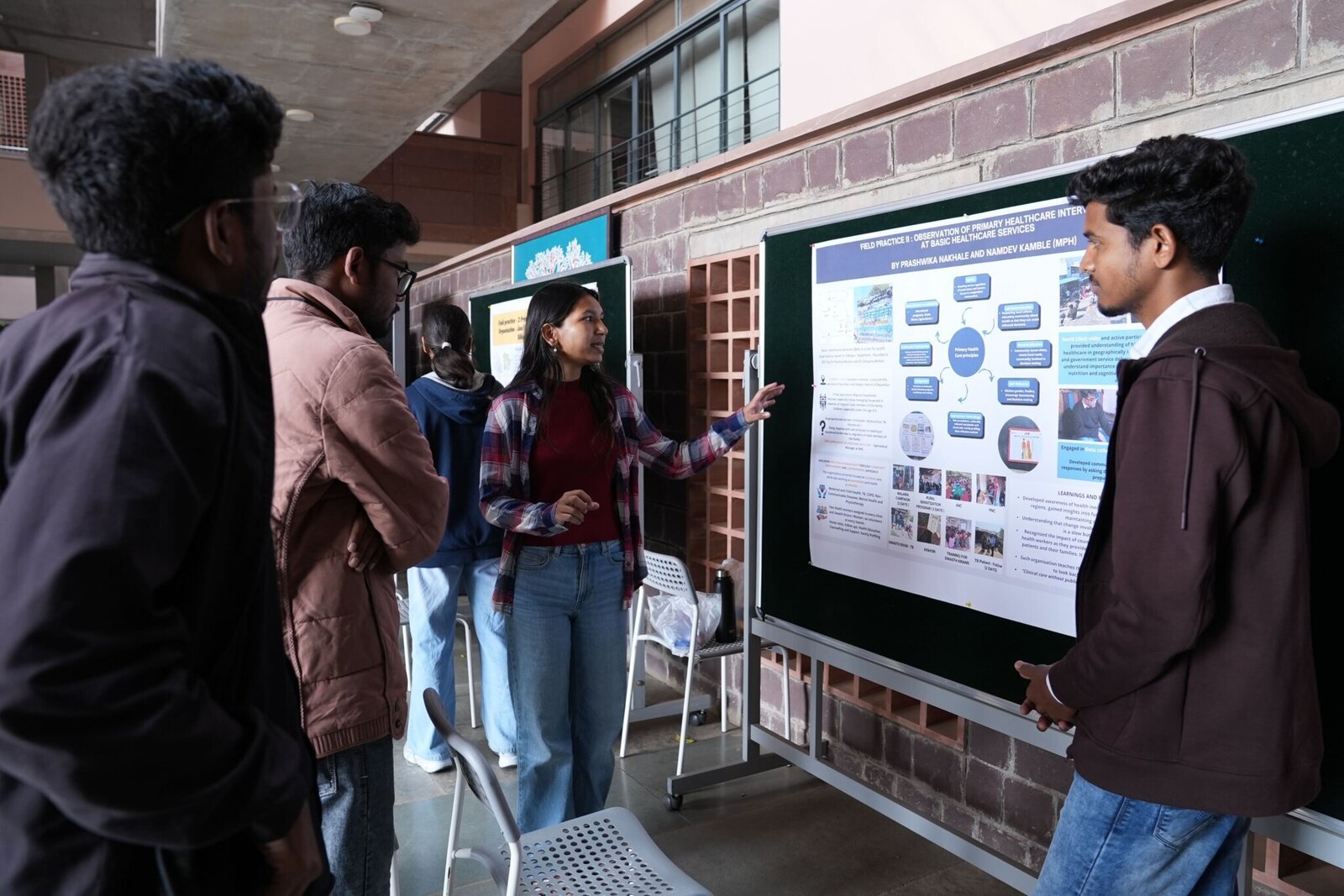
Where concepts come alive through fieldwork | Key learnings
“We learnt how research can be used to alter the health system to provide better healthcare delivery to people,” said students. Some of the key learnings that students highlighted during their field project exhibition held at Azim Premji University’s Bhopal campus include:
- Sensitisation to a rural area from a closer lens
- Better understanding of how NGOs work
- Functionality and operational challenges of a grassroots organisation
- The importance of building trust with the community and empowering them
“The people we met were like lamps, not only lighting up their own communities, but bringing light and hope into our lives too”, reflected Pulak and Priyanka, who worked with Swasthya Swaraj Society, that works in regions of southern Odisha, especially Rayagada and Kalahandi districts.
“Community immersion (with Swasthya Swaraj, Kalahandi, Odisha) exposed us to real community challenges, strengthened our sense of responsibility, and reshaped our thinking. It taught us that effective public health starts with listening to communities and valuing their knowledge.”
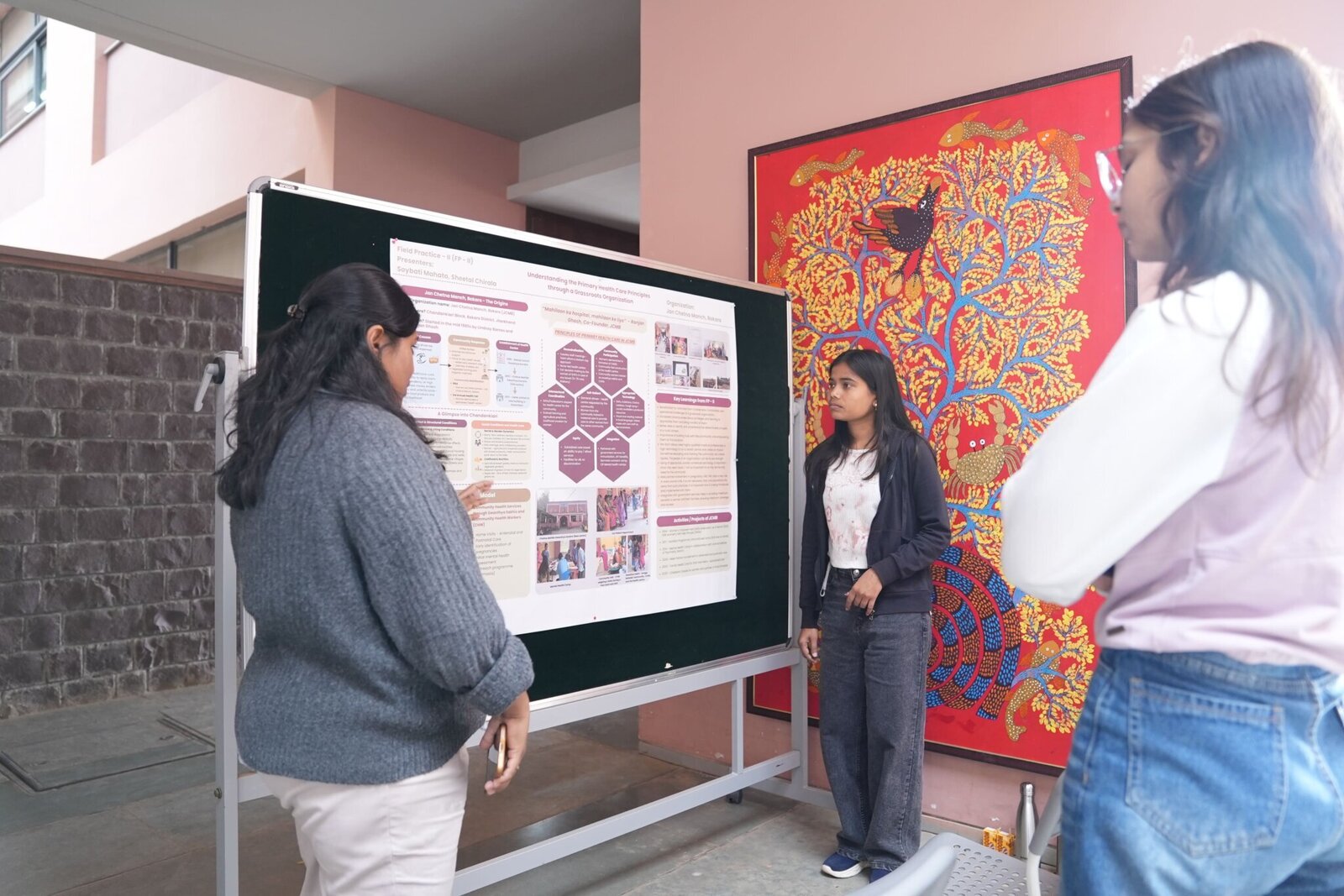
“Before our community immersion, I saw health as purely clinical. Witnessing tribal and marginalised communities struggle with housing, nutrition, and illiteracy helped reshape me into a holistic, socially conscious, observant practitioner who understands health as fundamentally social.”
Prabhu Mamadapur shares his journey through public health research, rural healthcare, and community-based field practice in India:
Loksai speaks about how field practice helped bridge classroom learning with real-world public health practice:
Prashwika Nakhale reflects on her experience with Basic Healthcare Services (BHS), Udaipur. From never having visited a village to engaging closely with rural communities, she shares how the experience helped her understand health beyond ‘treatment’, and connect theory with practice:
Cover image credit: Suraj Paswan
Know more about the Master of Public Health (MPH) programme at Azim Premji University:
Master of Public Health
To build a meaningful career improving health and equity across India
Campus Bhopal