
C.D. Deshmukh
Civil servant, central banker, and economic statesman
By G. Sreekumar
Details
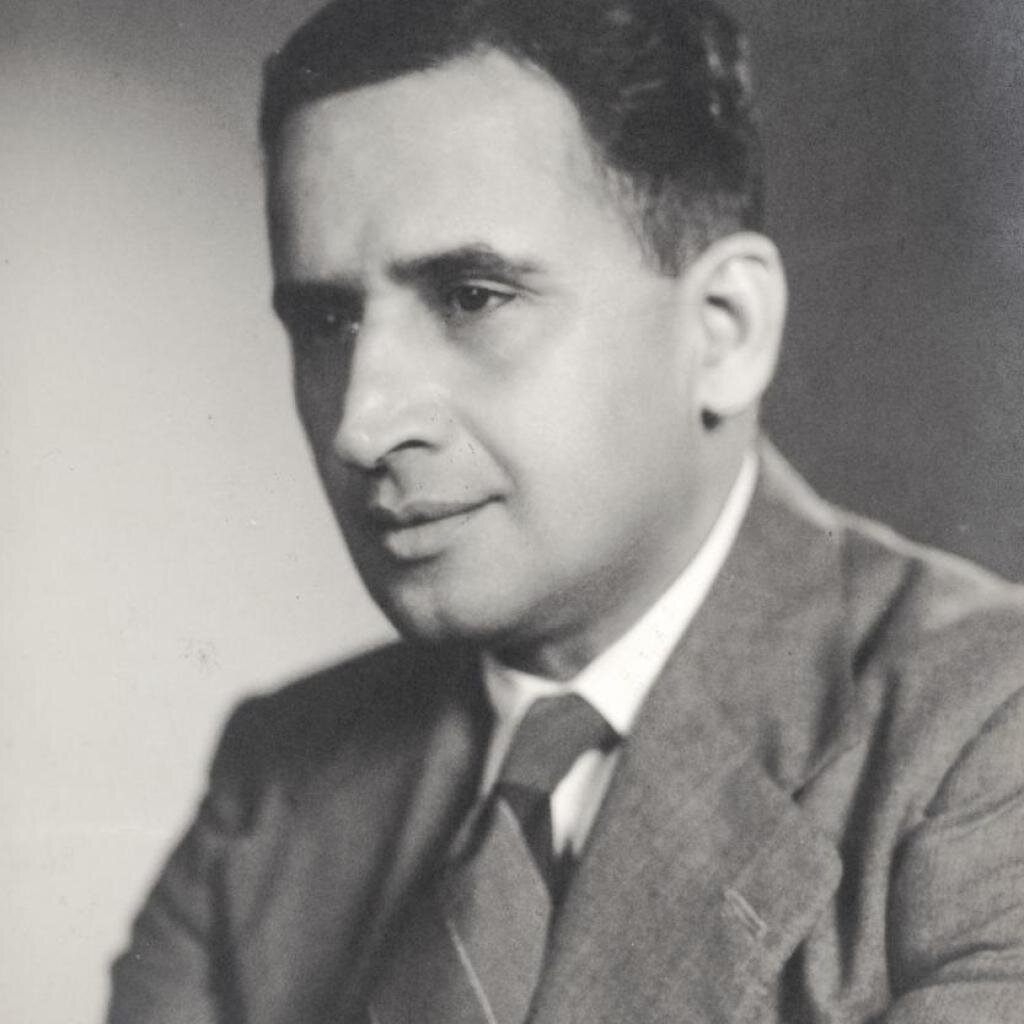
Chintaman Dwarkanath (C.D.) Deshmukh (1896 – 1982) was an Indian economic statesman whose career spanned four phases: civil servant, central banker, finance minister, and institution builder.
Deshmukh’s upbringing, education and training were not designed for a career in finance. Born to a lawyer in a traditional family in a village in then Bombay Presidency, Deshmukh stood first in school and university, winning several scholarships, including one for Sanskrit. At Jesus College, Cambridge, he passed the Natural Science Tripos in Botany, Chemistry and Geology in 1917, winning the Frank Smart prize in Botany. Deshmukh also studied law, passing the final examination in 1919.
Deshmukh topped the Indian Civil Service examination in 1918. He joined the service in 1919 and was posted to the Central Provinces and Berar. He worked his way up and became Revenue Secretary and Finance Secretary in 1934. Earlier, he was Secretary to the second Round Table Conference in London, attached to its Federal Structure Committee.
As the Settlement Officer in Raipur (1926−31), Deshmukh classified soil by physical composition and position for rice lands. Following Sir John Hubback’s pioneering method in Bihar and Odisha (formerly Orissa) in the early 1920s, he used random sampling in four successive seasons to determine the average yield for each soil class. Ronald Fisher, the eminent statistician, noticed this innovation. As President of the Indian Statistical Institute, Deshmukh later discussed these methods with P.C. Mahalanobis, the Institute’s founder. As Finance Minister, he helped scale it up to the national level, extending official approval and financial backing.
Deshmukh also experimentally consolidated land holdings in a village near Raipur. Its success led to the passing of a Consolidation of Holdings Act for the Central Provinces.
A note he prepared on the financial arrangements between the Government of India and the Provincial governments under the new Government of India Act, 1935, impressed the British Civil Servant Otto Niemeyer, who was examining the matter, and the Finance Department, which included Deshmukh in the Finance and Commerce Pool of Civil Service Officers.
Deshmukh’s probity and keen judgement based on practical wisdom untainted by ideological bias earned him appreciation. The government accepted his argument against complete prohibition in tribal areas, where liquor from the mahua tree was part of daily diet. On his advice, the provincial government imposed an excise duty on petrol, which the central government countermanded. The provincial government’s appeal to the Federal Court was upheld, creating a long-term source of substantial revenue. Following Keynesian theory and policies under Roosevelt’s administration, his suggestions for reflating the economy were also implemented.
Deshmukh red-flagged corruption and took stern action against offenders, even advising officials to ignore impracticable oral instructions from the Chief Minister. Deshmukh upheld the auditor’s objection to the Governor’s ADC drawing a travelling allowance for accompanying the Governor’s wife. Bitterness caused, if any, was temporary; such principled stances won him appreciation in the long run.
In response to the resolution of a member of the Legislative Council demanding a plan for the economic and industrial development of the Central Province, Deshmukh said that planning involves a few essential steps. According to him, these are “first, intensive introspection, that is to say, taking stock of your position comprehensively; second, economic reorganisation including a certain amount of dragooning of the populace; third, drawing up a plan and lastly, directing efforts towards certain pre-determined ends, as also making up arrears of development in the past.” The “introspection,” Deshmukh explained, can only follow a “very intensive survey of rural and urban conditions.” That is why, according to him, the Government of India invited two experts (Arthur Bowley and Dennis Robertson) to examine the possibility of an economic census in India. They estimated the cost of such a survey for all of India at about INR 30 lakh. This was why, according to Deshmukh, they did not go ahead with planning.
Continuing with his reply, Deshmukh also listed certain prerequisites for planning. These were: “complete self-sufficiency of the nation or the province and freedom from economic dependence in any form on any foreign country; complete financial autonomy, for instance, the power to manage currency; then unquestioned state interference with any aspect of economic activity; lastly big money to implement plans.” These conditions, he stated, are lacking in a small unit like the Central Provinces. In addition, there are other factors completely beyond the province’s control. He elaborated: “… we cannot affect the course of the essential factors which have brought about the present depression, we cannot manipulate foreign currency, we cannot establish an equilibrium within production and consumption, we cannot restrict the acreage of any farm produce, we cannot impose tariffs, nor can we protect or give shelter to industries….” Deshmukh’s views have to be seen in the context of the perceived early success of Soviet planning, Congress resolutions of 1929 and 1931 calling for greater government control over critical infrastructure and adopting socialist ideals, and even somebody like M. Visveswaraya who was not a socialist, publishing his Planned Economy for India in 1934. Deshmukh’s views reveal his early reservations about planning.
Central banker
In July 1939, Deshmukh was posted as a Liaison Officer in the Ministry of Finance to liaise with the Reserve Bank of India. He also became the government director on the Bank’s Central Board. In September, he became Secretary to the Central Board. In December 1941, he became Deputy Governor. After Governor James Taylor died in February 1943, he became the Bank’s first Indian Governor in August 1943.
In July 1944, Deshmukh joined the Indian Delegation to the Bretton Woods Conference. At his suggestion of a withdrawal threat, India received its due share in the International Monetary Fund (IMF) quota, bringing it among the top five countries. Deshmukh was a Member of the Board of Governors of both IMF and International Bank for Reconstruction and Development (IBRD) from 1946 to 1956. He also chaired their Joint Annual Meeting held in Paris in 1950.
Deshmukh created a research department at the Bank, with J.V. Joshi, a favourite student of Keynes, as the first economic advisor. Others recruited included B.K. Madan, B.R. Shenoy, N.S.R. Sastry, J.J. Anjaria, K.N. Raj, D.S. Savkar, P.S.N. Prasad, and S.L.N. Simha. He sent senior officers to the US, Canada, and UK to study the compilation of international accounts and to international conferences to learn about the latest developments in other countries.
Against the background of the liquidation of the Travancore National Quilon Bank in 1938, Governor James Taylor had prepared draft legislation for banking regulation. It could be passed only in 1949, towards the end of Deshmukh’s tenure. This was preceded by ordinances providing for bank inspection, restricting branches, and creating a separate Department of Banking Operations.
The biggest challenge during the period was exchange control, which was introduced at the war’s onset, following the UK and other sterling area countries. The UK also introduced dollar pooling, requiring sterling countries to introduce exchange control and pool their dollar earnings, from which the Bank of England would meet member countries’ requirements. After the war, India’s net contribution to the pool was around USD 300 million. Both the Government and the Reserve Bank of India took initiatives to ensure that India’s contribution was segregated to make it available for India’s post-war development. If India had opted out of the pool, which would have been politically infeasible, it would have had to pay in dollars instead of British pounds whenever there was an adverse balance of payments with non-sterling area countries. Finally, the British Treasury created a Reconstruction Fund held by the Reserve Bank in a dollar account with the Bank of England, to which $20 million would be credited annually.
Deshmukh, anxious that some of India’s past contributions be made available, wrote to the government arguing that the UK retains only such dollars from India’s past earnings, which was considered reasonable for the war effort. At the Reserve Bank’s AGM in Madras, Deshmukh was to plead for adequate allotment of dollars for India’s essential purchases. As per practice, the speech was sent to the government in advance. The government sent an emissary to persuade Deshmukh to tone down his critical remarks, which he refused to do.
After India’s partition, Deshmukh was a unique central banker for three countries – India, Pakistan, and Burma. Currency notes bearing his signature were also legal tender in the Trucial States, Bahrain, Kuwait and Oman. Deshmukh wrote that he ensured “the Bank discharged its obligations to Pakistan as conscientiously as in the case of India.” A fair portion of sterling balances was transferred to Pakistan. Provisions were also made to release sufficient sterling over the next two years, extent of drawings from reserves of hard currencies, final settlement of the cost of military stores and installations that India took over, fixing UK’s dues under the Defence Expenditure Plan, sterling pensions liability, and other arrangements for continued cooperation between the two governments. He ensured that India’s quota was retained while Pakistan got its share.
Deshmukh remained Governor until June 1949. By then, the Bank’s nationalisation had been completed smoothly without compromising its financial or operational independence. During his term, the Bank diversified its functions from basic currency, banking, and public debt to a full-fledged development-oriented central bank. New additions included research and statistics, regulating banking companies, industrial finance (including the Industrial Finance Corporation of India), and strengthening rural credit.
Deshmukh was the fourth Finance Minister of India (1950 – 1956). Before that, he served briefly as the Financial Ambassador of India in Europe and America, where he successfully negotiated a wheat loan. He also helped constitute a new Planning Commission. After John Matthai resigned as finance minister, protesting the parallel power structure in the new body, Deshmukh succeeded him in July 1950.
During his period, national income estimation and a National Sample Survey were assigned to the Indian Statistical Institute, of which he had been the President since 1945. He combined statistical work dispersed across various departments under a new Central Statistical Organisation reporting directly to the Cabinet. At his suggestion, Nehru had P.C. Mahalanobis appointed as the Hon. Statistical Advisor to the Cabinet.
Deshmukh created an economic division in the Ministry and the Planning Commission and made J.J. Anjaria from the Reserve Bank the Economic Advisor, heading both, with K.N. Raj as his deputy. Their services were critical in drafting the first five-year plan. He also mentored economists at the ministry, providing them with adequate international exposure. For the second five-year plan, Deshmukh tried to balance the increasing influence of Russian and other left-oriented economists and statisticians by bringing in economists like Milton Friedman to advise him on planning.
John Matthai chaired a Taxation Enquiry Committee constituted by Deshmukh. Deshmukh had Nicholas Kaldor report further on certain specific aspects. Kaldor recommended a wealth tax, a capital gains tax, a reduction in personal income tax to a maximum of fifty-six percent, and an expenditure tax to counter tax evasion.
The All-India Rural Credit Survey Committee, which reported in 1954, recommended that the Imperial Bank of India be nationalised. This was implemented even though Deshmukh, earlier as the Governor, was against nationalisation, considering it premature.
Deshmukh got Paul Appleby, American expert on public administration, to report on public administration in India. The Indian Institute of Public Administration and the Methods and Organisation Divisions in Central Government ministries were the immediate results of its recommendations.
During his tenure, the Industrial Credit and Investment Corporation of India was established in collaboration with the World Bank and Indian industrialists. It created the India Investment Centre, the Institute for Financial Management and Research, and the ICICI Bank.
Deshmukh considered nationalising life insurance his most significant achievement. Preparations for nationalisation were in progress when the fraudulent practices of Ramakrishna Dalmia, which resulted in his conviction, accelerated them. The announcement was made in great secrecy, which Deshmukh considered “one of the best-kept secrets of the Government of India for all time to come.”
On 22 January, Deshmukh resigned as the finance minister, protesting the Prime Minister’s announcement that Mumbai (then Bombay) would be a centrally administered territory. Milton Friedman and I.G. Patel suggested that the resignation was on account of other factors, maybe an increasing disenchantment with planning and the socialist turn of the country’s economic policies.
After his resignation, Deshmukh was appointed chairman of the University Grants Commission. Later, he became a Vice Chancellor of Delhi University. He continued to be the President of the Indian Statistical Institute till 1964. He ensured strong financial support, including for its research and training school headed by C.R. Rao, the eminent statistician. He also got prestigious assignments in national accounting and national sample surveys for the institute, earning international exposure with several reputed economists and statisticians visiting it. The institute would also be critical in framing the second five-year plan and statistical quality control and was declared an institution of national importance in 1959.
Deshmukh was also associated with around twenty institutions covering economics, education, publishing, public administration, and cultural relations. He was also the Founder and Life President of the India International Centre from 1959 till his death in 1982.
In 1974, he published his autobiography, The Course of My Life. His numerous speeches have been published as books and collected speeches. The Kale Memorial Lecture at the Gokhale Institute, Pune, became Central Banking in Retrospect, covering the early years of Indian central banking. Apart from an interest in botany and horticulture, another of Deshmukh’s enduring interests was Sanskrit, translating Kalidasa’s Meghaduta into Marathi and Amarasimha’s Amarakosha into English.
The Princeton and Leicester Universities and more than a dozen Indian Universities conferred Deshmukh with honorary doctorates.
Deshmukh, C.D. (1995). CD Deshmukh: Life and Times. IIC Quarterly, 22(4), 13 – 30.
Deshmukh, C.D. (1948). Central Banking in Retrospect – DG Kale Memorial Lecture. Gokhale Institute of Politics and Economics.
Deshmukh, C.D. (1957). Economic Developments in India – 1946 to 1956: A Personal Retrospect. Asia Publishing House.
Deshmukh, C.D. (1963). Foreword. In C.R. Rao (ed.) Essays on Econometrics and Planning. Pergamon Press and Statistical Publishing House.
Deshmukh, C.D. (1972). Reflections on Finance, Education and Society. Motilal Banarsidass.
Deshmukh, C.D. (1974). The Course of My Life. Orient Blackswan.
Balachandran, G. (1998). The Reserve Bank of India – 1951 – 1967. Oxford University Press.
Bhattacharya, A.K. (2023). India’s finance ministers: From Independence to Emergency (1947−1977). Penguin Business.
Desai, S.V. (1996). The Importance of being Deshmukh. IIC Quarterly, 23(1), 179 – 184.
Friedman, M., & Rose D. (1998). Two Lucky People: Memoirs. University of Chicago Press.
Hubback, J.A. (1927). Sampling for Rice Yield in Bihar and Orissa. Bulletin No. 166, Agricultural Research Institute. Government of India. Reprinted in Sankhyā, 7(3), 281 – 294.
Mahalanobis, P.C. (1944). On Large Scale Sample Surveys. Phil. Trans. R. Soc. [B]., 231, 329 – 451.
Mahalanobis, P.C. (1946). Sample Surveys of Crop Yields in India. Sankhyā, 7(3), 269 – 280.
Mahalanobis, P.C. (1959). Heralding a New Epoch. In R. Zakaria (ed.) A Study of Nehru. Times of India Press.
Mahalanobis, P.C. (1963). The Approach of Operational Research to Planning in India. Indian Statistical Series No. 18. Indian Statistical Institute.
Menon, N. (2022). Planning democracy: How a Professor, an Institute, and an Idea Shaped India. Penguin Viking.
Patel, I.G. (2002). Glimpses of Indian Economic Policy – An Insider’s View. Oxford University Press.
Reserve Bank of India. (1954). Report of the All India Rural Credit Survey Committee.
Simha, S.L.N. (1972). History of the Reserve Bank of India 1935 – 1951. Reserve Bank of India.
About the author
G. Sreekumar is a former central banker.