Revisiting India’s Street Vendors Act 12 Years Later
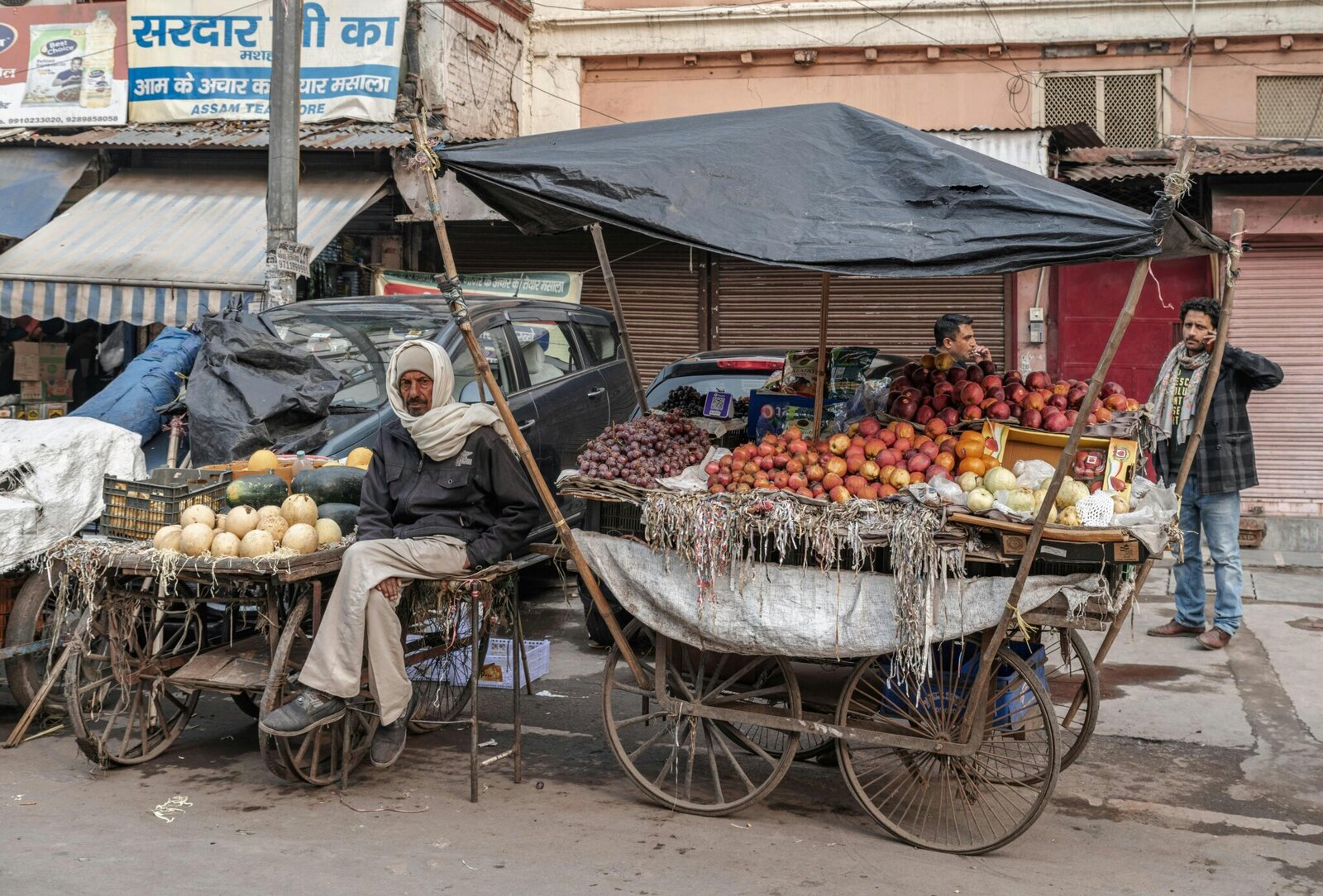
The gap between the promise of the Street Vendors Act, 2014 and the everyday realities of vendors is a key focus area for Annapurna Neti, Puja Guha, and Rajesh Joseph, writes Meryl Garcia.
Details
When the Street Vendors (Protection of Livelihood and Regulation of Street Vending) Act was passed in 2014, it was seen as a landmark moment for millions of street vendors across India. The Act represented the possibility of dignity, legal recognition and protection from arbitrary eviction. 12 years later, the legislation continues to be celebrated for its progressive vision and the detailed framework it created to protect vendor rights. Despite this, vendors continue to face the threat of harassment, eviction and livelihood insecurity on the ground.
The gap between the Act’s promise and the everyday realities of vendors is a key focus area for faculty members Annapurna Neti, Puja Guha and Rajesh Joseph. They are part of Azim Premji University’s Livelihoods Initiative, which seeks to connect academic inquiry with livelihood practices by centring the lived experiences of people on the ground.
To better understand these realities, the researchers have convened various discussions around the Act and its implementation, while also undertaking a major study on vendor perceptions of livelihood security across 10 tier‑2 cities in India including Coimbatore, Ranchi, Surat, and Varanasi.
Rajesh draws attention to the four decades of struggle for vendor rights that culminated in the Act. “It was a fight from the ground, and there were many heroes behind it,” he says, explaining how the legislation was the result of years of vendor mobilisation, advocacy, and litigation by organisations like National Association of Street Vendors of India, National Hawker Federation, and Self-Employed Women’s Association. He also highlights noted sociologist Sharit Bhowmik’s research across 10 Indian cities as a groundbreaking moment that helped shine the spotlight on the challenges faced by street vendors.
A progressive framework
The Act affirms the vendors’ right to vend, while outlining measures intended to protect that right such as conducting vendor surveys, issuing vending certificates, distributing ID cards, designating vending zones, and creating Town Vending Committees (TVCs) meant to include vendors in decision-making processes.
Although street vendors are integral to the everyday functioning of Indian cities, they have historically not been considered in discussions around public space. Puja points to a fundamental conflict between the livelihood needs of street vendors and the way cities are planned. While the Act seeks to protect informal livelihoods, urban planning prioritises aesthetics and visual order.
Early observations from the ongoing study also point to how urban transformation projects, like the Smart Cities Mission, have further complicated this relationship. Smart City projects often encourage designated vending zones, which may sometimes displace vendors from their usual vending locations.
“It is a question of contestation over space. Street vendors are often seen as a blot on the city’s beautification, whether in terms of law and order, traffic, or cleanliness,” Puja explains. “With Smart City planning, cities are finally considering street vendors. But the question is whether that results in including or excluding them,” she adds.
Renewed focus after COVID-19
“If you consider the last decade, a significant part of how everything was shaped was influenced by COVID. The pandemic, in a way, put the brakes on street vending. Entire livelihoods were wiped out,” recalls Annapurna.
Vending as an activity had almost completely stopped during the lockdown with many migrant vendors being forced to leave cities. In 2020, the government rolled out PM SVANidhi, a financial inclusion scheme for vendors. This helped many vendors access loans to restart their businesses. Annapurna notes that this is also when the Act started gaining momentum.
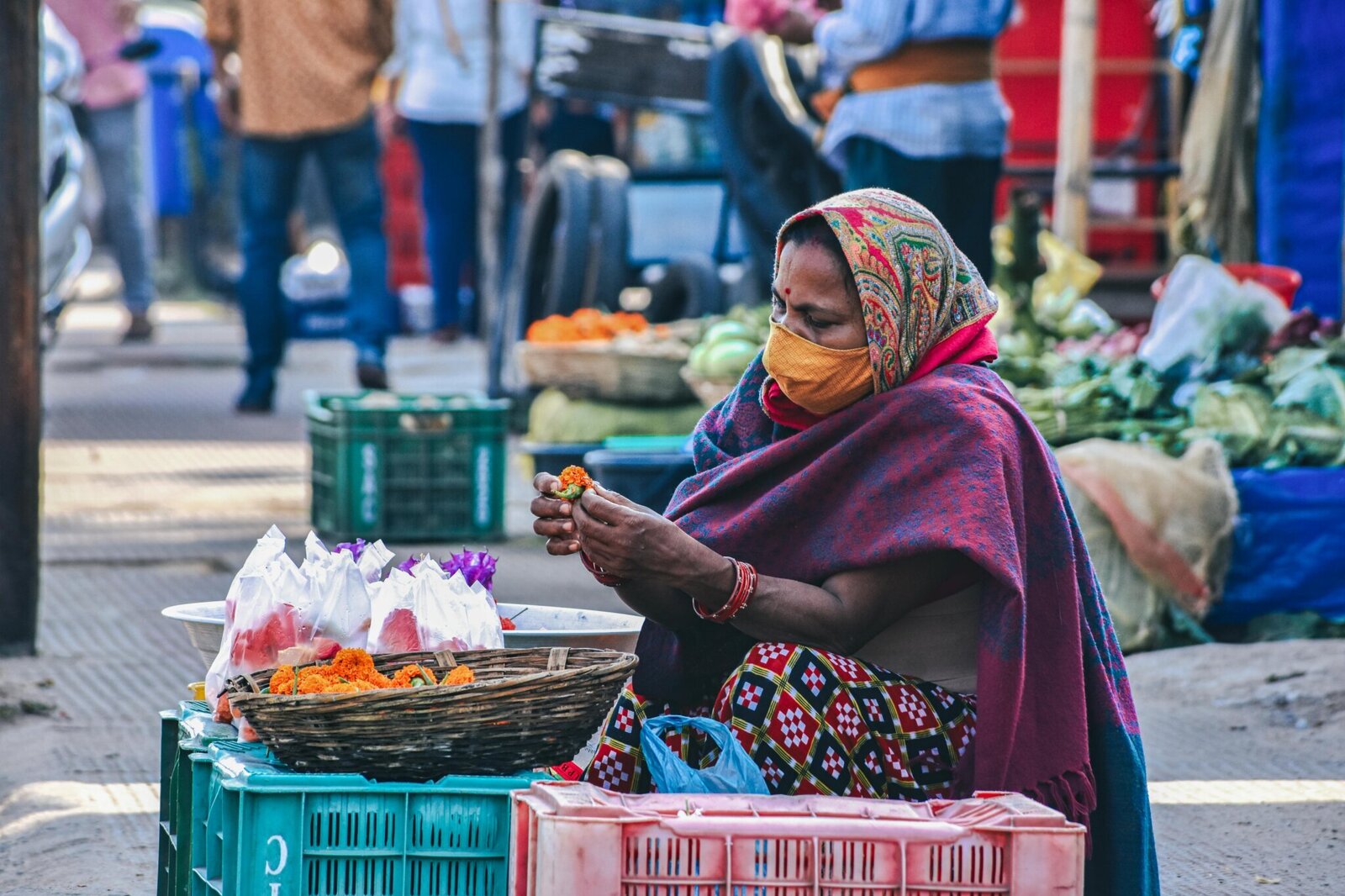
A women vendor selling flowers in Bhubaneswar.
Image credit: Soubhagya Maharana/Pexels
“We are not asking for free help or government jobs, we only ask to be allowed to work peacefully and repay our loans with dignity.”
The scheme offered critical support to street vendors in the form of collateral-free working capital loans. It also, unintentionally, helped in identifying vendors, particularly those who had been left out of official surveys. Annapurna adds that the scheme had disbursed loans to nearly 70 lakh vendors as of November 2025.
The ongoing study by the team, ‘A decade of the Street Vendors Act: Assessing progress and pitfalls’, reveals that vendors often seem more familiar with PM SVANidhi than the Street Vendors Act itself. While the scheme has become widely visible, awareness around the rights guaranteed by the Act remains limited.
Although the scheme has helped vendors to access state-facilitated loans, it has not necessarily translated to greater protection on the ground. During a roundtable organised by the university in Delhi, a street vendor described how she was facing eviction and harassment despite being formally recognised and accessing official credit.
“We are not asking for free help or government jobs, we only ask to be allowed to work peacefully and repay our loans with dignity,” she stated at the event.
Testimonies like these highlight the ground-level reality that vendors continue to face vulnerabilities at the hands of the very authorities that are supposed to protect them.
During a recent panel discussion on the Street Vendors Act held at the university, a legal expert highlighted Town Vending Committees as one of the most distinct features of the Act’s rights-based framework. Envisioned as representative bodies involving vendors, local authorities and other stakeholders, TVCs are intended to democratise governance around street vending.
However, experts also noted that several TVCs remain inactive or undemocratic, often dominated by officials with limited understanding of or commitment to the legislation. As a result, processes such as vendor surveys, certification, grievance redressal, and protection from eviction have been affected.
“Most states have implemented the Act in some form. Only when you look at the cities and states do you start seeing how differently it is being adopted and implemented. While regulation exists, perhaps even over-regulation, the question of vendors truly having livelihood security still remains.”
Different realities across cities
The problem also seems to be compounded further by the way states have framed their own rules under the Act. “Most states have implemented the Act in some form. Only when you look at the cities and states do you start seeing how differently it is being adopted and implemented,” says Puja.
These differences are now emerging more clearly through the ongoing study on vendors in tier‑2 cities across India.
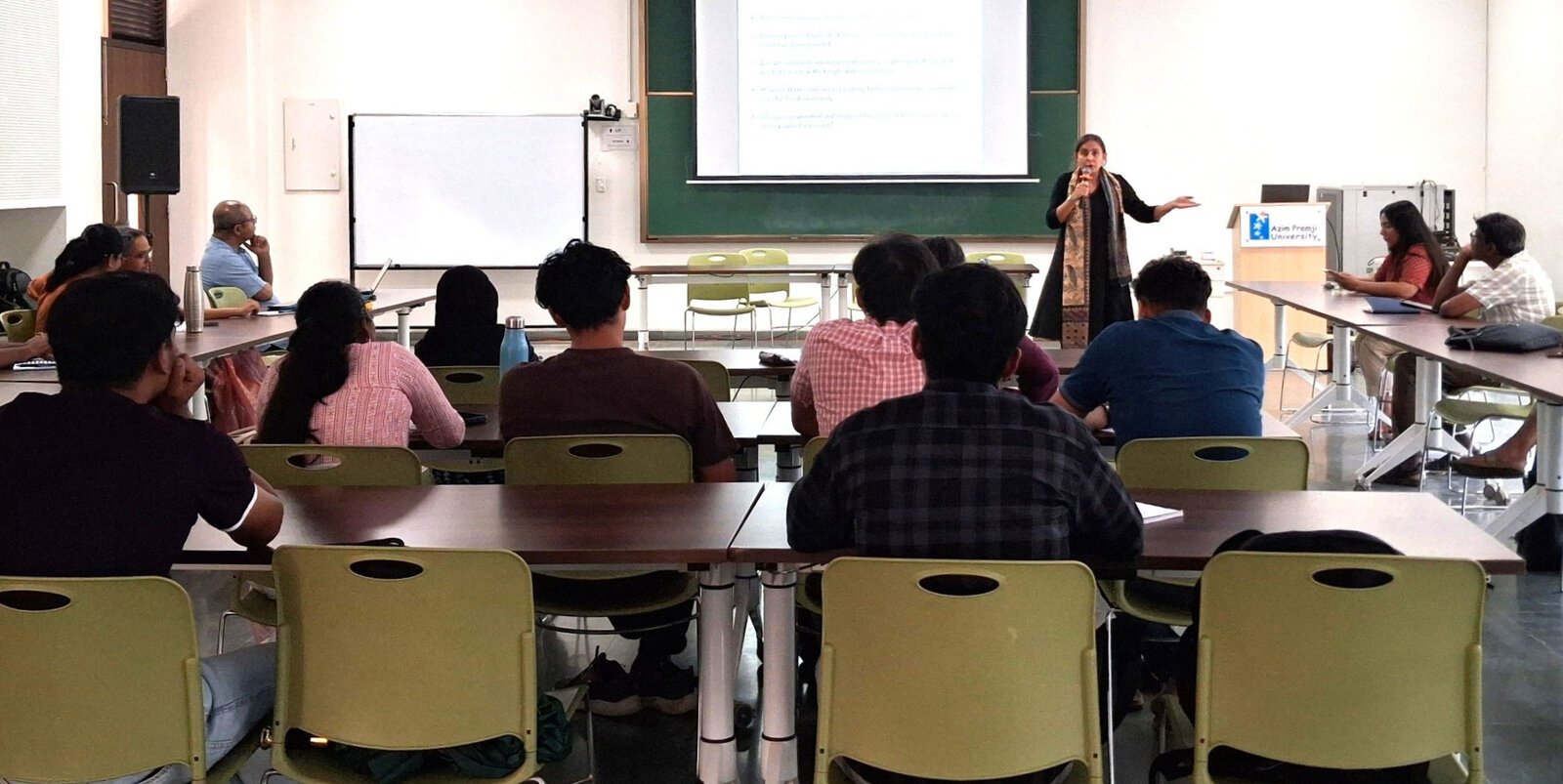
A panel discussion on Street Vendors Act at Azim Premji University.
Image credit: Archana Rangaswamaiah
“What we are finding is that regulation exists, perhaps even over-regulation, but the question of vendors truly having livelihood security still remains,” she adds.
The study is also finding that in cities where vendor associations are active and organised, vendors seem to be better positioned to negotiate with authorities and assert their rights.
“All of us value the convenience that street vendors provide. We want to step out of our apartments and easily access vegetables and daily essentials. At the same time, we view busy vending areas as an eyesore or a disruption. So where is the broader public support for street vendors and their livelihoods?” asks Annapurna, pointing out that meaningful change will depend on stronger accountability and implementation of the Act but also shifts in public attitudes towards informal work.
Featured image credit: Roman Saienko/Pexels.
About the author
Meryl Garcia is a consultant with Azim Premji University’s Research Centre. She spends her time exploring research projects across the social sciences and uncovering the stories hidden within them.