Half Life of Public Memory
Vidya Krishnan explores how we remember the Bhopal Gas Tragedy — and how language shapes that memory.
Details
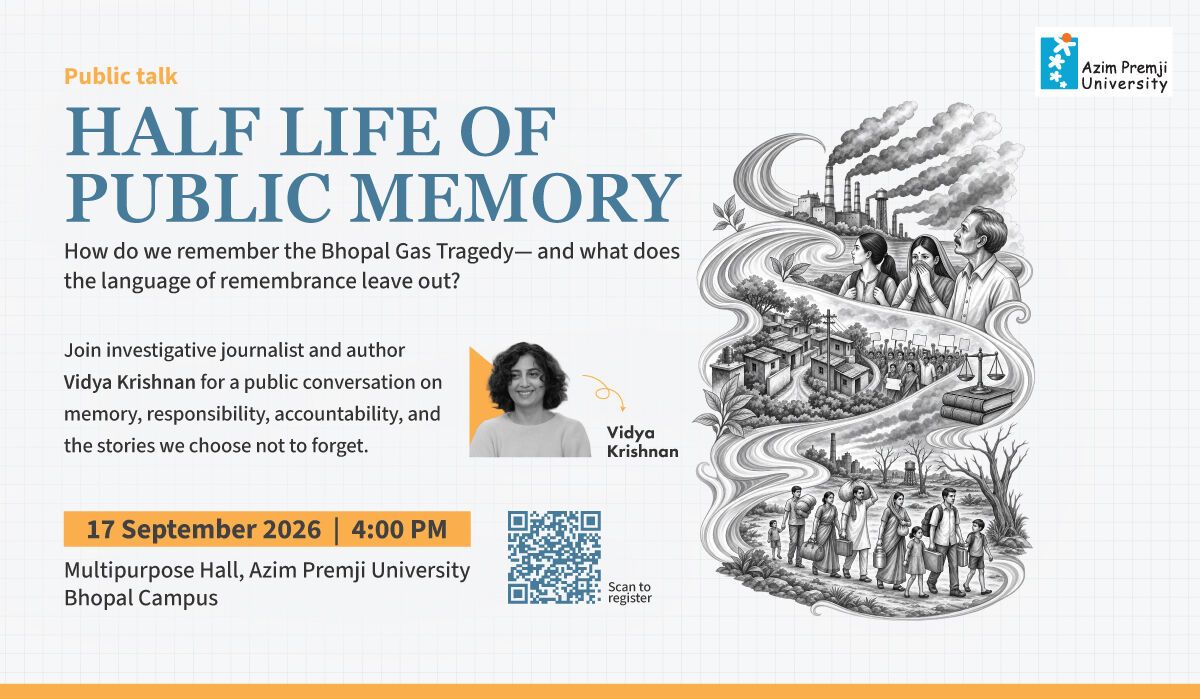
Forty years after the Bhopal Gas Tragedy. How do we speak about Bhopal? What happens when a disaster is remembered as something that simply happened, rather than as an event shaped by decisions, negligence and a lack of accountability?
Investigative journalist and writer Vidya Krishnan reflects on our memory of the tragedy and the ways in which language shapes what we remember— and what we choose to forget. The tragedy has often been separated from the societal and corporate responsibilities that shaped it, turning history into an inevitable event rather than one marked by choices and failures.
3rd December is a holiday without commemoration. As public memory fades, we have also failed to recognise survivors as ethical witnesses to history. The half-life of public memory, Krishnan suggests, is determined by what we choose not to forget.
About the speaker
Vidya Krishnan is a health-focused Canadian investigative journalist and author known for her book about Phantom Plague: How Tuberculosis Shaped our History.