Reclaiming what was always theirs: Securing village commons in peri-urban Bengaluru
Mosin Bikanso Bajaru and Dechamma C S highlight how the Community Engagement Initiative, Azim Premji University, in collaboration with the Foundation for Ecological Security, supported villagers to secure commons in Anekal taluk, Karnataka.
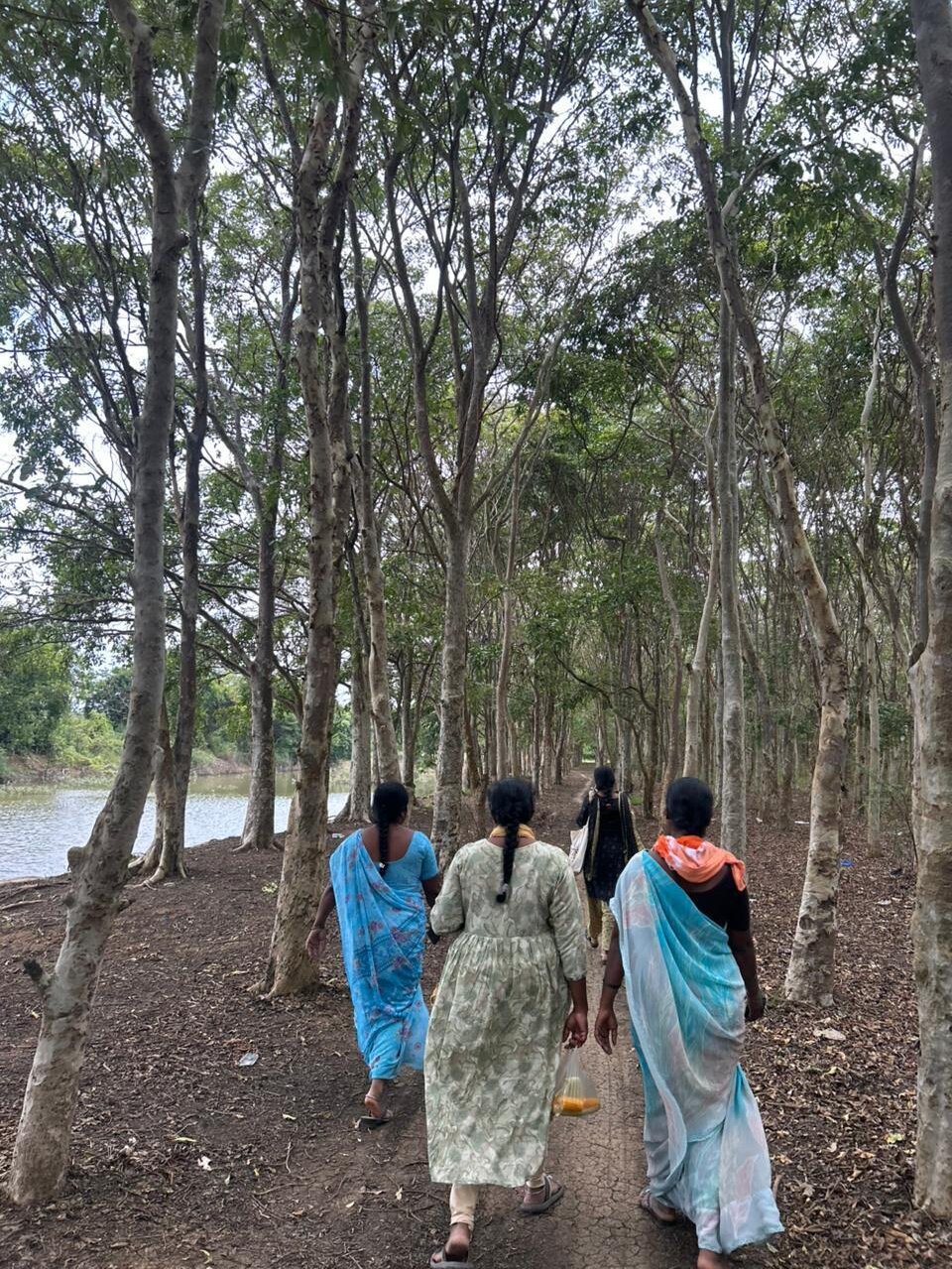
Villagers walking on the Bikkanahalli lakeside to mark its boundaries. Image credit: Poornima Barimani
Details
On the outskirts of Bengaluru, in villages across Sarjapura hobli (an administrative division) and the Anekal taluk (block encompassing several hoblis), the landscape is changing rapidly. What were once open grazing lands, village groves, water bodies, and burial grounds are now increasingly surrounded by roads, layouts, and construction sites. Yet, hidden within this transition from rural to peri-urban life, common lands continue to exist quietly, sustaining ecosystems and livelihoods.
For generations, these commons have been accessible to everyone and not owned by a single individual. Villagers grazed cattle here, collected firewood and fodder, drew water from tanks, and gathered in shaded gundu thopus (groves or small forests). These shared spaces supported biodiversity, contributed to local climate regulation, and offered much more. But as development pressure intensified, many of these lands began to shrink, and some disappeared altogether.
Concerned by this rapid loss, a collective effort was initiated by the Community Engagement Initiative, Azim Premji University to understand what remained. Using GIS tools, commons across 10 Gram Panchayats of Anekal taluk were systematically identified and mapped. Nearly 419 common lands were documented — each highlighting the status quo, encroachment and their present condition. The mapping process highlighted the extent of encroachment in these spaces, which made one thing clear — unless these lands were formally recognised and protected, their future was uncertain.
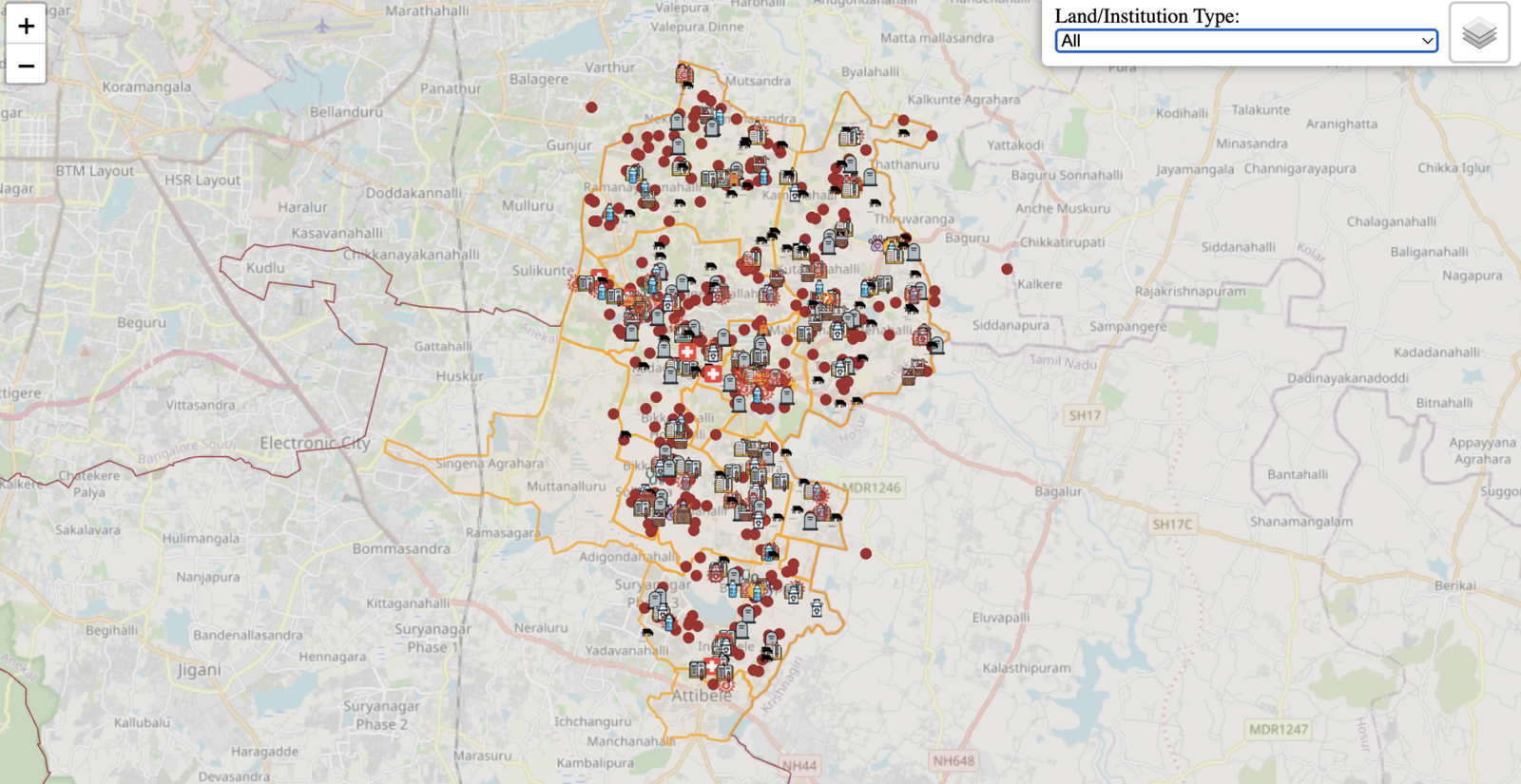
The map represents 419 common pool resources across 10 Gram Panchayats. Map Author: Ayushi Biswas
Protecting the commons
Along with technology, law and community action could help protect these commons. One of Azim Premji Foundation’s partner organisations, the Foundation for Ecological Security (FES), brought in its experience of securing commons through legal frameworks in several states.
In Karnataka, the Karnataka Panchayat Raj Act has provided a strong foundation. Under Sections 58 and 59 and Schedule I, Gram Panchayats are legally responsible for managing and conserving community assets and natural resources. This meant that commons were not unclaimed lands, they were Panchayat custodial lands.
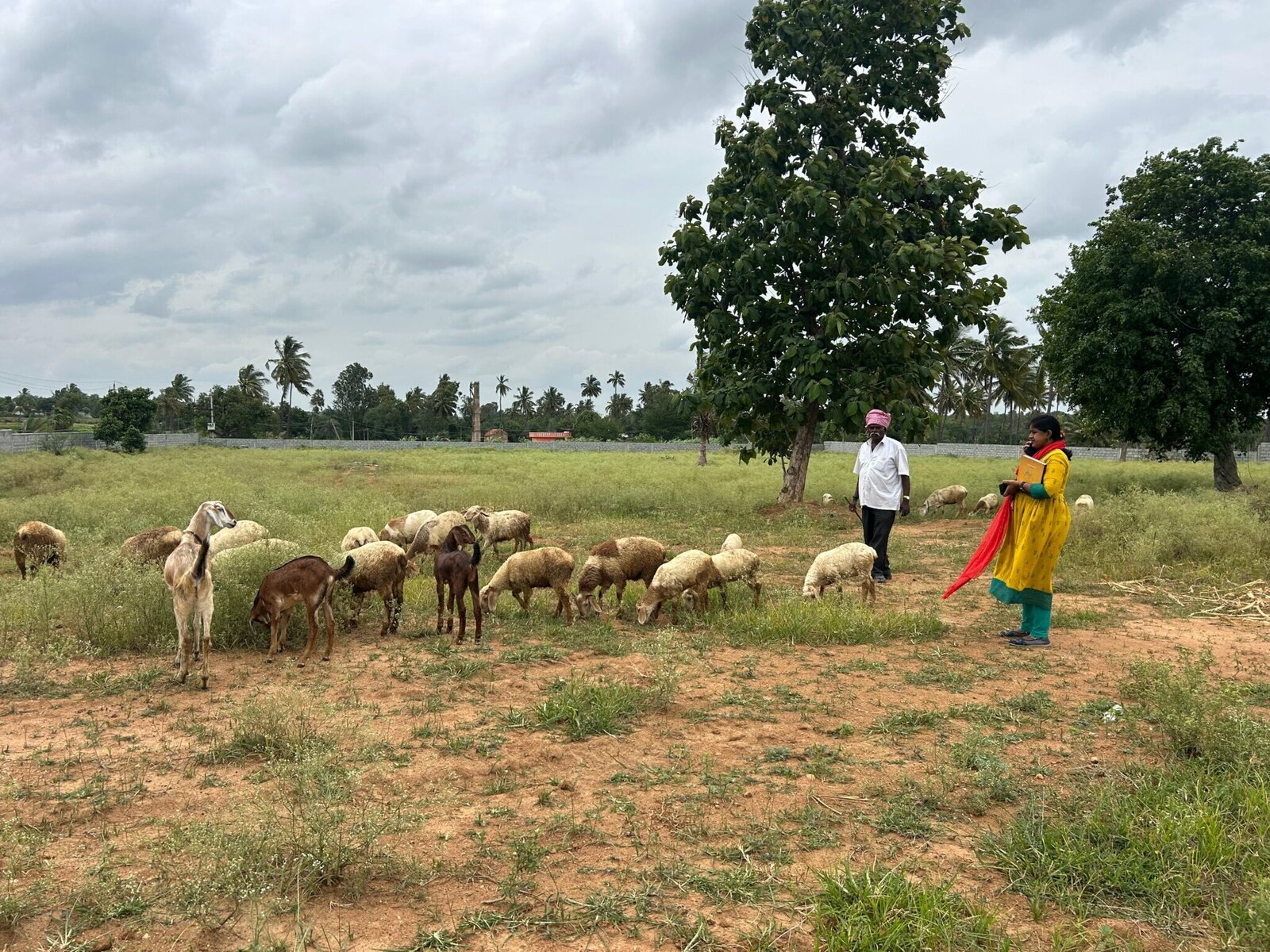
A villager tending his flock at a grazing land in Mugalur, Anekal. Image credit: Poornima
Grounded in this understanding, community resource persons supported by the University and the CEI built on this further. They approached their Gram Panchayats with evidence collected from the field maps, observations, and accounts of how villagers depended on these lands. The response was encouraging. Elected representatives and Panchayat functionaries acknowledged the importance of the commons and agreed to support their protection.
Community leaders, ward members, and elderly residents gathered to retrieve village revenue maps. Walking along the traced boundaries, they recalled historical uses and identified the areas that still functioned as commons. With mapping tools, they transformed this shared knowledge into detailed status reports.
What followed was a deeply participatory process. Community leaders, ward members, and elderly residents gathered to retrieve village revenue maps. Walking along the traced boundaries, they recalled historical uses and identified the areas that still functioned as commons. With mapping tools developed by the FES, they transformed this shared knowledge into detailed status reports.
Each report captured the life of a common land — its location and boundaries, the governance practices that sustained it, the people who depended on it, and the products and services it provided. This document was then transcribed into the natural asset registers with the Panchayat — ensuring that these lands are reserved for communal use and safeguarded from diversions of alternative purposes. Asset registers were then formally presented to the Gram Panchayat.
The Panchayat reviewed and approved the records in the general body meeting and passed resolutions, providing official recognition to lands that had long existed only in memory and practice.
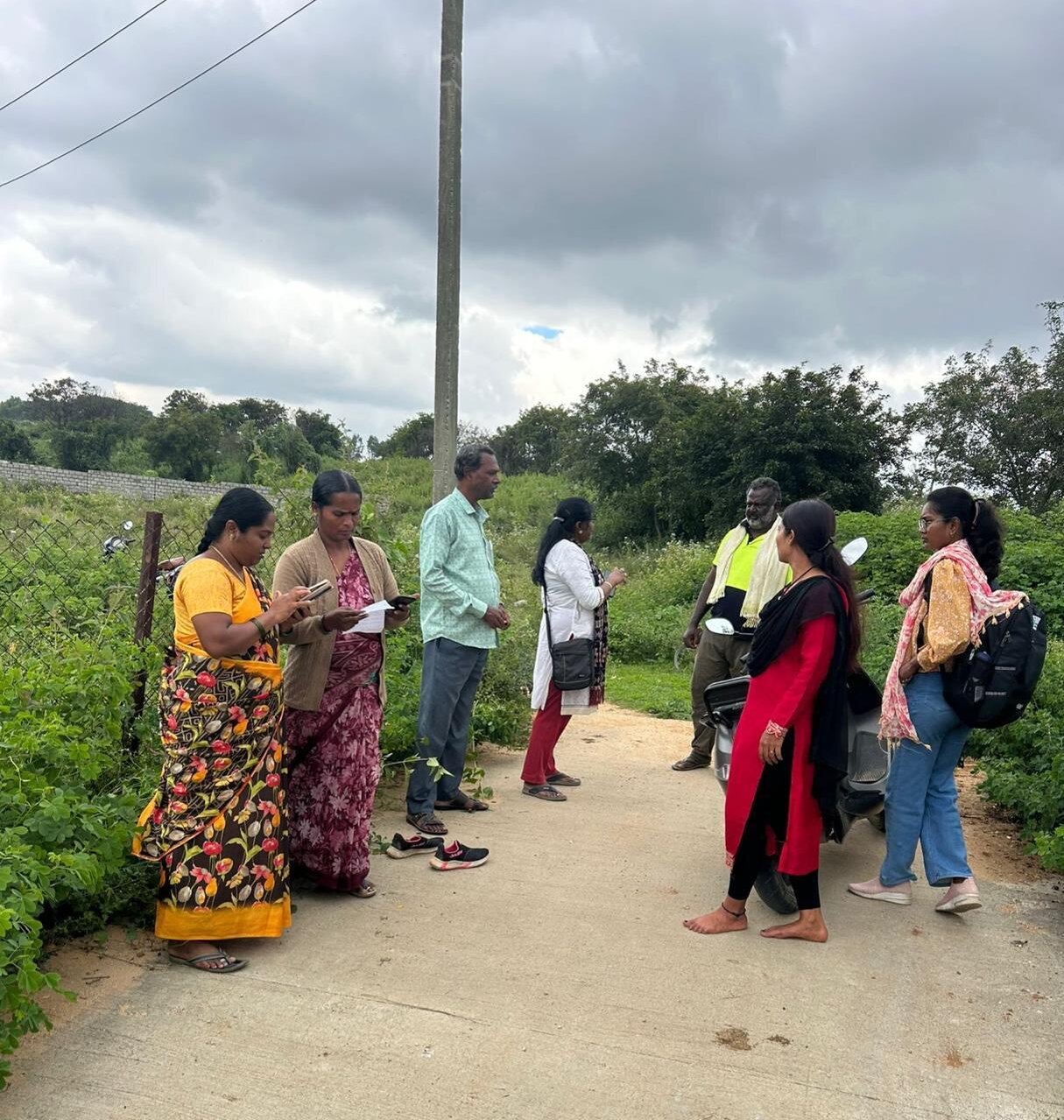
Elected representative, villagers and community resource persons tracing the boundary in Adigara Kallahalli village. Image credit: Muniraju
Building on this, the CEI, in collaboration with FES, expanded the effort across multiple Panchayats. In Sarjapura, Billapura, Handenhalli, and Mugaluru, a total of 292.22 acres of common lands were brought under the asset register. Alongside this, local lakes were carefully recorded, capturing data on biodiversity, ecological health, and community dependence.
By securing commons within formal governance systems, communities are reclaiming stewardship over their shared resources. These lands now can continue to support flora and fauna, recharge groundwater, improve soil fertility, and regulate local microclimates. Just as importantly, they help safeguard livelihoods that depend on grazing, fodder, water, and foraging.
There is much that an educational institution can do as part of its community engagement programme — bring stakeholders together, facilitate dialogue, enable access to resources, and build advocacy through a grounded, participatory approach. The initiative focused on protecting the commons, thus helping villagers and the Panchayat to reclaim and recognise the collective ownership they always possessed.
Note: The cover image shows villagers walking on the Bikkanahalli lakeside to mark its boundaries. Image credit: Poornima Barimani
Acknowledgement
We extend our sincere gratitude to Manjunatha B for his dedicated support and extensive help in field mapping. We also thank Muniraju, Poornima and Community Resource Persons (CRPs) for facilitating the exercise smoothly. Our appreciation goes to the Panchayat functionaries for their valuable time, cooperation and support for this effort.