
From Stigma to Strength: Sujana’s Journey in Rural Waste Management
Megha C A highlights the story of a woman who is part of a growing workforce that keeps Bengaluru’s waste management system moving, though their stories often go unheard.
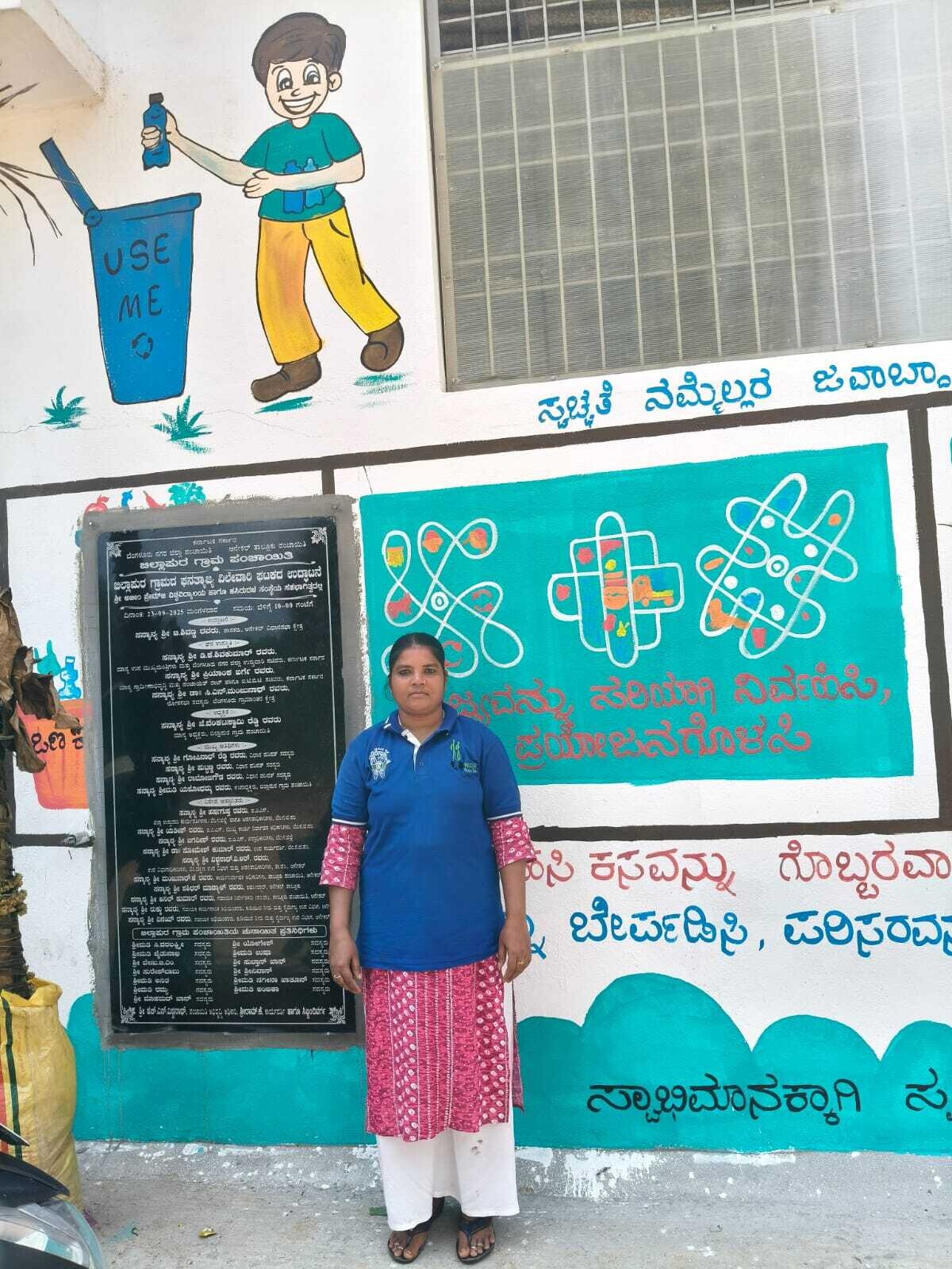
Details
“Hum safai wale hain, kachre wale nahi (We are sanitation workers, not waste pickers),” says Sujana, her hands moving swiftly as she sorts bottles and paper under the morning sun at the Billapura Dry Waste Collection Centre (DWCC) in Anekal. Her voice is steady and not defensive, just firm as she claims the dignity that her work deserves.
Every morning, Sujana begins her day at a DWCC on the outskirts of Bengaluru, Karnataka, sorting through bags of dry, wet, and reject waste. At 35, she is part of a growing workforce that keeps Bengaluru’s waste management system moving, though their stories often go unheard.
At DWCC, workers collects, sorts, and sends recyclable materials for further processing, preventing hundreds of tonnes of waste from reaching landfills every month. For workers like Sujana, these centres are more than workplaces — they are sites of dignity, livelihood, and community impact.
Sujana’s journey into this line of work was neither planned nor easy. Originally from Murshidabad, West Bengal, she grew up in Delhi under her aunt’s care. She left school after Grade III and began working as a domestic worker at a young age.
In 2012, she got married in Delhi and paused her work to raise her family. Today, she is a mother of three: two children studying in Murshidabad, while her youngest, in Grade I, lives with her in Bengaluru.
Her first marriage, however, was met with hardship and lack of support. In 2021, Sujana made the difficult decision to separate from her husband. Later that year, she married a widower from her village who had a daughter of his own, and together they moved to Bengaluru in search of a fresh start. “I didn’t want more children,” Sujana says, “I wanted to focus on raising the ones we already had.”
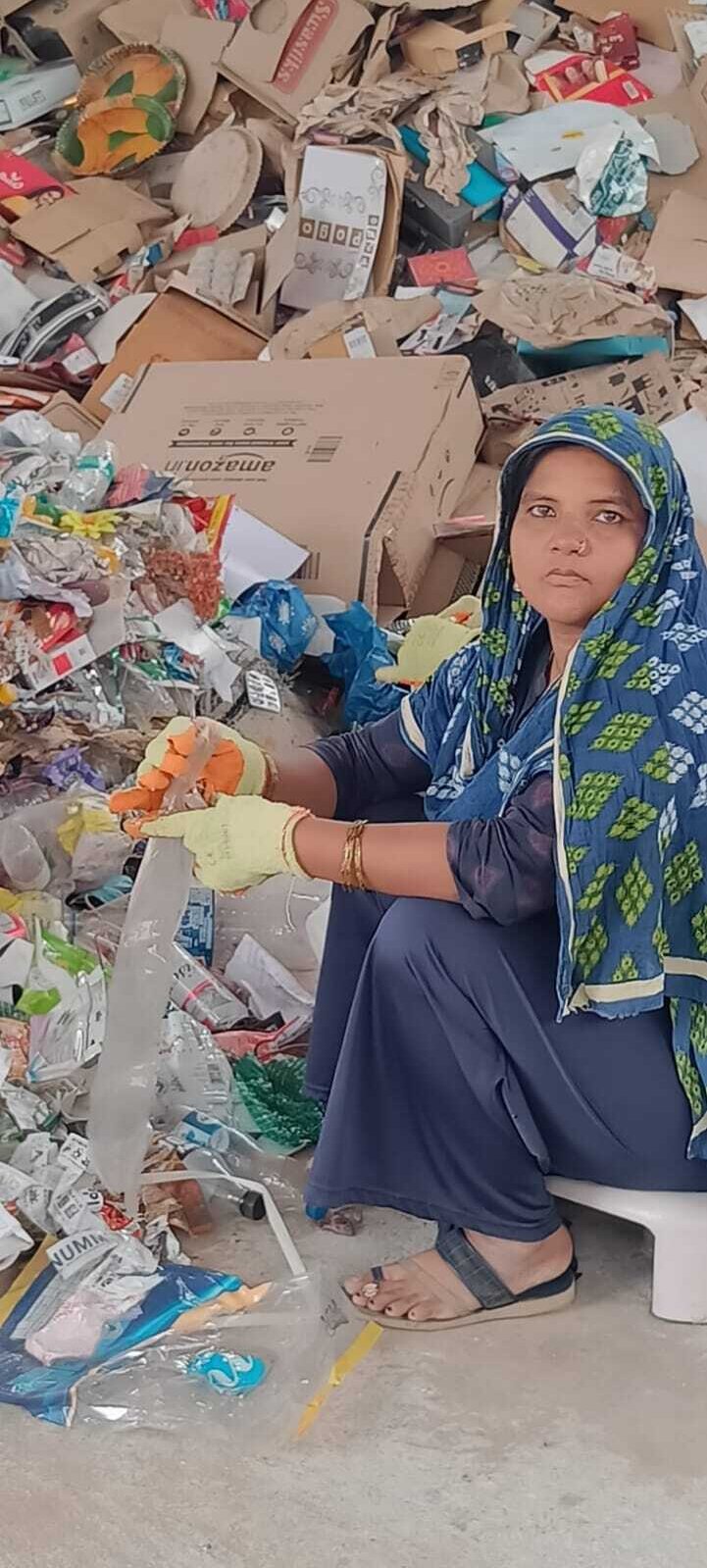
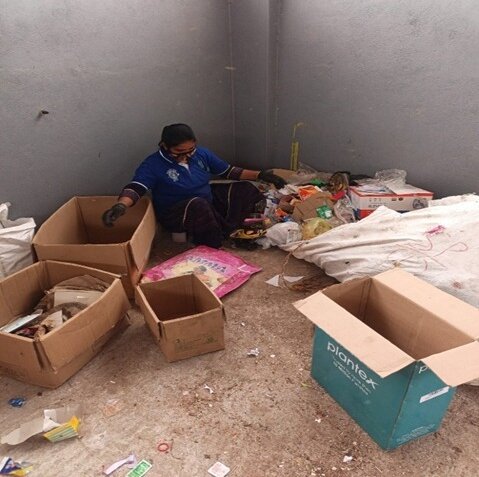
Sujana, a waste picker turned DWCC staff member, as she begins her morning shift.
A new beginning
Before joining the DWCC, Sujana worked as a housekeeper, earning about INR 10,000 a month, while her husband collected waste informally to support the family. But life took an unexpected turn when a family emergency forced her to return to her village in Murshidabad for three months. By the time she returned, her job was gone, and the family of six was left struggling to make ends meet. That’s when the opportunity at the DWCC came her way — a chance to not only earn a livelihood but also to rebuild her confidence and find dignity at work. DWCCs integrate informal waste pickers into Bengaluru’s formal solid waste management system, providing steady income and dignity to those who keep the city clean.
During this uncertain period, Sujana met Anish and Manjunath, representatives from Hasiru Dala (a social impact organisation that works to integrate informal waste pickers into Bengaluru’s formal solid waste management system), and me. When we approached Sujana to offer her a job at the DWCC, she was hesitant at first.
She called back after discussing the opportunity with her husband and confirmed that she was willing to begin work. That phone call marked the start of her involvement with the programme, where she would take on a defined role within the waste management system and participate in structured, dignified employment.
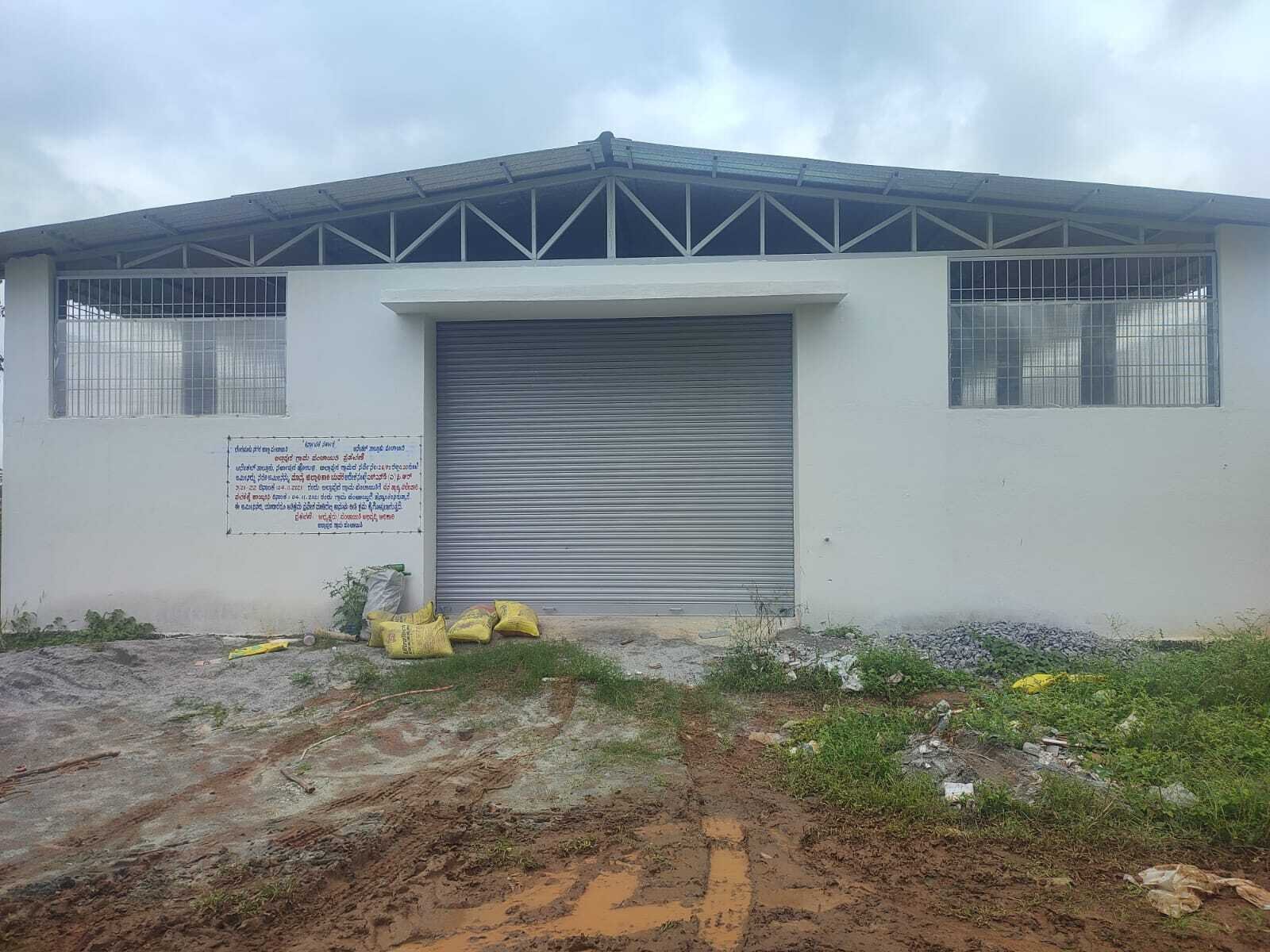
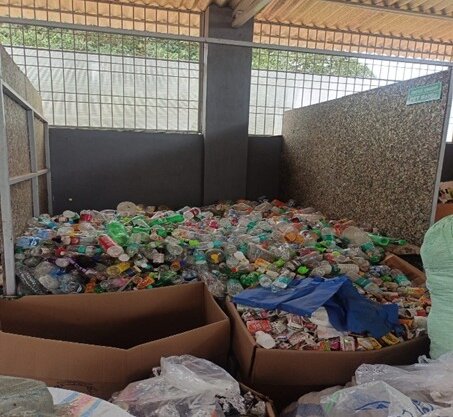
Inside the Billapura Dry Waste Collection Centre, where segregated waste is neatly sorted and stored before being sent for recycling.
Early days at the centre
Her early days at the DWCC were challenging. “In the beginning, I couldn’t eat,” Sujana recalls, reflecting on the shock of handling waste in a formal system for the first time. While systems existed to collect dry and wet waste separately, they were not yet practised effectively. The team was still in the early stages of raising awareness and convincing residents to hand over segregated waste.
“The smell, the worms… it was too much,” she recalls, describing the daily reality of handling mixed waste. The work was tough, and each day challenged her patience. But gradually, she learned the skills she needed and grew more confident in managing the different types of waste she dealt with.
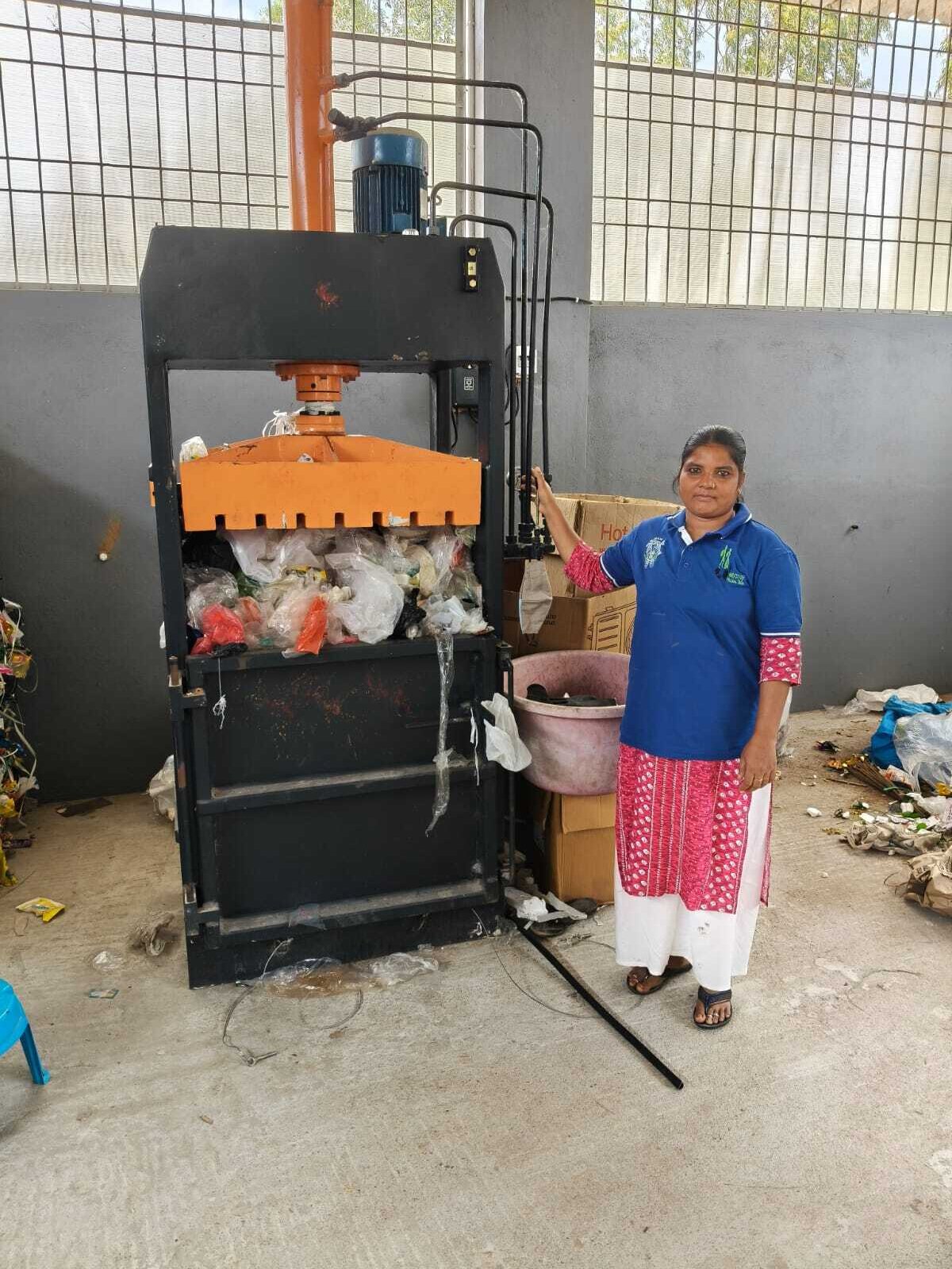
Sujana uses the baling machine to turn loose waste into organised bundles, ready for recycling.
Billapura panchayat’s role
What makes Billapura panchayat’s role significant is not only the functioning of its DWCC, but the governance choice that made such a system possible in a rural setting. Unlike many panchayats that still collect mixed waste and dump it at the nearest site or through contractors, Billapura adopted a decentralised, zero-waste governance model aligned with the Solid Waste Management Rules and Karnataka byelaws.
By choosing waste generators to take responsibility for segregation, processing and the inclusion of informal workers at the panchayat level, Billapura shifted from a disposal mindset to a resource-management approach. This willingness to follow a different path uncommon in rural waste governance has enabled better segregation, safer working conditions and dignified employment for workers like Sujana.
Four months later, things began to change. Consistent awareness efforts led to better segregation in the neighbourhood, and residents gradually adopted improved waste-handling practices. The introduction of new PPE kits including gloves, masks, and aprons has made a huge difference. Sujana is proud of her work now and she no longer has to deal with heaps of mixed waste. She no longer hesitates to call herself a safai wali (sanitation worker).
She is also outspoken about the responsibility of residents: “People who don’t segregate their waste should feel ashamed.”
By choosing waste generators to take responsibility for segregation, processing and the inclusion of informal workers at the panchayat level, Billapura shifted from a disposal mindset to a resource-management approach. This willingness to follow a different path uncommon in rural waste governance has enabled better segregation, safer working conditions and dignified employment for workers like Sujana.
Pride, resilience, and reflection
Society often carries a deep stigma around waste work, seeing it as undignified. But workers like Sujana are breaking that perception. Her dedication and professionalism have changed how people view the DWCC. Today, the community sees her with respect, and many women have expressed interest in joining the DWCC after witnessing her journey.
What matters most to her now is stability: her salary helps pay for her children’s schooling, supports her in-laws, and allows her to raise her children. Her biggest dream is simple yet ambitious: “I will make them officers,” she says with pride.
While some relatives have mocked her for working with waste, Sujana remains unfazed. “Relatives don’t help even when needed. They provide no real support,” she says, pointing out the hypocrisy of judgment without help. She has even given her parents a virtual tour of the DWCC over a video call, unbothered by societal stigma “I don’t care what people think,” she adds firmly.
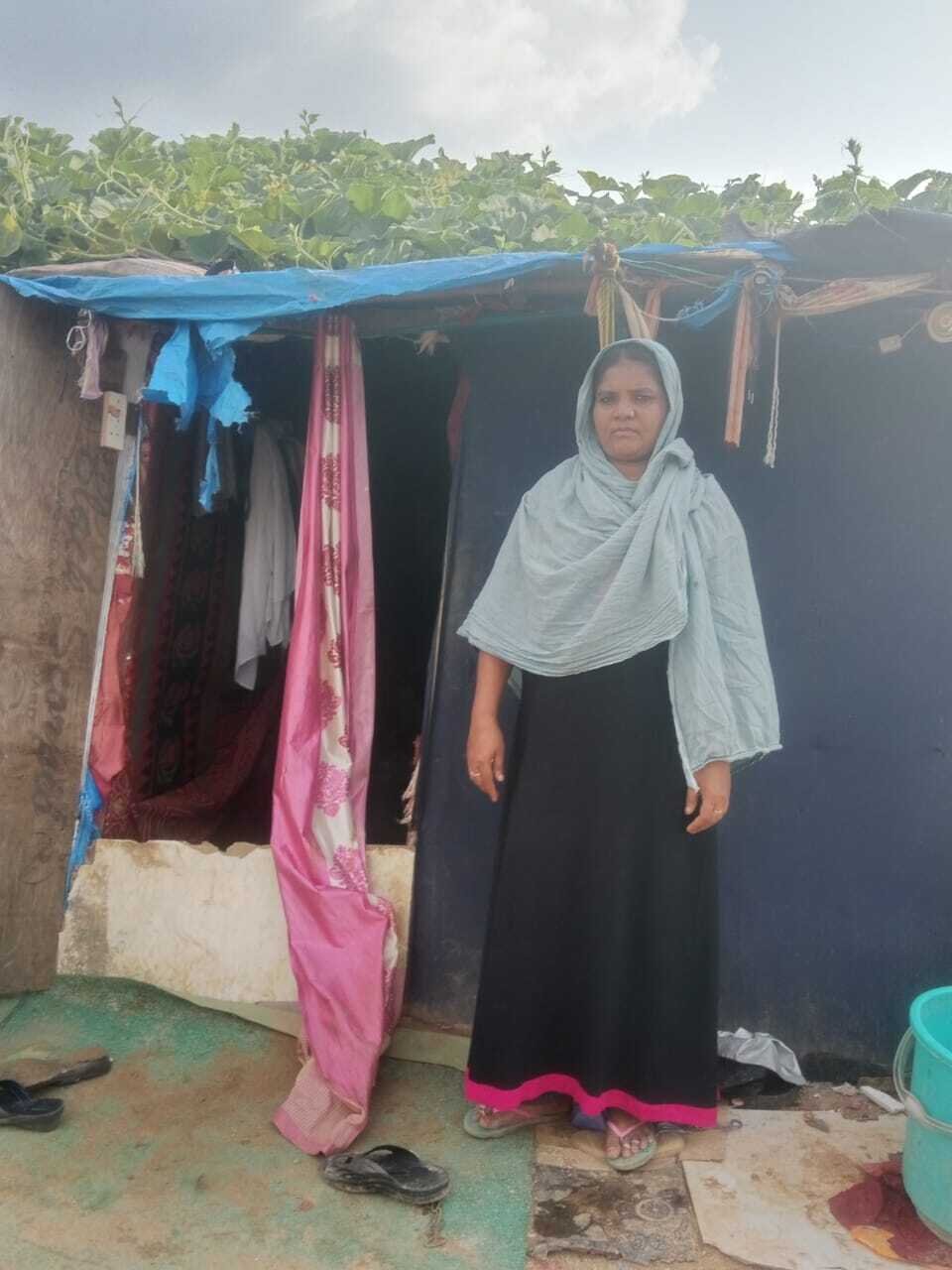
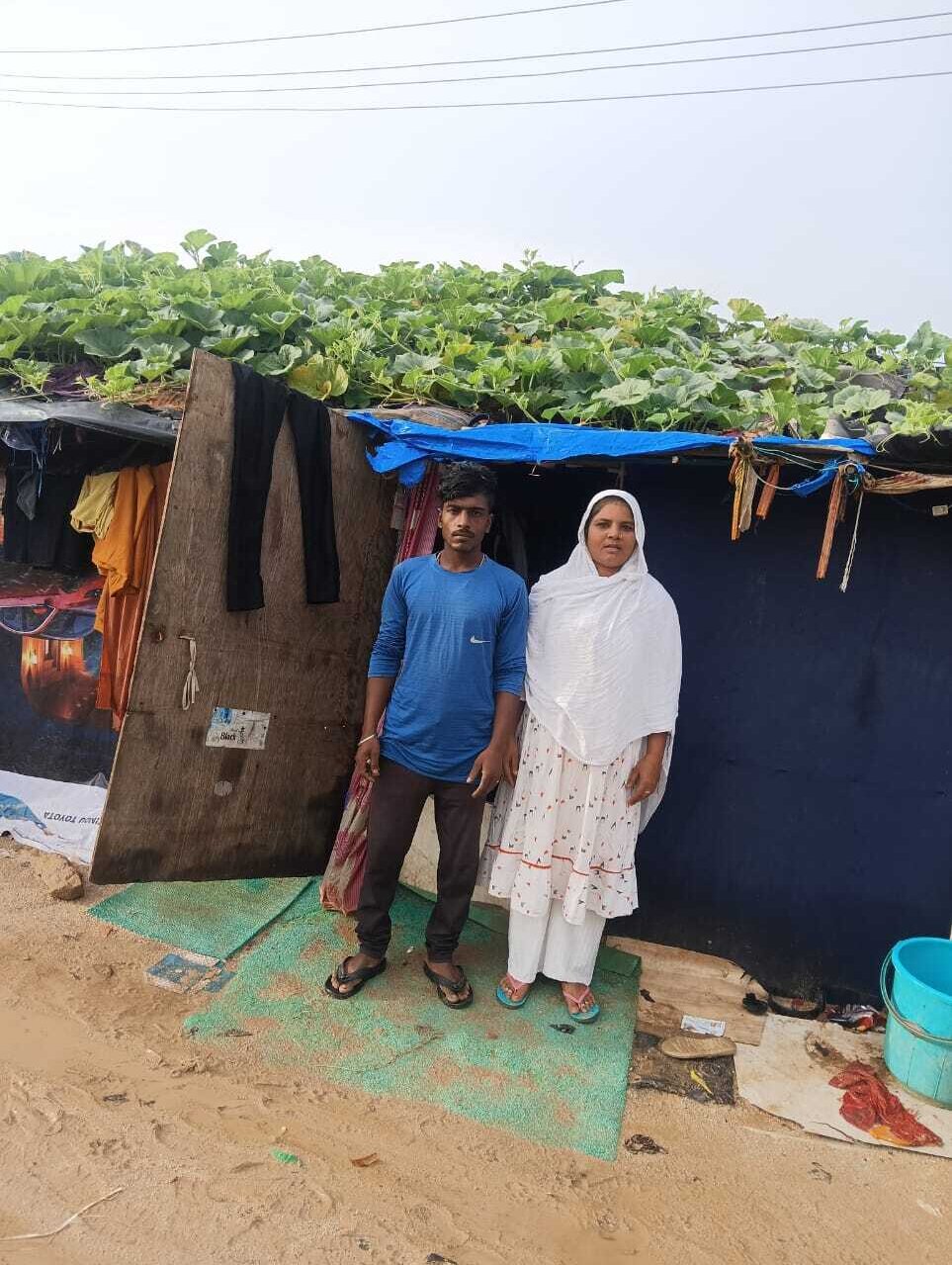
In the quiet of their home, Sujana and her husband pause for a photo, their smiles reflecting the warmth and support they share.
For Sujana, dignity is not defined by the work she does, but by the life she is building for her family. “I go home, spend time with my family, and what more do I need?” Her story is a testament to Bengaluru’s waste workers, who form the backbone of the city’s sustainability efforts yet rarely receive recognition.
She sums up her pride in one line that lingers: “Hum safai wale hain, kachre wale nahi. (We are sanitation workers, not waste pickers).”
Reflection: A call for change
Sujana’s story is more than just one woman’s journey; it is a reminder of the invisible labour that keeps our surroundings clean. Every bag of waste she sorts reflects someone’s daily choices — what they throw away and whether they choose the simple step of segregation.
Her courage challenges the stigma surrounding waste work and calls for respect and dignity for those who handle society’s trash. If every household segregated its waste, and every resident acknowledged the people behind this work, it would lighten Sujana’s burden and elevate her role from invisible labourer to community hero.
Taking care of our waste is not just about keeping a place clean. It means stopping open burning, sorting what we throw, and thinking about where it ends. It is about knowing that our choices affect others and the environment we share. How we deal with waste shows the respect we have for people who handle it and the care we have for the next generation.
Sujana’s story shows that dignity comes from doing work with honesty and purpose. She reminds us that looking after our surroundings is everyone’s work. When we manage our waste effectively, we make life a little easier for those who collect it and safer for our communities. Change starts when each of us takes responsibility for what we throw away.
Acknowledgement
This article emerged from sustained engagement on the ground and would not have been possible without the support of Azim Premji University, which provided the institutional space to undertake this work. I am deeply grateful to Dechamma C S and Anjor Bhaskar, Community Engagement Initiative, for their guidance, thoughtful feedback, and constant encouragement throughout the process. I thank Hasiru Dala for their collaboration and field-level insights that enriched this documentation. Above all, sincere thanks are due to the community members and waste workers, whose openness, lived experiences, and willingness to share their stories form the heart of this article.
About the Author
Megha C A is a Research Associate at Azim Premji University, working with the Community Engagement Initiative on Turning the Tables, a project on decentralised waste governance model. Her practice-based work involves sustained engagement with multiple stakeholders which involves conducting interviews with Panchayat staff, Executive Officers, and sanitation workers, along with documenting field processes and analysing project data and preparing reports. Through this practice-based engagement, she reflects on how everyday experiences and institutional dynamics shape decentralised waste governance. She may be reached at megha.ca@apu.edu.in
Image credit: Megha C A