
Tiger Tales
Bibliophile and bookstore assistant Medha Rao mulls over the many faces of the majestic big cat found in Indian children’s literature.
Details
The tiger is a captivating figure in literature. From William Blake’s poem The Tyger to Shere Khan from The Jungle Book, tigers have long fascinated writers, artists and poets. Unfortunately, this has not translated into how tigers have been treated in real life. From hunting the animals for sport to selling tiger parts as luxury items, the abysmal treatment that tigers have received at the hands of humans, led to their population falling to an all-time low in 2009.
In response to this, the thirteen tiger-range countries across the world launched a massive initiative to repopulate tigers by 2022. The drive set 29 July as the Global Tiger Day. India’s tiger population jumped from a little over 1,700 tigers in 2010 to more than 3,600 by 2022.
With fifty-eight tiger reserves, India is one of the largest tiger habitats in the world today. So, it comes as no surprise that the stripes of the tiger are ubiquitous even in its children’s books.
Through the Tiger’s Eyes
Writing on wildlife is often structured as non-fiction. But many children’s books buck this trend by telling tiger stories in the tiger’s voice. One of the best examples of this is Stephen Alter’s If You Were a Tiger Cub. This delightful story follows a brave young tigress as she bullies her older brothers, and tries to catch a hornbill, a python and a group of bats, all in a single afternoon. She wants to be the queen of the forest when she grows up, just like her mother.
Another story in this vein is Akshay Manwani’s The Tiger, the Bear and the Battle for Mahovann, which retells traditional fables in a contemporary setting while also being an excellent source for understanding the incredibly diverse wildlife found in India. The cast is entirely populated by animals, beautifully illustrated by Devashree Damodare, and the story follows the struggle for power and the meaning of justice in the jungle.
Another book on wildlife politics, but with a much more humorous tone, is Ranjit Lal’s The Tigers of Taboo Valley. Based on a true story of a male tiger caring for his cubs, despite it going against his natural instincts, the book talks about dysfunctional families and the difficulties faced by animals migrating to new homes when their habitats are destroyed by human encroachment.
Beastly Connections
The relationship between tigers and humans is complex. While we admire the big cat in our folktales and literature for its ferocity and majesty, the lived experiences of those who encounter tigers in their daily life are often antagonistic. Set in the Sunderbans, The Honey Hunter by Karthika Nair and Joëlle Jolivet adapts the folktale of Bon Bibi into a contemporary story about climate change and traditional ways of interacting with the forest. Jolivet uses stunning illustrations to portray the tiger as the antagonist of the story – an evil demon who is unwilling to spare the young boy Dukhe’s life. Down by the Mangroves by Sheela and Praba follows fifth-grader Moyna whose life changes suddenly when her father is taken away by a tiger. The book is another moving exploration of grief and resilience set against the tidal backdrop of the Sunderbans.
Children, however, have the greatest capacity for empathy, even when they are thrown into unexpected situations. A Girl, A Tiger and a Very Strange Story by Paro Anand and Priya Kuriyan is a half-prose, half-illustrated novel that narrates the tale of a young girl separated from her family by a storm. Even in a crisis, she reaches out to a similarly stranded tiger cub and survives against both the onslaught of nature and the prejudice of people, to guide the cub safely to its mother. The unique structure of the novel, where words and artwork co-exist seamlessly, mirrors its theme – human-animal harmony.
Neel from Mitali Perkins’ Tiger Boy has a strong sense of what’s right and what’s wrong, and for him poaching a young tiger cub is definitely wrong. Despite all the dangers that come with saving the animal, Neel is determined to find the lost cub and return it safely to its mother. The setting is once again the Sundarbans, a land fraught with human-animal conflict, but Neel shows kindness and the strength to do what he thinks is right even in the face of grave danger.
Big Cats, Bigger Dangers
If one boy can save a tiger, so can a whole village! Tiger on a Tree by Anushka Ravishankar and Pulak Biswas is a beautifully illustrated picture book in striking hues of orange and black, which follows a tiger who is escaping from villagers by climbing on trees and swimming in the sea. But when the villagers finally apprehend him, they make a surprising decision to let him go.
In contrast, One Lonely Tiger by Benita Sen and Sekhar Mukherjee is a whimsical reflection on the loneliness of the last tiger left on earth after all the others have gone extinct because of the loss of their habitat. The surviving tiger has only its own shadow to play with and no home to return to, ultimately being kicked out of the earth itself and forced to live on the moon.
This same theme, told through a non-fictional lens, is seen in Our Tigers Return by Peeyush Sekhsaria. It narrates the true story of the near extinction of tigers in the Panna Tiger Reserve in Madhya Pradesh in 2009 and how they were slowly reintroduced and protected until their numbers grew strong again. The story is presented as a conversation between the ‘sutradhar’, Park Director Rangaiah Sreenivasaa Murthy, and a young girl called Megha who has many questions to ask. This interactive storyline is an engaging way of taking readers into the running of the tiger reserve and its conservation initiatives.
Tigers aren’t just fictional characters we admire and fear. Children’s literature in recent years has made an active effort to portray the many faces of this regal creature and its triumphant return to wild spaces in India.
Bibliography
- If You Were a Tiger Cub (Rupa/Red Turtle)
- The Tiger, The Bear and the Battle for Mahovann (Red Panda)
- The Tigers of Taboo Valley (Rupa/Red Turtle)
- The Honey Hunter (Little Gestalten)
- Down by the Mangroves (Penguin)
- A Girl, A Tiger and a Very Strange Story (Penguin)
- Tiger Boy (Duckbill)
- Tiger on a Tree (Tara Books)
- One Lonely Tiger (Penguin)
- Our Tigers Return (Last Wilderness Foundation)
- The Block Printed Tiger (Tulika)
- Tiger! Tiger! Stories of the Big Cat (Speaking Tiger)
- The Day Grandfather Tickled a Tiger (Penguin)
- Eye to I: With my First Tiger (Perky Parrot)
- The Tiger King (Rupa/Red Turtle)
- Tigers for Dinner (Rupa/Red Turtle)
- Tiger (Jyotsna Prakashan)
- The Tiger Eaters (Karadi Tales)
- The Small Tigers of Shergarh (IndiaInk)
- Grandfather’s Tiger Tales (Speaking Tiger)
- Fierce-Face the Tiger: Jungle Stories (Speaking Tiger)
- The Golden Tiger Mountain (HarperCollins)
- Classic Indian Stories: The Champawat Man-eater/The Mohan Tiger (Westland)
- The Life of a Tiger (Speaking Tiger)
- Tigers Forever! (Katha)
- Watch Out! The Tiger Is Here! (Pratham)
- When I Grow Up I Want To Be A Tiger (Speaking Tiger)
- Adventure of The Green Tiger (Jyotsna Prakashan)
- The Traveller, the Tiger and the Very Clever Jackal (Mapin)
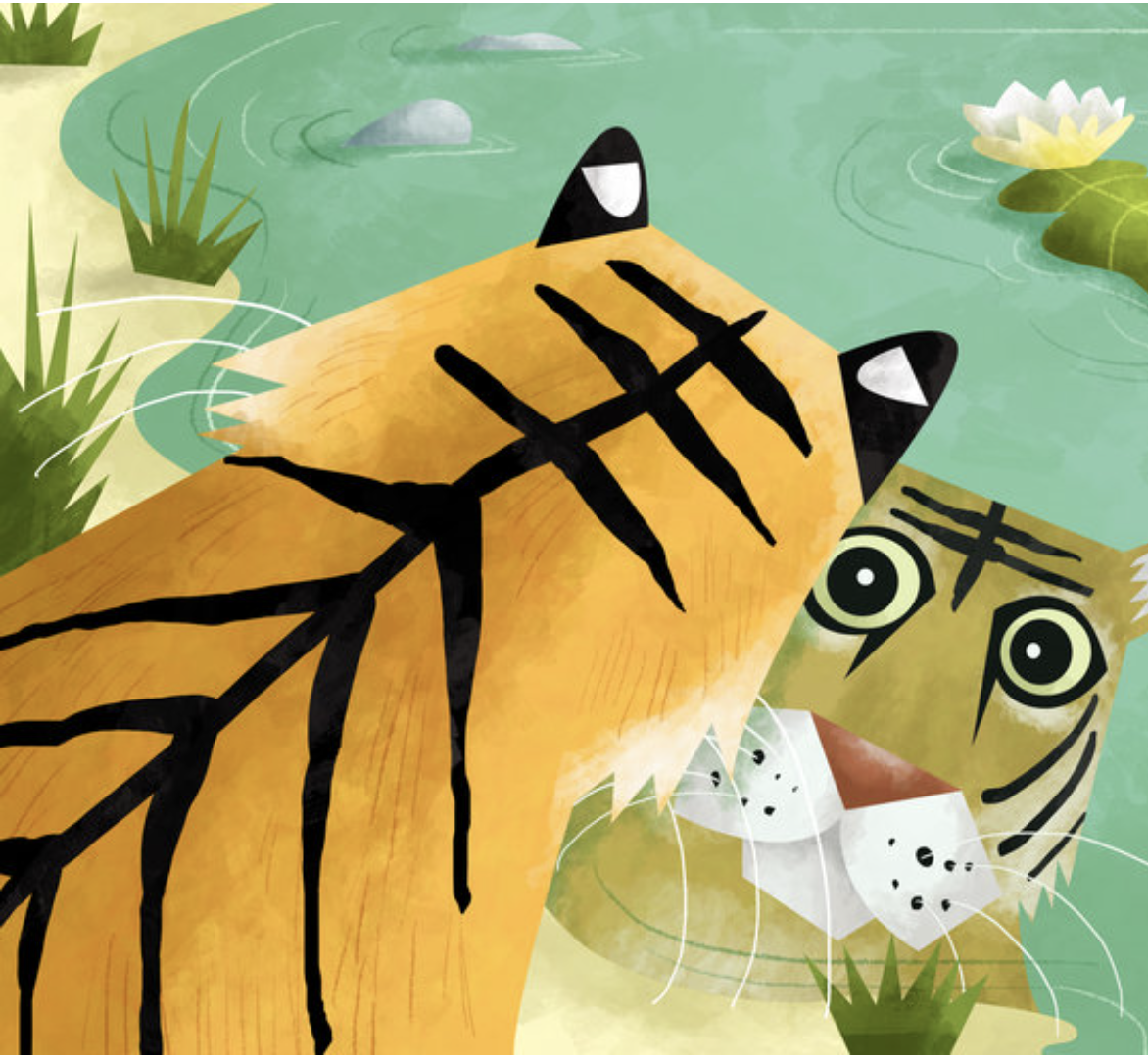
Image by Rohan Chakravarty/Storyweaver
About the Author
Medha Rao teaches theatre to middle schoolers at The Valley School and also works at Funky Rainbow, an independent Indian children’s bookstore in Bengaluru. She loves reading books and writing wacky stories.