
Pachyderm Parables
Worshipped, hunted, painted and protected… elephants lumber through India’s cultural landscape in remarkable ways. Library educator Sowmya Ravindranath traces their many trails in Indian children’s literature.
Details
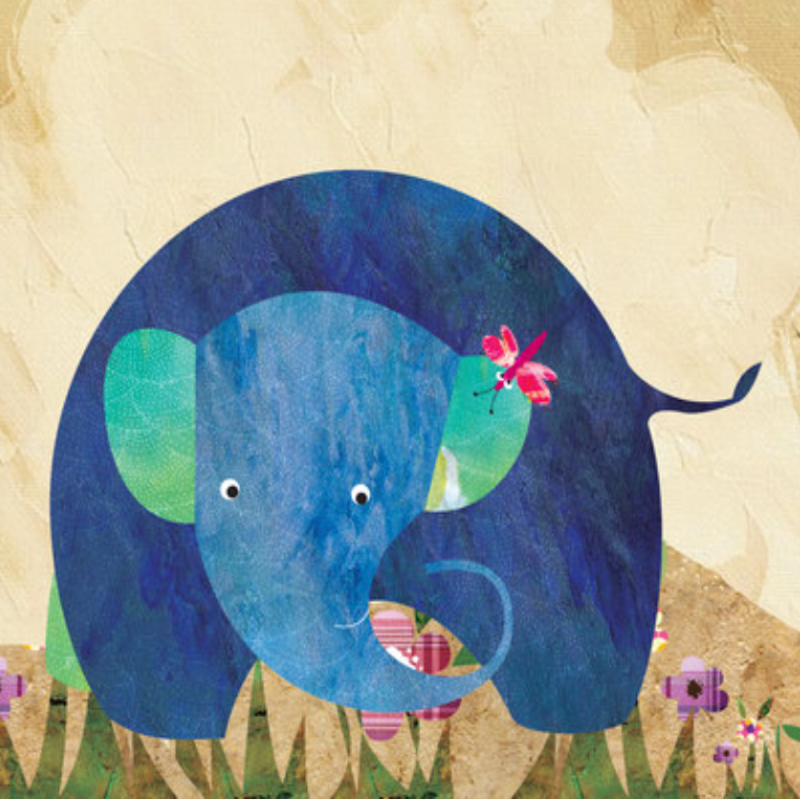
For a child growing up in India, the elephant is a multifaceted presence. One encounters this mighty mammal in the quiet sanctity of temple courtyards, amidst the festive fervour of processions, through mythology and worship where divinity takes pachyderm form, and in awe-inspiring wild encounters. This lived proximity forms the backbone of how the elephant journeys across Indian children’s literature.
Elephants in Antiquity
Epics and recorded history are rife with images of the majestic animal playing a central role in early civilisations. Vishakha Chachani’s Cave Art: The First Paintings explores the art on the rocks of the Bhimbekta caves, said to date back 30,000 years. The paintings of elephants near human-like figures signal familiarity or capture.
Steeped in Hindu and Buddhist iconography, elephants are revered as sacred in both cultures. Elephant Stories by Amar Chitra Katha unveils prominent Buddhist tales of wisdom and virtue, while Bhakti Mathur’s Amma, Tell Me About Ganesha follows the conversations of siblings Klaka and Kiki who are curious to know how Lord Ganesha got an elephant head. Mallika Nagarajan’s The Elephant in the Tree features Lord Indra’s trusted elephant Airavat and connects elephants, trees and the rain.
Elephants in Culture
It is not surprising that elephants are ambassadors of cultural tradition, folklore, and visual art in Indian publishing. Kavita Mandanna and Nayantara Surendranath’s A Pair of Twins, set in Karnataka, and Shobha Tharoor and Tanaya Vyas’ Parvati the Elephant’s Very Important Day, set in Kerala, explore the routines of a royal elephant and a temple elephant. While the former challenges traditional gender roles during festive rituals, the latter brings to light the sentience of the gentle giant. Books like The Elephants Who Liked to Dance, a retelling from the Munda Writers’ Group, represent the animal in indigenous tribal lore. Originally written in Munda, Kui, Suara and Juanga languages of Odisha, this story is part of a ten-book series called ‘Adi Kahani’.
The majesticity of an elephant becomes a way of exploring perspectives in What Shape is an Elephant?, an original Persian story by Rumi, illustrated by Feeroozeh Golmohammadi, which unpacks how one is limited to understanding only what one experiences. The physical form of a pachyderm has also inspired several drawing and colouring books. Tara Books’ 8 Ways to Draw an Elephant, demonstrates how Gond, Mithila, and Meena artists illustrate the same creature. In Boodabim, Alankrita Jain teases young readers’ imagination by rendering the jumbo in various hilarious and endearing ways. Created for the Wildlife Trust of India’s Project Gaj Yatra, Rohan Chakravarty’s Where’s Gaju’s Herd? is a colouring book that gently draws attention to the human-elephant conflict.
Elephants in Non-fiction
A small clutch of non-fiction narratives open the doorway to build scientific literacy and zoological curiosity about elephants. Shekar Dattatri’s photo-documentary Lai Lai the Baby Elephant showcases wild elephant biology, matriarchal herd dynamics, trunk coordination, and foraging habits. Books like I am Aan by Meenakshi Bharadwaj and Christopher Corr, and Life Cycle of an Elephant by Vijita Mukherjee offer readers interesting facts about an elephant. Retellings like Why Elephants Have Tiny Eyes by Pow Aim Hailowng and Priya Kuriyan bridge indigenous myth with natural history in a tale from India’s Northeast.
A Wild Elephant at Camp by Anupama Mohorkar and Emanuele Scanziani, Walk the Grasslands with Takuri by Nima Manjrekar, Nandita Hazarika and Maya Ramaswamy, and A Jungle Safari by Geeta Dharmarajan and Sonal Panse follow naturalists to uncover how elephant herds actively interact with other species and shape their environments.
Elephants in Families
With their close-knit family structures, stories of the pachyderm have often offered space to examine childhood play, care and self-expression. In Ashok Rajagopalan’s hugely-popular Gajapati Kulapati series, the central character’s sneezes, tummy troubles and mischief call attention to his everyday adventures, while the other characters remain firmly interested in his care. Having a cast of characters who nurture the protagonist is also the anchoring idea in Arthi Anand Navaneeth and Kavita Singh Kale’s picture book Ranganna, where a young elephant’s desire to paint his nails turns gentle play into self-expression. What happens when care comes from outside the family group? Anushka Ravishankar and Christiane Pieper’s Elephants Never Forget explores themes of identity, adoption and non-traditional families through rhythmic verse and woodcut style art.
Family routine is the dominant theme in Sushil Shukla and Priya Kuriyan’s Haathi ke Bachche. In Radhika Chadha and Priya Kuriyan’s I’m So Sleepy, a baby elephant’s quest to understand how to sleep in the absence of his mother leads to a series of endearing interactions with his friends. CG Salamander and Satwik Gade’s Tara’s Elephant and Vidya Varadarajan and Zainab Tambawalla’s My Blue Elephant explore imagination and play as the cornerstones of childhood. In both books, the protagonists have secret pet elephants who bring them joy and deliberation.
In Little Vinayak by Shobha Viswanath and Shilpa Ranade, an elephant is born with an extraordinarily long trunk that causes him to trip, until an older elephant teaches him how to carry it. While intended as an allegory for self-acceptance and disability, the story inadvertently posits physical body traits as an obstacle to overcome.
Elephants in Danger
As habitats shrink, elephants are at a huge risk of not only displacement but also being typecast for going rogue. Mahagiri by Hemalata and Pulak Biswas presents the story of a working elephant who reacts to a mahout pressuring him to perform. On deeper observation, it becomes evident that the disobedience was rooted in concern for a little creature. Conversely, Bablu and the Mouse by Lavanya RN and Malavika PC narrates a tale of a giant elephant terrifying a tiny mouse, framing physical size as an inherent threat rather than a responsibility.
Tuskless elephants, referred to as makhnas, are often framed as rogues. Arvind Krish Bala and Sandip Luis’ Magnificent Makhna, recounts the capers of Moorthy — a makhna from the Western Ghats who came to be known as a rogue-turned-gentle giant.
As environmental threats escalate, children’s books have also proffered narratives that bring awareness of wildlife conflicts. In Mita Bordoloi and Tarique Aziz’s Bumoni’s Banana Trees, the eponymous protagonist and her family, who live near Kaziranga National Park, have to grapple with elephants eating their bananas till an empathetic solution resolves the impasse. Unni’s Story by Vinitha and KR Raj tells the story of little Diya who finds a baby elephant trapped by poachers. In Living Next Door to Alise by Anita Nair, nine-year-old Siddharth must find a way to keep the elephant Alise away from a bearded bandit. A real-life account, Birds, Beasts and Bandits: 14 Days with Veerappan captures the authors’ Senani and Krupakar’s days as hostages of the notorious elephant poacher and bandit.
Elephants in Fable
When Rudyard Kipling compiled his short stories and published them as The Jungle Book in the 1890s, it became an instant hit. Hathi, the elephant character in his stories, is seen as a wise and formidable elder who keeps the law of the jungle. In his other story collection, Just So Stories, Kipling wrote pourquoi tales — creative narratives that tell how species came to be. One of these stories, ‘The Elephant’s Child’, follows a curious calf whose short stubby nose gets stretched into a trunk while escaping from the clutches of a crocodile! Kipling’s stories drew from the Panchatantra, where human-like animals hold mirrors to explore social values and morals. In fable-first cultures, such stories, although loved, have led to a problematic typecasting of animals.
When Kipling was rising to fame, in another part of the world, Indian-American writer Dhan Gopal Mukerji debuted with his novel Kari the Elephant. Unlike fables where animals are anthropomorphised, his story portrayed elephants and humans sharing an ecosystem and living with mutual respect.
Middle-grade fiction featuring elephants, however, remains relatively sparse when compared to the plentitude of picture books. A few titles like Ranjit Lal’s That Summer at Kalagarh and Nizrana Farook’s The Girl Who Stole an Elephant stand out as engaging middle-grade novels that give older readers room to explore animal agency.
Bibliography:
- Cave Art: The First Paintings (Tulika Publishers)
- Elephant Stories (Amar Chitra Katha)
- Amma, Tell me about Ganesha (Anjana Publishing)
- The Elephant in the Tree (Katha Books)
- A Pair of Twins (Karadi Tales)
- Parvati the Elephant’s Very Important Day (HarperCollins)
- The Elephants Who Liked to Dance (Pratham Books)
- What Shape is an Elephant? (Katha Books)
- 8 Ways to Draw an Elephant (Tara books)
- Boodabim (Tulika Publishers)
- Where’s Gaju’s Herd? (Wildlife Trust of India)
- Lai-Lai: The Baby Elephant (Tulika)
- I Am Aan (Katha Books)
- Circle of Life: Lifecycle of an Elephant (TERI)
- Why the Elephant has Tiny Eyes? (Tulika Publishers)
- A Wild Elephant at Camp (Tara Books)
- Walk the Grasslands with Takuri (Katha Books)
- A Jungle Safari (Katha Books)
- Gajapati Kulapati series (Tulika Publishers)
- Ranganna (Tulika Publishers)
- Elephants Never Forget (Tara books)
- Haathi ke Bachche (Eklavya Publications)
- I’m So Sleepy (Tulika Publishers)
- Tiny Tales: Tara’s Elephant (Scholastic India)
- My Blue Elephant (Scholastic India)
- Little Vinayak (Karadi Tales)
- Mahagiri (Children’s Book Trust)
- Bablu and the Mouse (Karadi Tales)
- Magnificent Makhna (Tulika Publishers)
- Bumoni’s Banana Trees (Tulika Publishers)
- Unni’s Story (DC books)
- Living Next Door to Alise (Penguin)
- Birds, Beasts and Bandits: 14 Days with Veerappan (Penguin)
- The Jungle Book (Heritage Words Publishing)
- Just So Stories (Fingerprint Publishing)
- Kari the Elephant & Hari, the Jungle Lad (Hachette)
- That Summer at Kalagarh (Tulika Publishers)
- The Girl Who Stole an Elephant (Nosy Crow/Penguin)
- Uncle Nehru, Please Send an Elephant (Tulika Publishers)
- Trunk Call for Ajju (Penguin)
- Trumpet Calls: Epic Tales of Extraordinary Elephants (Hachette)
- The Elephant Book: Myths, Folklore and True Stories (Rupa Publications)
- If Elephants Could Talk (Hachette)
- Chumki and the Elephants (Duckbill)
- Aana and Chena (Tulika Publishers)
Image: Haathibhai/Storyweaver
About the Author
Sowmya Ravindranath is a library educator, who is deeply interested in making libraries safe spaces for children to explore their inner and outer worlds. She can be contacted on sowmya.ravindranath@gmail.com