
Education-Development Interlinkages (Part XVIII)
Social Benefits of ‘Education for All’
Q&A with Santhakumar V | 19 Dec 2025
Analysis based on cross-sectional datasets confirms that households with a higher level of education are less likely to be poor. Moreover, returns from education rise with the level of education.
Details
Q. Is ‘Education for all’ necessary?
A: We have to think about what we mean by ‘education for all’. I have valid reasons to argue that school education is necessary for all. Before discussing the usefulness of school education for all, let us address a few other issues: the provision of higher education need not cover everyone. Such a provision can be inefficient and lead to a wastage of resources, since there may be a section that may not be interested or may lack the motivation or aptitude to acquire such education. The success of higher education depends not only on what is provided but also on what is assimilated by students. Hence, the lack of adequate interest on the part of students may work against this assimilation and can lead to lower learning achievements. This leads to the wastage of resources for higher education.
People may argue that one can be educated even without going to school, and there is no need for school education for all. A carpenter’s son may pick up vocational and life skills from his parents. Is there any need for this child to go to school? Yes, and we can discuss these in detail. Some intellectuals are unhappy with the outcomes of formal education. Many students may not learn much. And even those with higher levels of education may behave in socially harmful ways. Hence, there are pessimists regarding the usefulness of education. In my view, this pessimism is unwarranted. There are important social and personal benefits of education.
Let me also add something about how we should see the benefits and costs of education. We should look at empirical evidence, where statistical tools play an important role. For example, there can be educated people who are unemployed, but that does not tell us much about the benefits/costs of education. There is enough statistical evidence that, on average, a person with higher levels of education gets a higher income compared to others. This does not mean that there will be no one with higher education who is unemployed. How we infer from social facts is important in the shaping of our opinion.
Q: Does education help people come out of poverty and vulnerability?
A: Yes. A number of studies have brought out evidence on the relationship between the lack of education and poverty (or that between education and relatively higher incomes) from different parts of the world. We have prepared a document with references, and that is available at the University-Practice Connect platform of Azim Premji University. For example, a study in Africa notes that investments at all levels of education lift people out of poverty (Palmer et al, 20091). Analysis based on cross-sectional datasets confirms that households with a higher level of education are less likely to be poor. Moreover, returns from education rise with the level of education.2 This method of directly comparing households with different levels of education may provide direct and clearer evidence of the contribution than the macro studies linking national estimates of income and education.
Education or even minimal literacy could help in reducing poverty even among those social groups in India, like the Scheduled Castes (SCs) and Tribes (STs), which have been socially and economically deprived historically. One data-based assessment in 2010 notes that poverty among the illiterate STs was about 56.91 percent whereas that among the same group with primary schooling is only 20.11 percent (Thorat, 20103). Similarly, the percentage of poverty among the illiterate SCs is 43.94 percent, whereas it is only 12.86 percent among those belonging to the same group who have acquired primary schooling. Kannan and Raveendran (2011)4 have analysed the consumer expenditure of people who can be classified as poor and vulnerable in different states of India. Here, too, education is found to be an important determinant. The odds ratio of being poor and vulnerable due to low education is as high as 4.68 in West Bengal for SC/ST, 6.22 for Other Backward Tribes (OBCs) in Madhya Pradesh and 5.73 for STs in Orissa.
The linkage between poverty and the lack of education prevails in the developed world, too. Blandon and Gibbones (2006)5 note that poverty in adulthood in the United Kingdom is associated with low education, lack of employment and employment experience and, for women, single parenthood. While considering the long-term persistence of poverty or the likelihood of those who escape poverty in the United States, it has been noted that about 83 percent of white children living in two-parent households headed by someone with at least a high school education will escape long-term poverty. In contrast, only 10 percent of poor, black children in a household headed by a single woman without a high school diploma will be able to escape it. The role of education in enhancing individual income has been documented in numerous studies. A review of these studies by Psacharopoulos and Patrinos (2018)6 indicates that the rate of return to schooling across countries is approximately 10 percent. The return to schooling seems higher for low-income countries and for lower levels of schooling, though these vary depending on the context. Higher returns to education can be seen even in the informal sectors of rural areas in India. Education helps a person in rural India to participate in the rural non-farm sector (RNFS) jobs, like the construction of buildings and roads, and earn higher incomes. According to Jatav and Sen (2013)7, a person with secondary education has nearly 2.3 times higher probability of being in RNFS compared to one who is illiterate. According to one estimate, the wage premium between the farm and the rural non-farm sector associated with education was growing over time. It was INR 86 per day for literate workers over illiterate ones and INR 197 per day for those who had attended middle school (Eswaran et al, 20098).
The importance of ‘quality’ in education — beyond just access — cannot be overstated. Research shows that the actual learning achievements of students hold more significance than we often realise. Key cognitive skills among the population, rather than just the number of years spent in school, are strongly linked to personal earnings, income distribution, and overall economic growth (Hanushek and Wosmann, 2007).
While learning achievements are important, we must also recognise the value of access to education. Children attending school for 10 to 12 years can still experience significant social benefits, even if their academic performance is not exceptional. This is particularly true for girls.
Q: How does education help in addressing other aspects of underdevelopment, like higher population growth and infant mortality?
A: Educating girls plays a crucial role in breaking the cycle of poverty and underdevelopment for both current and future generations. When girls receive an education, they are more likely to postpone marriage, assert their reproductive rights, and have fewer children. In many regions of India, early marriage hinders girls from pursuing secondary education. Research indicates that an additional year of schooling can reduce fertility rates by 5 to 10 percent. Furthermore, a study by Herz and Khandker (1991)9 found that women without education tend to have significantly more children.
This reduction in birth rate can lead to lower infant mortality rates. Additionally, women who are literate or have received an education tend to have better knowledge of hygiene and other practices that can help reduce infant mortality and morbidity. They are also more capable of understanding and reacting to situations where the risk of HIV infection is higher (Herz and Sperling, 200410). Research indicates that for each additional year of a mother’s education, there is an average reduction of 9 infant deaths per 1,000 births (World Bank, 199311).
Educated mothers are likely to have fewer, healthier children, which can lead to improved educational outcomes for those children. A number of studies have noted the positive contribution of mothers’ education to the schooling of their children. When mothers are educated, they are more likely to ensure that their children attend school (Filmer, 199912). This effect is particularly significant for educating girls (Bhalla et al., 200313). Mothers’ education is important even for the enrolment and attendance of boys in schools in India (Santhakumar et al, 201614). For all these reasons, girls’ education is an important tool to take generations out of poverty.
Primary schooling is not adequate to achieve the social benefits of girls’ education. Secondary schooling is important for desirable changes in fertility, infant mortality and participation in paid employment. It is noted in Subbarao and Rainey (1995),15 based on a study of several countries, that a woman, on average, is likely to have more children if she does not have a secondary education and is also more likely to have experienced the loss of a child or two in their infancy. On the other hand, the situation is very different in those countries where half the girls were educated at the secondary level. Even for achieving other desirable outcomes like the use of child delivery services, secondary education is important (Malhotra, Pande, and Grown 200316).
Hence, the expansion of schooling to include girls is important to address issues of underdevelopment and poverty. There are two issues here. First, the extension of education to girls may facilitate ‘education for all’ in the long run. Therefore, there is some merit in the prioritisation of girls’ education in the efforts to achieve ‘schooling for all’. Secondly, it is unrealistic to expect that normal efforts to expand education are going to facilitate the education of girls from different sections of society in all parts of the world. There are deep-rooted social and cultural factors that prevent the schooling of girls, and hence, greater efforts in this direction are important.
All these show the importance of seeing that girls are in school for 10 – 12 years, even if their learning achievements are not good. This is primarily due to the benefits of socialisation that they receive from schools, which may help them to avoid practices which are shaped by discriminatory gender norms from families and communities. Students learn not only from teachers but also from their peers. They also learn life skills by interacting with others. School is an important space for children to interact with others who come from different socioeconomic groups. These peer interactions can be helpful in multiple ways.
Q: Is there a rationale for including the spread of education, specifically the average years of schooling within the population, when calculating human development indicators?
A: Yes, the reduction in population growth rate and infant mortality associated with girls’ education can contribute to human development. Lower infant mortality rates may encourage parents to have fewer children. This, along with the improvements in health practices, can lead to higher life expectancy within the population. We have seen that the education of mothers plays a key role in promoting education in the next generation. When both boys and girls receive a basic education, it can positively impact economic development. All these factors together reflect in human development, which encompasses more than just economic growth, serving as a stronger indicator of the welfare of the population.
Q: What could be the other benefits of the spread of school education, especially to children belonging to poorer and less privileged groups?
A: In both developed countries like the USA and less developed nations in Latin America, research indicates that higher levels of education are linked to a decrease in crime rates. The literature identifies three types of crime, with property crimes — such as theft and robbery — being notably impacted by education. Enhancing educational opportunities can lead to lower participation in these types of crime. However, education may not significantly influence white-collar crimes, like fraud and scams, nor political crimes, such as terrorism. Among the urban poor in Latin American cities, the crime rate is notably higher for teenagers who are out of school. Various governments have implemented policies aimed at improving school retention in an effort to reduce these crimes. Similar trends are observed in the US, where researchers have identified a reduction in crime as one of the most important non-economic benefits of providing universal access to education.
Q: In any society, a section of people gets educated. What are the implications when the other section cannot get an education?
A: The fact that education for some and not all is a cause of inequality is well recognised. Studies suggest a strong and direct relation between enrolment inequality and income inequality. Winegarden (1979)17 found that inequality in educational attainment has a stronger role in general income disparities than previous studies had revealed.
Some studies compared the actual earnings of workers with different levels of skills or education. One such study (Juhn et al, 199318) found that the real average weekly wages for the least skilled workers (as measured by the tenth percentile of the wage distribution) declined by about 5 percent whereas wages for the most skilled workers rose by 40 percent between 1963 and 1989. The study notes that a major part of the increase in wage inequality for males over the last 20 years can be explained in terms of the increased returns to the components of skill other than years of schooling and years of employment experience. The divergence in earnings between the most skilled and the least skilled contributes to a substantial increase in wage inequality. It has been noted (Levy and Murnane,199219) that the distribution of incomes within schooling groups has been rising in the US, but the impact of skills is much greater. Average returns to schooling have been increasing, with much higher returns for more highly educated people in China (Li et al, 201120). Considering the evidence from India (Pieters, 201121), it is noted that the relative demand shifted to higher-skilled workers in the service sector, and this has caused an increased wage gap between high- and low-educated workers.
There was a widening wage gap between graduate and primary educated (for the regular salaried) employees, which has contributed to the increased wage inequality in the 1990s. The increase in wage inequality was attributable mainly to increases in returns to skills. This was due to shifts in labour demand within an industry and not so much across industries (which would be expected as part of globalisation). The wage premium for skilled people is generally attributed to Skill-Based Technological Change (SBTC) and resulting increases in the demand for skilled labour (Berman et al, 199822). It has been noted that wages increase with the increase in years of education (Deschenes, 200223).
Q: How did the spread of education or the lack of it affect poverty and underdevelopment in India?
A: Human Development Indicators (HDI) of certain states in India are higher than those of others. The spread of education played an important role in this. The cases of Kerala, Goa and Delhi, etc., are examples. One can say that lower levels of human development have not much affected the economic growth, as evident from the case of Gujarat. Though its HDI is not high, it could attract industrial investments. The lack of adequately skilled people will not affect the economic growth of a state in India, since there can be an immigration of skilled workers from other states. For example, many skilled workers from Kerala and other states moved to Gujarat and that facilitated its economic growth. However, the lack of adequate focus on school education for all has social impacts in Gujarat. The dropping out of a section of girls from secondary schools and its impact on other aspects of human development are to be noted.
There are states where there is not enough improvement in access to (and quality of) school education, and these continue to do badly in terms of human development. Population growth rate, though it has come down, is still higher (with a fertility rate of 3 or more children per woman) in some of these. Infant mortality rate, though it is around 10 per 1000 in Kerala, is more than 30 per thousand in states where the educational achievements are not desirable. All these indicate the benefits of ensuring school education for all.
There could be teething problems in this process. There may not be enough qualified teachers. All children may not achieve adequately in terms of learning. But these should not discourage societies from extending school education to all. The demand for quality education and governmental responses to that demand will be higher when most people start using education. Hence, there is merit in enhancing access to school education even when there are quality issues.
Education per se may not solve all social issues. Sections of educated people may behave in socially harmful ways. Or the education that is available may not be enough to make all human beings concerned about society or nature. However, there are other social benefits of education, which we can discuss in other Q&A notes.
It is necessary to address the basic challenges of poverty and underdevelopment in any country. There is no reason to allow the persistence of these basic challenges when there is enough evidence to indicate that the spread of education can have a significant moderating impact on them. This is not to say that efforts to improve the quality of education or make it a lot more useful are irrelevant. However, the first step should be to extend the formal school education to all children.
Santhakumar V is a former Professor, Azim Premji University, Bengaluru
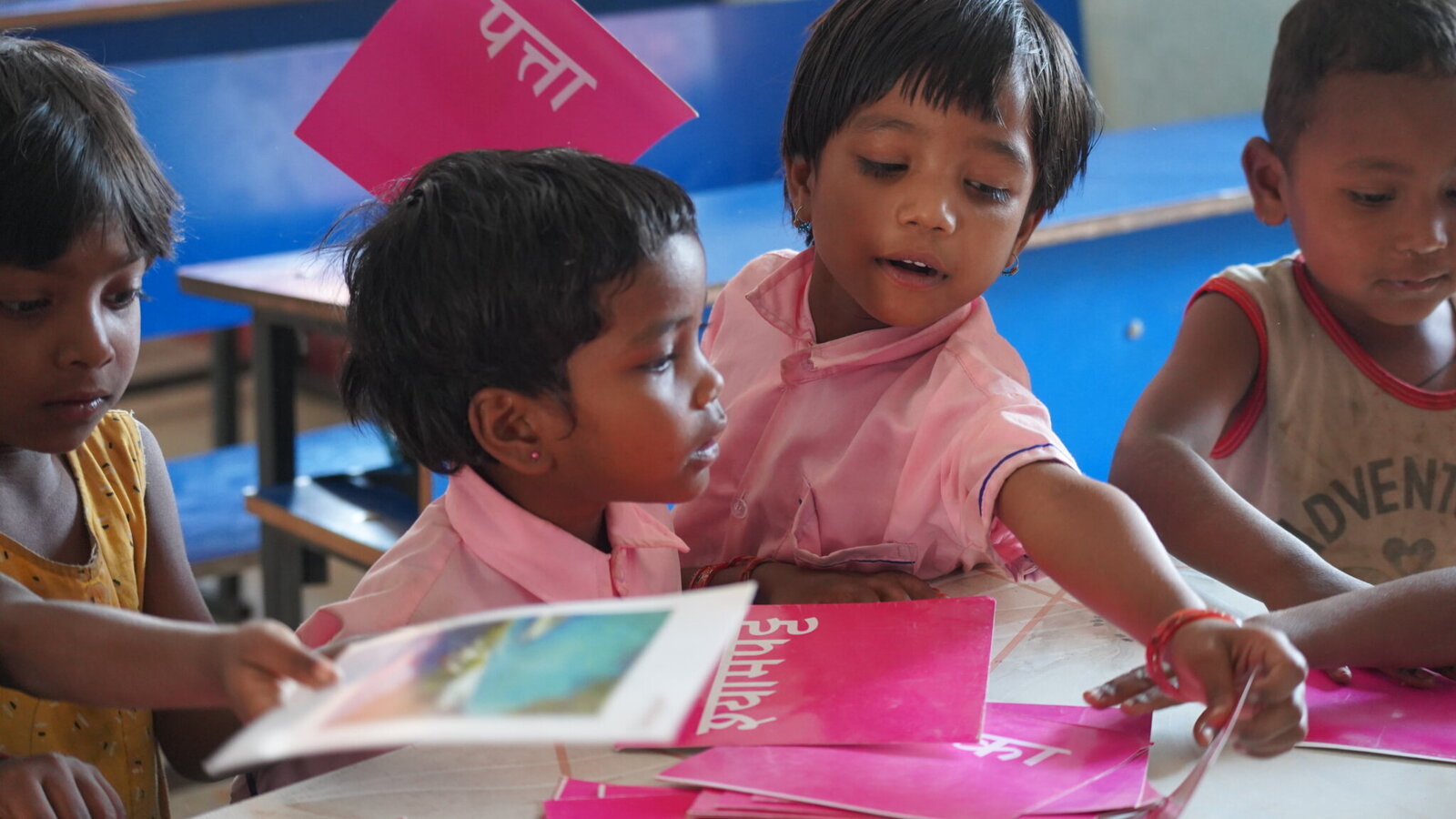
Featured Image: Purusottam Singh Thakur, Azim Premji Foundation
Palmer R, R. Wedgwood and R. Hayman with K. King and N. Thin (2007) `Educating out of Poverty? A Synthesis Report on Ghana, India, Kenya, Rwanda, Tanzania and South Africa, Centre of African Studies, University of Edinburgh↩︎
Palmer R, R. Wedgwood and R. Hayman with K. King and N. Thin (2007) `Educating out of Poverty? A Synthesis Report on Ghana, India, Kenya, Rwanda, Tanzania and South Africa, Centre of African Studies, University of Edinburgh
Thorat, A. (2010), Ethnicity, Caste, and Religion –Implications for Poverty Outcomes, Economic and Political Weekly, Vol XLV No 52, December 18-24, 47-53↩︎
Thorat, A. (2010), Ethnicity, Caste, and Religion –Implications for Poverty Outcomes, Economic and Political Weekly, Vol XLV No 52, December 18-24, 47-53
Kannan, K. P. and Raveendran, G. (2011) India’s Common People: The Regional Profile, Economic and Political Weekly, 46,38, 60-73↩︎
Kannan, K. P. and Raveendran, G. (2011) India’s Common People: The Regional Profile, Economic and Political Weekly, 46,38, 60-73
Blanden, J. and Gibbons, S. (2006) ‘The Persistence of Poverty across Generations: a view from two British cohorts’ Report for the Joseph Rowntree Foundation, Policy Press.↩︎
Blanden, J. and Gibbons, S. (2006) ‘The Persistence of Poverty across Generations: a view from two British cohorts’ Report for the Joseph Rowntree Foundation, Policy Press.
Psacharopoulos, G. and H.A. Patrinos. 2018. “Returns to Investment in Education: A Decennial Review of the Global Literature.” Education Economic, 26 (5): .445-458.↩︎
Psacharopoulos, G. and H.A. Patrinos. 2018. “Returns to Investment in Education: A Decennial Review of the Global Literature.” Education Economic, 26 (5): .445-458.
Jatav, M. & Sen, S. (2013). Drivers of Non-Farm Employment in Rural India: Evidence from the 2009-10 NSSO Round. Economic & Political Weekly, Vol. XLVIII Nos. 26 & 27, 14-21↩︎
Jatav, M. & Sen, S. (2013). Drivers of Non-Farm Employment in Rural India: Evidence from the 2009-10 NSSO Round. Economic & Political Weekly, Vol. XLVIII Nos. 26 & 27, 14-21
Eswaran, M., Kotwal, A., Ramaswami, B. and Wadhwa, W. 2009. Sectoral labour flows and agricultural wages in India, 1983-2004: Has growth trickled down? Economic and Political Weekly 44(2): 46-55↩︎
Eswaran, M., Kotwal, A., Ramaswami, B. and Wadhwa, W. 2009. Sectoral labour flows and agricultural wages in India, 1983-2004: Has growth trickled down? Economic and Political Weekly 44(2): 46-55
Herz, B. K and Khandker, S R (1991). Women’s Work, Education, and Family Welfare in Peru. Discussion Papers 116, World Bank, Washington, DC.↩︎
Herz, B. K and Khandker, S R (1991). Women’s Work, Education, and Family Welfare in Peru. Discussion Papers 116, World Bank, Washington, DC.
Herz, B. and Sperling, G. B. (2004). What Works in Girls’ Education: Evidence and Policies from the Developing World. New York: Council on Foreign Relations.↩︎
Herz, B. and Sperling, G. B. (2004). What Works in Girls’ Education: Evidence and Policies from the Developing World. New York: Council on Foreign Relations.
World Development Report, 1993, World Bank, Washington, D.C.↩︎
World Development Report, 1993, World Bank, Washington, D.C.
Filmer, D. 1999. “The Structure of Social Disparities in Education: Gender and Wealth.” Policy Research Report on Gender and Development, Working Paper Series No. 5, World Bank Development Research Group/Poverty and Human Resources. Washington, D.C.↩︎
Filmer, D. 1999. “The Structure of Social Disparities in Education: Gender and Wealth.” Policy Research Report on Gender and Development, Working Paper Series No. 5, World Bank Development Research Group/Poverty and Human Resources. Washington, D.C.
Bhalla, S. S., S. Saigal, and N. Basu. 2003. Girls’ Education Is It—Nothing Else Matters (Much). Background paper for World Development Report 2004: Making Services Work for Poor People. Oxus Research and Investments, New Delhi, India. [http://econ.worldbank.org/wdr/wdr2004/library/doc?id=29789]↩︎
Bhalla, S. S., S. Saigal, and N. Basu. 2003. Girls’ Education Is It—Nothing Else Matters (Much). Background paper for World Development Report 2004: Making Services Work for Poor People. Oxus Research and Investments, New Delhi, India. [http://econ.worldbank.org/wdr/wdr2004/library/doc?id=29789]
Santhakumar, V., Gupta, N., & Sripada, R. (2016). Schooling for All in India: Can We Neglect the Demand? Oxford University Press.↩︎
Santhakumar, V., Gupta, N., & Sripada, R. (2016). Schooling for All in India: Can We Neglect the Demand? Oxford University Press.
This is a cross-country study of fertility and secondary school attainment among women in 65 low- and middle-income countries, which covered 93 percent of the population of the developing world. Subbarao, K., and Rainey, L. 1995. Social Gains from Female Education. Economic Development and Cultural Change 44(1): 105–28↩︎
This is a cross-country study of fertility and secondary school attainment among women in 65 low- and middle-income countries, which covered 93 percent of the population of the developing world. Subbarao, K., and Rainey, L. 1995. Social Gains from Female Education. Economic Development and Cultural Change 44(1): 105–28
Malhotra, A., R. Pande, and C. Grown. 2003. Impact of Investments in Female Education on Gender Equality. International Centre for Research on Women, Washington, D.C.↩︎
Malhotra, A., R. Pande, and C. Grown. 2003. Impact of Investments in Female Education on Gender Equality. International Centre for Research on Women, Washington, D.C.
C. R. Winegarden. “Schooling and Income Distribution: Evidence from International Data.” Economica, vol. 46, no. 181, 1979, pp. 83–87. JSTOR, www.jstor.org/stable/2553099. Accessed 31 Mar. 2020.↩︎
C. R. Winegarden. “Schooling and Income Distribution: Evidence from International Data.” Economica, vol. 46, no. 181, 1979, pp. 83–87. JSTOR, www.jstor.org/stable/2553099. Accessed 31 Mar. 2020.
Juhn, Chinhui, Kevin M. Murphy and Brooks Pierce (1993), “Wage inequality and the rise in returns to skill”, Journal of Political Economy 101: 410-442.↩︎
Juhn, Chinhui, Kevin M. Murphy and Brooks Pierce (1993), “Wage inequality and the rise in returns to skill”, Journal of Political Economy 101: 410-442.
Levy, Frank, and Richard J. Murnane. 1992. U.S. earnings levels and earnings inequality: A review of recent trends and proposed explanations. Journal of Economic Literature 30 (3): 1333-81.↩︎
Levy, Frank, and Richard J. Murnane. 1992. U.S. earnings levels and earnings inequality: A review of recent trends and proposed explanations. Journal of Economic Literature 30 (3): 1333-81.
Li, F., Y. Zhao & W. John Morgan (2011): The rate of return to educational investment in China: a comparative commentary, Education, Knowledge and Economy, 5:1-2, 45-52.↩︎
Li, F., Y. Zhao & W. John Morgan (2011): The rate of return to educational investment in China: a comparative commentary, Education, Knowledge and Economy, 5:1-2, 45-52.
Pieters, J. (2011) Education and Household Inequality Change: A Decomposition Analysis for India, The Journal of Development Studies, 47:12, 1909-1924.↩︎
Pieters, J. (2011) Education and Household Inequality Change: A Decomposition Analysis for India, The Journal of Development Studies, 47:12, 1909-1924.
Berman, Eli, John Bound and Zvi Griliches (1994), “Changes in the demand for skilled labour within U.S. manufacturing industries: evidence from the annual survey of manufactures”, Quarterly Journal of Economics 109: 367-397.↩︎
Berman, Eli, John Bound and Zvi Griliches (1994), “Changes in the demand for skilled labour within U.S. manufacturing industries: evidence from the annual survey of manufactures”, Quarterly Journal of Economics 109: 367-397.
Deschênes, Olivier. “Unobserved Ability, Comparative Advantage and the Rising Return to Education in the United States: A Cohort-Based Approach.” Princeton University Industrial Relations Section, Working Paper No. 465, 2001.↩︎
Deschênes, Olivier. “Unobserved Ability, Comparative Advantage and the Rising Return to Education in the United States: A Cohort-Based Approach.” Princeton University Industrial Relations Section, Working Paper No. 465, 2001.