
Education-Development Interlinkages (Part XVII)
Vocational training as part of school education: A socioeconomic view
Q&A with Santhakumar V | 17 Oct 2025
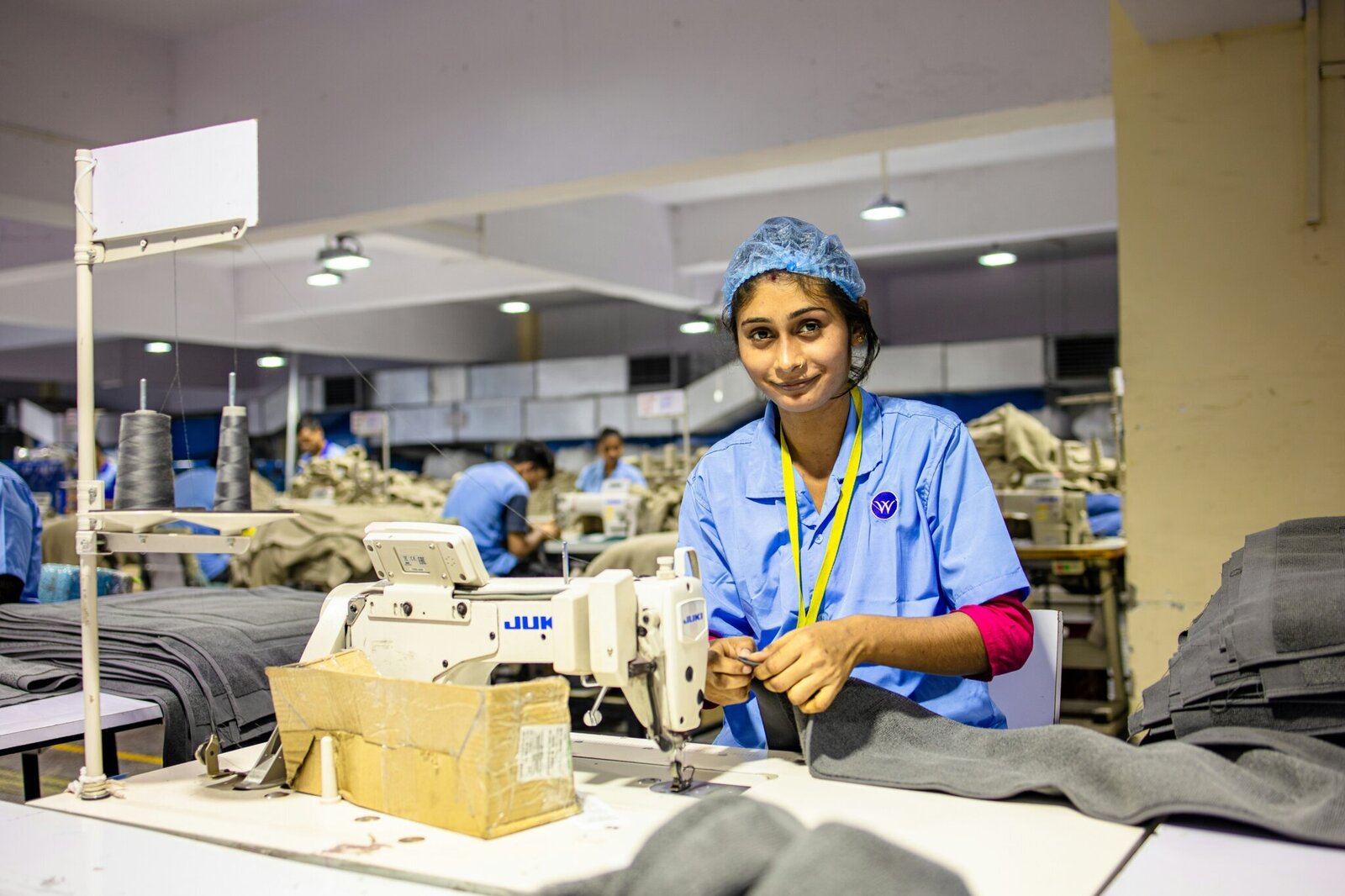
There are efforts currently on in India to impart skills to youngsters. This may help a section of them to find jobs.
Details
Q: What is your view on the need for vocational training as part of school education?
A: This is a complex issue. There is no global consensus on this. India followed Britain in designing its education system. In Anglophone countries, the basic premise is that all children should get a general education of 10 to 12 years. Moving towards formal vocational training happens mostly after this period. Hence, a section of students in India may go to an Industrial Training Institute (ITI) after 10 years or a polytechnic after 12 years of general schooling.
However, Germany, Switzerland, the Netherlands and a few other countries in continental Europe have a provision to segregate students while they are in secondary school and encourage them to pursue vocational education. Teachers and the school system have a role in making this choice. Hence, higher education in universities is used by only a select group. Those who opt for vocational education may have opportunities to pursue higher education in universities of applied sciences. It is noted that there is a higher level of matching between education and employment in these countries.
There is a similar system in other countries of southern Europe. However, the segregation there is based on the choice by parents – children from poorer families and those with less-educated parents may opt for vocational education, as they may want a job as early as possible, and may find the ‘opportunity cost’ of university education higher. This can lead to a situation where even those students who have the aptitude and interest in university education from poorer families may not opt for such an education. This is harmful since it can lead to the persistence of inequality across generations and also works against economic mobility. Moreover, people with higher education may come from a relatively smaller section of such a society, and that is not good for the economy.
If we take newly industrialised countries in Asia, like China or its eastern neighbours, the role of vocational education in industrial development is not very clear. It is those who complete general school education (not vocational training) who move to cities to take up jobs in factories. These factories may be providing on-the-job training to those who have basic proficiencies, including numeracy and literacy. These workers pick up skills which are necessary for a specific workspace based on the knowledge that they have acquired through general school education. In other words, we can say that the industrial development in these countries was driven by the availability of youngsters who completed school education (and not necessarily vocational training). Hence, the argument that the industrial/manufacturing development is not happening adequately in India due to the lack of enough vocational or skill-based education may not be valid based on the experience of China and other such countries. All these indicate the need for a nuanced (as against an ideological) approach towards vocational training as part of school education.
Q: What are the challenges in India in using the model where students are segregated in schools for vocational education?
A: If the choice is left to parents, it will be the poorer parents who may opt for vocational education for their children. However, in India, poverty is linked to caste. Most of the poorer families belong to lower castes. This can lead to a situation where students belonging to these groups opt for vocational education, and university education is pursued by those belonging to the upper castes. This can decelerate the socioeconomic mobility of the former and can lead to the persistence of the caste system. (In fact, traditionally, caste was based on occupations, and most of those who were doing carpentry or blacksmithing or masonry were from the so-called lower castes). The segregation for vocational education can strengthen this system.
This was a concern when Gandhi advocated the integration of work with school education. When skills related to parental occupations are integrated with school education, these may become less attractive to those who want to get out of these occupations. (People belonging to lower castes may want to get out of their traditional occupations partly because of the desire to get better-paying jobs, and partly to get out of the social stigma associated with the caste-based occupation). Hence, Gandhi’s approach was criticised as one that would strengthen the caste system. That was also one reason for the failure or non-acceptance of Gandhi’s model of education in India.
Even if India adopts the model of vocational education that is prevalent in Germany, the Netherlands, Switzerland, etc., where school teachers (not parents) select the students who can go through vocational education, there could be challenges and other social impacts. We have already discussed the impact of family and socioeconomic factors on the learning achievements of students in other Q&A notes. Hence, those who are more likely to have lower learning achievements may come from poorer families and with parents with lesser education (and they could be from less-privileged social groups). Those who demonstrate higher proficiency in academics may come from families which are better off economically, but also at higher positions in the social hierarchy. If students are diverted to university education based on considerations of merit and others towards vocational education, persistence of the caste system and social inequality that we have mentioned in the previous paragraph may prevail.
There is also another major challenge. We have discussed the nature of India’s economic development and its impact on school and higher education in another Q&A note. Though the country has witnessed a higher economic growth after the 1980s, it is more in the service sector and not in manufacturing. Moreover, a major part of manufacturing happens in informal sector organisations where jobs are without regular contracts and without any social security. Those who get vocational education are more likely to get jobs in the manufacturing sector. However, in the current conditions, their chances of getting a desirable job with adequate social security are lower. This may encourage them to go for higher education. This has implications – vocational education cannot be imposed on a section of students as it may lead to an ‘inferior’ choice in terms of employment. When students are given the choice, they may not opt for it.
There are also residuals of Brahmanism in India. This means that upper castes may prefer jobs which do not require working with hands. They may prefer white collar jobs (which are mostly in the service sector) and, hence, may prefer higher education irrespective of their aptitude and ability to do so. They may not like it if teachers or the education system forces them to opt for vocational education. If the majority of those who opt for (are selected for) vocational education come from lower castes due to their exposure to skills, such as blacksmithing or carpentry, or the relatively lower achievements in the academic/theoretical aspect of school education, there could be caste fragmentation in the choice of stream of education. This may be resisted or resented by the so-called backward or lower castes. There is also the process of ‘Sanskritization’ by which the so-called lower caste emulates the practices of the upper castes. This may also encourage the former to opt for higher education and service-sector jobs.
Q: Are there other reasons that lead to lower wages for those who get vocational education compared to those who get higher education in universities and colleges?
A: There are reasons which are global, but there are others specific to the less developed countries. Those who get vocational education may only get entry-level jobs in manufacturing companies, but the managers and marketing professionals in these firms are more likely those with university/college education. University/college education is more valuable in the service sector. As countries develop, there is a decline in the relative importance of manufacturing and a corresponding growth in the service sector. All these factors may lead to a global situation where individuals with a university/college education may have higher lifelong earnings compared to those with only vocational education.
However, there could be other issues in less-developed countries. In many manufacturing units in these countries, the capital used is less. This may reduce the productivity of workers. (When a highly sophisticated machine is used, those who work with such machines may produce more and get higher wages, but that is not the case for a major part of manufacturing units in less developed countries.) Also, the manufacturing is carried out with a technology which uses lower levels of capital (and which requires less sophisticated skills). This may reduce the wage rate of workers (since wages depend on the productivity of workers). Moreover, due to poverty and other reasons of underdevelopment, the share of people who are willing to work in jobs which require less sophisticated skills would be higher. An increased supply of workers can also reduce their wage rate.
We can compare the situation with a manufacturing unit (say, of cars or washing machines) in highly industrialised countries, like Germany. Their factories are highly mechanised (which means the use of more capital). Highly skilled workers are needed to operate these machines. However, the share of German people who are willing to be such workers is not very high (due to a relatively small population size, the availability of different employment and income-earning opportunities, etc.). For all these reasons, they may get a higher wage rate.
Since the wage rate of manufacturing workers in countries like India is not high, it may influence the choice of education of school-going children. The gap between the expected income from services and manufacturing may become much wider. Hence, many may try to get higher education to find employment in the service sector, even though some of them may remain unemployed. (This is like the migration to urban areas. When the wage rate in urban areas is higher, many from rural areas may migrate to cities, but a share of them may remain unemployed.)
Moreover, today technology is increasingly playing an important role in all economic activities. When technology becomes the main input into the production process, those who have higher proficiencies in it will be at an advantage, whether it is in manufacturing or services. This may enhance the value of higher education in professional disciplines (even for manufacturing). Those who get vocational education immediately after school education may face challenges in the emerging global market. This could be another reason for the decline in the attractiveness of vocational education globally.
There is an interesting pattern in less developed countries. Generally, there is a higher supply of workers who are willing to work at lower wages. This, based on the framework of economics, should lead to the choice of labour-intensive technology in the production of various goods and services. For example, there should be an increase in the use of house helpers for washing clothes, or workers for the making of garments in a factory. However, this is not happening due to globalisation. It can make the consumption preferences in less-developed countries closer to those in developed ones. For example, there could be an increase in the use of fully automated washing machines even in less developed countries, where many people are willing to work as house-help. When garments produced in these countries are exported to international markets, the production system may change to incorporate more automation for quality and other considerations. In essence, even in those countries where workers are cheaper, capital-intensive production and the latest technologies are used. This can also increase the demand for an education, which would enhance the ability to acquire the latest technologies. This may reduce the demand for lower levels of vocational education in these countries.
Q: The purpose of education should be to enable youngsters to pick up the knowledge and proficiencies on their own. In that sense, isn’t it better to give them a general-purpose education rather than a vocational education which imparts a narrower set of skills?
A: This is true in the broadest sense, but there are issues and challenges when we get into the details. It is true that an educated person should be able to acquire knowledge and skills as and when these are required. This is especially so in the current context, where technology is changing rapidly. Older technologies, skills and jobs may become redundant quickly in this scenario. Those who are trained in a narrower set of skills may find it difficult to acquire a newer skill. In that sense, the failure of general-purpose education in India may not be the type of this education per se, but it is poorly attempted. Hence, many students, even after completing 10 or 12 years of general-purpose school education, may not acquire the ability to pick up knowledge and skills on their own. This may be due to the poor quality of education.
Most of the proficiencies that a person needs to acquire skills and knowledge on their own can (should) be imparted through school education. Moreover, specific forms of higher education can also be narrow and can reduce the ability of students to acquire general proficiencies.
Q: Vocational education gives certain useful proficiencies. If this is true, isn’t it better to give certain exposure to vocations in school education?
A: Yes. In that sense, all students (irrespective of whether they can pursue higher education or not) should have an exposure to aspects of vocations as part of their school education. Though this was attempted in India in the past, it was not so useful or effective. When I was in school, there were classes devoted to work experience (in addition to arts and sports). However, it was not attempted with adequate preparedness. There can be a change in the situation. There can be a set of vocational activities in all schools. Students can be given exposure to these based on their age. There may be some who may develop an intrinsic interest in these, and these can be encouraged, even if students do not take them up as careers. There can be attitudinal changes which can be brought about through exposure to vocations. Everybody should have an inclination to work with their hands, and this can be an objective of vocational training. This is much more important in India, where the residuals of Brahmanism remain, which discourage manual labour. Certain vocations can be useful to teach academic subjects more effectively. For example, carpentry can be connected with mathematics, soil and water testing can be connected to chemistry, and agriculture can be connected to biology and ecology. This is an interesting way to connect conventional academic subjects with the real world of students. All students can have an exposure to different uses of computers as part of their school education. Giving an exposure to vocations may require a higher level of preparedness and infrastructure in schools. Many Indian schools are not equipped to do so. The New Education Policy (NEP) 2020 has provisions to give exposure to vocations in school education. That is a step in the right direction, but its implementation may be challenging due to the lack of public resources allocated for education.
Q: What are the steps necessary to strengthen vocational education in India?
A: There are Industrial Training Institutes and Polytechnics in India. These provide vocational education to those who complete 10 and 12 years of schooling, respectively. The most important step is to strengthen these institutions. There are a number of challenges here. There are not enough investments in physical infrastructure in these institutes. These should be able to impart training in each vocation in the latest technology, and that may require an upgrading of infrastructure and also the capacities of trainers. This is necessary since these trainers may have only limited industrial experience and hence may not have exposure to the latest industrial practices.
Hence, it is good to have close collaboration with industrial firms in the running of these vocational institutes. This can make the training a lot more appropriate to the current requirements of the industry. It may also help the placement of students in internships and jobs, which may serve as an incentive for youngsters to choose vocational institutes. However, we should not presume that such an improvement in the functioning of these institutes would change the excessive focus on higher education, due to the problems which we have mentioned earlier in this note.
There are efforts currently on in India to impart skills to youngsters. This may help a section of them to find jobs. Since there is a significant share of people who migrate to cities to seek employment in construction, manufacturing and services, such skill-development programmes can help if they are adequately organised and can attract those who are in need. However, my impression is that even these programmes are not adequate to address the socioeconomic challenges of employment in the country. For example, girls may find it difficult to continue in jobs due to the demands of marital life, and they may withdraw from work even after getting placed through skill-development programmes. On the other hand, those who are willing to work (like those young men from poorer families who migrate to cities) may be acquiring skills (like masonry) over time by working (and without enrolling in formal skill education programmes). In summary, vocational education is important, but we should not attribute the problems of massive unemployment in the country to the lack of or non-use of such education.
About the author:
Santhakumar V is a former Professor, Azim Premji University, Bengaluru
Featured Image: EqualStock on Unsplash