
Teaching Economics: What can schools and universities learn from each other?
Charlie Chaplin’s Modern Times, case study of fish markets in Kerala — explore how educators came together to make teaching economics colourful, innovative, and simpler.
Campus
Bhopal
Details
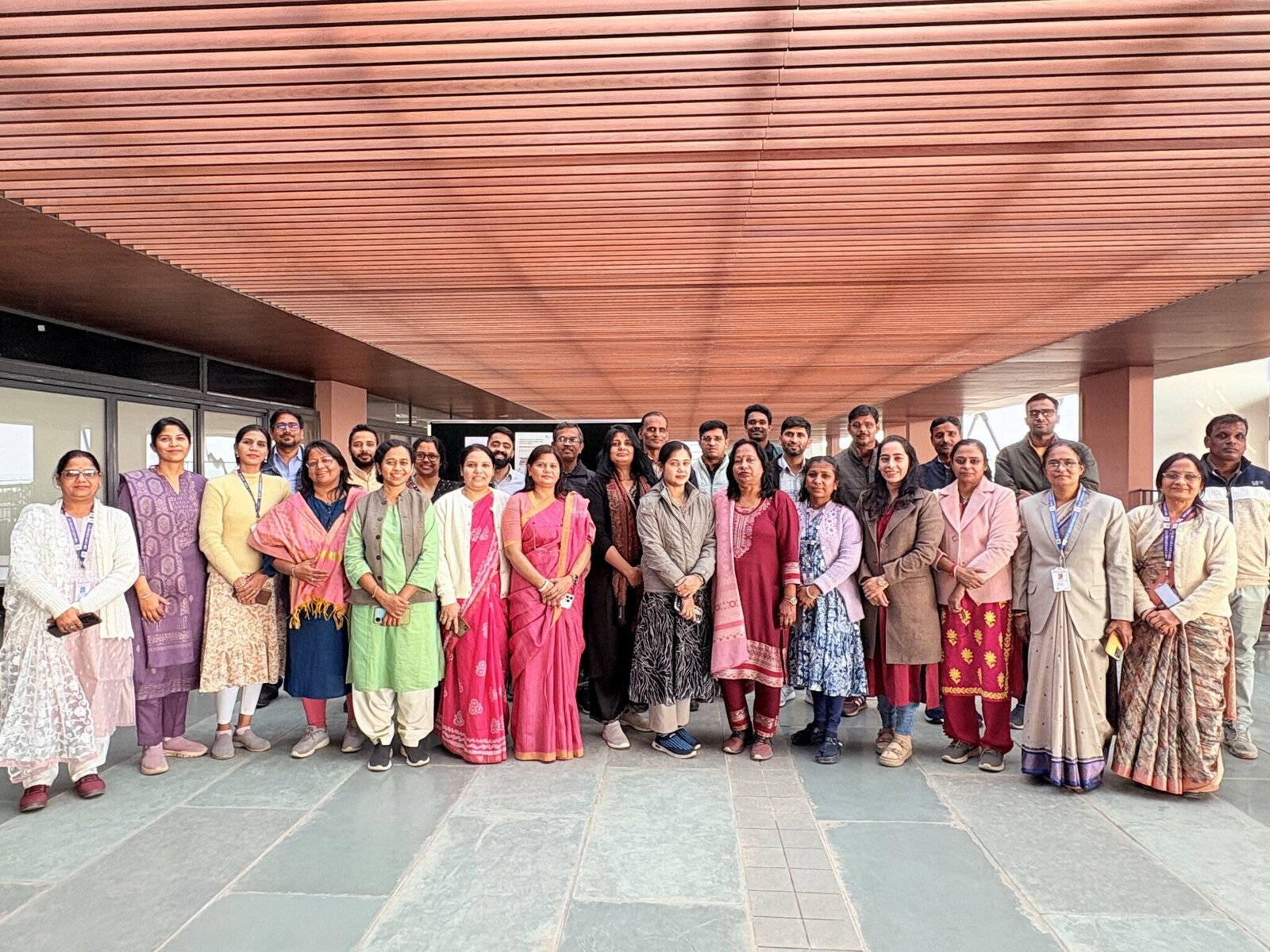
A shared space to discuss the economy, economics, and the teaching of economics, and where the spirit of sharing (and not training) reflected. The Teaching Economics workshop for Higher Secondary Economics teachers held at Azim Premji University, Bhopal campus, aimed at connecting core syllabus topics with real-world economic issues.
25 teachers from government and private schools in and around Bhopal came together to learn from one another how to make economics teaching more meaningful. Many problems are common to teaching economics at school and college levels — the use of mathematics in economics, the relevance of economic models and concepts, and questions of rigour recur repeatedly.
Bringing economic theories to bear on real-world problems is a constant challenge for teachers across levels. How do we negotiate these challenges? What opportunities do we see in classrooms? What are the new domains of work in the discipline? What pedagogic experimentation is possible?
Interactive in nature, the workshop included hands-on activities, a book exhibition, and more.
Session 1: Revisiting the concepts of Microeconomics
Session 2: Microeconomics in Everyday Life
Session 3: Understanding Microeconomics concepts through classroom activities
Session 4: “What is the Core of Economics?”
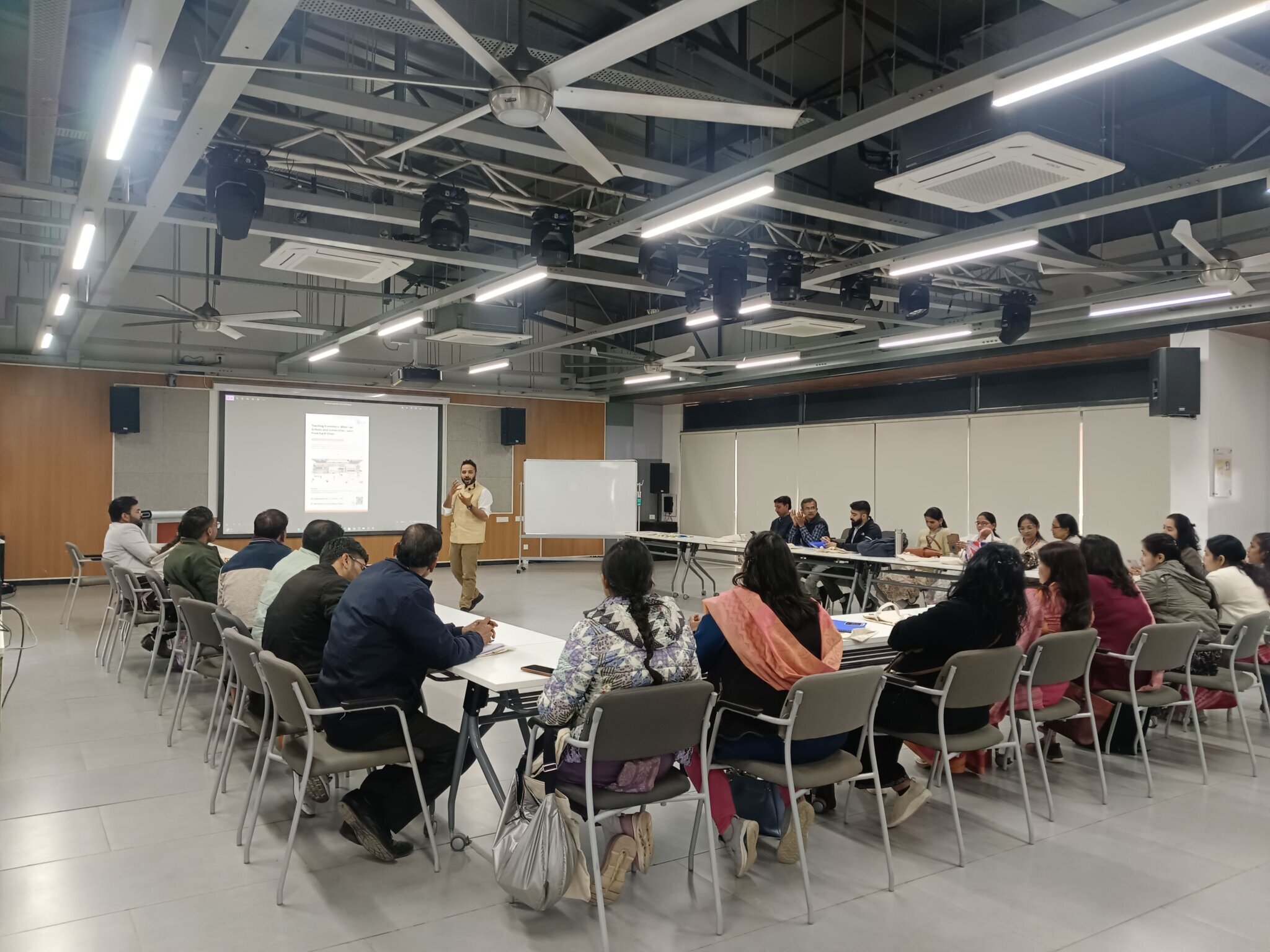
Microeconomics centres on the problem of choice
According to the dominant school of economics, sensible choice requires comparing marginal benefits and marginal costs. In the first session, this was illustrated through everyday examples and life stories.
A personal journey of establishing an enterprise in Uttarakhand, its challenges and successes, was used to discuss important microeconomic concepts such as competition, differentiated products, profit-making and producer surplus, price elasticity, innovation, and market capture.
Classroom activities for abstract concepts
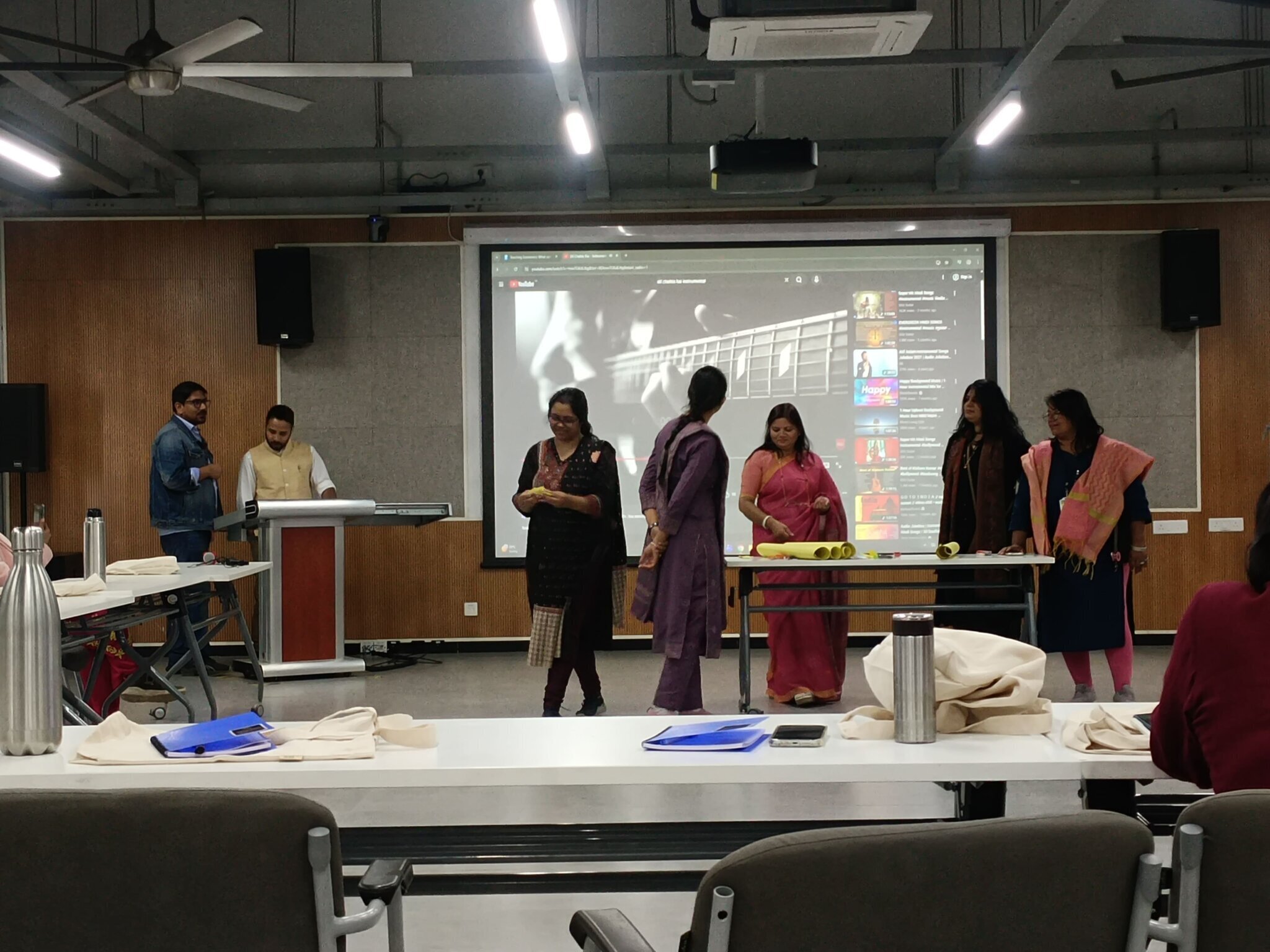
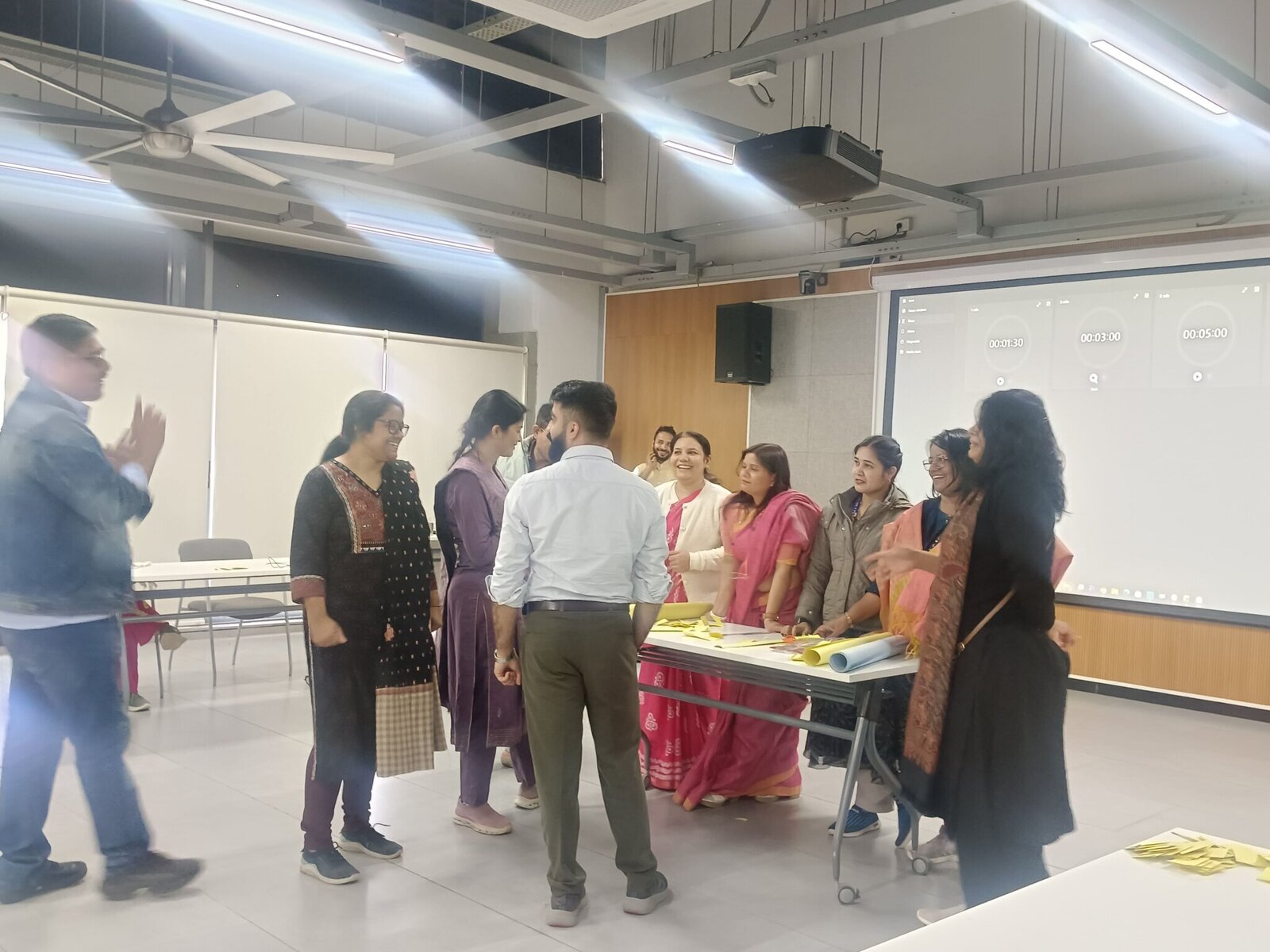
Using a few chart papers, staplers and scissors, a demo of how classroom activities can make abstract concepts comprehensible was conducted. A simple production process, using a simulated game with hired labour and fixed capital investment, demonstrated how ‘declining marginal product’ can arise.
Declining marginal product of labour is an economic principle where adding more workers to a fixed amount of capital (like machines or space) eventually leads to smaller increases in total output, because each new worker has less of the fixed input to work with, causing inefficiencies like crowding or competing for resources, even if workers are equally skilled. Teachers participated actively in the activity.
Disequilibrium in markets
The equilibrium assumption underlies much of microeconomics, whereas real-life examples often present situations of disequilibrium. Disequilibrium is not emphasised enough in standard microeconomics.
A case study of fish markets in Kerala, where different prices across markets and situations of excess demand/supply prevailed, presents an illustration of disequilibrium. This situation prevailed, until a technological breakthrough occurred. The availability of mobile phones reduced price variations by making information on excess demand and supply more easily available.
Innovation is a double-edged sword. Many a time, it leads to greater exploitation and erosion of workers’ rights under capitalism, illustrated through a clip of Charlie Chaplin’s Modern Times.
When “invisible hand” fails
There are various situations when Adam Smith’s “invisible hand” ceases to apply and market solutions become sub-optimal. From tackling pollution to the provision of public goods such as health, education, water supply, and sanitation, many situations were discussed where government intervention becomes necessary.
What do we want economics to do?
A famous economist says that economics is important not only for what it teaches, but because it prevents us from being fooled by other economists. Economics should demystify economics!
It is important for people to trust their own experiences rather than accept arguments uncritically. One must be prepared to question. This was explored and contextualised using recent data on inequality. Some exposure to economics is therefore important for all, to enable them to ask questions and keep democracy healthy.
The workshop was facilitated by Lokesh Posti, Mampi Bose, Narendra Goswami, Saswata Guha Thakurata, and Sukanya Bose.